
Vivo brought in a new premium smartphone in the Indian market with the Vivo X200T. Positioned as a flagship killer, this model brings high end specs and features at a more approachable price point. But just a couple of weeks ago, the Vivo X300 debuted as the brand’s true flagship model alongside the X300 Pro. So we have one model aimed squarely at delivering flagship-class experience at a slightly more accessible price, and the other positioned as a true flagship with top-tier imaging and performance. Choosing between them isn’t just about price, so here’s a detailed comparison to help you decide which smartphone makes more sense.
Design & Display
At first glance, both Vivo X200T and X300 share a similar design language, blending a premium glass back with a metallic side frame. The sides, front, and back are all flat, with the rear also featuring a big circular camera island. Other identical design elements include uniform bezels on the front and an IP68 + IP69 rating for water and dust resistance. The differences are quite subtle between the two, so you’re not seeing any compromise with the X200T, despite its cheaper price tag.
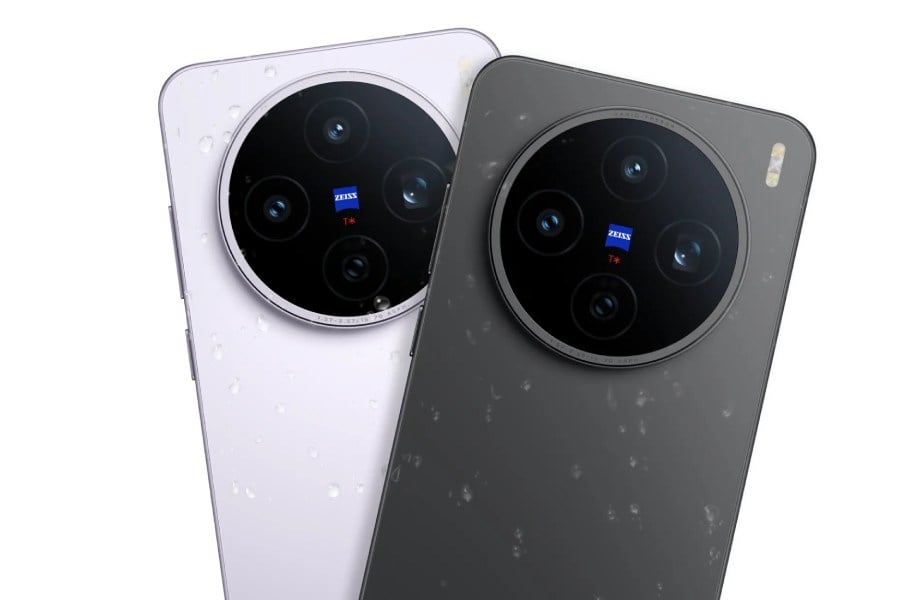 Vivo X200T
But once you turn the phones around, it becomes apparent that the Vivo X300 is a compact flagship. It sports a 6.31-inch LTPO AMOLED display with a 1.5K resolution, a 120Hz refresh rate, 2160Hz PWM dimming, Armor Glas protection, and a peak brightness of up to 4,500 nits. In comparison, the Vivo X200T is a standard sized smartphone with a 6.67-inch 1.5K 120Hz AMOLED panel with a 2160Hz high frequency PWM dimming and up to 5000 nits peak brightness.
The smaller screen size also helps the X300 be lighter (190 grams) than the X200T (205 grams). Another major advantage of the Vivo X300 is support for LTPO technology, which brings variable refresh rate for better energy efficiency.
Performance
Under the hood, the Vivo X200T is powered by MediaTek’s Dimensity 9400+, a flagship-class chipset built on a 3nm process that handles everyday tasks, multitasking, and most demanding games with ease. It offers strong performance for its price and is paired with OriginOS 6 based on Android 16, promising a smooth UI experience.
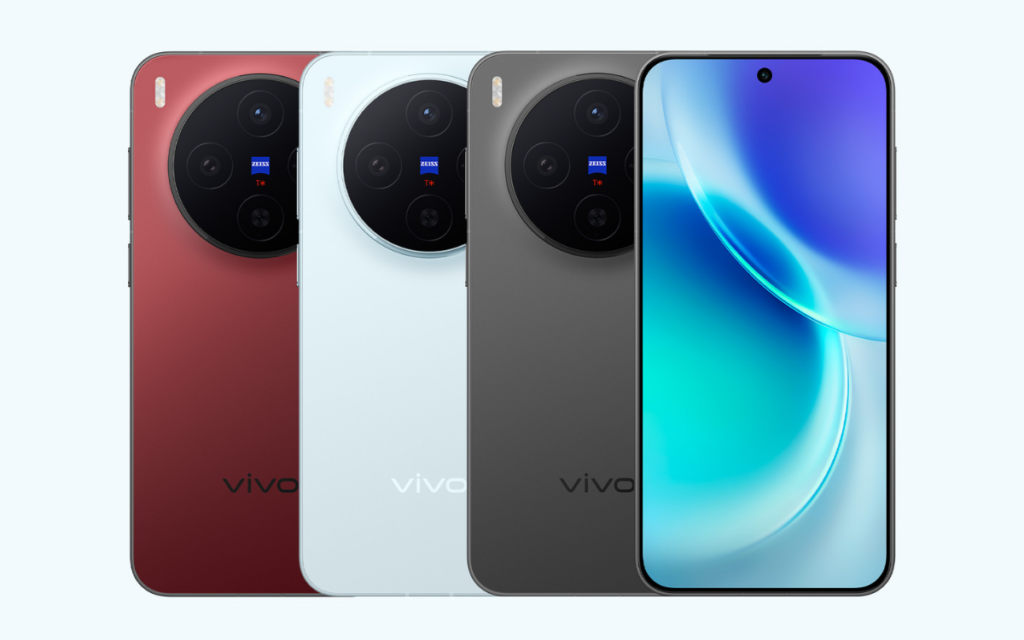 Vivo X300
In contrast, the Vivo X300 moves up a step with MediaTek’s Dimensity 9500, which delivers measurable performance gains in CPU and GPU workloads. Benchmark comparisons suggest that the Dimensity 9500 can be around 15-30 % faster in key tasks and benchmarks than the 9400+.
For most users, the X200T’s performance is more than capable and close to flagship-level, but the X300’s newer and more powerful SoC gives it a clear edge in long-term performance and graphically intense mobile games.
Camera
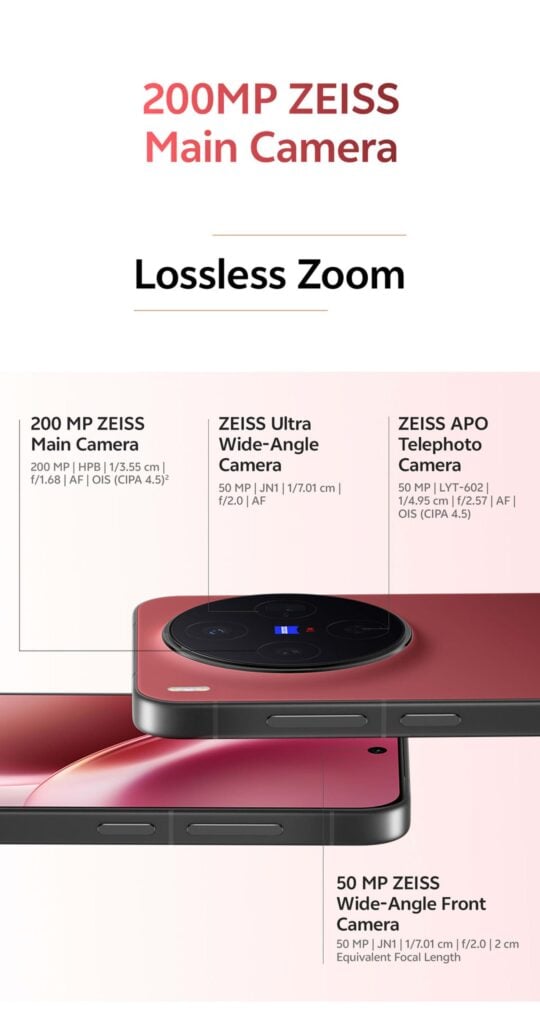 Vivo X300 Camera
Just like the design, the camera setup is nearly identical between the Vivo X200T and Vivo X300. The 50MP triple rear camera setup for both models features a similarly sized periscope telephoto shooter and ultra wide angle lens. But the Vivo X300 pulls ahead with a large 200MP 1/1.14-inch primary camera and a 50MP selfie shooter. Meanwhile, the Vivo X200T has a smaller 1/1.56-inch main sensor and a 32MP camera on the front. These differences could still seem minor, but Vivo employs Zeiss optics on the X200T, while the X300 gets the Zeiss T* coating, Zeiss optics, and V3+ imaging chip for improved image quality.
Battery & Charging
Battery life is another area where both phones hold their ground, though with slight differences. The X200T is equipped with a 6,200mAh battery that supports 90W wired fast charging and 40W wireless charging. This means all-day endurance and quick top-ups, making it excellent for heavy day-long use.
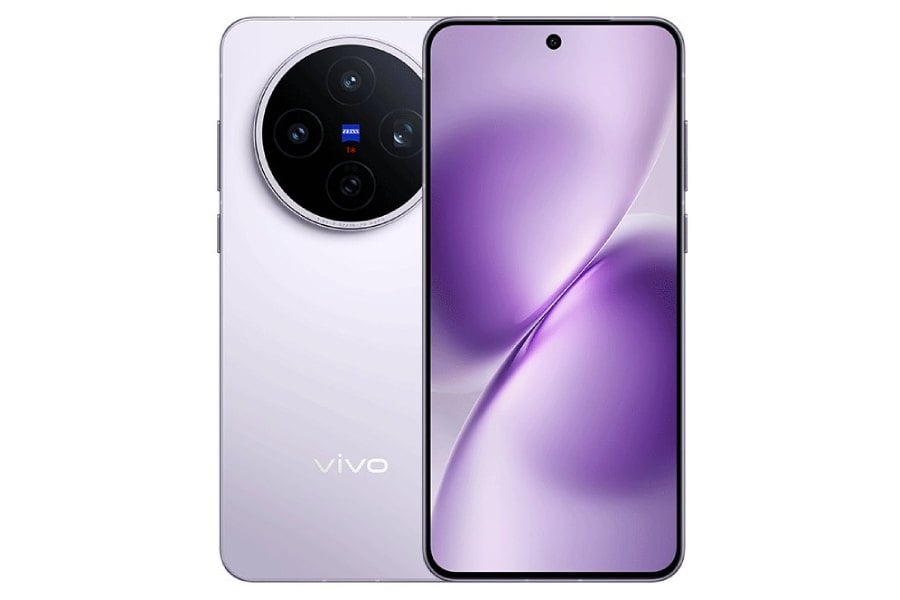 Vivo X200T
On the other hand, the Vivo X300 supports the same fast charging suite and wireless charging, but its battery is marginally smaller (6,040mAh). Still, coupled with the more efficient LTPO screen and newer chipset, real-world battery life remains competitive and close to what the X200T offers.
Verdict
The Vivo X200T does exactly what it sets out to: deliver a balanced premium smartphone experience with strong performance, excellent battery life, solid cameras, and long-term software support, without the premium flagship price tag (Rs 59,999). It is a compelling choice for those who need flagship like experience and a competent photography experience.
The Vivo X300 is a true flagship in every sense, featuring more powerful hardware, an advanced imaging system with a 200MP primary shooter, and a compact yet efficient LTPO display. So if photography, peak performance, and future proofing matter the most, the Vivo X300 justifies its higher price tag (Rs 75,999).
For more daily updates, please visit our News Section.
Tech enthusiast? Get the latest news first! Follow our Telegram channel and subscribe to our free newsletter for your daily tech fix! ⚡