
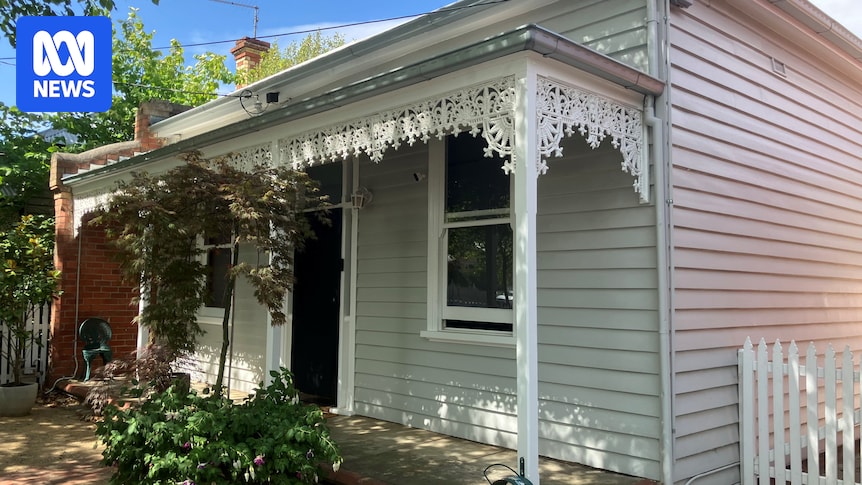
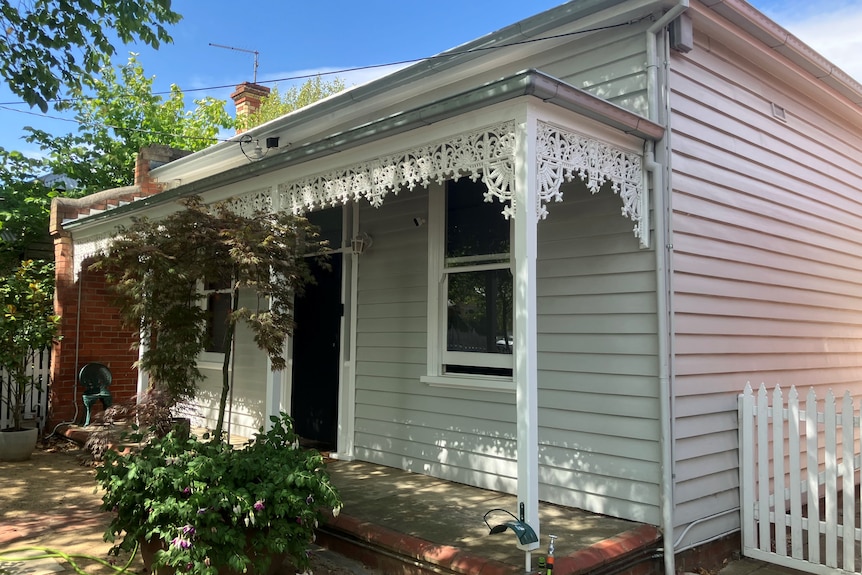
On a cold Ballarat winter’s day, Billy Harraway-Jones decided to uncover the story of his family home.
What he found was a saga of courtship and marriage in a new world, and of life and death on the Australian goldfields.
Mr Harraway-Jones had at his disposal an internet connection and patience.
With access to online databases and local council records, he slowly pieced together a history of the house.
The tools are there for anyone to use.
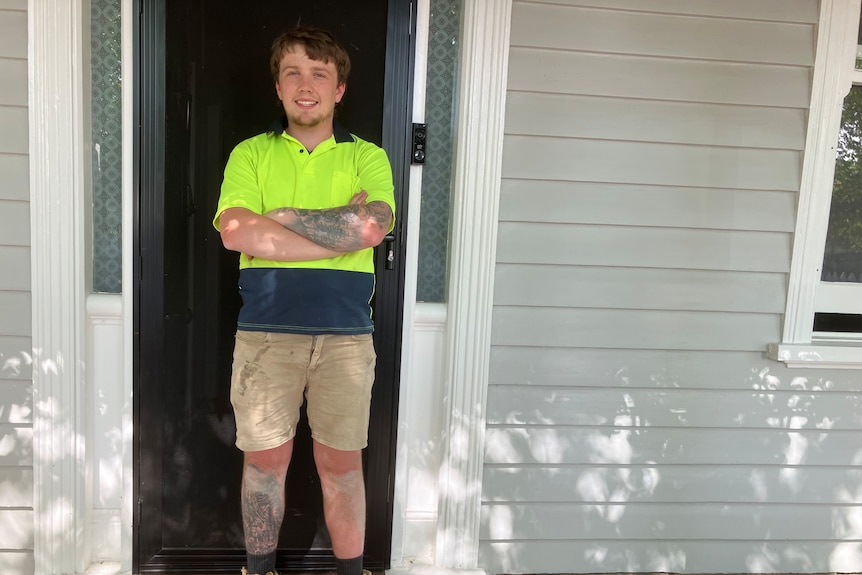
Billy Harraway-Jones opened the door on his family home’s history. (ABC News: Gavin McGrath)
“I grew up in my parents’ house in Lydiard Street, and you always knew that, even though you think of it as your house from your perspective as a kid, many of those houses in that street are over 100 years old,” he said.
“There’s been multiple different people cycle through that house.
“The weather had been miserable and, I thought, ‘I’ve got a bit of time, why not do something different, and find out about those people?'”
Mr Harraway-Jones had been told the home’s first owner was William John Payne.
It turned out it was William’s father-in-law, Cornish immigrant Philip Williams, and that the metaphorical “ghosts” of the house were older than he suspected.
William courted and married Elizabeth Williams, then aged 18, in August 1866, and eventually moved in.
Before long, Mr Harraway-Jones found himself scanning marriage certificates from Cornwall and delving into a family history 17,000 kilometres away.
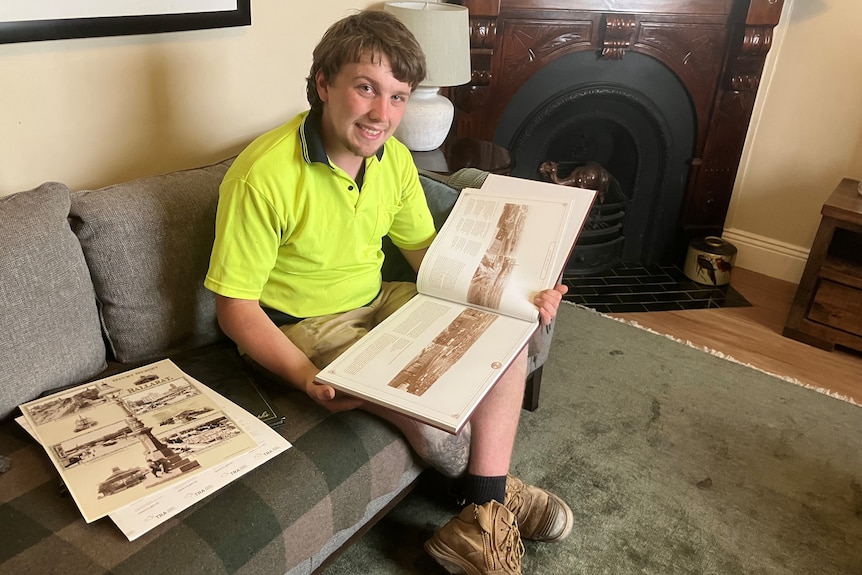
Billy Harroway-Jones says local historical societies can offer further insights. (ABC News: Gavin McGrath)
Intriguing tales
There are grand old buildings across Australia with great histories and many proverbial ghosts to be discovered.
However, even comparatively modest places have an intriguing tale to tell, Gippsland historian Linda Barraclough said.
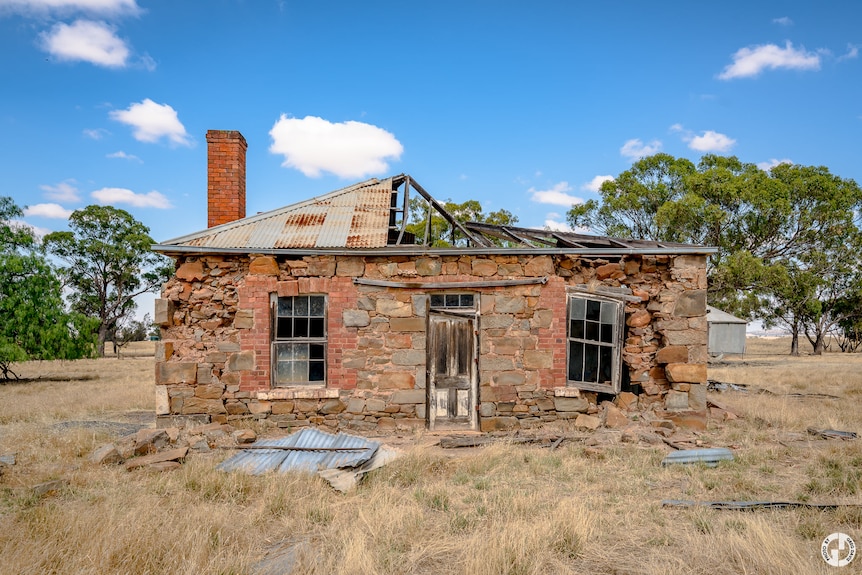
Historical ownership records exist even for abandoned properties. (Supplied: Greg Davis, Explored Visions)
“Houses do not have to be big and grand to be worth researching,” Ms Barraclough said.
“Sometimes the humblest tell the more interesting stories.
“They do not even have to be that old.”
Ms Barraclough said good examples were houses used immediately following World War II.
“The worker housing immediately after the Second World War, like the Australian Paper Manufacturing houses in Traralgon, prefabricated railway houses in Traralgon, SEC houses in Yallourn and in Newborough,” she said.
“They were called ‘snail houses’ because one SEC executive said if workers are going to be recruited [from the United Kingdom], they were going to have to bring their homes with them. Even sawmilling houses can have fascinating histories.”
Treasure trove of history
You don’t need to be a professional historian to begin tracing your old house’s history.
Mr Harraway-Jones’s first steps towards discovering the deeper history of his home were made on Trove, an online database owned by the National Library of Australia that catalogues Australian newspapers, government archives, library records and museum documents and manuscripts.
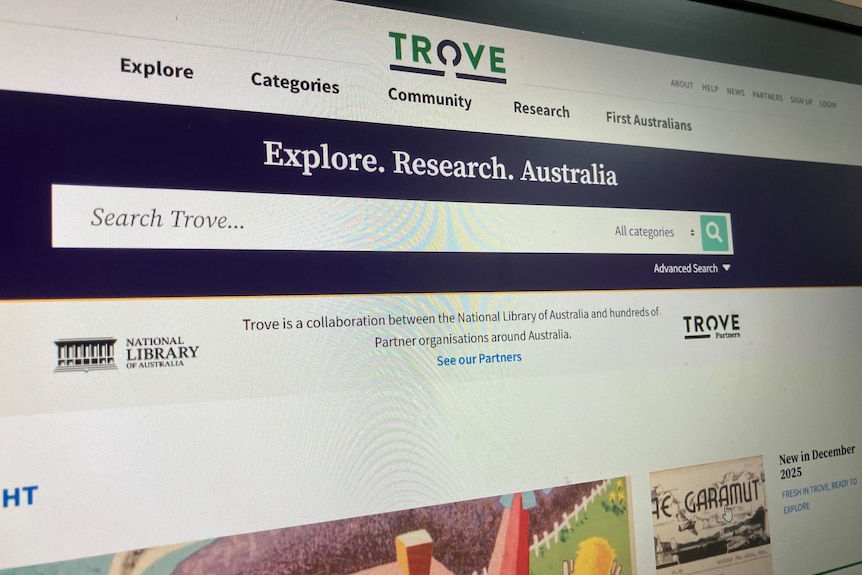
The National Library of Australia’s Trove research portal can be searched online. (ABC News: Gavin McGrath)
“Just going through Trove, reading [old newspaper] articles, there wasn’t too much, but what you do is you find a bit of a trail,” Mr Harraway-Jones said.
“You may potentially find a birth or death notice, for example, and that’s enough to start putting the pieces together and working out your next source.”
Ms Barraclough described Trove as “a game changer”.
While libraries had extensive records in bound volumes or microfiche (microfilm), Trove enabled near-instant searches of names, places and even keywords that may appear in news articles or other documents.
“There’s a high percentage of newspapers that you can read online back to their beginnings and the brilliant thing is they’re searchable,” Ms Barraclough said.
“It’s not only newspapers. It’s got a lot of maps, it’s got a lot of books and a huge cache of photographs, and it’s just changed research completely.
“You can sit at home and do it on your computer.”
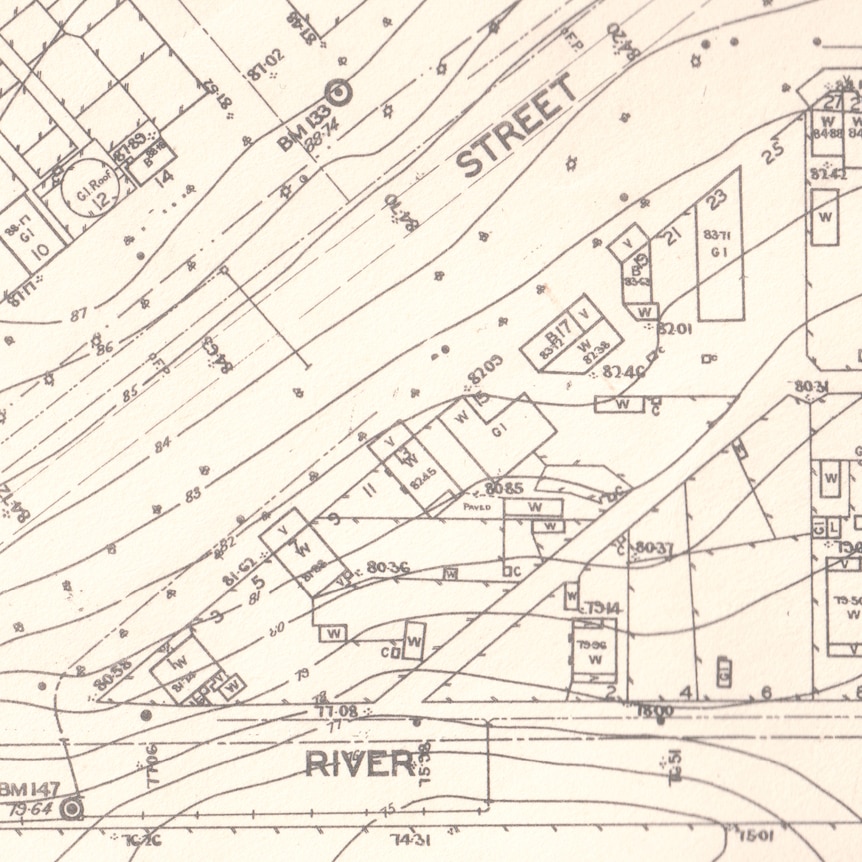
A 1939 sewerage map from the Maffra Sugarbeet Museum collection. (Supplied: Maffra Sugarbeet Museum)
Tracking down the title
Another good place to start is the property’s title history, which can be accessed online through Land Registry Services in NSW or Landata in Victoria.
A title history search statement lists the names of current and previous owners, dates of sale and mortgage discharge information.
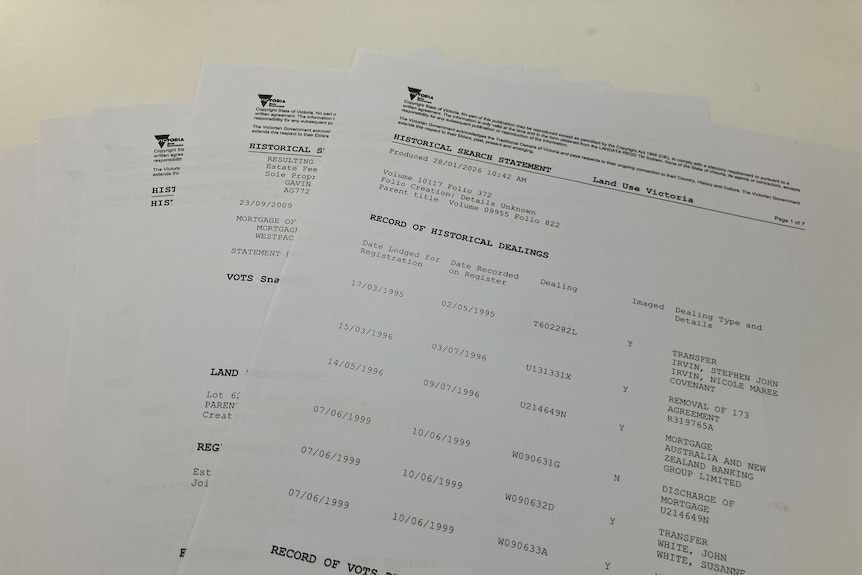
A property’s title history report can be obtained from each state’s land registry service. (ABC News: Gavin McGrath)
Mr Harraway-Jones said those basics could then be used to expand a search within a local area or parish.
“You can then start searching things like council documents,” Mr Harraway-Jones said.
“We’ve got really good digitalised rates records in the Ballarat Library or you can view them online.
“That can tell you a lot about who lived there. You get their surname, occupation, whether or not they just owned it and rented it out or if they lived in it, and then you start putting a picture together.”
Once armed with these essentials, Ms Barraclough said local historical societies and clubs, and even groups on social media could help colour in the details of what life was like for past owners and residents.
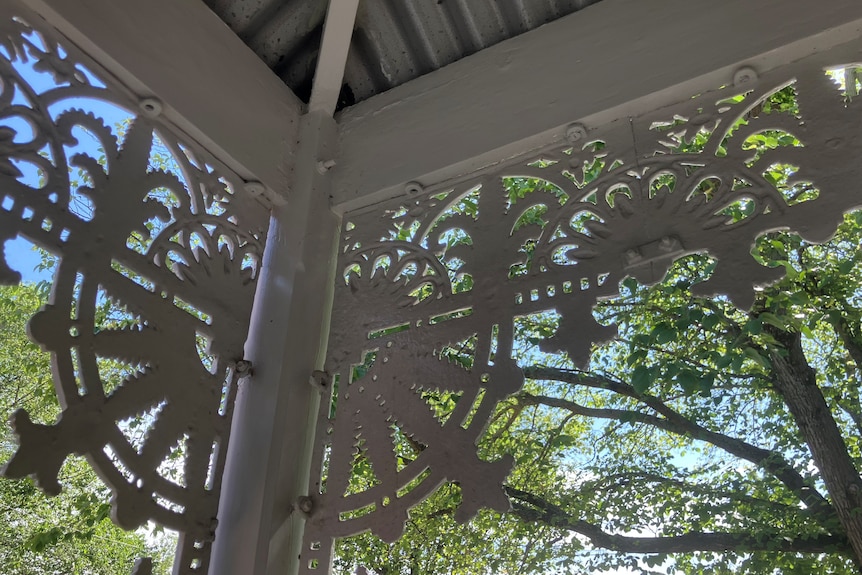
The history of old Australian homes can be accessed online. (ABC News: Gavin McGrath)
Detours and dead ends
Mr Harraway-Jones said there were a few hiccups along the way.
The property had several street number changes over its history, which had to be navigated through council records before he was able to lock down an address.
However, having sketched out a timeline of the house’s history, he said he was confident he could do it for any old house in Australia — and that anyone else with sufficient diligence and tenacity could too.
Mr Harraway-Jones said his home had seen many ups and downs over its 146-year history.
“My father used to joke, ‘This house is so old, someone’s probably died here,'” he said.
“This all confirmed what my dad used to say. Multiple people died there, but at least a few were born as well.”
Billy Harraway-Jones used Trove to help discover details about his home. (ABC News: Gavin McGrath)
Where to search:
If you’re looking to research your home, here are a few places you might start:
trove.nla.gov.au — Trove is the National Library of Australia’s online research portal. In addition to searchable archives, it also has digitised copies of newspapers from 1803 onward.nswlrs.com.au — NSW Land Registry Services. Its historical land records viewer allows free searches of maps, title records and plans dating back to 1792.landata.online — Victorian Land Registry services. A title history search statement, which lists the land’s legal owners, can be purchased for about $23.Titlesqld.com.au — Historical title searches are available at a cost of between $25 and $37.Landgate.wa.gov.au — Western Australian land information authority. Certificates of title can be ordered for about $33. nsw.gov.au/departments-and-agencies/births-deaths-marriages — NSW Registry of Births, Deaths and Marriages.bdm.vic.gov.au — Births, Deaths and Marriages Victoria.familyhistory.bdm.qld.gov.au — Births, Deaths and Marriages Queensland.aiatsis.gov.au — The Australian Institute of Aboriginal Torres Strait Islander Studies website. It includes a step-by-step way to research your Aboriginal and Torres Strait Islander heritage.prov.vic.gov.au — The Public Record Office Victoria website has an extraordinarily broad array of information, including immigration details, prison and legal records.archives.cityofsydney.nsw.gov.au — The City of Sydney council’s collecting archive, including the John Sands Sydney, Suburban and Country Commercial Directory each year from 1858 to 1932–33 (except for 1872, 1874, 1878 and 1881), which includes residents’ names, street addresses and occupations.