
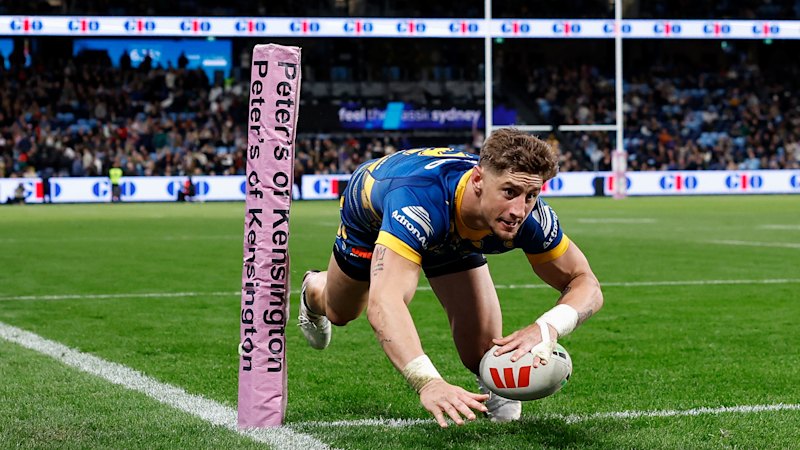
Zac Lomax allegedly told Parramatta officials he didn’t want to play rugby league again when requesting a release as it emerged that the Eels rejected an increased transfer fee offer of $300,000 from the Melbourne Storm.
Lomax’s playing future has become the subject of a Supreme Court case after Parramatta initiated legal action to prevent him from joining Melbourne. The court outcome this month will determine whether Lomax makes his Storm debut against his former club in round one.
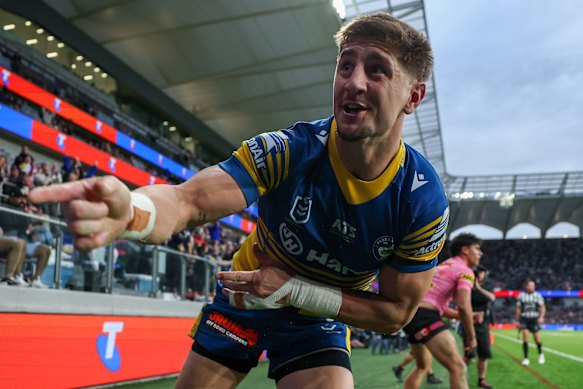
Zac Lomax’s future is up in the air.Credit: Getty Images
Sources speaking on the condition of confidentiality because the matter is before the courts say Lomax told the Eels last year he had no intention of playing in the NRL again, and wanted to instead switch to rugby.
Informed sources have told this masthead that, as part of the release negotiated with Parramatta, Lomax would have to pay the club $200,000 if he joined proposed rebel competition Rugby 360. The mooted move fell over when R360 officials postponed their inaugural season from 2026 to 2028.
Another agreed term of Lomax’s release, according to Parramatta, is that the representative star can’t join another NRL club before October 31, 2028 without its express written consent.
The Storm initially offered Parramatta $200,000 in compensation in a bid to sign him. That offer was rejected, with the Eels instead seeking a player of similar value in return, identifying Xavier Coates, Stefano Utoikamanu or Jack Howarth.
When the parties couldn’t come to an agreement, the Storm – according to confidential sources – upped their compensation offer to $300,000. Given Lomax was on a contract worth $700,000 per annum, the total benefit to Parramatta in 2026 could have been $1 million.
However, the Eels again rejected the offer, given the $300,000 figure can’t be added to their salary cap, and they wouldn’t get an adequate replacement despite allowing a representative star to go to a rival.
The Storm was also open to the prospect of taking on another Eels player in a move that would have freed up more salary cap space for the blue and golds – and a top-30 roster spot – but no deal eventuated.