
Samantha Donovan: It’s been more than half a century since humans last travelled around the moon in the Apollo missions, and the wait for the next trip is going to be a little longer than planned. NASA has delayed the launch of its Artemis II mission until March after testing this week found problems in the space rocket and crew capsule. Alison Xiao prepared this report.
Archive: And liftoff of Artemis I. We rise together back to the moon and beyond.
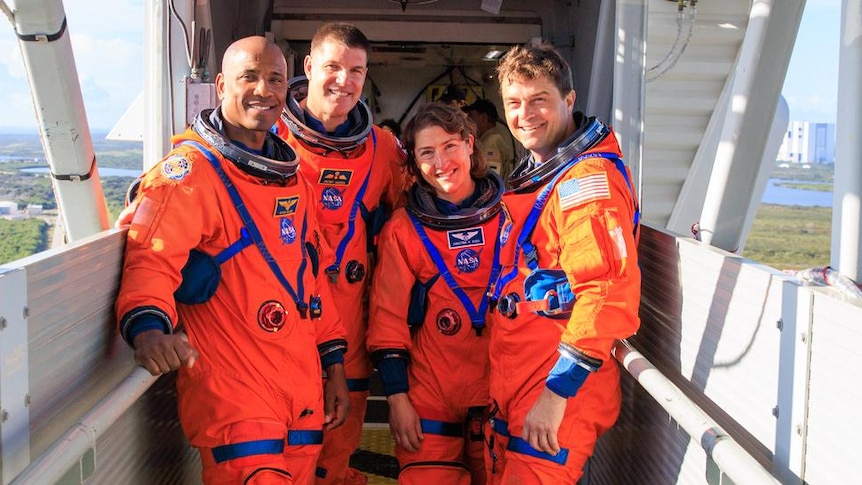
Alison Xiao: It was nearly four years ago that three space-travelling test dummies were launched on a trip to the moon in the first mission in NASA’s Artemis program. The second mission was due for liftoff early next week, this time with four human astronauts. But there’s been a setback.
Amit Kshatriya: The wet dress rehearsal we had last night was a critical milestone. I think it’s clear based on what we saw in real time we’re now targeting no earlier than March.
Alison Xiao: That’s Amit Kshatriya, NASA’s associate administrator. Artemis II is off until at least March because of hydrogen fuel leaks detected during a two-day wet dress rehearsal with the giant new rocket. The test was the final pre-launch simulation. The rocket was fully loaded with liquid propellant but did not actually launch. Former NASA astronaut Leroy Chiao told CNN he believes the issues found are not significant.
Leroy Chiao: They think they’ve got a process figured out where they can change the flow rate of the hydrogen to allow the seals to not get too cold. Everything else on the rocket seems to be pretty sound right now. That’s one small step for man, one giant leap for mankind.
Alison Xiao: It’s been more than 50 years since humans last set foot on the moon as part of the Apollo space program.
Archive: For every American this has to be the proudest day of our lives.
Alison Xiao: What makes this mission impressive is that if successful it’ll be the furthest humans have ever flown away from Earth. Dr Kate Ferguson is associate director of strategic projects at the ANU’s Institute for Space which is working with NASA to develop laser communications for the Artemis program.
Dr Kate Ferguson: Artemis II is a 10-day mission doing a flyby of the moon and it paves the way for the Artemis III mission which will be the one that will actually land on the moon.
Alison Xiao: She says each mission in the Artemis series will test more technology and the limits of the humans on board and allow for more exploration of the moon.
Dr Kate Ferguson: This is really part of a bigger program establishing a permanent human presence on the moon and then using that as a platform to go on to Mars.
Advertisement: Australia, we’re going to the moon.
Alison Xiao: The Australian Space Agency is also collaborating with NASA on Australia’s first ever lunar rover named Roover which is due to lift off later this decade to explore the moon.
Samantha Donovan: Alison Xiao reporting.