
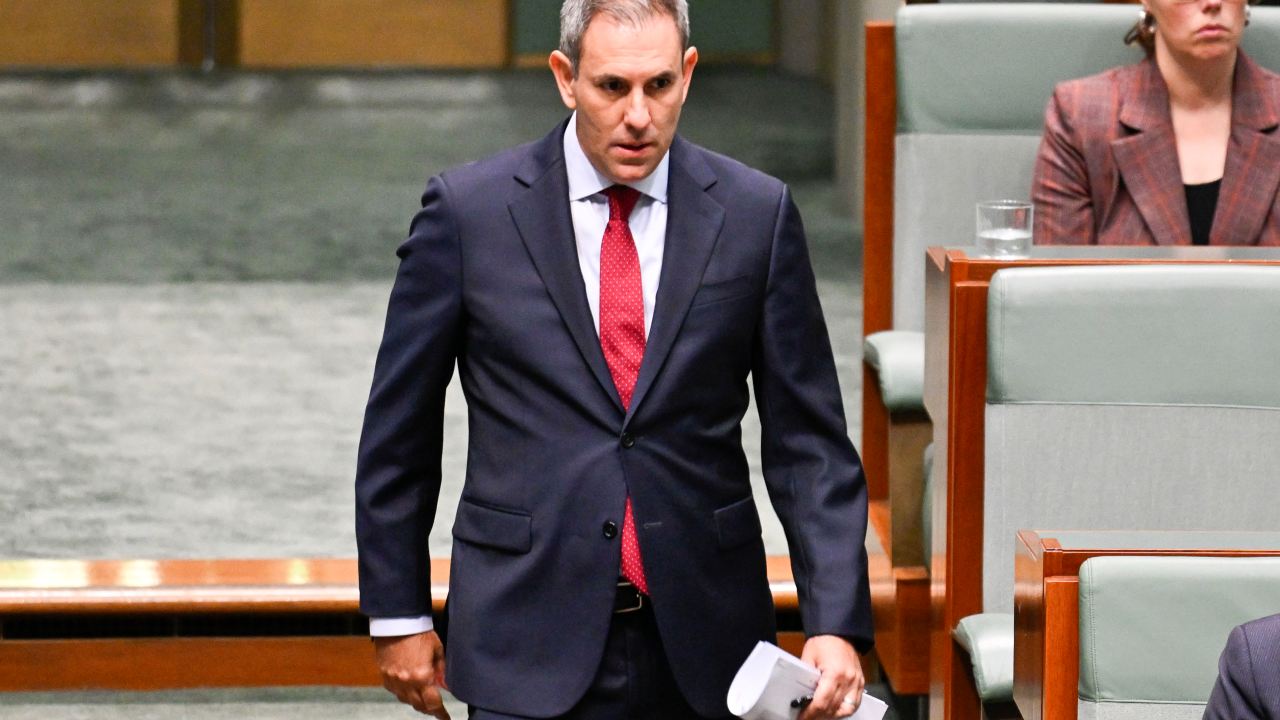
Labor’s “detrimental” massive spending agenda is “drag” on the economy and creating a “really sad time in Australian history”, a former Reserve Bank of Australia board member declared.
Roger Corbett has skewered large public spending after the central bank lifted the cash rate to 3.85 per cent and inflation soars above the 2-3 per cent target band.
It also follows RBA governor Michele Bullock admitting government spending did contribute to the latest interest rate hike, contradicting Treasurer Jim Chalmers’ claim.
Mr Corbett said the public service has “dramatically increased” at “an enormous cost” for both the budget and private sector.
“They’re spending vast money on renewables. This is a big spending government and you can’t have a big spending government and a growing economy, because aggregate demand exceeds supply and interest rates have to go up,” Mr Corbett told Sky News.
“But interest rates don’t stop government expenditure, they only stop private expenditure.
“So this is going to have a detrimental effect on our economy.
“This is really a sad time in Australian history, because we are the lucky country … we have excellent exports of commodities … at the present time you could argue the collective government is a drag on our economy.”
Outside of the Covid-era, government spending as a proportion of GDP is the highest in 30 years.
Treasury forecasts spending to GDP will hit 26.9 per cent in 2025-26.
Other criticisms of large public spending arose from former Labor cabinet minister Joel Fitzgibbon who last week said the private market was being crowded out by the government.
“Private demand has been quite constrained for many years now,” Mr Oliver told Sky News on Wednesday.
“The strength has actually come from public spending … and that has meant more demand in the economy than would otherwise be the case.”
Ms Bullock on Friday admitted during a heated House Standing Committee on Economics that government spending was a key factor of the aggregate demand driving inflation.
When asked by Liberal MP Simon Kennedy if government spending affected the bank’s decisions, Ms Bullock said: “Well, it does, as does private. It’s part of aggregate demand.”
“It does, because as you say there’s some public demand and then there’s transfers and taxes which also flow into that,” Ms Bullock said.
“It’s factual, it is not an opinion, it’s not a judgement, it is a fact. That’s all it is.”
AMP’s chief economist Shane Oliver similarly voiced “valid concerns” about capacity constraints in the economy which were “likely to keep the risk of a further rate hike”.
“The best thing government can do to help alleviate this is to lower the level of public spending,” Mr Oliver said in a statement on Tuesday.
EQ Economics’ managing director Warren Hogan said federal and state governments did not need to cut spending “wilfully and widely” to calm the economic pressures, but called for the spending to be “restrained”.
“Maybe that’ll get the job done,” Mr Hogan said.
“But if the governments of Australia do nothing, I think the RBA is going to have to take the cash rate above where it was a year ago – above 4.35 and most likely towards five (per cent) and put this economy at risk of recession.
“They have to do that though if the government of Australia will not act.”