
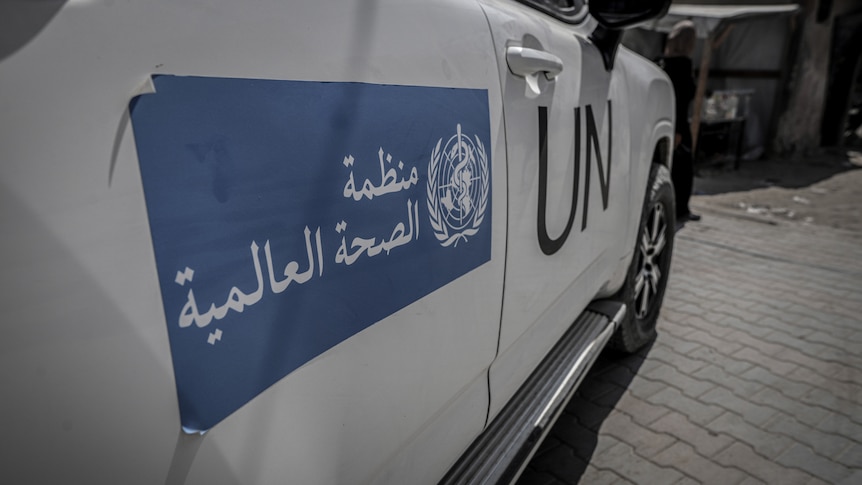
On 27 December 2025, I set off with three highly respected colleagues on flights to Amman, Jordan. All of us are Melbourne-based medical specialists, in the fields of emergency medicine, general surgery, anaesthetics and neonatology.
Our purpose was straightforward: to provide medical expertise to deliver clinical care, teaching and senior medical support in Gaza during January, to a population which has suffered immensely in recent years.
There was nothing cavalier in our approach — planning had been meticulous. We were following a path that was well-trodden by many other Australian health professionals, as delegates of an NGO which has deployed Emergency Medical Teams under the auspices of the World Health Organisation (WHO). The Department of Foreign Affairs and Trade was aware of our mission, as was the Australian Embassy in Jordan.
We had provided extensive documentation to confirm our qualifications and expertise, signed multiple disclaimers acknowledging the potential dangers of such a deployment, received a number of briefings on everything from personal security and cultural safety to trauma-informed care and resource constraints. We had accepted plans relating to our specific deployments: I was likely to have been based at Al-Shifa Hospital, the heavily damaged but still functioning principal health service in Gaza.
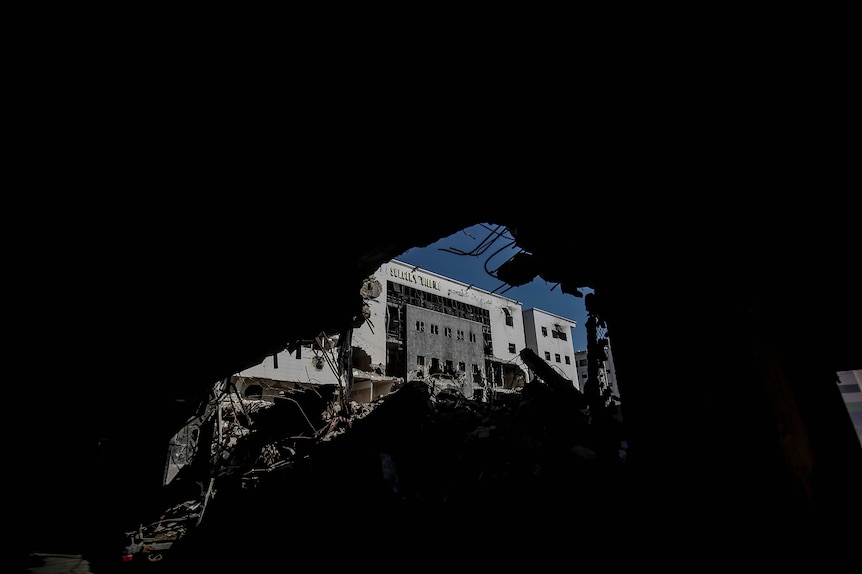
Al-Shifa Hospital in Gaza City, which suffered severe damage as a result of Israeli military attacks, on 25 December 2025. (Photo by Saeed M M T Jaras / Anadolu via Getty Images)
I learned new terminology — such as “soft-skin vehicles” and “hibernation strategy” — and was reassured to note that professionalism and ethical principles were respected in the provision of healthcare.
The briefings, despite their plain language, were confronting. An unspecified number of senior doctors in Gaza have been injured, killed and imprisoned during the conflict, or fled the destruction. Many doctors are working at levels of seniority beyond their experience as a result, and are suffering the trauma of two years of exhausting work in an environment that would harm even the most resilient.
As for resource constraints, Gaza’s health care system cannot be described as meeting even a primitive standard. Every medication is in short supply — sterile gauze to clean and dress wounds is rarely available, functional surgical and anaesthetic equipment scarce and precious. Everyday illnesses are fatal in the absence of basic drugs like antibiotics. Wounds fester and lead to septicaemia, chronic illnesses deteriorate without standard assessment and treatment.
Basic, life-saving medical supplies are being refused entry by the authorities.
Health, as we all know, is not purely based on healthcare services. It is reliant on basic factors which most of us take for granted in Australia: access to clothing and shelter, a safe water supply and adequate nutrition. None of these fundamental needs are reliable in Gaza at present. Diesel generators are almost impossible to obtain, and hospitals without electricity are severely impeded in their mission to care for the sick.
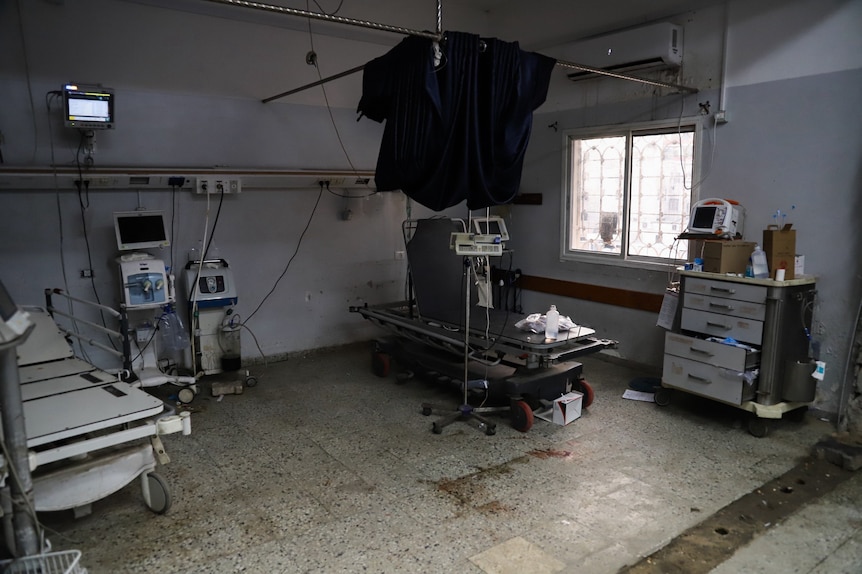
A view of Al-Shifa Hospital, left empty after medical staff and patients were forced to evacuate due to intensified Israeli attacks in Gaza City, on 24 September 2025. (Photo by Abood Abu Salama / Anadolu via Getty Images)
Having travelled over ten thousand kilometres to Amman, and liaised with Jordanian and Gazan representatives of our NGO, the WHO and the UN, we awaited the outcome of our submissions to travel — this would only be received the night before the UN convoy was due to travel. Thankfully, each of us received approval to travel to Gaza.
Before dawn the next morning, we were in the UN convoy. Travel out of Jordan was slow, but our briefings had prepared us for long periods of waiting. I was tense as we underwent the next stages of processing in our trip to Gaza. Every aspect of travel — documentation, luggage and personal effects — were more rigorously assessed than I had ever experienced. I obtained the final permit, cleared all final checkpoints, and made my way with a colleague to the next UN transport.
We were finally able to focus exclusively on our mission for the next three weeks, and it was a profound moment for me. Our objectives — caring for a population in desperate circumstances — were about to be implemented.
In my thirty-three years as a doctor, this would have to be one of the worst examples of a humanitarian crisis with which I had any professional involvement. I knew that weeks of preparation would only partially mitigate the shock of an environment I had never previously encountered.
Time passed as we waited for all UN and NGO workers to be processed. We had been told that further delays were to be expected. Then, I heard noise outside the border and customs processing centre, and noted a soldier, probably the same age as my son. He was clearly agitated — questioning UN officials, waving his hands and approaching other convoy members. He was looking for members of my NGO. On identifying ourselves to the soldier, our Australian passports were confiscated and our return to the processing area was demanded.
Want the best of Religion & Ethics delivered to your mailbox?
Sign up for our weekly newsletter.
An hour later, following immense confusion and anxiety, all four members of my medical team were compelled to board a bus back to Jordan. Only then did we realise what had just happened. The alleged infringement? One of my colleagues had a laryngoscope, airway tubes and a few intravenous cannulae in his bag. Anything defined as “life-saving equipment” was prohibited.
A prohibition on life-saving equipment. I’m not sure I will ever be able to fully absorb those words. We had been told that nothing that could be used in medical care was permitted to cross the border, as part of recently imposed changes to conditions placed upon healthcare workers. Not only was this equipment confiscated, but the authorisation of the entire team to go to Gaza was reversed.
We returned to Amman. I was devastated. My sense of moral injury and loss was overwhelming. Over the subsequent days, my colleagues and I struggled to process what has happened, and I know this will take a considerable period of time and reflection.
We have spent most of our lives honing our professional skills as doctors. We have the capacity to ease suffering and save life, and we recognise the privilege of serving those in need. We have submitted to an ethical code which recognises that all people are deserving of medical care, without any consideration beyond their dignity as human beings. And yet, we were denied access to a situation of ongoing, profound and avoidable human suffering.
However complex the geopolitical considerations of the Middle East may be, the ethical and practical considerations relating to healthcare are quite simple. In a time of darkness and destruction, small acts of kindness and care bring light and humanity, and remind us how much we have in common. The suffering of millions in Gaza must be alleviated with aid to answer basic human needs.
Until that happens, we are all diminished.
I look forward to the day when humanitarian workers can enter Gaza more easily, and provide the care that is so desperately needed.
Dr Stephen Parnis is a Senior Emergency Physician and Clinical Fellow at the Plunkett Centre for Ethics, Australian Catholic University.
Posted 4 Feb 20264 Feb 2026Wed 4 Feb 2026 at 3:03am, updated 4 Feb 20264 Feb 2026Wed 4 Feb 2026 at 3:55am