
Getty
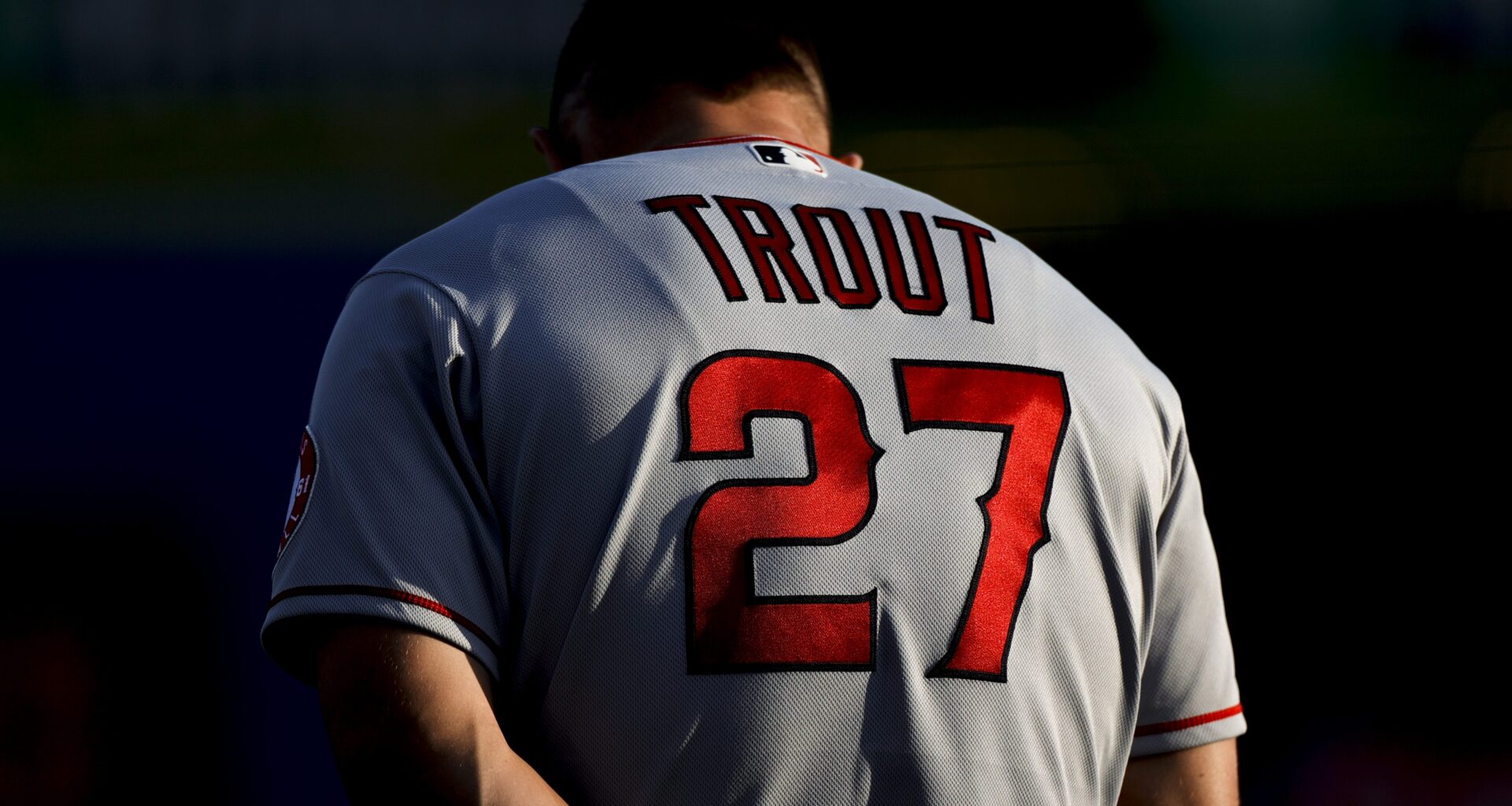
Mike Trout stands for the national anthem prior to the game against the Toronto Blue Jays at TD Ballpark on April 09, 2021.
Few professional athletes ever step off their main stage and into a completely new arena with as much ambition as Mike Trout. Known around the world for his breathtaking play in Major League Baseball, the Los Angeles Angels stalwart has turned his lifelong passion for golf into something far bigger than hobbies or weekend rounds.
He is the co-founder and driving force behind Trout National – The Reserve, his own private golf course and destination club nestled in South Jersey.
Trout National is a private 18-hole championship golf club designed by none other than Tiger Woods through his firm TGR Design. The club also includes a reversible short course, state-of-the-art practice facilities, lodging options, and world-class amenities; all set to open fully in spring 2026 after a preview period for members.
From MVP Swings to Scratch Golf Ambitions
For more than a decade, Trout has been synonymous with baseball excellence. But away from packed stadiums and highlight-reel catches, the Angels superstar has quietly poured just as much competitive energy into golf.
Trout doesn’t pretend golf comes easily, either.
“It’s a humbling sport,” Trout says. “You go out and shoot 73, 74 and then the next round, you shoot an 85… it’s a hard game and the ball isn’t even moving.”
That humility hasn’t stopped him from grinding. Trout revealed his current handicap index sits at a 2, down from a 4 after rolling in some strong rounds on his home turf. During the pandemic, he leaned fully into improvement mode.
“I played like 36 holes a day,” he said. “After [I’d be] done training and hitting baseballs in the morning, [I’d] go out there and play 36 holes and try to get better at golf.”
Much like baseball, Trout treats golf as a craft. If something went wrong during a round, he’d head straight to the range afterward to fix it. That same obsessive attention to detail now fuels his life on the fairways.
His brother Tyler Trout, who serves as project lead, summed it up best:
“Any sport you could possibly imagine, he’s just good at it. His ability to turn on and really get focused and dialed when it matters… I’ve never seen anybody else like him.”
How a Random Text Turned Into a World-Class Golf Vision
The origin story of Trout National is almost cinematic.
After an earlier attempt to purchase a course fell apart during COVID, Trout was preparing for a game when he received a text from an unknown number. Tt was drone footage of a few raw holes carved into South Jersey land.
“It caught my eye,” Trout recalled. “I texted my brother and said, ‘aye, find out about this.’”
That footage led them to developer and future business partner John Ruga, who had been building a short course for personal use. What started as a modest nine-hole idea quickly snowballed.
“It literally went from nine holes to 18 holes to public to private,” Trout said. “Then it was like, you know what, let’s just have fun with it and put everything that we want into a golf course. Now we’re here.”
Ruga immediately sensed the property’s potential.
“Before we cleared it, walking back here, you knew it had the potential to be something special,” he said. “It’s a privilege to be able to take a piece of land and do this.”
The Trout family knew they weren’t golf-industry veterans, so they leaned on elite expertise – starting with legendary designer Woods.
Inside Trout National’s $100 Million Playground
Although the course was technically ready more than a year ago, the club allowed the turf to mature through a full growing season to ensure pristine playing conditions from day one. Once members pass through the 14-foot perimeter walls, they’re immersed in what the club calls “curated luxury,” with underground tunnels guiding cars beneath fairways so sightlines and the resort-like atmosphere remain uninterrupted.
Built in Millville near the edge of the Pine Barrens, the course sits on reclaimed silica sand mines, creating natural elevation changes and sandy soil ideal for golf. When Woods and his design partner Beau Welling first walked the property, they were struck by how closely it resembled North Carolina’s famed Sandhills terrain. Landing Woods as the course architect was a surreal moment for Trout.
“He’s one of the reasons I got into golf,” Trout said. “Watching him at the Masters, watching him destroy fields – that’s what made me enjoy golf more.”
Tyler echoed that sentiment, describing Woods as shockingly approachable.
“He’s just the most down-to-earth, relatable, approachable guy you’ll ever meet. It’s wild to think Tiger Woods is like that.”
Amenities elevate the experience even further. There’s The Dugout, a baseball-inspired comfort station behind the 14th and 16th tees with stadium seating and scoreboards, plus a 7,600-square-foot performance center, a fully lit six-hole short course called The Bullpen, and a luxury clubhouse featuring a wine cellar, spa, barbershop, bowling alley, and simulator lounge. The championship course stretches to 7,519 yards but uses expansive ribbon tees to stay playable for all skill levels.
Membership is capped at just 227, a nod to Mike Trout’s No. 27, and includes elite athletes, owners, and tour players. The $100-plus million project has since become South Jersey’s largest development since Atlantic City’s boom years.
“A lot of people come up to me, just out and about, [saying] how appreciative they are with what we’re bringing to South Jersey, and building relationships is huge,” Trout said. “That’s what it’s all about. The first couple weekends have been great with the members. … building those relationships and friendships, you know, that’s what South Jersey is all about.”
Aaron’s Loop and the Heart of Trout National
Trout National carries a deeper emotional core for the Trout family.
One of the most meaningful stretches on the property is Aaron’s Loop, named in honor of Trout’s childhood friend and brother-in-law, Aaron Cox, who tragically passed away by suicide in 2018. The tribute transforms part of the course into something far more personal than scorecards and yardages.
“He was there for my first hole-in-one,” Trout shared. “We know every time we play that loop, he’s over us watching us.”
Tyler described Cox as someone who naturally drew people in.
“He just had that gravitational pull to him. Like you just wanted to be around him,” Tyler said. “So what we’re learning from the little bit we’ve been out here is this building has that pull. People are just wanting to come out here and be here. It’s very emblematic of Aaron.”
For Mike, honoring Aaron also means using his platform for something bigger than sports. He and his wife Jessica have been intentional about raising awareness around mental health, hoping the visibility of the course, and his own voice, can help spark conversations that matter.
“You never know what someone is dealing with or what people are going through,” Trout said. “If it can spark just a little bit of conversation to speak up and talk to people and get help, it’s worth it.”