
I’VE POSSIBLY written more than enough recently about the Rugby Football League’s National Community Rugby League strategy, which will take effect from early next month.
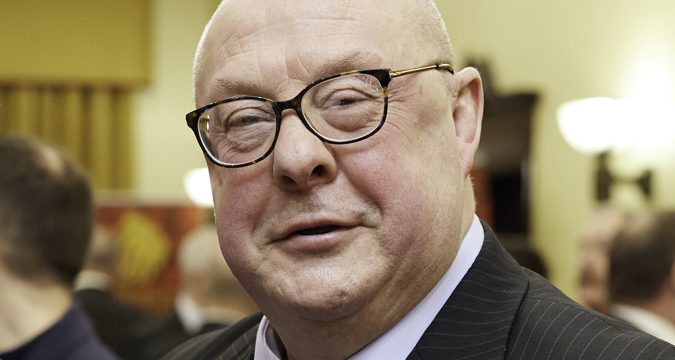
I’ve strived to adopt a neutral stance, and bearing that in mind, I’m handing over this week’s ‘Talking Grassroots’ to former League Express columnist and old friend Garry Schofield OBE, largely at his request.
Schoey and I have a few things in common. We’re south Leeds lads and we both have strong connections with the local amateur scene, having played in the area.
The similarities pretty much stop there, though. Garry and I both spent a lot of time on the field of play but although I was mediocre (at best), although keen, Schoey was world-class – and keener.
Whereas my ‘career’, if that’s the right word, involved a decade at open-age level with the Middleton Arms and White Hart after less-than-memorable stints with the Under 17 teams at Market District and Hunslet, Garry progressed from the all-conquering Hunslet Parkside club – and the captaincy of the BARLA Great Britain Under 19 side who blitzed hosts New Zealand in 1983 – to enjoy a stellar professional career with, primarily, such as Hull, Balmain and Leeds.
And he shares, with Mick Sullivan, the honour of having earned a record 46 Great Britain caps.
So the great man’s views, especially at what is surely a pivotal time for amateur Rugby League (and therefore for the professional game) in this country are, without question, worth listening to.
Over to you, Schoey…
“I’m sending out this message because I care so deeply about BARLA and, by extension, the sport of Rugby League.
“If a bicycle chain isn’t broken, why try to fix it?
“Without BARLA, I and thousands of others would not have become professional Rugby League players. We all owe BARLA, whether we became stellar stars, honest professionals, top amateurs or simply blokes who enjoyed playing on park pitches.
“Tom Keaveney MBE, Jack Clayton, Alan Beale, Alan Gibb, Maurice Oldroyd and others such as Alan Parker – and, latterly, Mick Turner – were giants of Rugby League. Similar men of high calibre included the Cumbrian Jackie Reid and Kenny Everson, from Featherstone.
“Their ethos (and BARLA’s) was to pit the best against the best, and it was the same at schools’ level.
“Under BARLA, an initial target for players was to be selected by their District League. You’d have teams like Hull, St Helens, Wigan and Leeds playing against each other and if you showed that you were good enough at that level, you could earn selection for your county – Cumbria, Lancashire or, in my case, Yorkshire.
“In turn, those who impressed most in the County Championship could get picked to play for Great Britain, whether at home or on foreign soil which, shortly before my time but following the launch of BARLA, exploded from just France to the southern hemisphere, to countries like Australia, New Zealand and Papua New Guinea.
“That was a real carrot for ambitious young players, and a real reason why so many of us didn’t sign for professional clubs as soon as we were old enough.
“Every single player in the BARLA Great Britain Under 19 squad who toured New Zealand under my captaincy in 1983 said that they would not sign professional terms until the tour was over.
“I can tell you that, of that very successful British side, 23 of the 26 lads became successful professional players. Six went on to play for the full Yorkshire team and another six of us for the full Great Britain side.
“If that’s not massive confirmation of how BARLA provided for the professional game, I don’t know what is.
“In response, the Rugby Football League established Colts rugby, for Under 17s and Under 19s, but there really wasn’t any need for it. In my view, it was motivated by an irrational hatred of BARLA.
‘Why should the amateur game be run more professionally than us?’ seemed to be their thinking.
“BARLA’s tried, tested and proven pathway was successful but it’s been destroyed by the RFL, especially through Scholarships and Academies, which simply haven’t worked.
“Professional clubs get their players, including those who sign for Scholarship or Academy teams, from BARLA clubs and then they’re often over-coached.
“Hunslet Parkside were my first club, at the age of twelve, and I also played at school of course, although these days there’d be no ‘of course’ about it.
“Back then there were 19 Rugby League-playing schools in south Leeds and many, if not most, ran two teams. Do you want to know how many there are now? Well, I’ll tell you – precisely none.
“My school was Clapgate, where Harry Jepson, who was the secretary of Hunslet and later Leeds Rhinos, was the deputy head.
“Harry was an out-and-out Rugby League man and wouldn’t allow soccer in his school – not even in the playground.
“But most schools in Humberside, Yorkshire, Lancashire and Cumbria don’t now play Rugby League, it’s not just in Hunslet. It’s a massive issue.
“When you talk about British talent coming through. you have to think about the supply line, and that starts with our amateur clubs.
“Unfortunately too many kids who join Scholarship teams are promised (or think they’ve been promised) the earth but are sadly left heartbroken when they’re told they’re not good enough. They become disillusioned, don’t go back to their amateur clubs, and all too often, are lost to the game.
“But the biggest mistake that’s been made was the move to summer. Players are less likely to be available because of things like holidays, weddings, stag dos, festivals and family events. Summer rugby was touted as the right move but I’m sorry – it’s been a disaster.
“I see that the other week the guy in charge of the restructuring at the RFL, Martin Coyd OBE, said: ‘We are the governing body.’
“Well, let me tell Mr Coyd, you can govern what’s supposed to be the professional game, but leave the amateur game alone – you’re destroying it.
“The RFL should give the amateur game back to BARLA and let them run it. The BARLA system, between 1973 and 2004, produced far more – and better quality – players than the RFL has done since.
“For example, Alan Gibb was a fine coach for Yorkshire. He’d say to players, ‘you’ve been picked for a reason, just show your qualities’. And Frank Stanton, the Balmain coach who only a year earlier had been at the helm with Australia’s superb 1982 tourists, simply told me when I joined the Tigers: ‘You’re here to score tries, you have a free rein.’ That was music to my teenage ears.
“The BARLA system was the best system for everyone – including for the pros – and a key fact was that under BARLA, everyone was a volunteer, other than a small number of office staff under Maurice Oldroyd.
“Everybody was pulling in the right direction, for the good of the game. Now players have to pay annual subscriptions to help fund the RFL’s administrative staff.
“It’s important to remember that Ellery Hanley, Andy Gregory, Shaun Edwards, Adrian Morley, Andy Farrell, Paul Sculthorpe and I were all former BARLA boys who were Hall of Fame members when the RFL took over the running of the amateur game in 2004.
“There shouldn’t be a Hall of Fame member since 2004 as they haven’t been good enough.
“Rugby League has been my life for 52 years, through Clapgate school, Parkside High School, Hunslet Parkside, BARLA Great Britain and my professional clubs.
“I’ve loved Rugby League for many years but I’m no longer in love with the sport, which is heartbreaking. Hopefully this will not – because of our ‘governing body’ the RFL – be the death of amateur Rugby League.”
Those are the thoughts of Garry Schofield OBE. Here, meanwhile, are the concerns of a grassroots stalwart (like many, he has asked to remain anonymous): “I believe that in between five or ten years the amateur game as we know it will look bleak.
“There will be no open-age leagues or players, with the governing body focussing on youth and junior leagues for players to go into Super League clubs.
“I believe there will be no semi- professional leagues beyond that tier, and beyond Women’s Super League, there will be no women’s amateur leagues or teams as the governing body will focus on girls’ progression to Women’s Super League.”
Cumberland Amateur Rugby League emergency meeting amid NCRLFamous amateur club Queens to return for good causeTalking Grassroots: Confusion reigns ahead of NCRL kick-offPennine League’s long history comes to an end – with postponementWomen’s Amateur Rugby League competition to end after more than 40 years