
For some time, up until last year’s Six Nations, a stirring victory over Ireland in 2024 represented England’s most significant win under Steve Borthwick. Sealed by Marcus Smith’s last-gasp drop-goal, it was the result that hinted at the side’s potential — and was doing some heavy lifting in that regard.
Way before a gripping climax led to Smith’s strike, George Furbank set the tone. In the fourth minute, after Jack Crowley had put the visiting team 3-0 up at Twickenham, the England full back gathered a long clearance from James Lowe and speared diagonally into opposition territory. Furbank whipped a pass to Tommy Freeman, who was lined up by Calvin Nash.
However, the latter came off much worse in a shuddering collision. That deprived Ireland of a right wing and Furbank identified the space, ghosting to the outside shoulder of George Ford and delivering a deft take-and-give that freed Henry Slade. England poured down the touchline and Ollie Lawrence dived over.
Furbank’s afternoon was not without errors. However, with England trailing 17-8 in the second half, he glided over himself from another slick kick return. His finish sparked a morale-boosting comeback and appeared to rubber-stamp Furbank’s second coming, paving the way for him to become a regular starter.
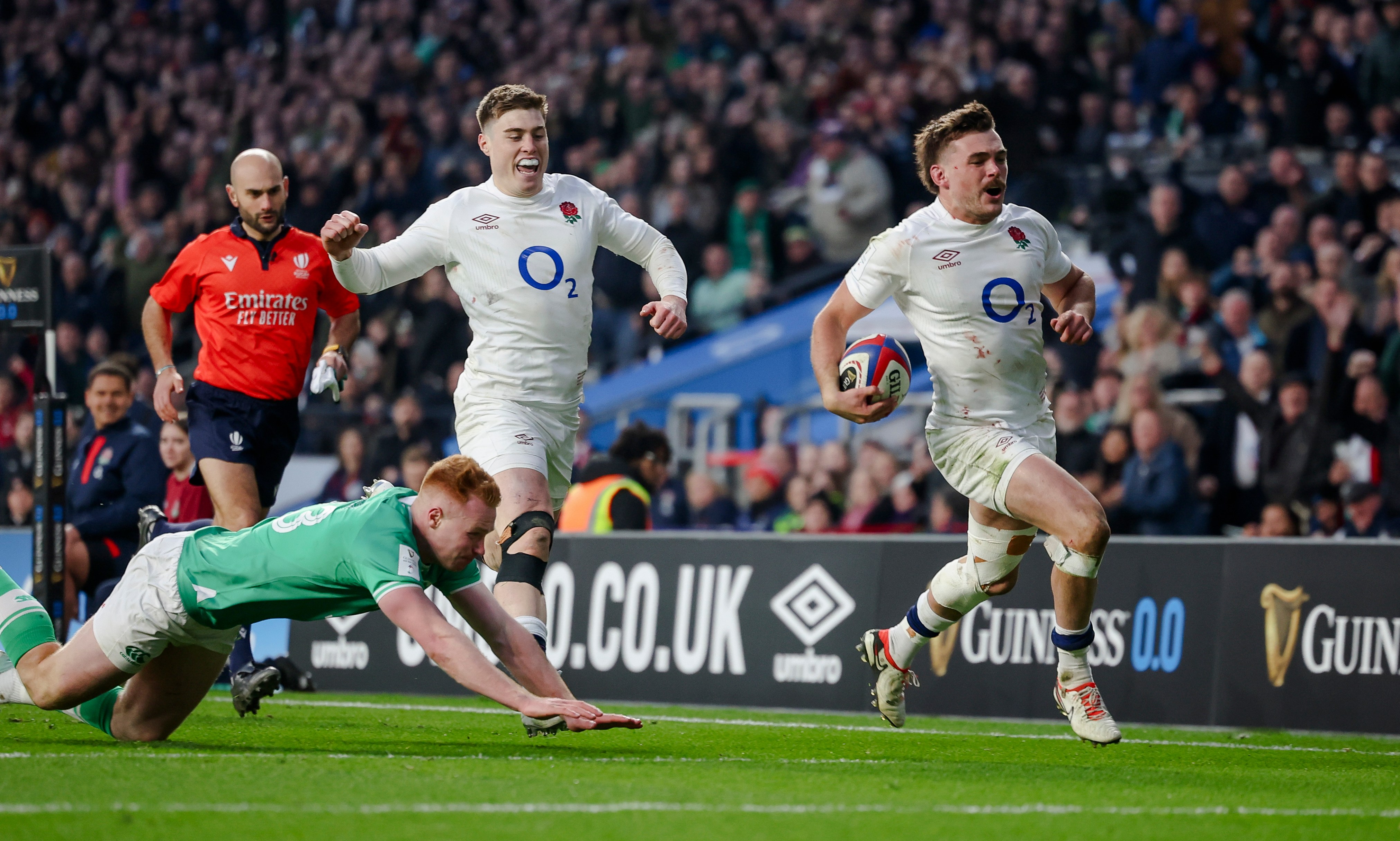
Furbank helped to spark England’s comeback against Ireland during the 2024 Six Nations
TIMES PHOTOGRAPHER MARC ASPLAND
It has not proved to be that simple, however. The next weekend in Lyon, Furbank lasted six minutes against France before limping off. He faced Japan and New Zealand that summer, yet missed the second Test against the All Blacks. Three starts in November 2024 constitute the most recent of his 14 caps. This is despite the award of a central enhanced Elite Player Squad (EPS) contract six months ago, demonstrating how highly the England coaches rate him.
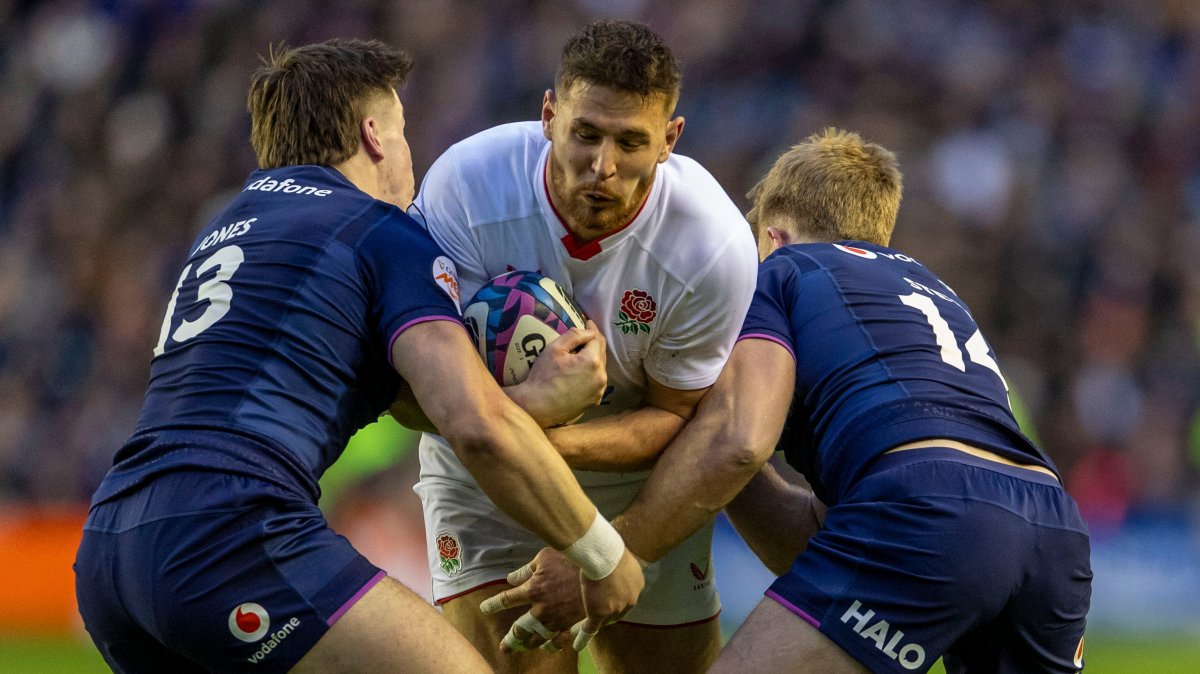
As ailments continue to frustrate Furbank before another meeting with Ireland, one of Borthwick’s keynote selections is to retain Freddie Steward at full back. Given that England lost the aerial battle in their 31-20 defeat at Murrayfield last Saturday, this seems like a firm show of faith. Tom Roebuck appears to have carried the can, with Tommy Freeman shifting to the right wing and Henry Arundell occupying the left.
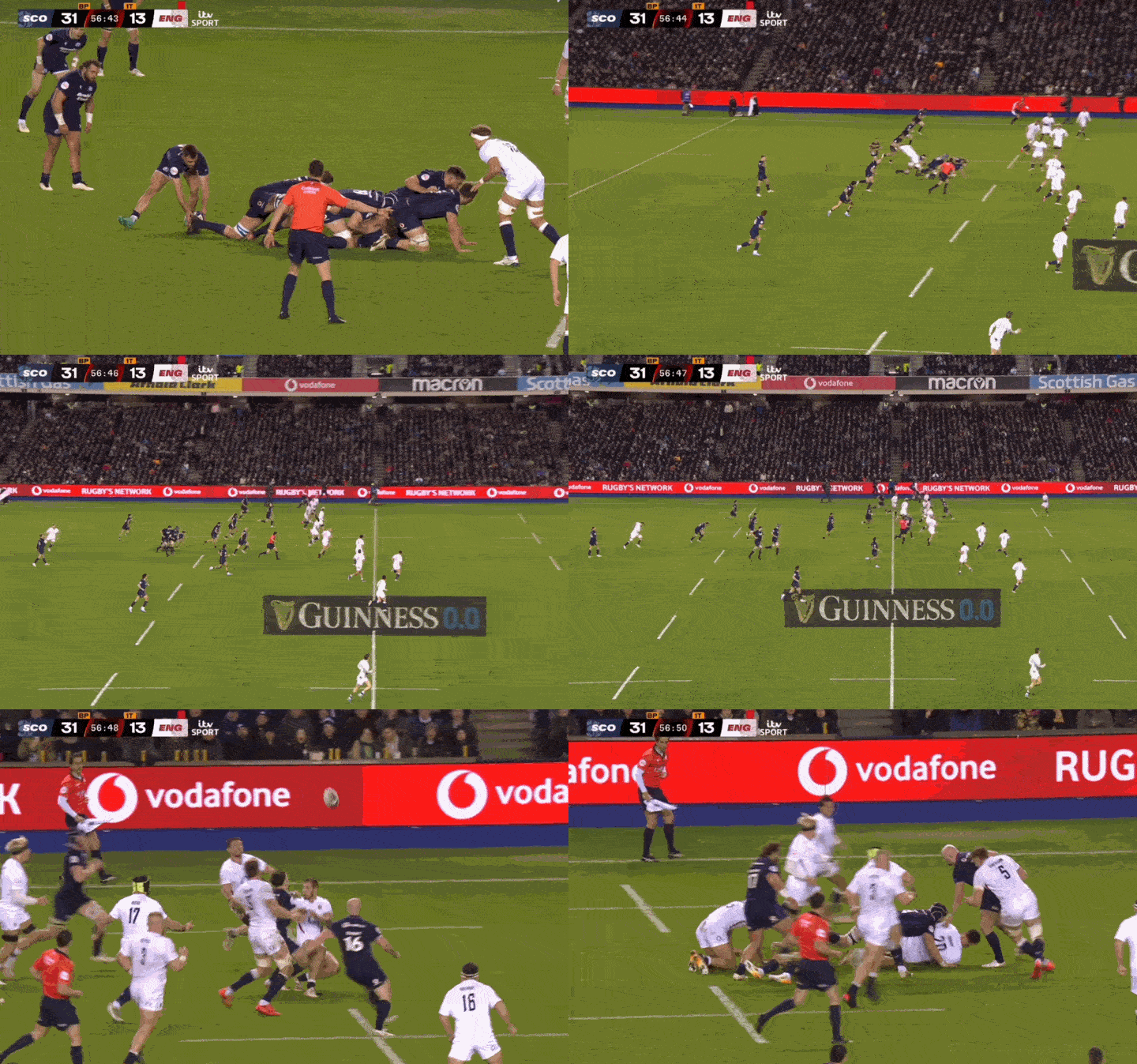
Steward’s big asset is his courage and commitment under the high ball. While the crackdown on escorting should theoretically enhance the value of this asset, aerial contests are now so much of a lottery that clean catches are rare. Take this one against Scotland from Ben White’s box-kick.
Jamie Dobie swims through white shirts to climb against Steward and knocks on. A retreating Tom Curry snaffles possession for England.
According to Opta, Steward completed 138 of 158 defensive catch attempts (87.3 per cent) in Test matches before it became illegal to form a “glove” of retreating team-mates around a player in the backfield.
Since November 2024, when chasers needed to be granted access to catchers, that figure has dropped to 39 in 56 attempts (69.6 per cent). Now, this figure will probably look worse because of Steward’s bravery. He is willing to hurdle over bodies to address high balls. Albeit from a smaller sample size, Marcus Smith (26 catches from 32 attempts) has a superior rate of 81.3 per cent when starting at full back for England.
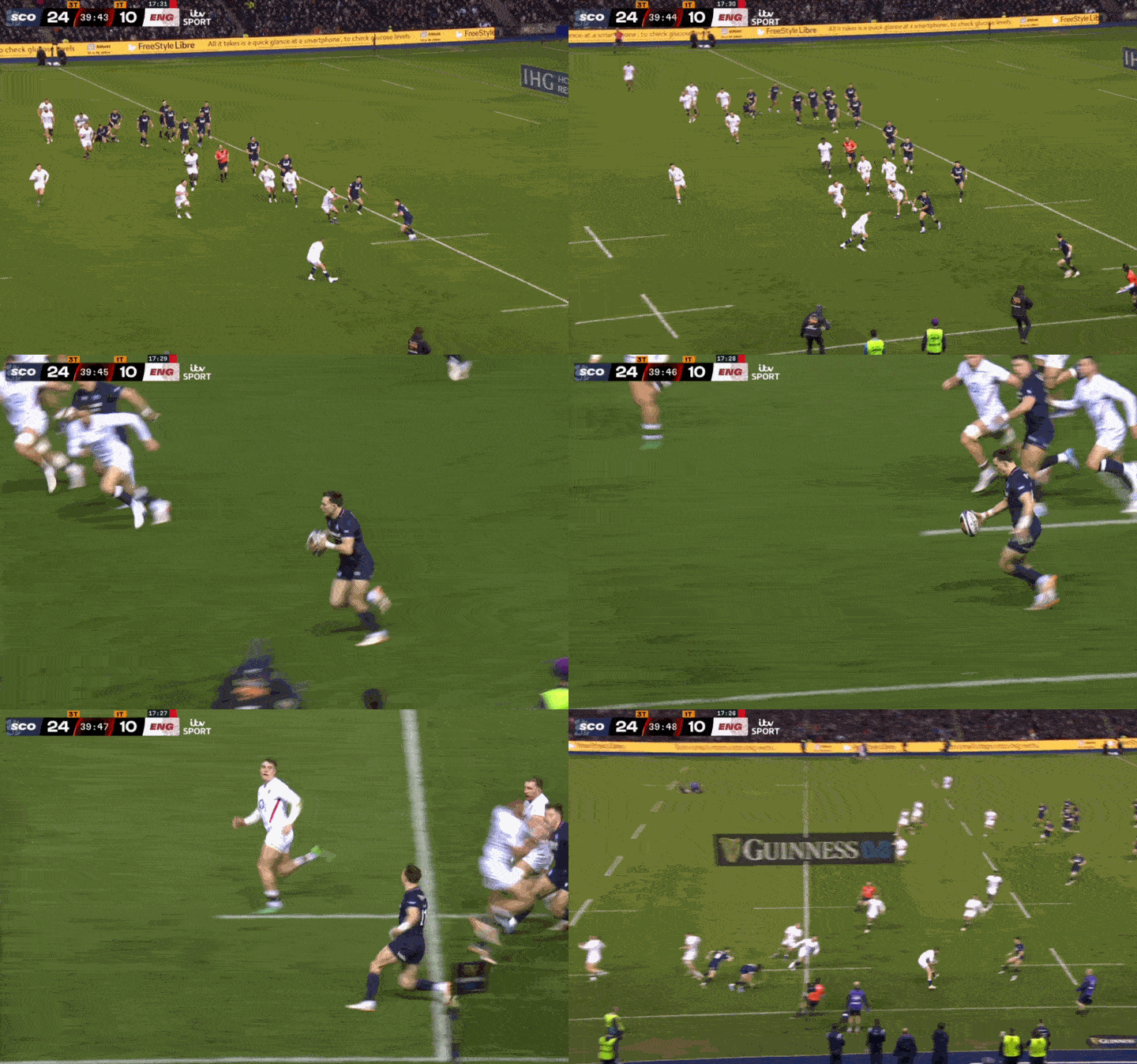
As they have done with alarming regularity over the past eight years, Scotland scrambled England’s senses with their expansive attacking game — especially while Arundell was off the field. In this example, which could have been attributable to misguided communication from someone in front of him, Steward swings around to join the far side of the defensive line rather than the near side that Scotland eventually play towards.
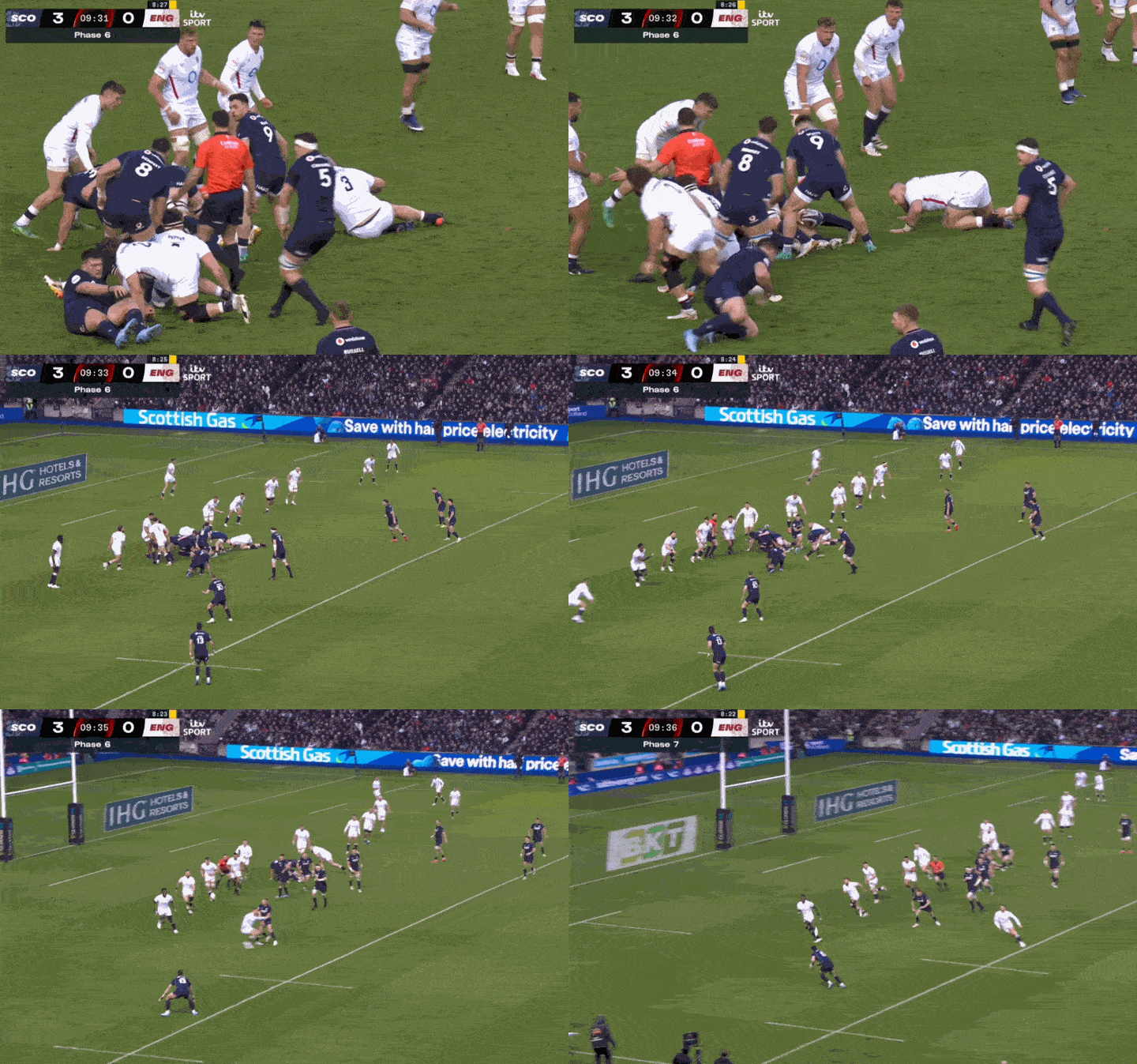
As difficult as it is to defend with 14 men, and even if it was unlikely that Steward would have stopped Huw Jones after a flick-on from Finn Russell, he will reflect on a misstep.
There were impressive interventions as well, such as this overhead catch from Dobie’s chip.
Ireland set up fewer aerial duels against Italy on Saturday than they did in Paris a week earlier, preferring to cycle through phases in their second game of the Six Nations. Having selected an ultra-mobile back row of Tom Curry, Henry Pollock and Ben Earl for this weekend’s match at Twickenham, England will not mind if the visiting team keep the ball in their own half.
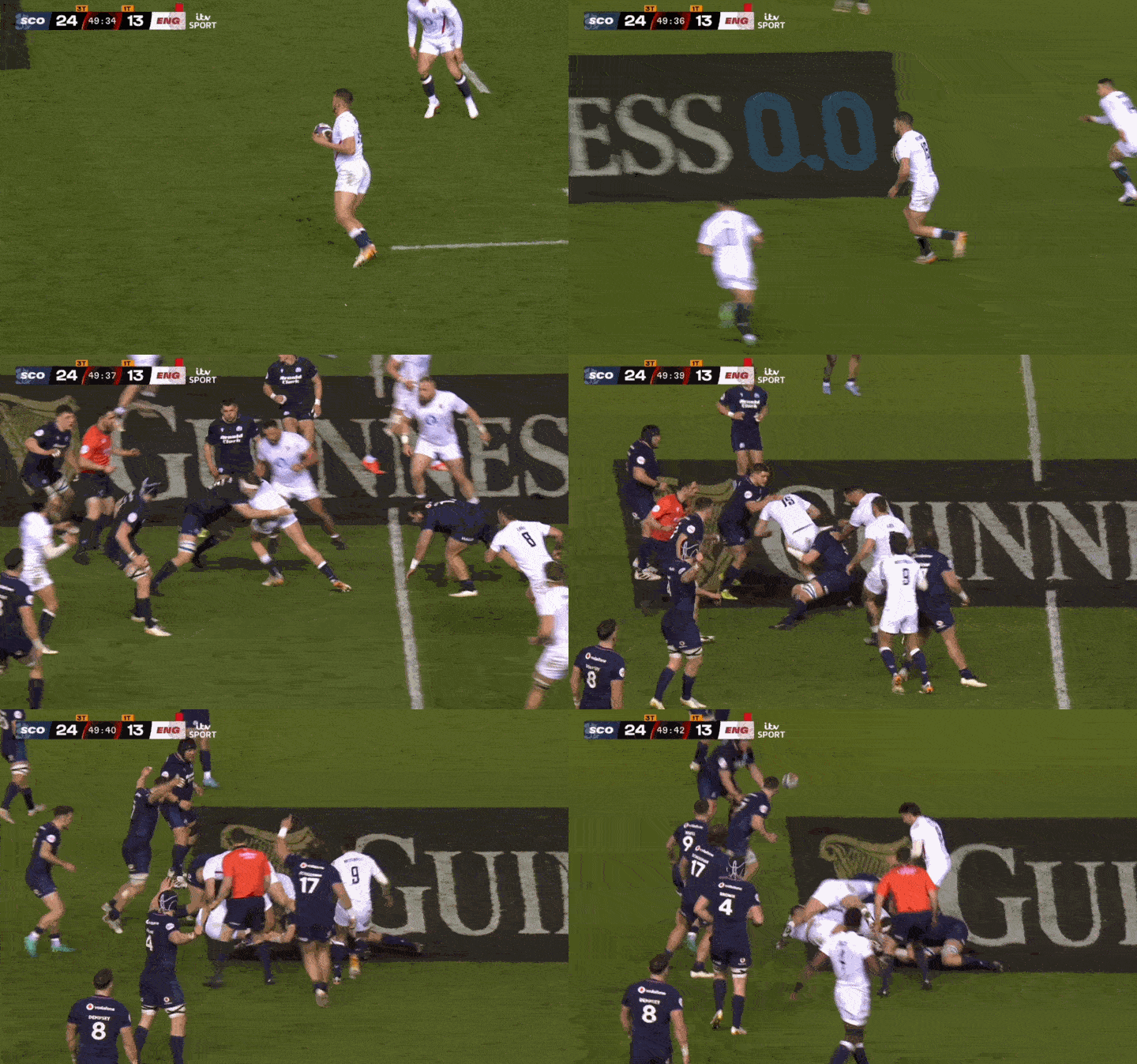
Steward, who does not have an enhanced EPS contract and is yet to beat Ireland in four attempts, has flitted in and out of Borthwick’s preferred line-up. He must be secure when Andy Farrell’s players do go to the air, and decisive when running the ball back if and when Ireland kick long. He did cough up this turnover from the backfield at Murrayfield, when George Turner burrowed in.
Keeping his balance to fight through contact will be a priority. Steward has ten Test tries in 43 caps and can be a hefty carrier. When he stays too upright, as he did early on at Murrayfield before being held up by Kyle Steyn and Jones, he becomes an easier target.
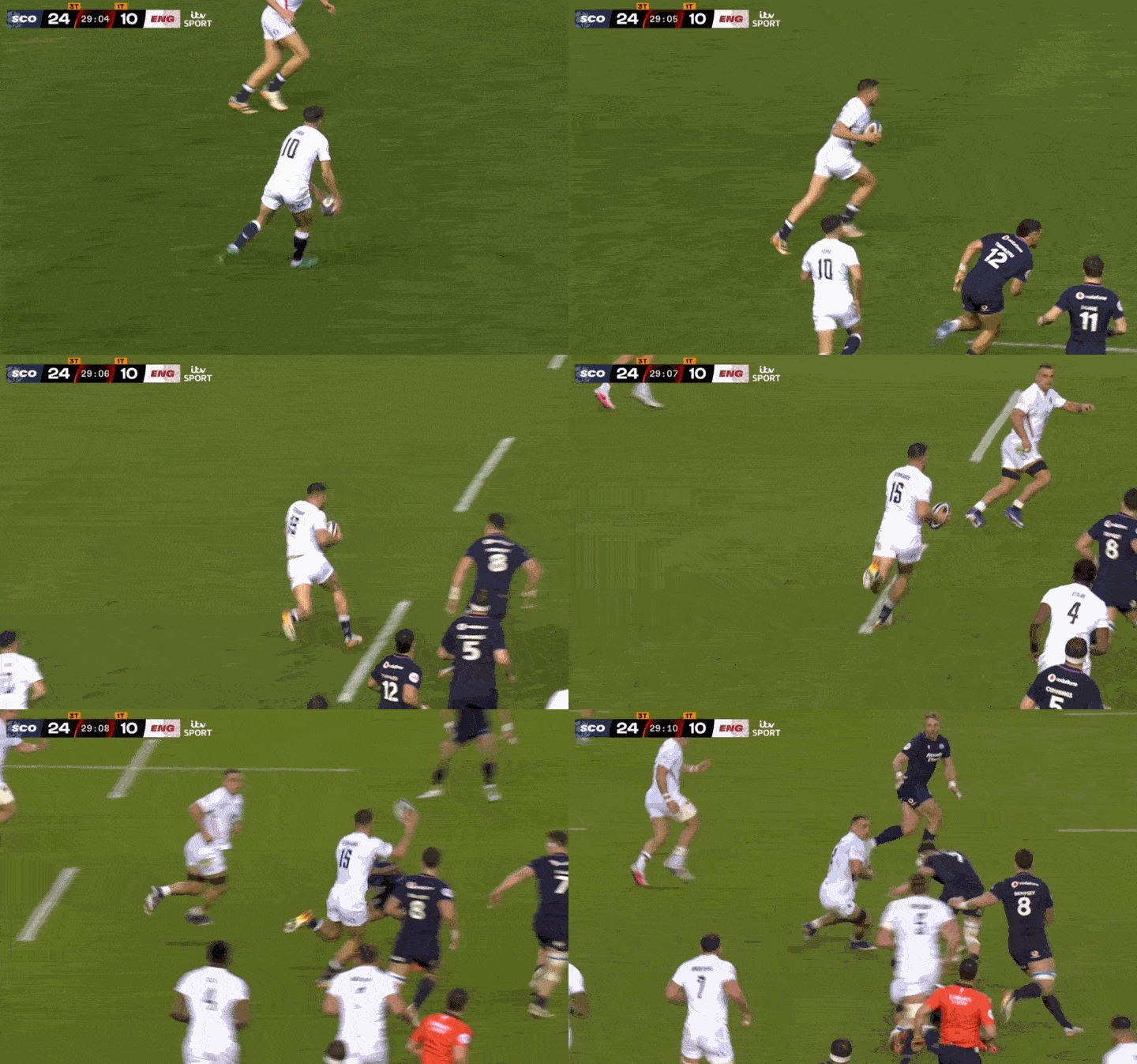
There have been flashes of more effective and creative link play from Steward, even if the 25-year-old will never be an electric speedster. This flipped pass to Earl kept a counter alive.
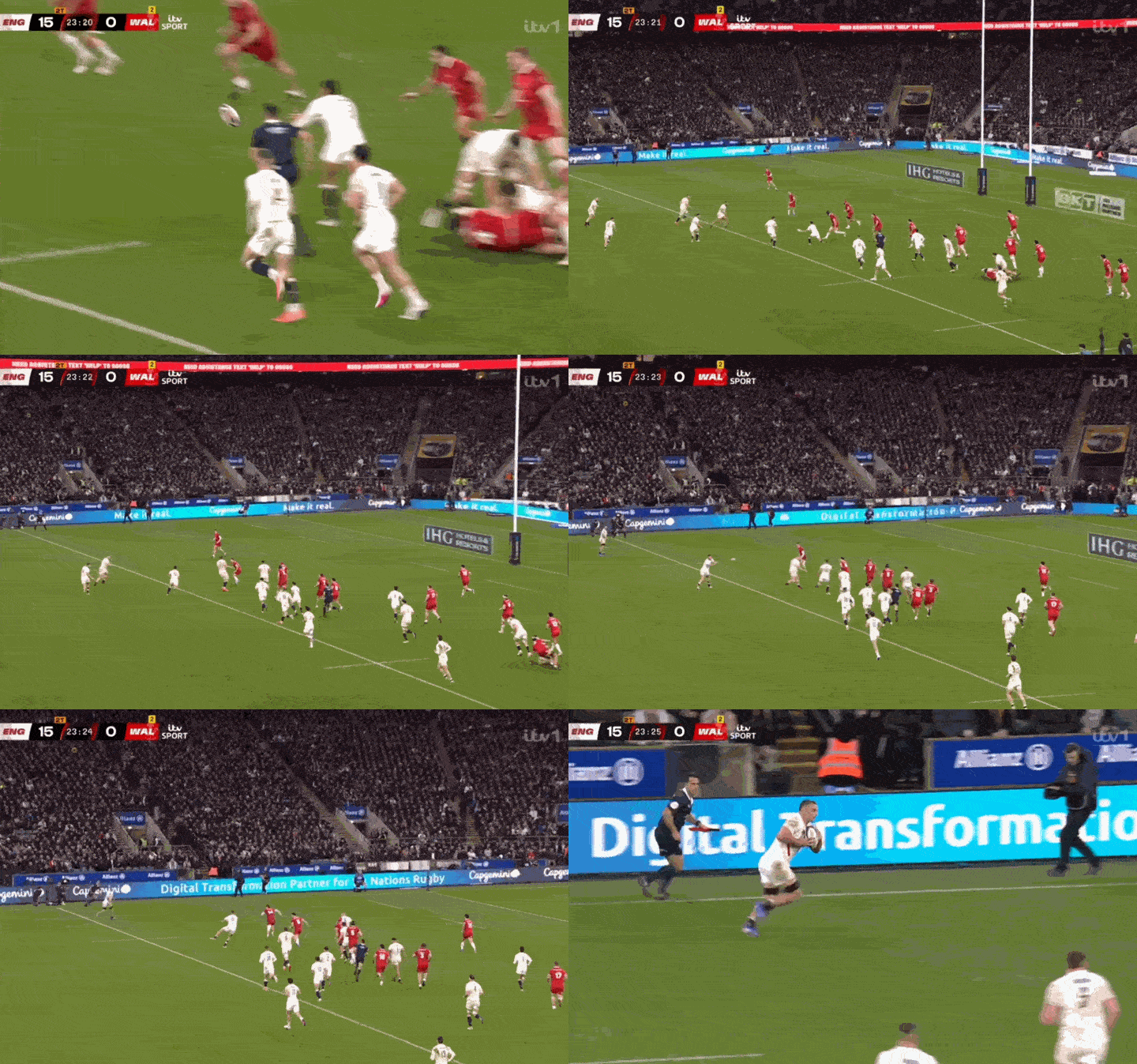
Against Wales, he transferred the ball to Earl neatly for a first-half try. You can see Steward close to the breakdown on this phase, circling around into a deeper position.
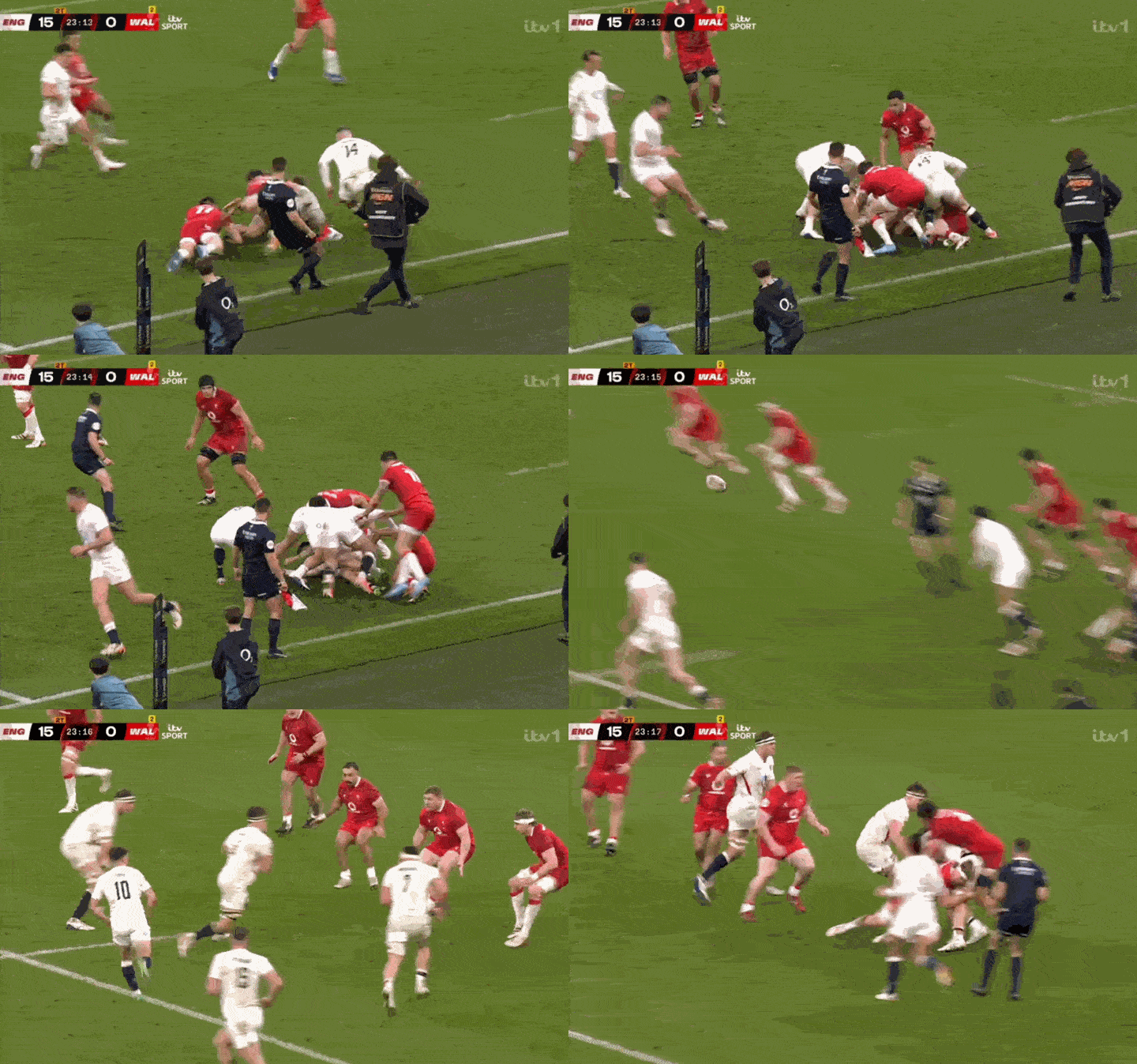
When the camera pans out, we can appreciate the importance of work off the ball as Steward ends travels from the near touchline across to the opposite 15-metre channel to release Earl.
As Ollie Lawrence returns at outside centre to add punch and team up with Fraser Dingwall, the secondary distributor, in midfield, expect Freeman to roam off his wing into the middle of the pitch. Pollock will be asked to have plenty of touches and will occasionally migrate to the wide channels when England are in possession, with Arundell also offering pace on the flank.
Furbank was fit and available, but perhaps his inclusion would have brought one change too many, and he is extremely light on game time anyway. Borthwick seems to view Marcus Smith primarily as a potential full back these days, rather than a fly half, meaning the Harlequins player could replace Steward — as he did against New Zealand in November — if England need to chase the game again or present different challenges.
Steward’s role is to help lay the foundations for an accurate, assured team performance. A second consecutive loss would undo more of the goodwill earned by England’s 12 straight Test victories. Borthwick is backing Steward to regain some impetus.
England v Ireland
Guinness Six Nations
Saturday, 2.10pm
Live on ITV 1