
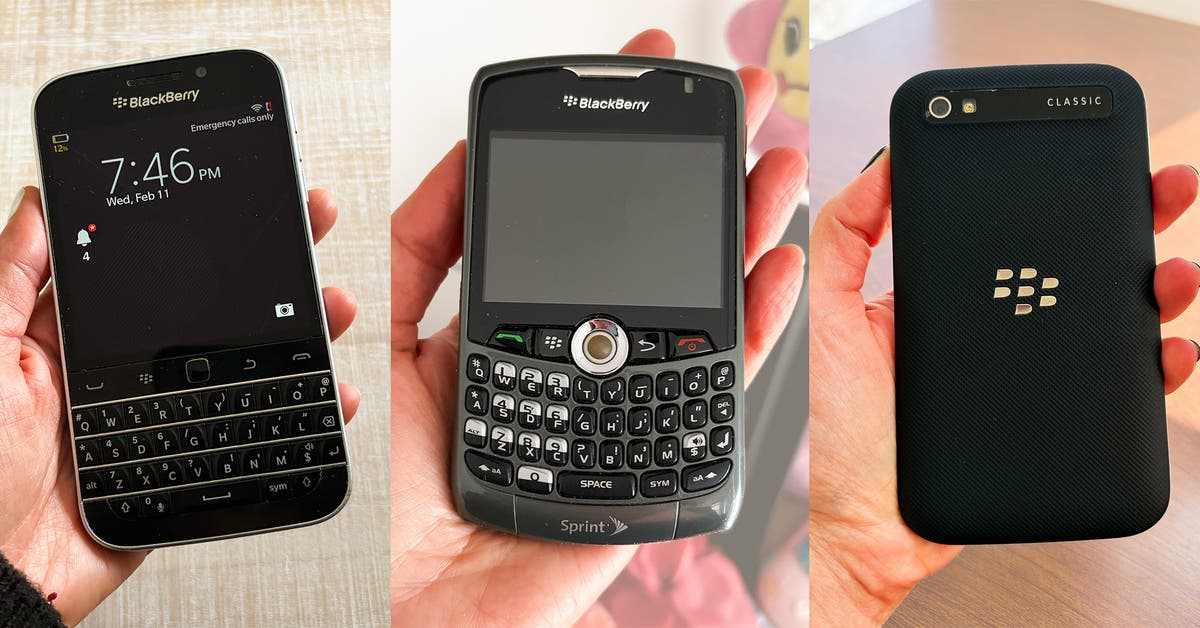
My BlackBerry Curve is compatible only with 3G networks, which were deactivated years ago. That … wasn’t going to work for me. So I turned to eBay, where I discovered that many old BlackBerrys are being sold as collector’s items rather than functioning devices.
I asked cellular network security expert David Burgess what to look for when buying an old phone. A SIM card for a modern-day 4G or 5G phone will work with a 2G-compatible BlackBerry, he said, but 5G, the current standard, doesn’t really play nice with 2G.
“As 5G continues to roll out, the 2G networks will eventually have to disappear, because there’ll be no convenient way to run 2G and 5G networks at the same time and have them work in a seamless way that gives people an equal service,” Burgess said. “So [2G] will eventually disappear, which is intentional.”
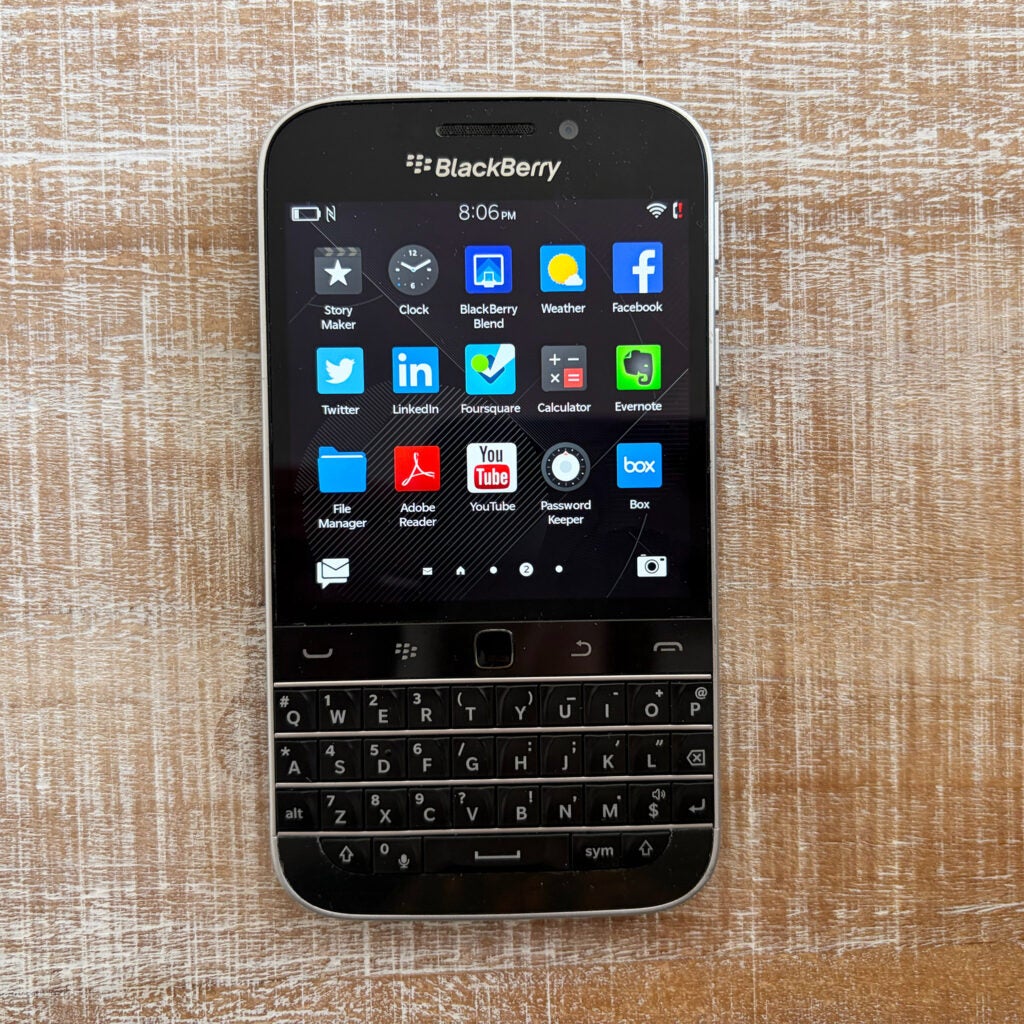
If you want to purchase a BlackBerry secondhand, I suggest the BlackBerry Classic Q20 with 4G LTE, which was popular around 2015. It still delivers high-speed data and, unlike 2G and 3G handsets, plays nice with 5G. With my 3G BlackBerry Curve out of commission, I ended up testing the Classic Q20 instead.
 Brenda Stolyar/NYT Wirecutter
But carrier connectivity isn’t all you have to worry about.
BlackBerry closed its app store in 2019 and shut down its servers in 2022. As a result, any devices running its services via cellular networks or Wi-Fi can’t receive or send text messages, call emergency services, download and run native apps, or receive over-the-air updates.
There are workarounds. If you have a BlackBerry that’s compatible with 4G, your current SIM card should be able to work properly with the device. You can also download apps — technically. But it requires whole a lot of patience.
I attempted to sideload apps on my computer and then upload them to the BlackBerry via an SD card. This wasn’t easy. After a ton of troubleshooting, I figured out that I needed a 16 GB microSD card (I found that anything larger was incompatible with the phone), a microSD card reader, and a laptop.
I relied heavily on the ProjectBerry 2.0 YouTube channel, which offers tutorials on how to sideload apps to BlackBerry OS 10 devices, along with links to Android Package Kit (APK) files for different apps that you can download and install to your device outside the Google Play store. I found that the easiest way to do this was to download the APK, drag it onto the SD card while it’s plugged into the card reader, and then insert the SD card into the phone and hope the apps show up. (If you’re already overwhelmed, I understand.)
That’s a lot of effort to get a phone to work, but I had to see it through. I managed to download Instagram Lite and Google Maps, but they didn’t work well.
Instagram Lite allowed me to scroll through my feed, but I couldn’t post to my grid or stories — whenever I’d try, it would freeze on a black screen, and I’d have to force-quit the app.
If you’re using a BlackBerry to cut down on screen time, this is probably a good thing.
But I need a phone to have Google Maps functionality, and it was wonky when I used it on the BlackBerry. I could access walking or driving directions, but I’d receive an error message for subway lines near me.
Both apps would also crash often, forcing me to restart the phone.
Between the amount of work it took to download the apps to the phone and the fact that they didn’t function well, the conclusion was obvious: I couldn’t confidently switch over to the BlackBerry as my primary device.
When I began this experiment, I had told myself that I would be just fine with access to calls, texts, Google Maps, and my banking app. But the idea of these apps’ crashing on me while I was out, with no access to Wi-Fi or a secondary phone with proper connectivity, was enough to keep me from even attempting to make the full switch.
Using old devices also involves a number of security issues.
They’re easier to hack than modern-day phones because of how advanced attacks have become, and they no longer receive software or security updates to patch their vulnerabilities. Attackers probably wouldn’t even try, cybersecurity expert Chet Wisniewski told me. But if you’re a high-profile person whose data hackers would salivate over, using an old BlackBerry probably isn’t a good idea.