
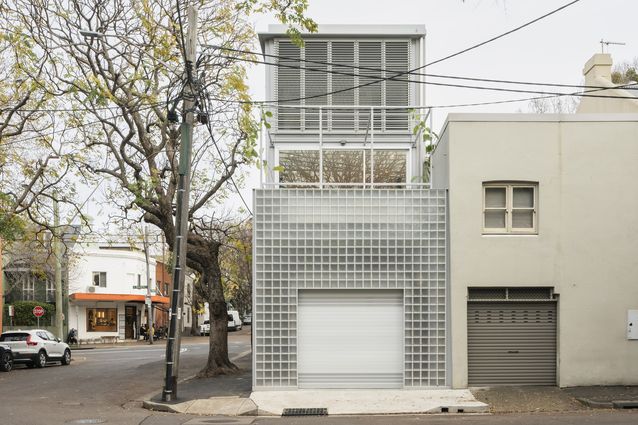
One objective of good architecture is to design a beautiful place, rather than to simply make a beautiful object. Architecture is not inhabited sculpture – it is a complex response to social and economic factors, and it is a response to history and to context. The Corner Store by Ian Moore Architects is a project that has the objective of responding to, and contributing to, the city – as it was, as it is and as it will be.
The site is on Gadigal Country in Surry Hills, an inner-city suburb of Sydney. The existing building started as a pub in 1869 – the Moore Park Hotel, later the Royal George Hotel. It was converted to a fruit and veg shop in 1922 and in the 1960s became a corner grocery shop that closed permanently during the COVID-19 pandemic.
View gallery
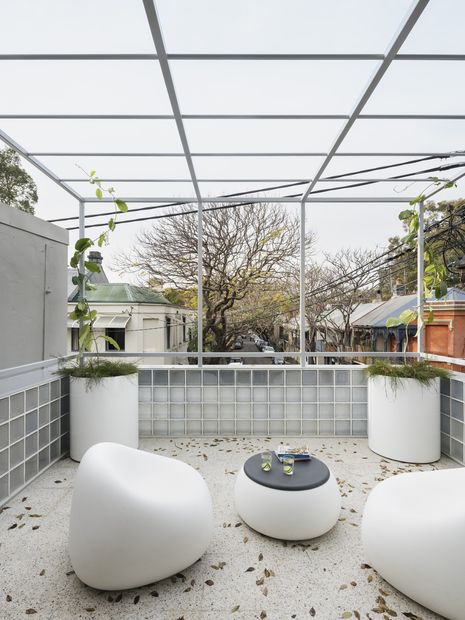
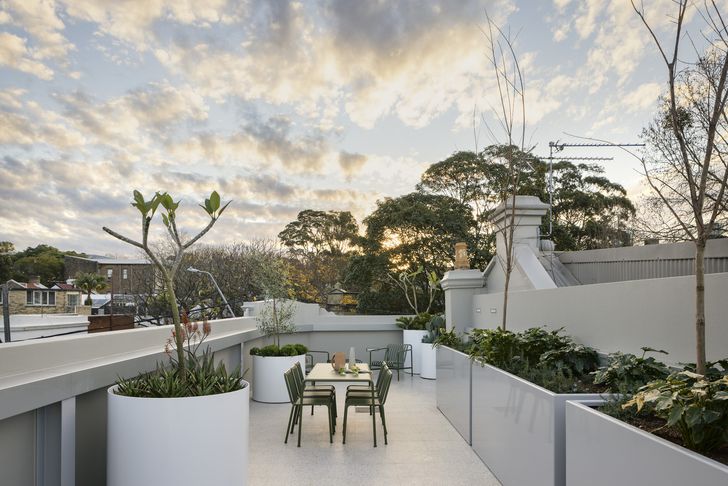
Cities are subject to change, and the alterations designed by Ian Moore Architects recognise this. Initial plans proposed commercial gallery and studio spaces at street level with a two-level residence above. Council rejected the extent of the third level and the provision of commercial space on the ground level, despite the latter’s reflection of the history of the site. The final plans were for a residence spread over all three levels, occupying the entire site except for a courtyard cut into the centre of the plan. There is a terrace above the garage at the rear, and a substantial roof terrace, which is uncommon in inner-city Sydney.
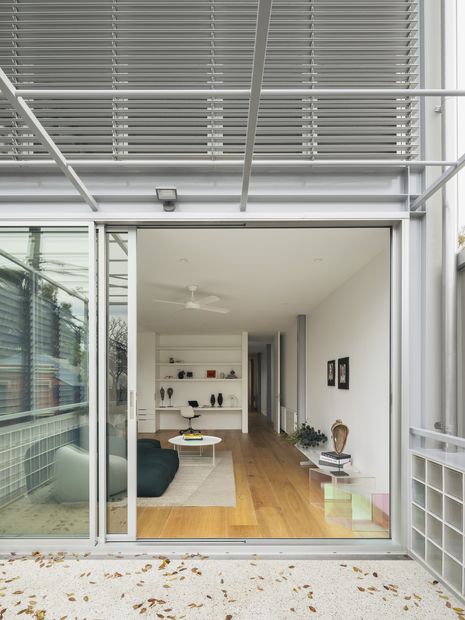
It was important to recognise the cultural history of the place – something the first scheme proposed to achieve in part by keeping commercial spaces at street level. Nonetheless, the plan is sufficiently flexible to allow changes in patterns of use over decades, as occupant needs change. Rather than making bespoke spaces for particular uses and for particular occupants, the plan is simply divided into smaller, enclosed spaces and larger, open spaces. The building would not require significant alterations to respond to change.
View gallery
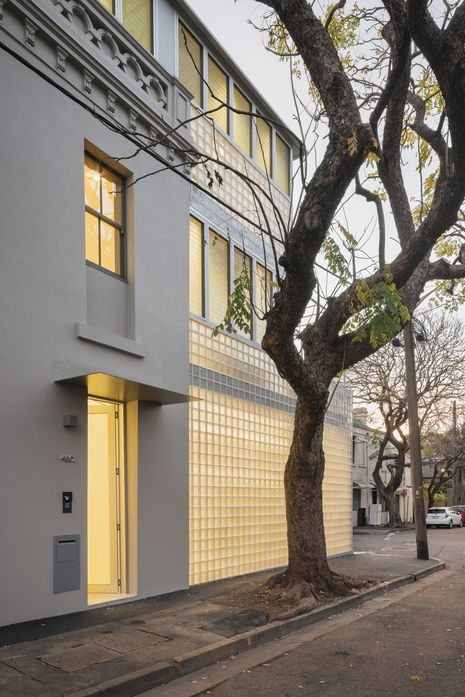
Retaining significant fabric was complicated as the facade had broken away from the cross walls and was leaning as much as 30 centimetres into the street. This was stabilised with a delicately inserted steel portal frame that remains internally visible.
New work is clearly differentiated with glass block walls that enclose the garage and rise to form a balustrade to the terrace above. The rear of this shimmering, glowing box terminates the vista down a street that doglegs around the site. It is a generous gesture in the neighbourhood. The garage is lofty and, enclosed by the glass blocks, is perhaps the most beautiful space in the house. This suggests that one day it might become the gallery space originally sought – or provide another use deserving of such a dignified and beautiful space opening onto the street.
View gallery
This is a project that reminds us that we do not live in dwellings, rather we dwell in communities. Not only does it repair existing fabric of the city, but it is connected to the city. The roof terrace sits within and slightly above the tree canopy, and the terrace above the garage enjoys vistas over the streets whilst remaining connected to them.
Too often as architects we focus on public buildings as being the things that make the city, forgetting that housing is the fabric of the city. We need both monuments (public buildings) and fabric (housing) to form the city. The Corner Store reminds us what is civic architecture can be.
View gallery