
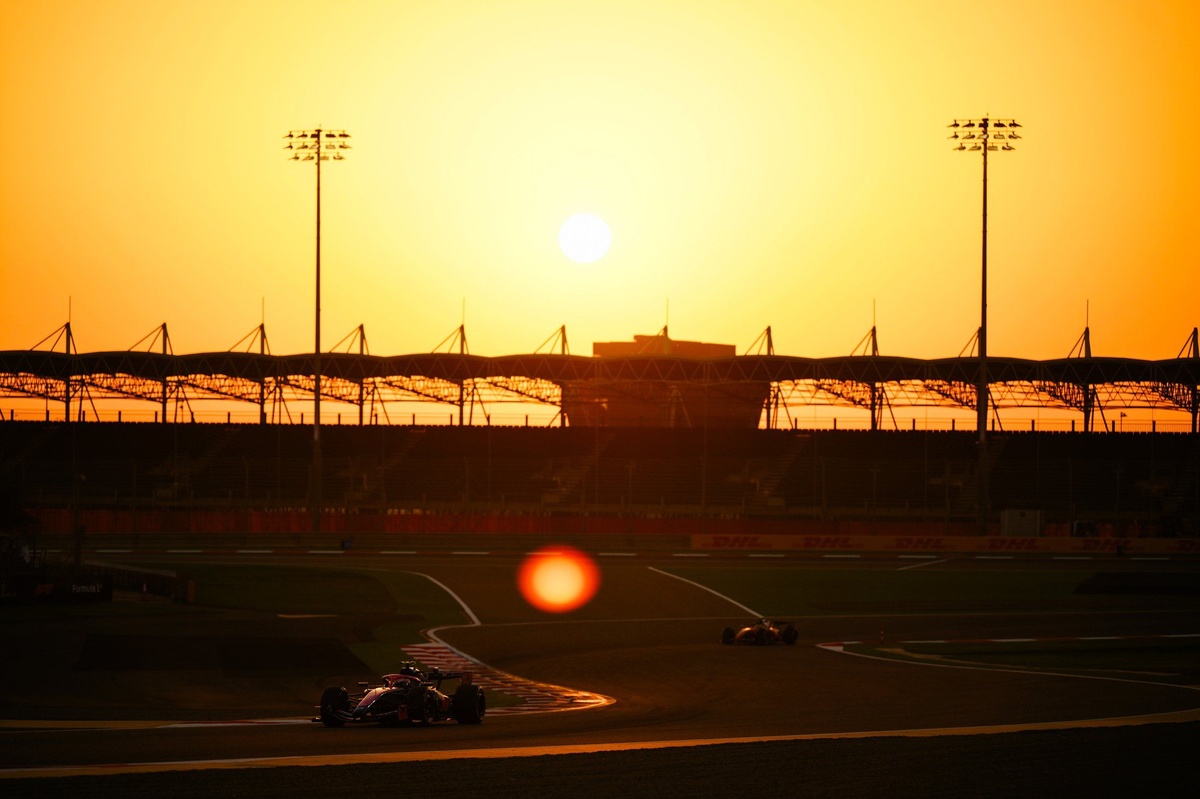
Five days down, one day left – and the Bahrain test is very much hurtling towards the business end of the run plans across the grid. The drivers are daring to go quicker on their qualifying simulations, and daring to go longer on their race-style runs – and the final day coming up should start to present our clearest idea yet of 2026’s expected competitive order…
…which will almost certainly be proven wrong when we get to Melbourne, leaving us with F1 testing egg on our faces.

Watch: Autosport Explains: F1 Testing Day 5
The times dipped into the 1m32s for the first time across our six-day (plus four-day layoff) spell in Bahrain. Oscar Piastri posted a 1m32.861s on the C3 compound, ending Max Verstappen‘s post-lunch spell at the top as the Dutchman opened the afternoon/evening session with a lap good enough to beat Lando Norris‘ ‘morning’ effort. Kimi Antonelli then stretched his legs after sunset, reeling off a 1m32.803s to remind those in attendance why Mercedes enters 2026 as the championship favourite. If Mercedes is sandbagging, gods help everyone else.
And, pleasingly, the first C5 tyre runs came in – although it seemed like the softest grade of rubber hadn’t quite been able to hang on across the lap. Franco Colapinto was the fastest of the three who had a crack at a flyer on the C5s, hurtling up to sixth in the overall times with a 1m33.818s, while both Alex Albon and Sergio Perez had mistakes on their laps with Pirelli’s least durable compound.
As has become standard in the prelude to 2026, les grandes fromages continued to toot their foghorns upon demand as they seek to exert some degree of pressure on F1’s governance. Everyone wants more favourable terms for themselves, and ’twas ever thus in Formula 1; this, of course, is made easier with the unexpected holes outlined in the new set of regulations.
Antonelli vs Piastri: Two vastly different approaches to similar laps
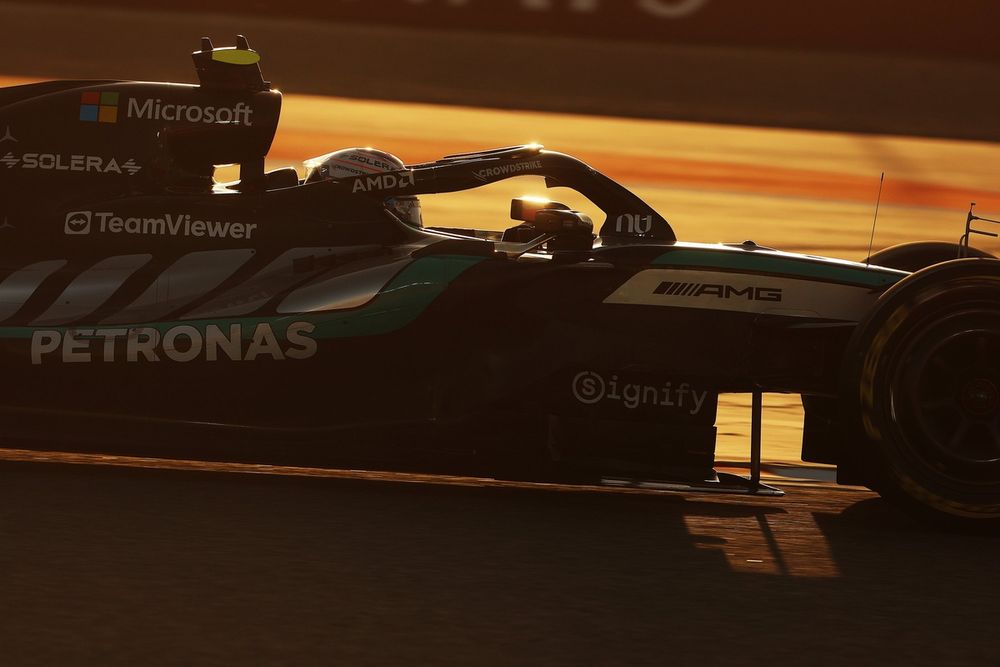
Antonelli set the fastest lap of the test so far with his Thursday evening run
Photo by: Steven Tee / LAT Images via Getty Images
For those who frequent Autosport on a grand prix weekend, you may be accustomed to our GPS analysis pieces that delve into the little details seen between drivers in a pole lap. Across the previous ruleset, the tiny margins between drivers on a pole lap could usually be distilled down to a little lock-up, or a marginal lick of extra speed on a certain straight.
In this case, when looking at the laps of Piastri and Antonelli, the differences in approach are seismic – and yet, the margin between them would not seem out of place in the previous F1 era. A further particularly interesting note is that, at one point, Piastri is almost up by half a second – but Antonelli later finds a swing of that magnitude at Turn 12 to set himself up for the final phase of the lap.
Qualifying laps have always tended to reward some degree of sacrifice, with some corners merely serving as a jumping-off point for the more high-value turns. This will be magnified under the new rules; pole laps will be meticulously planned in advance, and it’ll be up to the drivers to deliver the goods.
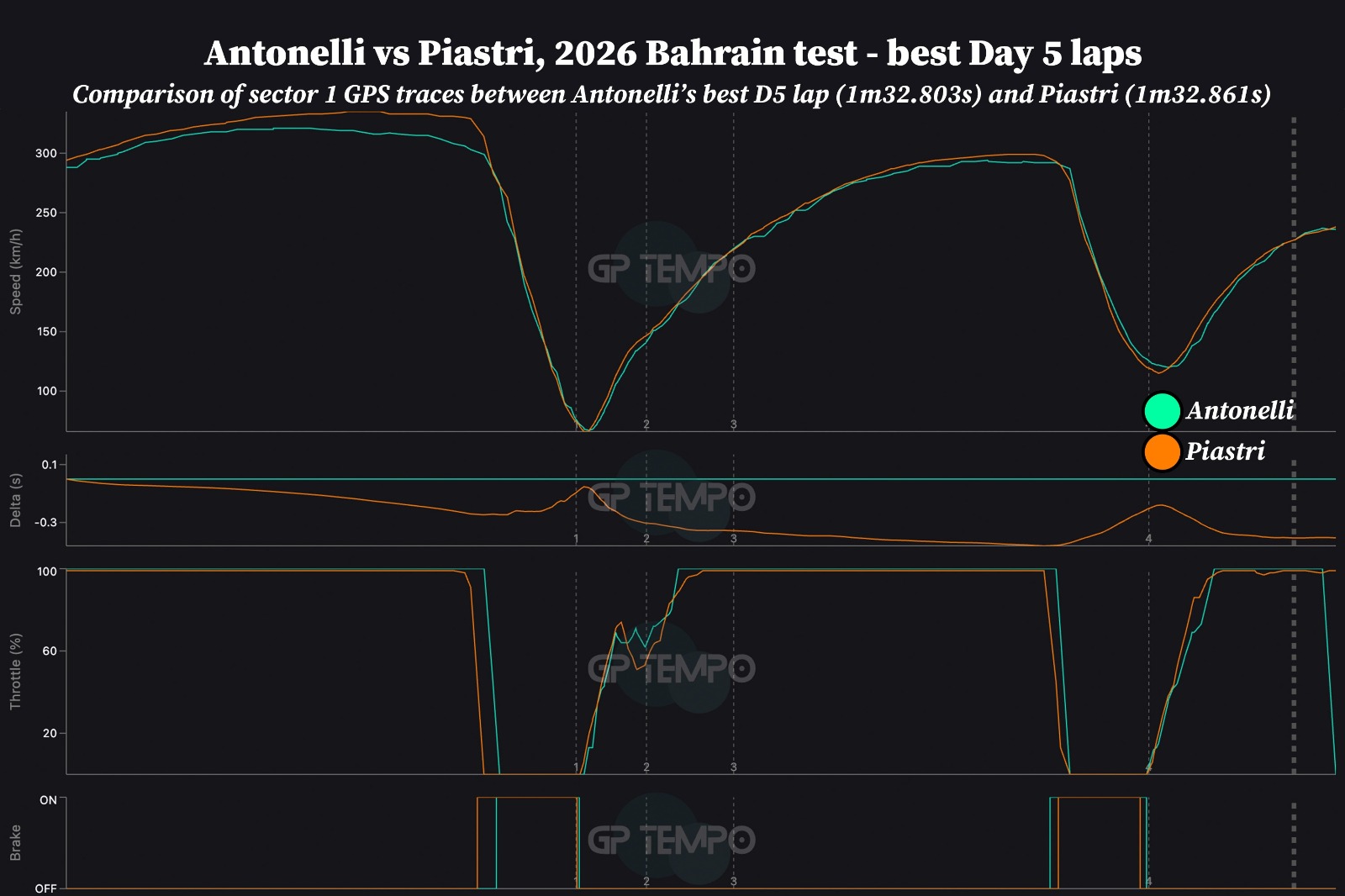
As seen in the traces above, Piastri gathers the time in the first sector with the use of more deployment upon the straight. Although earlier off the throttle, Piastri flicks down through the gears a bit later to keep the revs in a slightly higher band. The greater top speed out of Turn 3 ensures that the Australian’s advantage continues to grow, reaching a maximum 0.458s delta between them on the approach to Turn 4 – largely since Antonelli stays in seventh gear to harvest more energy through the ‘superclip’ phase.
Antonelli takes Turn 4 in second gear, while Piastri holds his car in third; although both drivers dipped into first gear at Turn 1, neither uses it through the rest of the lap. Instead, Piastri is attempting to maintain some degree of harvesting through the use of an earlier lift, accepting the 1000rpm engine speed penalty versus Antonelli.
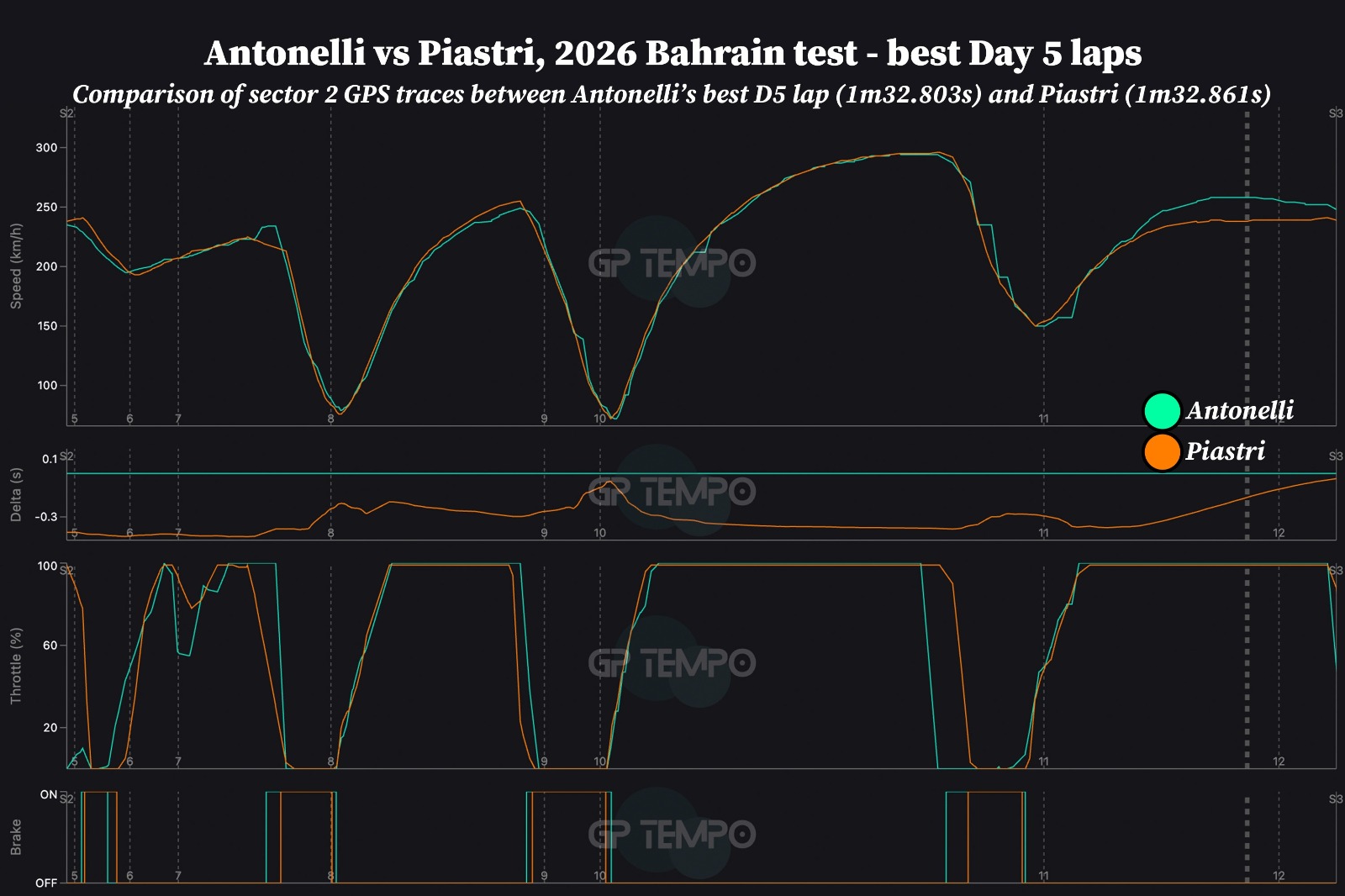
As the cars begin the rollercoaster downward descent towards Turn 8, Antonelli chooses to lift earlier for the Turn 5-6-7 kink and modulates the throttle to ensure he’s using minimal deployment through this section of the circuit. But this gives him a little more power between Turn 7 and 8, which coincides with the small spike in speed before the corner, ensuring he can maintain a little bit more minimum speed through the second-gear right-hander. This approach halves the deficit to Piastri, who’s later off the throttle and punctuates the sequence with less of a lift.
Antonelli then lingers on the throttle longer ahead of Turn 10, which is subsequently less beneficial. Piastri’s slow-in, fast-out response adds to the Italian’s deficit once more, but there’s a significant gambit up Antonelli’s sleeve. With an earlier lift for Turn 11, he’s able to wind on the power sooner up the hill and punches in a bit of boost to ensure that his closing speeds for Turn 13 are much higher.
This is a huge source of lap time; while most have tended to use the Turn 11/12 complex to harvest, Antonelli’s use of Turn 12 as a deployment point effectively wiped away the arrears – he was just 0.036s behind at the close of the second sector, and then 0.153s up at the corner apex.
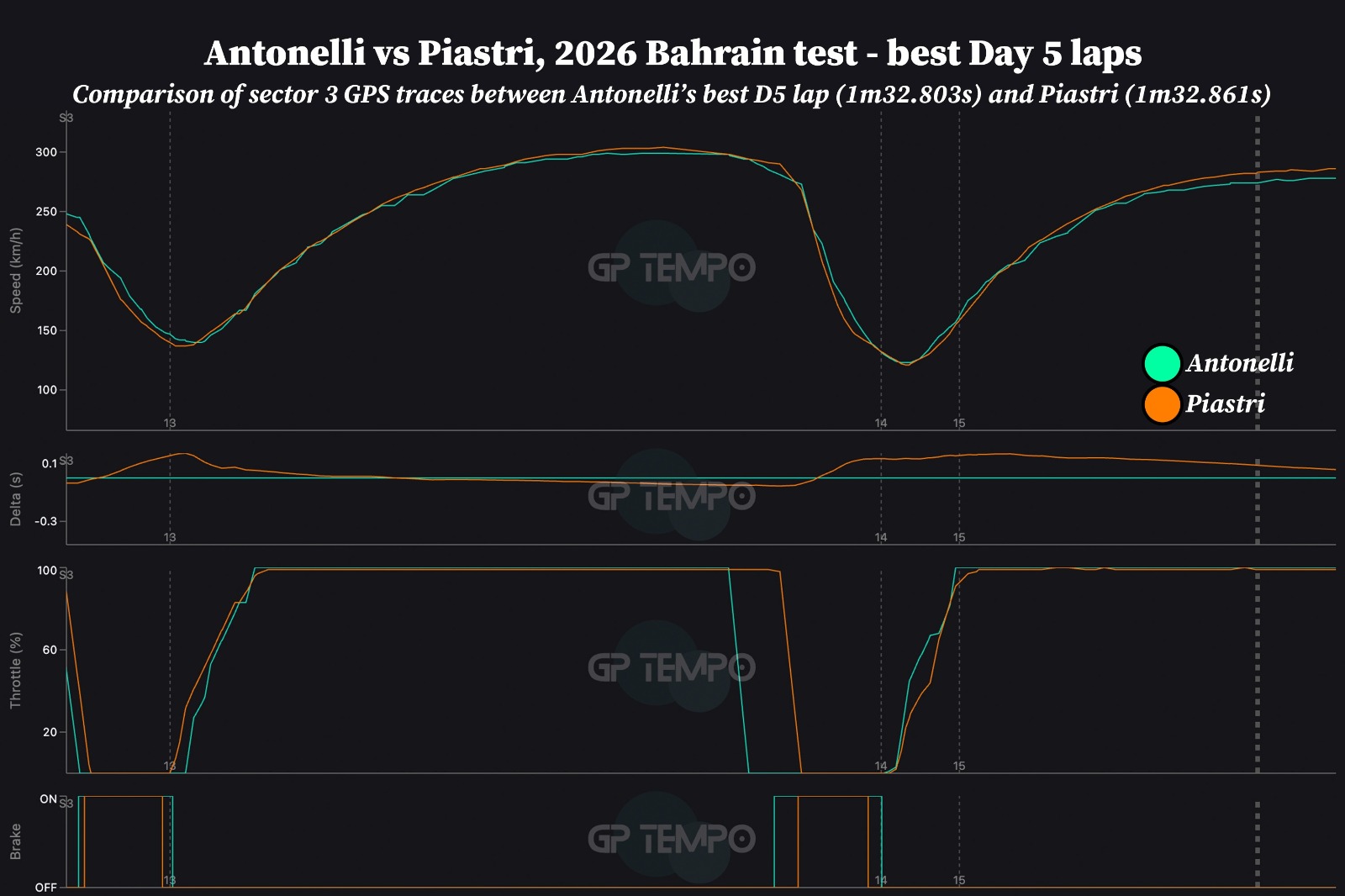
As Piastri is earlier on the throttle out of the corner, he’s able to swing the delta back into his favour. But Antonelli’s able to keep his minimum speeds up with a lower gear selection through the lift and coast, and, despite the earlier lift and earlier braking choice for the final bend, his throttle response also comes sooner – resulting in a nice slingshot onto the start-finish straight that just nudges him 0.058s clear of Piastri’s effort. That’s the effect of deployment strategy, and the importance of determining where using the full 350kW mode offers most benefit.
Wolff blows house down against “illegal” accusations
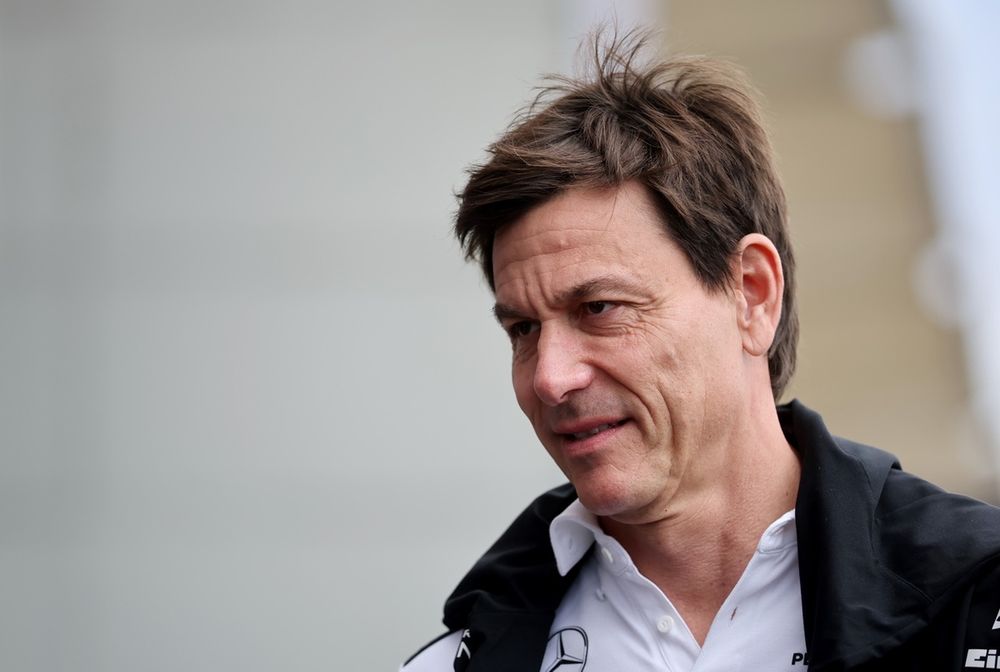
Angry like the Wolff: Mercedes’ team principal rather put his foot in it when railing against illegality claims
Photo by: Hector Vivas / Getty Images
It appears that Toto Wolff was caught with a nasty case of foot-in-mouth during the team principals’ press conference on Thursday, as he railed against the various accusations – evidently, he was weary of the seemingly never-ending discussion about compression ratios and Mercedes’ alleged circumvention of the 16:1 limit through a loophole in the regulations.
The FIA has placed the subject of additional measuring practices on the voting docket. Since this would require a change to the regulations, which only allows for measurement of the compression ratio at ambient temperatures, it needs a supermajority of four manufacturers, F1, and the FIA to go through. The FIA’s suggestion is that further measurements at 130C could be retrofitted into the rules, although it is unknown when this would be implemented.
Read Also:
“We said it all along that this looks like a storm in a teacup, the whole thing,” Wolff stated in the press conference. “And numbers were coming up [in the media] that were…if these numbers would have been true then I absolutely understand why somebody would fight it. But eventually, you know, it’s not worth the fight.
“It doesn’t change anything for us, whether we stay like this or whether we change to the new regulations. And that’s been a process. But we also want to be good citizens in the sport because it doesn’t make a big difference.
“We changed opinion philosophically, you can disagree with it because I believe regs are there to be made and you keep the FIA close to you and that’s how it should be.
“But, if you have four other PUs that are putting immense pressure on the FIA at a certain stage, what choice do we have than not to play? We were pretty comfortable in even having a protest going on Friday in Melbourne. But is this what we want?”
The subject then switched to fuel, with Wolff asked if there was any weight to the suggestions that Petronas’ 100% sustainable fuel was yet to be homologated. But he bit a little bit harder than anticipated, downplaying imaginary suggestions that the fuel was not legal.
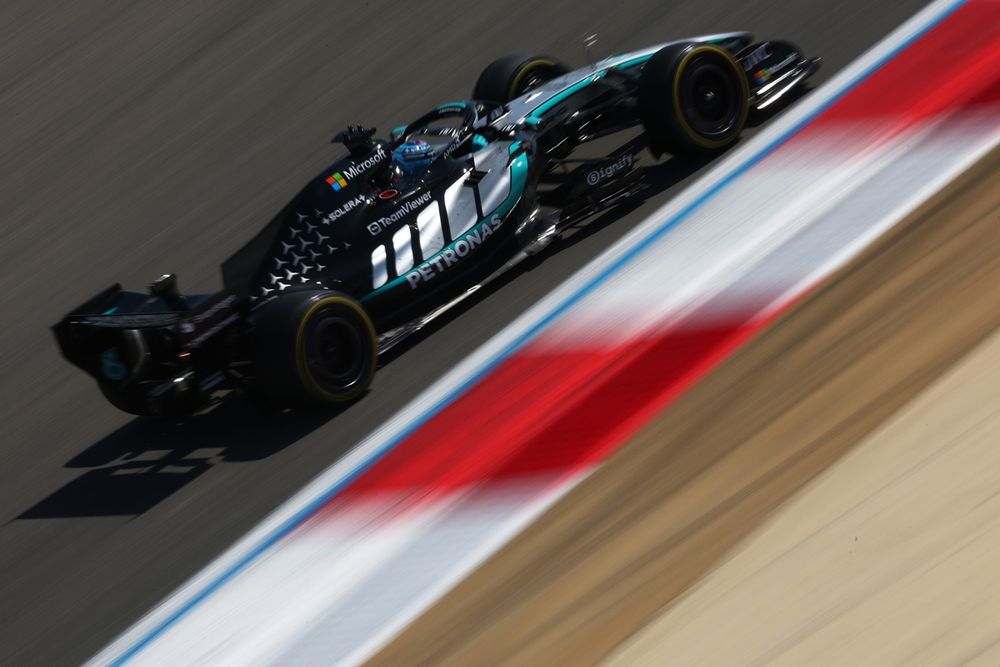
Mercedes has stared down the barrel of the other manufacturers’ guns in the 2026 prelude
Photo by: Mark Thompson / Getty Images
Evidently bored of accusations, he even suggested that the media might come up with something a touch more serious. “And now the next story comes out that our fuel is illegal,” Wolff ranted. “I don’t know where that comes from and it starts spinning again. Maybe tomorrow we’re inventing something else like, I don’t know, that I’ve been on the Epstein Files.” There were probably better examples that Wolff could have given.
FIA’s technical chief Nikolas Tombazis also admitted his surprise that the compression ratio debate had reached the current state of fervour, likening it to losing one’s perspective when ensconced in the competitive spirit of a backgammon game. He noted that it was nonetheless important to implement the vote to nip the issue in the bud.
“It’s extremely competitive. Formula 1 is that times 1,000,” he said. “So people get a bit too excited, and I don’t think this topic ever needed to get to that level of attention. I’m not saying it’s not important, but I think it’s also, does it merit all this excitement for many months? Frankly, no.”
If nothing else, F1’s compression ratio saga has at least broken new ground for tenuous allegories. It’ll be nice when it’s over.
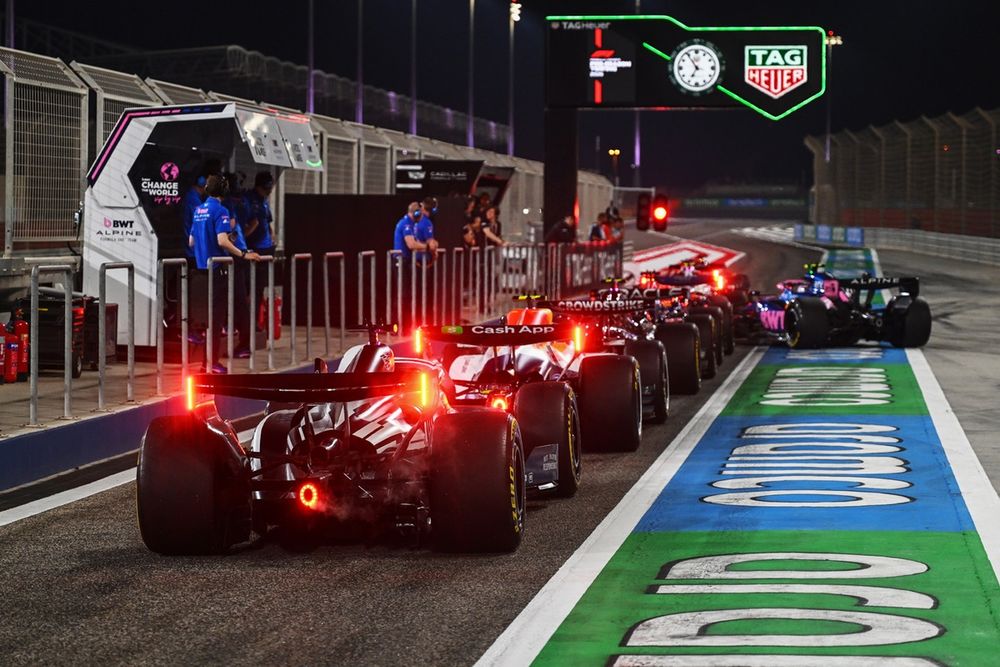
One more day of testing to go – stay tuned for our full analysis on Friday night
Photo by: Mark Sutton / Formula 1 via Getty Images
We want to hear from you!
Let us know what you would like to see from us in the future.
– The Autosport.com Team