
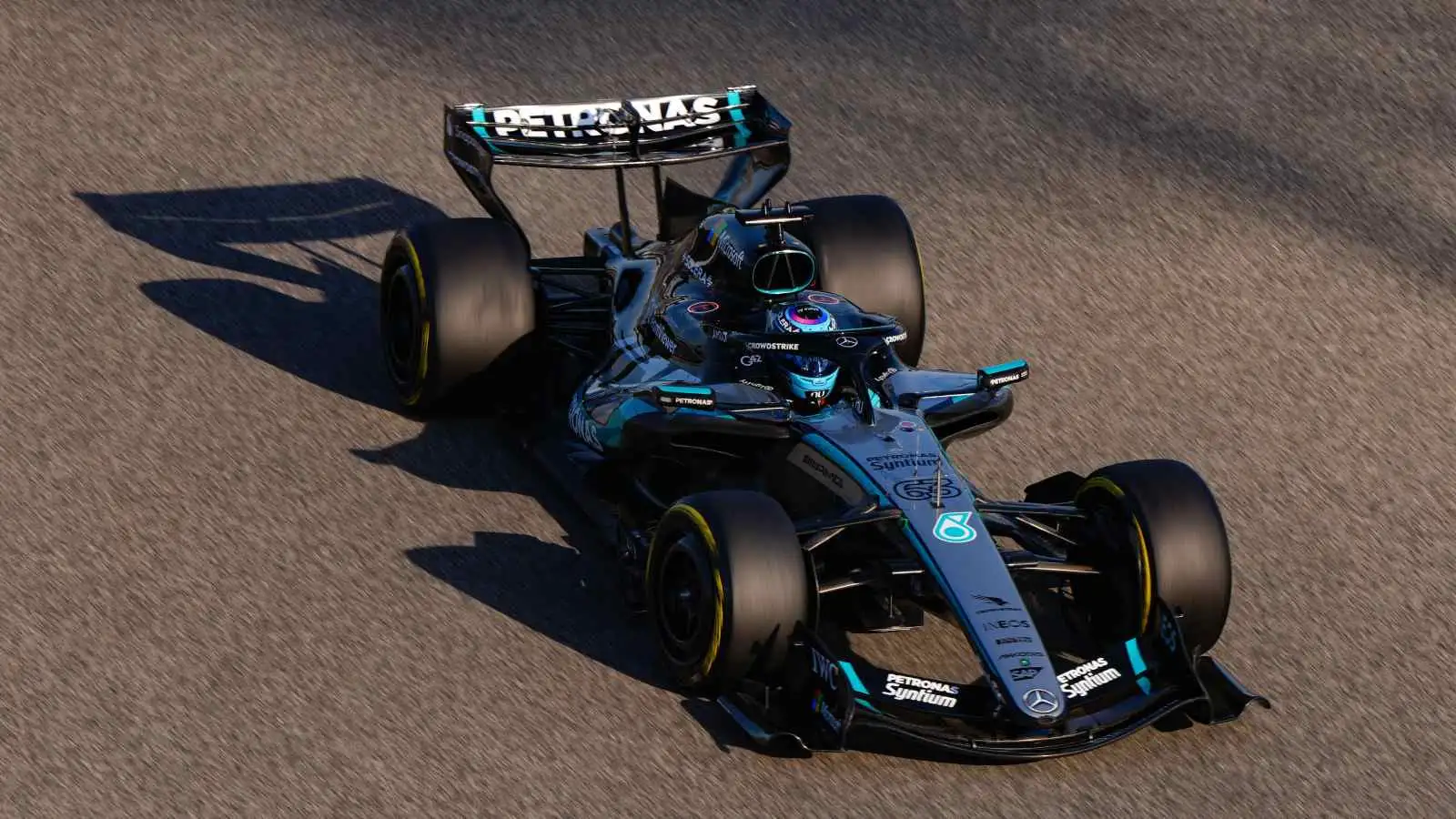
New Formula 1 regulations for 2026 have introduced a host of new terminology for fans.
But while many are self-explanatory, such as Overtake Mode, terms such as ‘super clipping’ are rather more complicated.
What super clipping means for Formula 1 2026
Want more PlanetF1.com coverage? Add us as a preferred source on Google for news you can trust.
For 2026, F1 has embraced an increased reliance on hybrid power, upping it from around 20 per cent in the previous generation to 50 per cent of the car’s total power output.
That is stored in a battery, which drivers can recharge with up to 9MJ per lap.
Primarily that is done under braking, making the concept entirely invisible to fans.
However, at some venues, it may be that there are insufficient braking incidents such that cars will employ other tactics to harvest the energy.
One of these is termed Super Clipping.
In its simplest form, it’s when the hybrid system siphons off power from the internal combustion engine to charge the battery when the driver is at full throttle.
In F1 2026, cars will have around 350kW from both the ICE and hybrid system.
Under the regulations, the hybrid system can use up to 250kW of that power to recharge the battery, leaving roughly 135bhp from the ICE driving the rear wheels (at peak harvest).
This process is termed a ‘Super Clip’, and the resulting loss of power to the rear wheels does see top speeds drop – and can prompt drivers to downshift on a straight.
That loss of speed, it has been suggested, could create scenarios on track where cars make contact as the driver ahead slows unexpectedly due to super clipping.
“The super clip is when the electrical engine starts to harvest, even if the driver is full throttle,” McLaren team principal Andrea Stella told PlanetF1.com and other media in Bahrain.
It’s similar to the ‘d-rate’ under the previous engine regulations
Then, when a car ran out of electrical energy, the MGU-K would stop contributing to the car’s total power output.
Under the previous regulations, the hybrid system contributed 120kW, equating to around 160bhp, with the internal combustion engine producing north of 700bhp.
Explaining F1 2026
Explained: F1’s complex power unit upgrade system
Explained: How F1’s new ‘overtaking mode’ will work in 2026
A d-rate would therefore slow the car’s acceleration towards its top speed, but wouldn’t steal energy back from the ICE.
In F1 2026, the hybrid system can redistribute that power, meaning a car doesn’t simply accelerate slower, it will likely slow down despite the driver being on full throttle.
To counter that, drivers can lift and coast into corners. Doing so helps the battery recharge, but that process is currently limited to 250kW and could still create scenarios where super clipping takes place.
It’s a concept the FIA is aware of, with McLaren testing a potential solution on the final day of testing.
Rather than limiting the recovery to 250kW, McLaren increased that limit to 350kW, with Stella reporting positive results.
Such a change, he reasoned, would do away with the need for drivers to lift and coast excessively to recharge their hybrid system.
It’s been discussed within the F1 Commission, but for the moment, with a lack of real world racing data, the intent is to leave things as they are.
That might change in future, as ‘harvest poor’ circuits such as Albert Park, Suzuka and Jeddah offer greater insight into how energy harvesting will play out.
Should it be identified as an area where change is needed, the governance is clear.
The matter would be tabled and voted upon at the F1 Commission. If it reached the necessary majority it would then be passed on to the FIA World Motor Sport Council for ratification into the regulations.
That is not the work of a moment, though it could be pushed through comparatively quickly.
Technically, it’s a minor change, too – McLaren demonstrated that on Friday in Bahrain.
But the necessity for any change now is unclear, and ‘super clipping’ will remain an element of F1 2026.
Want to be the first to know exclusive information from the F1 paddock? Join our broadcast channel on WhatsApp to get the scoop on the latest developments from our team of accredited journalists.
You can also subscribe to the PlanetF1 YouTube channel for exclusive features, hear from our paddock journalists with stories from the heart of Formula 1 and much more!
Read Next: Stefano Domenicali confident F1 2026 criticism is premature