
Flynn Benson
February 18, 2026 — 4:00pm
Save
You have reached your maximum number of saved items.
Remove items from your saved list to add more.
Save this article for later
Add articles to your saved list and come back to them anytime.
Got it
AAA
What’s good, what’s bad, and what’s in between in literature? Here we review the latest titles. See all stories.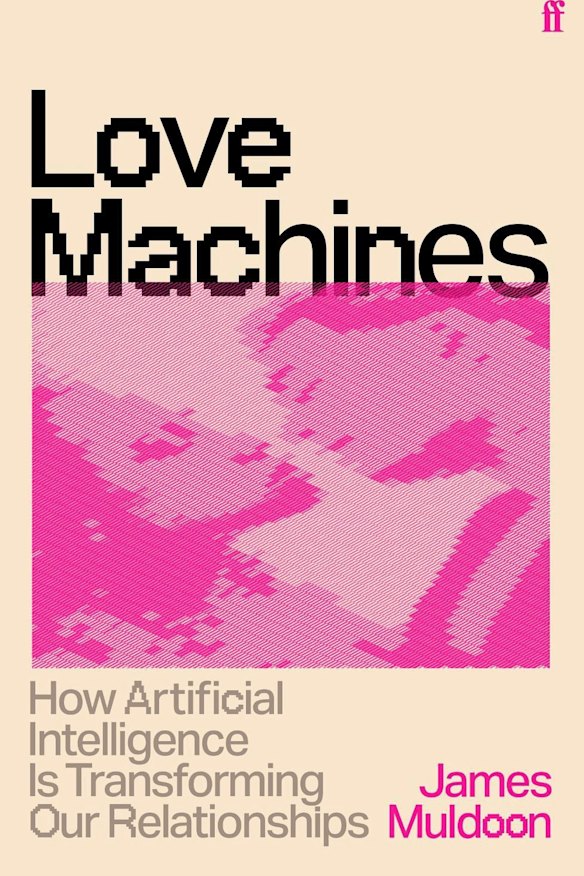
ARTIFICIAL INTELLIGENCE
Love Machines
James Muldoon
Faber, $26.99
Before James Muldoon became Dr James Muldoon, an academic and public commentator specialising in the harms of AI, he wrote his doctoral thesis on the 20th-century thinker Hannah Arendt. Arendt, who famously used the cliché-riddled mind of Holocaust architect Adolf Eichmann to coin the phrase “the banality of evil”, does not feature prominently in Muldoon’s new book Love Machines, on AI chatbots, which is a shame because even if chatbots have not yet perpetrated any genocides, both the craven producers and the lonely users of this artificial intimacy display something both evil and banal.
Muldoon, writing with specialist knowledge for a general audience, is far less unhappy about the technology than this reviewer. While he acknowledges that some of the stories in his book are “unsettling”, he shows more interest in describing the social phenomenon of chatbots than in judging them. Love Machines thus operates somewhere between a sociological study and an oral history, with context and commentary interspersed between the testimonials of people who have all spent many hours plumbing the emotional depths of large language models.
The first – least disturbing – section of the book, examines chatbots used for emotional support and guidance. We read about Malik, a young American who found solace in a chatbot called James after losing his uncle, and Derek, who starts talking to “Atlas” during the pandemic, eventually spending nearly all his waking hours in artificial conversation. The unhealthy aspects of these relationships are made clear, but there are still provocative questions raised: Is a one-sided, all-consuming relationship more unhealthy with a chatbot than another person? Is there much difference between asking ChatGPT for life advice and reading a self-help book?
But as Love Machines goes on, the questions become less palatable. The world of romance AI offers a panoply of people who claim, with a sincere misapprehension of the world, that they have found an entirely fulfilling relationship with a customisable avatar available for a monthly subscription fee. In the unlicensed world of therapy chatbots, vulnerable people may find help and support, but will almost certainly have their data harvested in the process. In the final, emetic section of Muldoon’s book, the author describes the world of “deathbots”, whereby modern technology and capitalism have contrived to allow deceased loved ones to be digitally resurrected for infinite conversation.
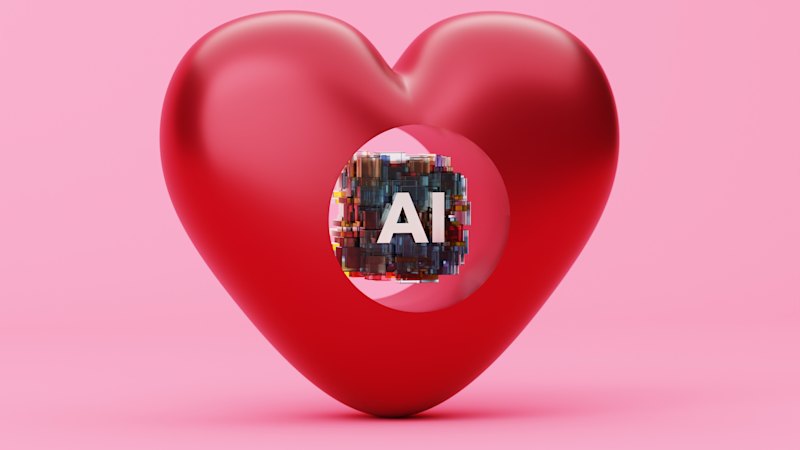
 Chatbots are increasingly being used for “romantic” relationships.Dreamstime
Because he does not particularly tip his hand in regard to his subjects, Muldoon allows for a certain deadpan humour in these accounts: a lonely young man is encouraged by his artificial lover, who speaks in the vernacular of an online erotic subculture, to kill the Queen of England; a husband spends more than $10,000 on in-app purchases for his electronic mistress; a jaded twenty-something plans to raise children with his AI wife because “humans aren’t really people who can be trusted”.
But this same dispassionate style of writing lends itself to mirroring the language of marketing and advertising employed by the tech companies themselves. Mark Zuckerberg, for example, will claim with a straight face that AI will help us make the extra friends missing in our life, while our learned author will offer the opinion that AI friendships might enable us to “engag[e] with ourselves and practis[e] forms of self-love and self-care with the assistance of technology”.
Another tech CEO seeks “the complete and total elimination of grief”, while Muldoon does not have much to say about his product beyond some academic twaddle, calling these deathbots “relational beings integrated into practices of mourning, memory and intergenerational continuity”. Even if Muldoon clearly believes that this technology represents a real danger, any moral argument is undercut by his free adoption of corporate talking points. It’s as if he set out to write an exposé on the sugar industry and concluded that Coca-Cola, for all its potential harms, has an unbeatable tang.
Related Article
Muldoon’s previous book, Feeding the Machine, co-written with two other academics, took much the same approach: extended testimonials were provided from individuals in the industry, with bland writing providing context for the uninformed reader. But that book had the advantage of examining lives in obscure parts of the technological supply chain and giving voice to people hidden by AI’s glossy sheen.
Love Machines suffers from the fact that these stories aren’t new: personal accounts of life with chatbots can be found in the news, on YouTube, on Reddit, and across every corner of the internet. Muldoon should have learned from Hannah Arendt that it’s not enough simply to describe the world around you; you must have the strength to make a judgment.
The Booklist is a weekly newsletter for book lovers from Jason Steger. Get it delivered every Friday.
Save
You have reached your maximum number of saved items.
Remove items from your saved list to add more.
From our partners