
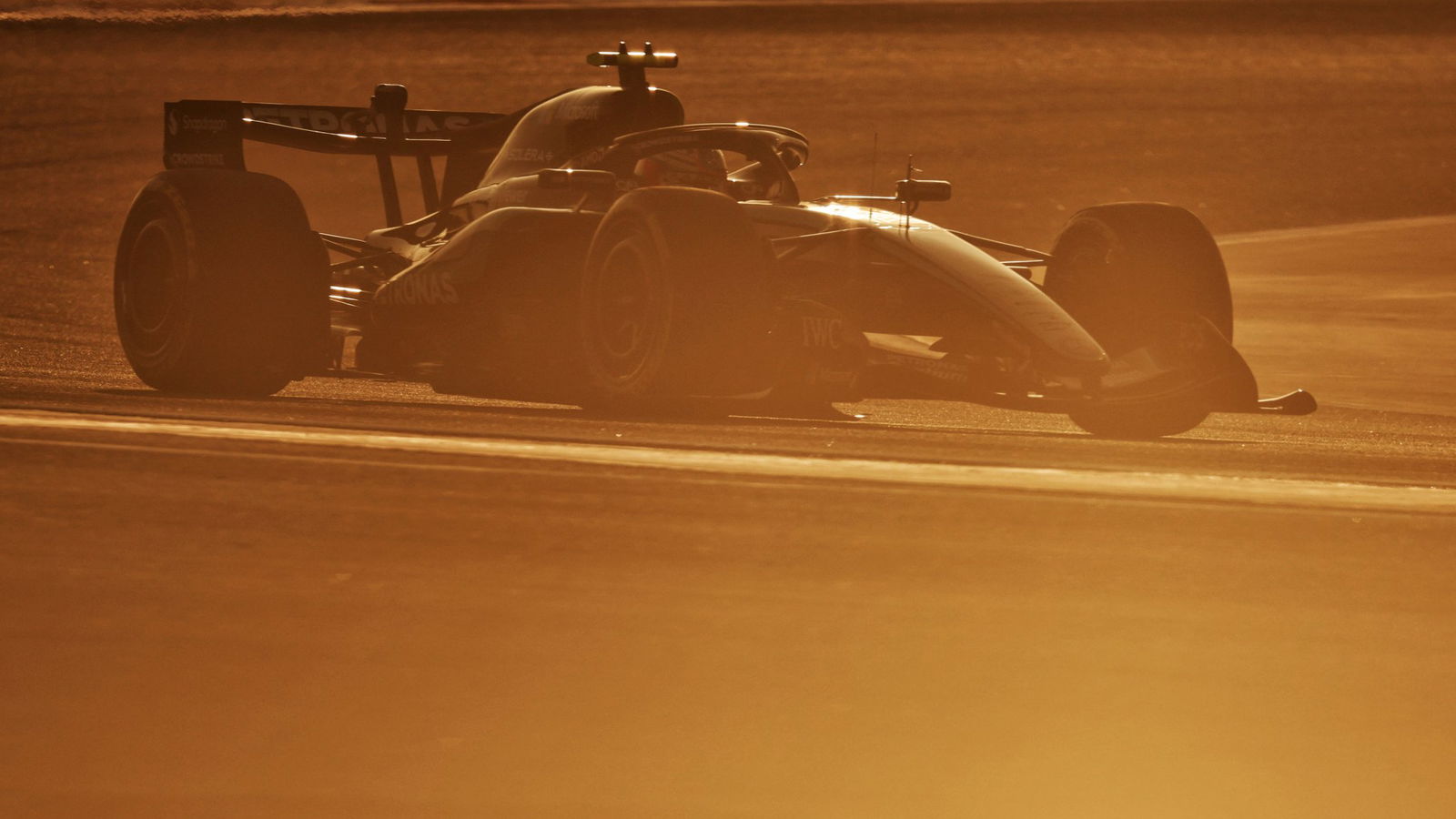
Mercedes Formula 1 driver George Russell believes circuits with heavier power and energy demands will lead to “intriguing” races in 2026.
F1’s new-for-2026 car regulations have been designed to encourage more competitive on-track action.
However, during pre-season testing, drivers have offered gloomy outlooks on the new car’s ability to follow others in turbulent air.
Energy management has also been a key talking point of the winter, though George Russell believes this will ultimately lead to interesting races at circuits with a greater demand on power.
“Well, you definitely can [follow] because there is less aero on the cars, so there’s less disturbance,” Russell said.
Article continues below ADVERTISEMENT
Article continues below ADVERTISEMENT
“And then the big difference this year compared to the previous era is the variability in energy deployment between cars and drivers, depending on driving styles.
“That will probably far outweigh the aero turbulence.
“I think we will see different racing at places like Melbourne and Jeddah, where there are numerous long straights.
“I think the racing could be quite intriguing.”
Four-time world champion Max Verstappen has been the most vocal critic of the new rules, branding them “anti-racing” and “Formula E on steroids”.
Article continues below ADVERTISEMENT
Article continues below ADVERTISEMENT
A lot of drivers have echoed some of his comments, with Lando Norris stating that the 2026 cars are not as “pure” to drive as the previous generation.
But Russell defended the changes in style drivers are having to make and compared it to videos he has seen of Ayrton Senna.
“The guiding principles are still very much the same: you’re trying to push the car to the absolute limit, trying to brake as hard as possible and as late as possible, and carry as much speed through the corners,” he added.
“I think every single era of cars, there is a quirk of driving.
“I’ve watched the Senna’s onboards from the 80s and 90s and he’s driving a very unique style, blipping the throttle at the apex of corners to keep the turbo spinning and balancing the car.
Article continues below ADVERTISEMENT
Article continues below ADVERTISEMENT
“That’s also abnormal. Here, we’re maybe doing a bit more lift-and-coast than you would ordinarily expect.
“But here in Bahrain and the test in Barcelona, it didn’t really feel that bad. Melbourne might be a different story, but I’m quite enjoying it.”
Subscribe to our F1 Newsletter