
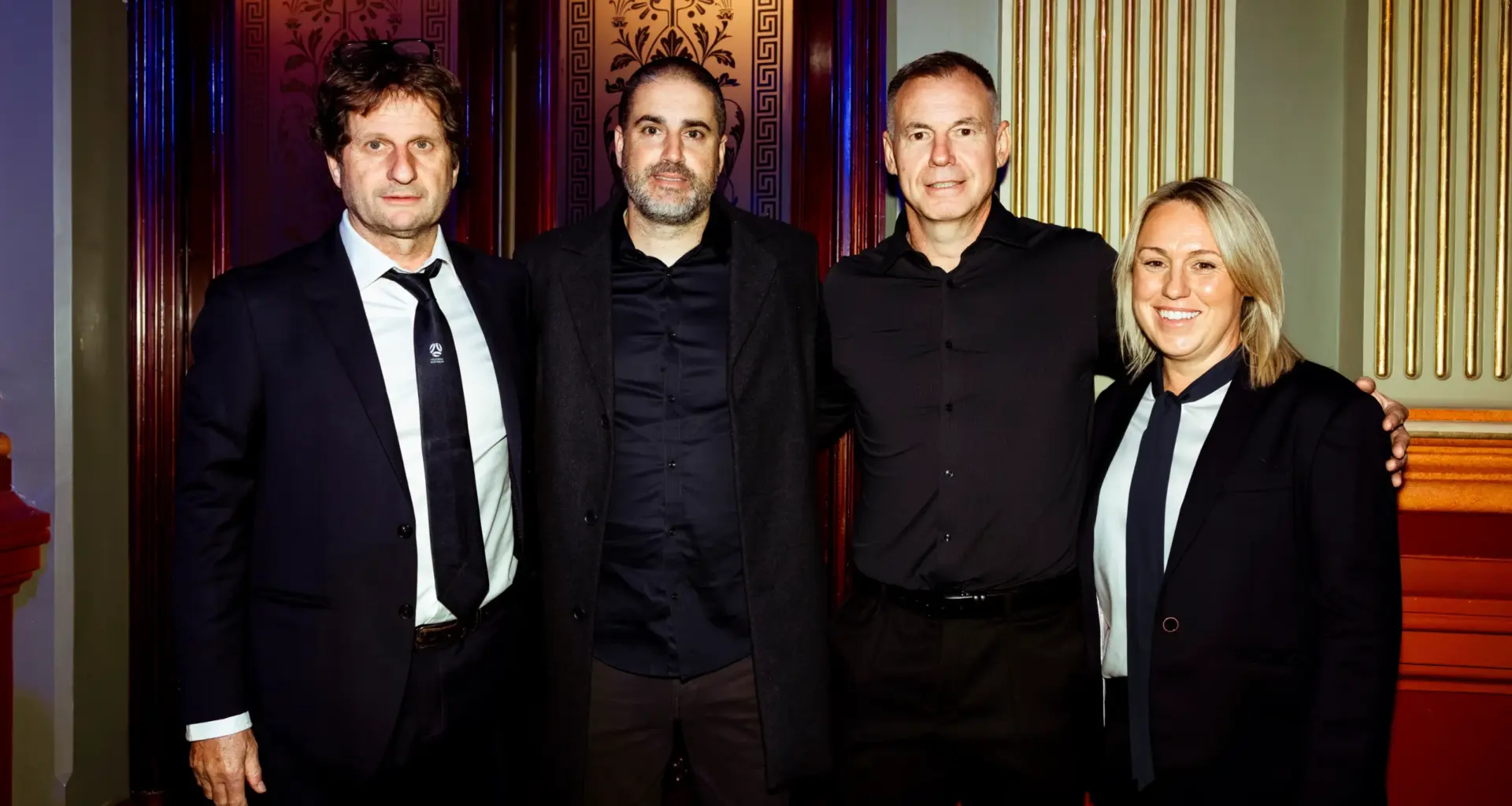
This Women’s Asian Cup on Australian soil isn’t just a special moment for the Matildas and those wearing green and gold.
Across the tournament, there are Australians at the peak of their powers, not only influencing the future of football in Asia, but showing how Australian football IP is now an export in demand across the continent.
If Joe Montemurro is the patriarch of this group, taking his national side after influencing football in the W-League, then England (Arsenal), Italy (Juventus) and France (Lyon), there are narratives everywhere: Marc Torcaso in charge of the Philippines, with Riccardo Marchioli as his assistant, Leah Blayney as assistant of the highly fancied Japan side and former Matildas boss Ante Milicic leading defending champions China, all with fellow Australians amongst them in their backroom staff.
Working in Australian football has its challenges irrespective of your vocation – but this group have proven what happens when talent and work ethic combine – the latter, along with resilience, a common theme when all of them speak about the new Australian coaching cohort.
“We have a work ethic in football that I think has no comparison overseas in what I’ve experienced,” Montemurro said.
“We have challenges as coaches who are developing as coaches or going through the system. We have good things, we have bad things, but in the end, we develop probably some of the most resilient, knowledgeable coaches in the world.
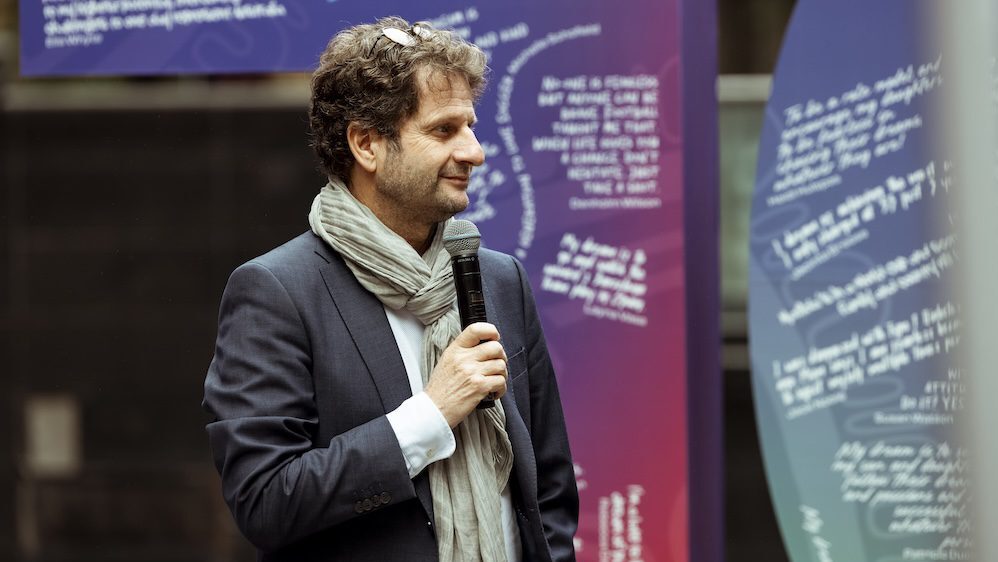 Joe Montemurro. Photo: Tiffany Williams / Football Australia
“And I say that, and I can probably use a little bit of experience from overseas, they work hard, they’re curious, they want to learn. And I think that shows.
“That’s why we have a lot of good people around the world. And as you said, not just coaches, good operators in terms of admin, in terms of other areas, the sports science, the medical areas and that’s because of our work ethic and our curiosity to be better and want to be better.
“I hope that we acknowledge that.
“I hope that we give them the credit that they deserve because I know the journey, I know it’s difficult and there’s nothing to compare our resilience and our work ethic.”
When the likes of Blayney and Torcaso speak, two who have worked their way up via the national programs and the local leagues, they think it’s time to put some respect on the cohort that is emerging.
“I think we’re good coaches and I think that we trained and prepared differently.
“We have to work really hard for our craft and what we want to do…
“(A few people) know how hard it’s been over the many, many years to get to this point. But my best way to describe it is I think, as I said, we’re hardworking coaches and when we believe in something and we are on the same page as wherever we are in the world, whichever country that we’re working with, I think more often than not we are able to get good results.
“Ange (Postecoglou) is a perfect example. Obviously, Joe Montemurro is a perfect example. Ante and I know Leah is obviously in Japan now as an assistant coach. But even some of the staff members that are working for those countries – there’s assistant coaches out there that are also part of these national teams as well.
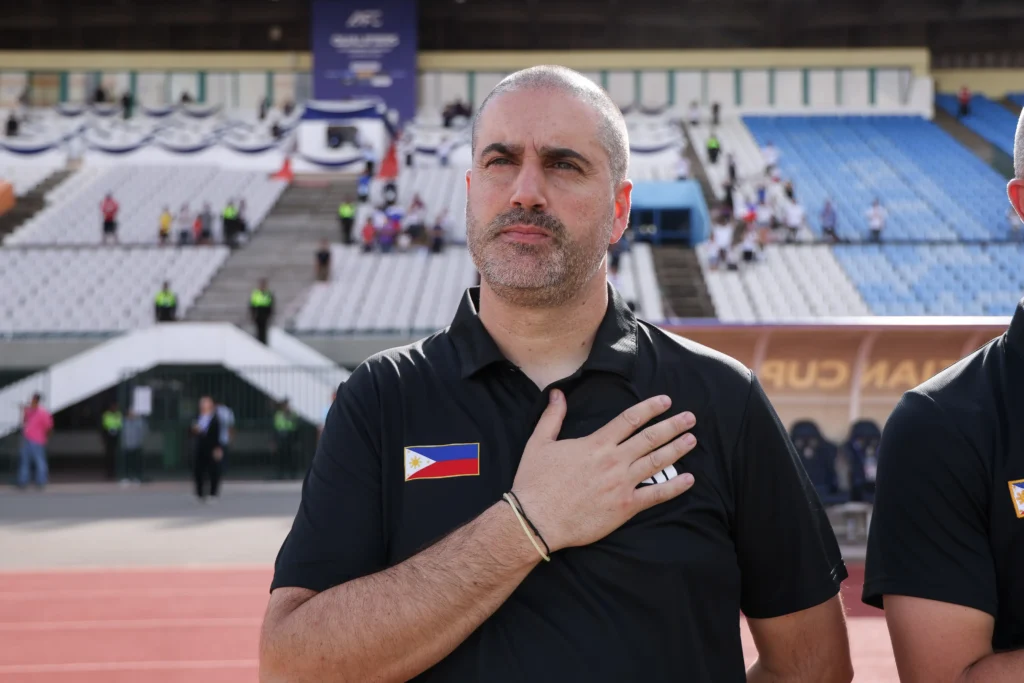 Mark Torcaso. Photo: Supplied
“I just really believe that we’re good at what we do, but we’re passionate at what we do. We’re extremely loyal people. But I just think we’re good enough.
“I don’t want to put that pressure on all our Aussie coaches, but I think we’re good enough because we’re determined to succeed and be the best that we can.”
Blayney is a case in point of that ambition, moving to Japan to continue to push herself, learn and experience different environments.
“I think that there’s a group of us who have come through recently, who have some very strong mentors in the game,” Blayney told reporters, on the back of John Aloisi and Ross Aloisi also recently earning head coach roles in China.
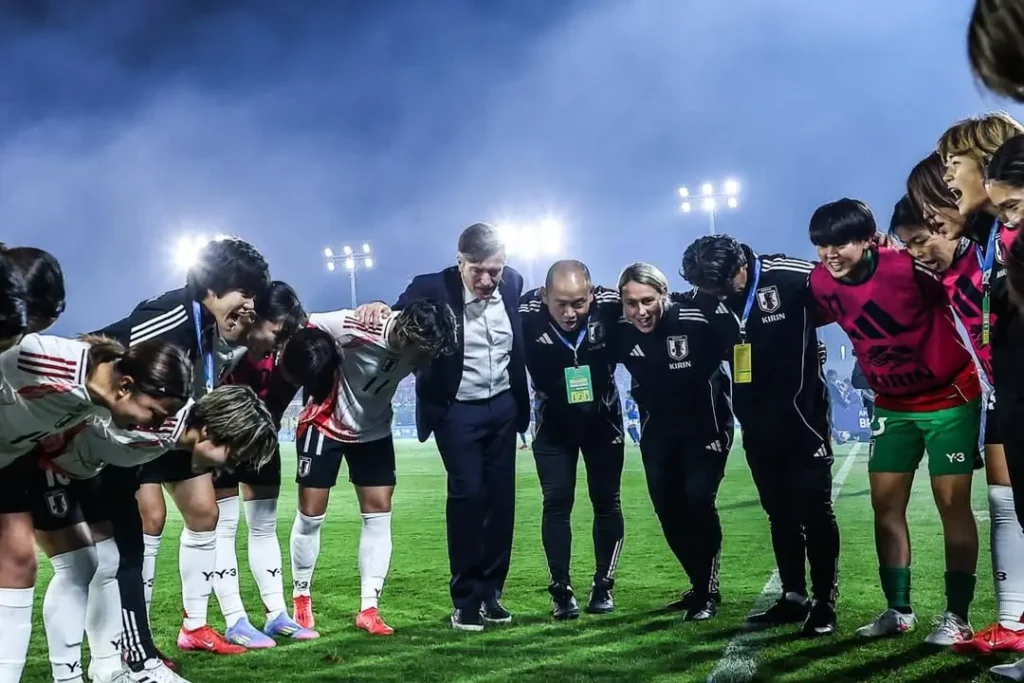 Photo: Leah Blayney / Instagram
“I know some of the boys have mentioned the influence of Ange as well as the influence of Rado Vidosic on some of our female football coaches recently.
“The fact that we have access to a lot of that football IP in the country today is something that has helped a lot of our coaches take that next step and go into your high level environments and not just fit in, but excel.
“Aussie coaches belong on the world stage.”
Milicic has seen those highs, first as an assistant in the Socceroos’ set-up, before leading the Matildas to the 2019 Women’s World Cup.
Energised after a stint leading Macarthur in the A-League, he’s got responsibility for a giant in women’s football – a role that has flown under the radar as an achievement in the current Australian football landscape.
 Ante Milicic in his days as Matildas coach.
China, so often called football’s sleeping giant, is now very much leaning into Australian football ideas, with John Aloisi, Ross Aloisi, Kevin Muscat and Nick Montgomery now in charge of four Chinese Super League clubs, with a sprinkling of Australians in their coaching staff.
“Everyone’s got their own path, and I think I don’t follow too much of the men’s game here because I’m fully focused on my role. I caught up with Muskie last year and went to one of his games, but he’s done an excellent job there back to back,” Milicic said.
“I was in contact with Zdrilla (David Zdrilic) yesterday (at the time of the interview) who’s with Ross of course, they’re at a training camp in Dubai.
“Everyone’s doing their own thing but we’re all there for each other.
“We’re all in contact and if anyone needs any information, of course, we try to help each other.
“And at the same time, that goes for my staff as well. I’ve got another four Australians with me here in China as well. So I think that’s very common for us as Australians when we are in a foreign country to keep the lines of communications open.”