
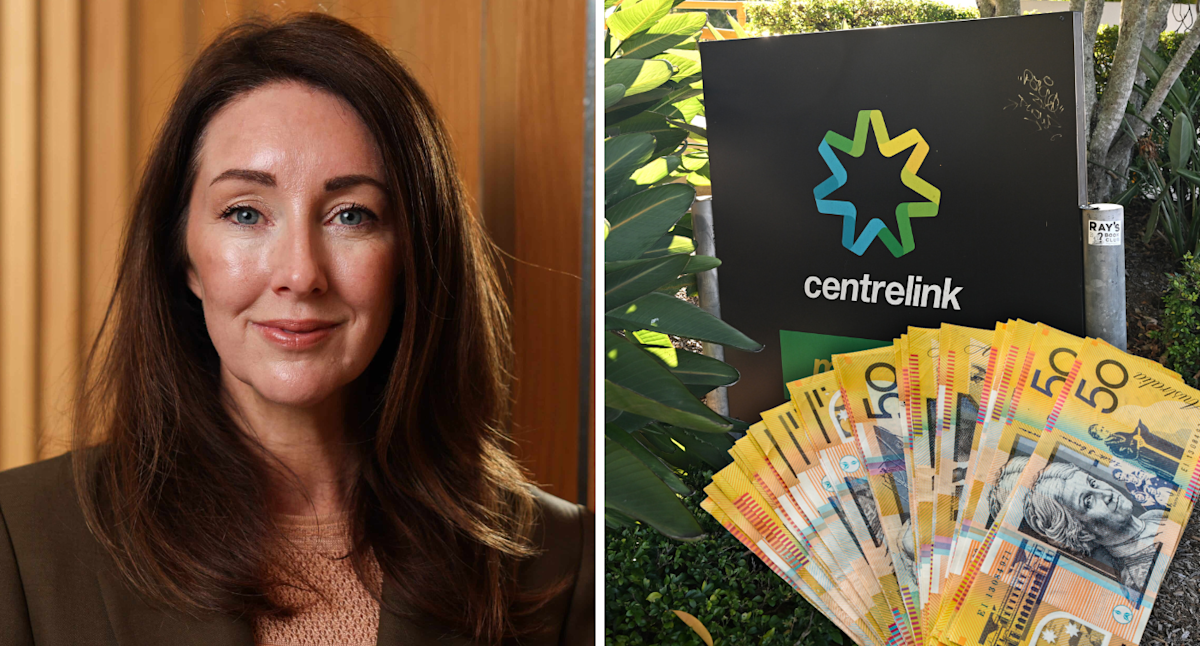
 ASFA CEO Mary Delahunty said the rise in lump sum super amounts needed reflected rising living costs, along with the age pension not keeping pace. (Source: ASFA/Getty)
Australians now need tens of thousands of dollars more in their superannuation to afford a “comfortable” retirement. The Age Pension has not kept pace with the actual cost increases facing retirees, the peak super body has found, leading retirees to rely more on their super than Centrelink.
The Association of Superannuation Funds of Australia (ASFA) has lifted its superannuation estimates for the first time in three years. Fresh figures show a single homeowner aged 67 will need a lump sum of $630,000, up from $595,000, to achieve a comfortable retirement.
Couple homeowners now need super balances of $730,000, up from $690,000, to maintain a comfortable lifestyle.
RELATED
ASFA CEO Mary Delahunty said retirees’ living costs had risen and support from the Age Pension had not kept pace with the increase.
“The Age Pension has not kept pace with the actual cost increases retirees face, particularly for essential goods and services,” she said.
“Costs in the categories that retirees tend to spend most on have risen faster than general consumer price inflation. So that means even though the Age Pension is indexed, a greater burden is placed on retirees’ personal super savings.”
Do you have a story to share? Contact tamika.seeto@yahooinc.com
The maximum Age Pension is currently $1,178.70, including the pension supplement and energy supplement. The government has indicated the rate will likely increase by $22.20 per fortnight with the next round of indexation on March 20.
ASFA has also released its updated quarterly budgets for retirees.
It found homeowners aged 65 and over now need $54,840 annually for a single, and $77,375 for a couple for a comfortable retirement.
That’s due to steep rises in the past year, including in electricity costs (up 21.5 per cent), coffee and tea (up 15.3 per cent), domestic travel (up 9.6 per cent), water rates (up 7.1 per cent) and property rates (up 6.2 per cent).
Along with the Age Pension not keeping pace with retirees’ cost of living, ASFA said the increase in deeming rates was another “crucial factor” that meant retirees now needed higher lump sum super savings.
The government has confirmed deeming rates will increase on March 20. These are the assumed rates of return applied to financial assets when assessing Age Pension eligibility.
The lower deeming rate will increase from 0.75 to 1.25 per cent for financial assets under $64,200 for singles and $106,200 for couples combined.
The upper deeming rate will increase from 2.75 to 3.25 per cent for assets over the same thresholds.
“When deeming rates rise, a person’s assessed income can increase even if their actual investment returns have not, which can reduce their Age Pension,” Delahunty said.
“This shifts more of a retiree’s budget towards reliance on super rather than Centrelink.”
To check whether you are on track, ASFA has calculated how much you would need at different ages to achieve the comfortable standard of $630,000 in super at retirement.
These calculations assume a future pre-tax income of $65,000 a year that keeps track with inflation.
Age
Amount
30
$66,500
40
$168,000
50
$296,000
55
$377,000
60
$469,000
65
$571,000
Delahunty said the good news was Aussies were retiring with “larger super balances than ever before”.
A 30-year-old worker today with $30,000 in super who is earning $80,000 adjusted for inflation is estimated to retire with $645,000.
That’s because super funds have delivered good returns in the last few years, while the super guarantee has been steadily rising since 2020 to now be 12 per cent.
Get the latest Yahoo Finance news – follow us on Facebook, LinkedIn and Instagram.