
Home » Australia Travel News » Port Douglas to Mossman: Australia’s Premier Sugar Rail Transformation and World-Class Ecotourism Cycling Trail
Published on
February 24, 2026
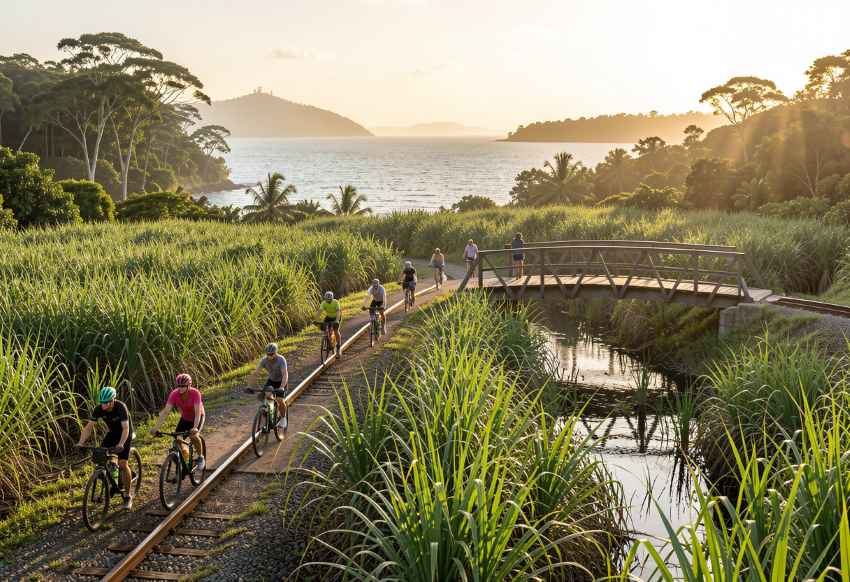
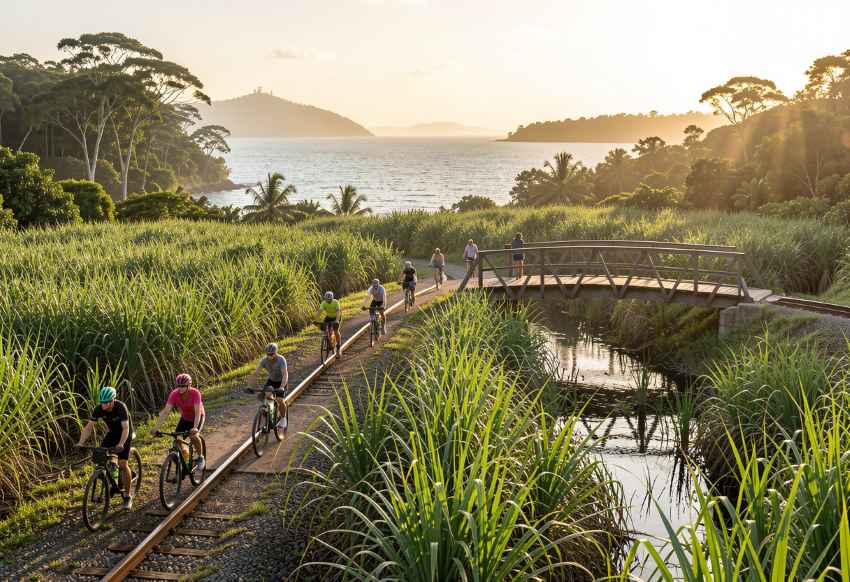
Image generated with Ai
A significant shift in regional travel has begun with the announcement of plans for a premier cycling and walking trail in Tropical North Queensland, Australia. The historical essence of the region is being used to provide a safer, more scenic alternative to the current road networks. The Douglas Shire Council made a strategic decision to repurpose the decommissioned sugar cane railway line that previously served the Mossman Sugar Mill. This infrastructure, which has been largely dormant since the mill’s closure in late 2023, is envisioned as the foundation of a new “active transport” corridor connecting Port Douglas and Mossman.
Bridging Tourism Hubs through Heritage
The connection between the coastal allure of Port Douglas and the lush, agricultural heart of Mossman is currently facilitated primarily by the Captain Cook Highway. While stunning, this route is frequently described as a high-pressure environment for non-motorised travellers due to its narrow shoulders and heavy tourist traffic. Through the development of this rail trail, a dedicated path is being established that will allow visitors and residents alike to bypass the highway entirely. The route follows the narrow-gauge tracks that formerly transported raw sugar to the iconic Port Douglas Sugar Wharf, ensuring that the heritage of the shire is preserved while its future utility is maximized.
Funding the Future of Regional Connectivity
Momentum for the project was solidified during a recent ordinary meeting of the Douglas Shire Council, where a formal application for the Queensland Government’s Active Transport Grants Program was endorsed. A funding request for $250,000 has been submitted to the Department of Transport and Main Roads (TMR) to facilitate the essential planning and business case development. Under this programme, a 50:50 cost-sharing arrangement is maintained, with the council committing an equal share of $250,000 to ensure the project’s viability. These resources are being allocated toward comprehensive surveying, condition assessments of existing rail bridges, and the creation of concept designs that meet modern safety standards.
The Synergy of the Wangetti Trail
This rail trail is not being viewed as an isolated project but rather as a critical component of a broader ecotourism strategy. The region is already home to the ambitious $47 million Wangetti Trail, a 94-kilometre dual-use track extending from Palm Cove to Port Douglas. While the Wangetti Trail is designed to offer a rugged, adventure-based experience through national parks and World Heritage-listed rainforests, the Mossman-Port Douglas Rail Trail is being planned as a more accessible, family-friendly “spine”. Connectivity between these two major trails is expected to position the Douglas Shire as a premier global destination for cycle tourism.
Advertisement
Advertisement
Economic and Safety Dividends
Substantial benefits are anticipated for the local economy as this project moves toward realization. Safe passage for seasonal workers and commuters is being prioritized, reducing the reliance on motorized transport between the two townships. Furthermore, the diversification of the tourism product is being sought to attract a new demographic of “slow travellers” who prioritize environmental sustainability and health. The transition from industrial rail to recreational trail is being managed as a “game-changer” for local businesses, with increased foot traffic expected at cafes, equipment rental shops, and cultural sites throughout Mossman and Port Douglas.
Environmental Stewardship and Design
Environmental considerations are being integrated into the earliest stages of the planning process. By utilizing an existing corridor, the impact on the surrounding landscape is significantly minimized compared to the construction of entirely new infrastructure. The trail’s design is being tailored to showcase the unique topography of the Douglas Shire, from the sprawling emerald cane fields to the coastal fringes of the Coral Sea. It is intended that the natural beauty of the region be protected while being made more accessible to those who wish to experience it at a human pace.
Advertisement
Advertisement
A Legacy Continued
The closure of the Mossman Sugar Mill marked the end of an era that lasted more than a century, but the story of the rails is being rewritten. The “Bally Hooley” steam engines, which once delighted tourists on these same tracks, are remembered as the forerunners of this modern initiative. The steam and smoke of the industrial past are giving way to the silent, clean energy of active transportation. As the business case is finalised and additional state funding is sought, the project demonstrates the region’s ability to adapt and innovate in the face of changing economic landscapes.
