
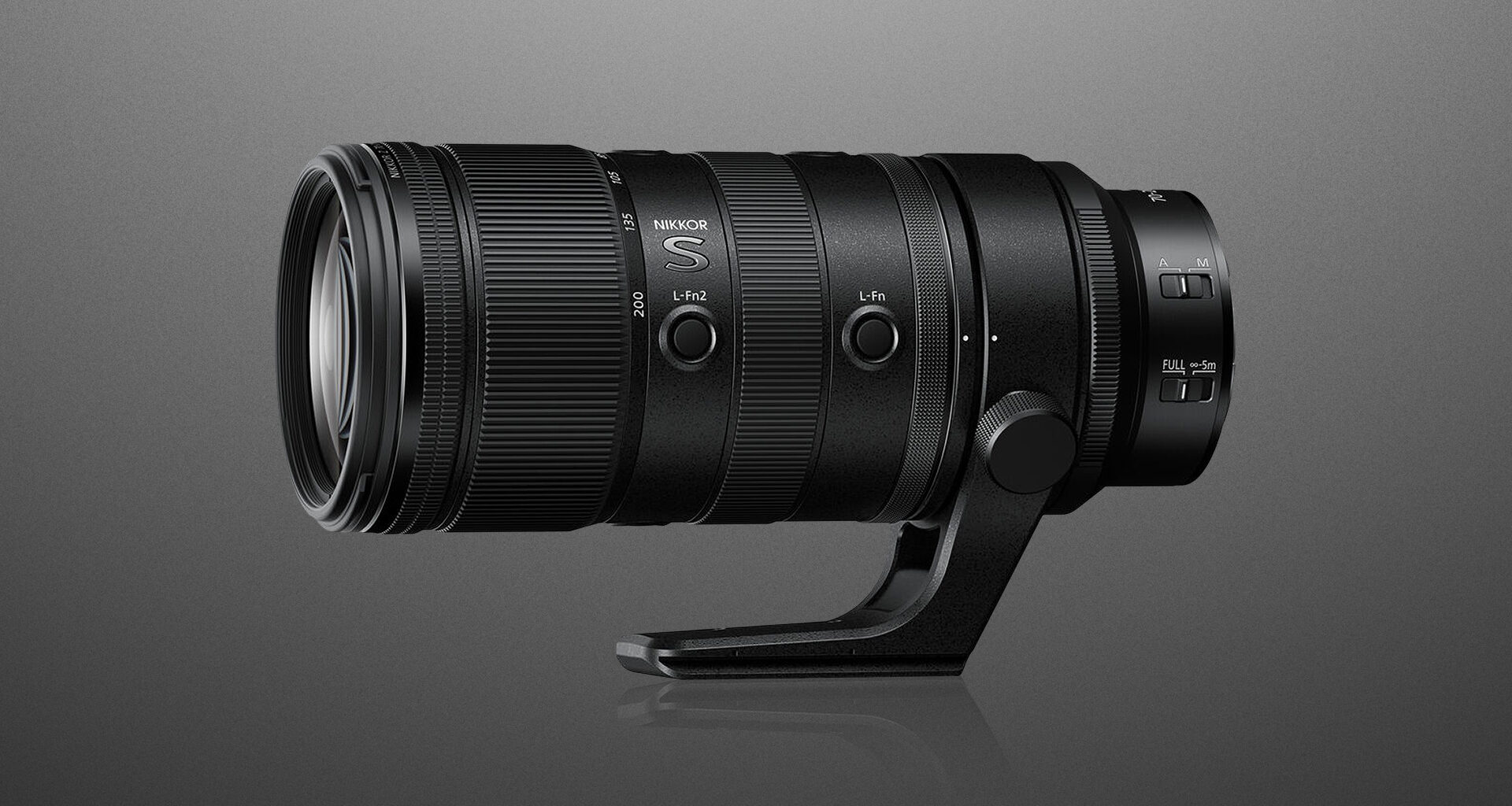
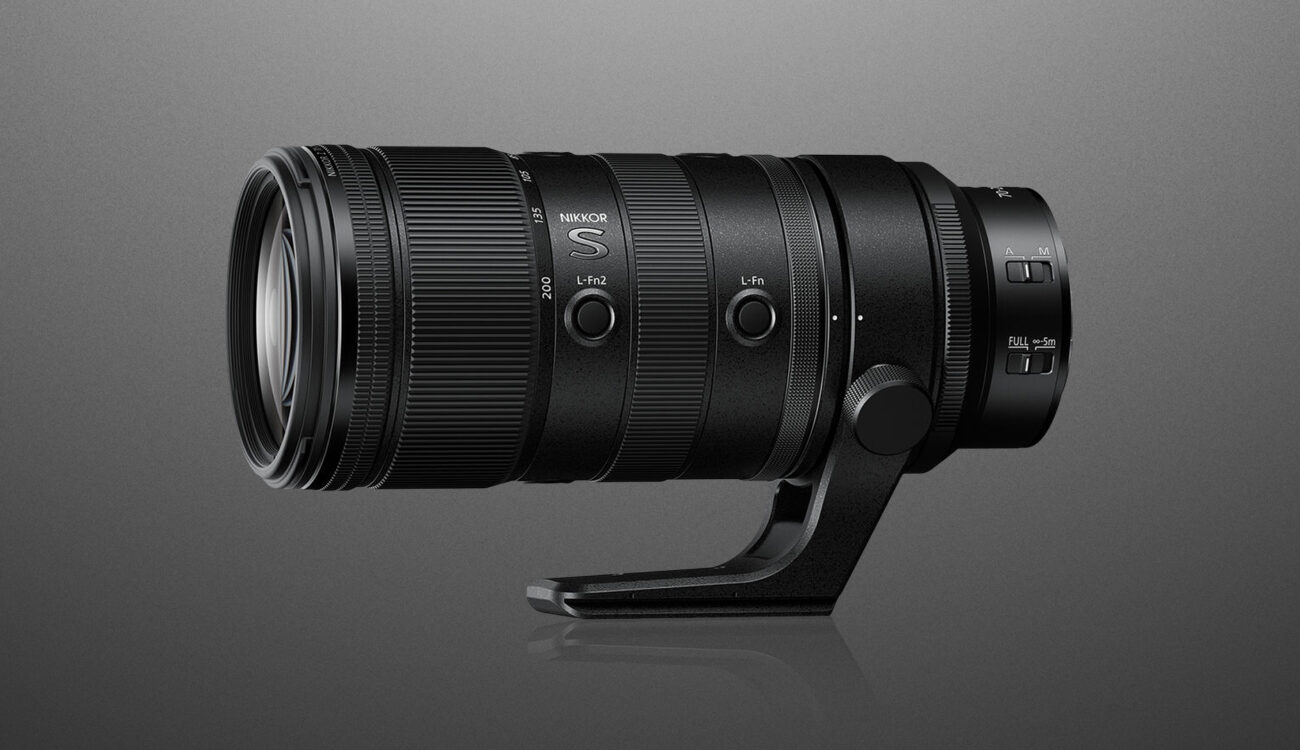
Nikon has just introduced an upgraded version of its classic telephoto lens, the new NIKKOR Z 70-200mm f/2.8 VR S II. Compared to the previous generation, it improves in every aspect, being lighter and more compact to carry around while offering superior image quality and autofocus performance. It’s now available to pre-order, so let’s take a look!
Back in August last year, Nikon began upgrading its “holy trinity” of lenses, starting with the introduction of the second-generation NIKKOR Z 24-70mm f/2.8 S II. As the first 24-70mm lens with an internal zoom design, it soon became my go-to lens for run-and-gun video work, paired with either my Nikon ZR or Z mount KOMODO-X.
Nikon’s first-generation 70-200mm f/2.8 VR S telephoto lens for Z mount mirrorless cameras was announced six years ago, and to be honest, it’s hard for me to imagine improving on this already impressive lens. However, it seems like the engineers at Nikon managed to pull it off with the new NIKKOR Z 70-200mm f/2.8 VR S II.
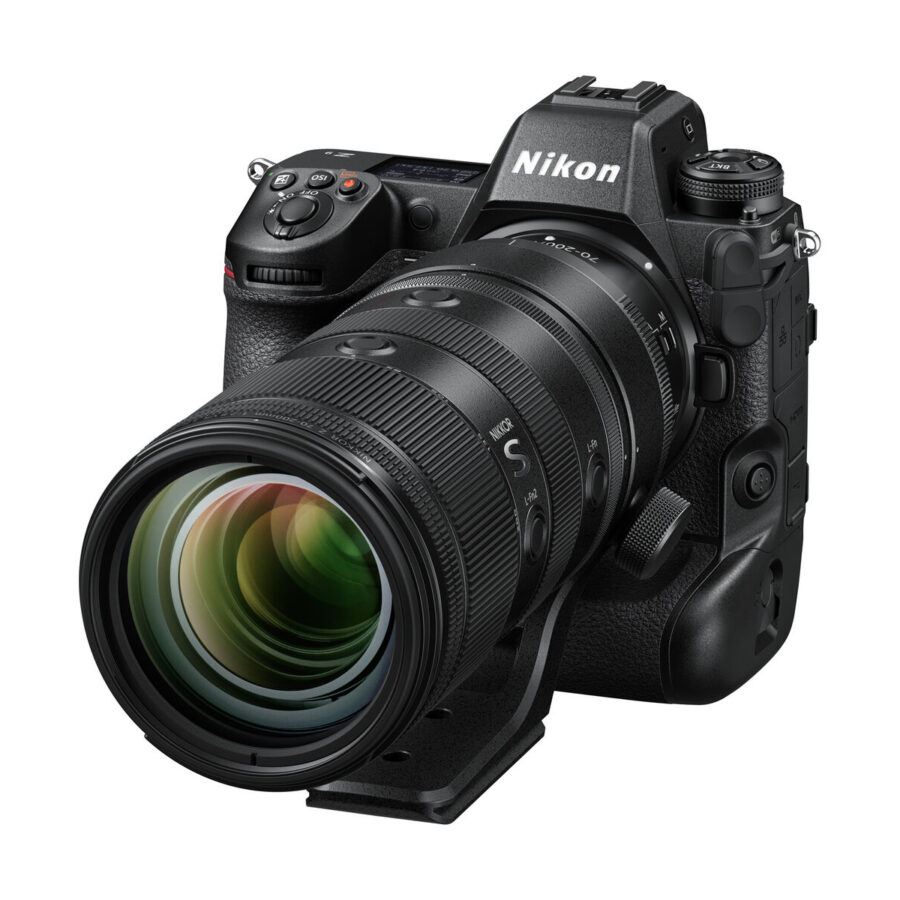 Nikon NIKKOR Z 70-200mm f/2.8 VR S II on Nikon Z9. Image credit: NikonNikon NIKKOR Z 70-200mm f/2.8 VR S II – overview
Some of the major differences with the first-generation model start on the outside of the lens. Indeed, the NIKKOR Z 70-200mm f/2.8 VR S II measures 208x90mm/8.2×3.6in and weighs 998g/2.2lbs, making it 12mm shorter and 26% lighter than its predecessor.
This full-frame Z mount lens offers the classic 70-200mm telephoto range with a constant f/2.8 aperture, but its reach can be extended if needed. Indeed, the NIKKOR Z 70-200mm f/2.8 VR S II is compatible with both Nikon’s 1.4x and 2x teleconverters, which respectively turn it into a 100-280mm f/4 or 140-400 f/5.6 lens.
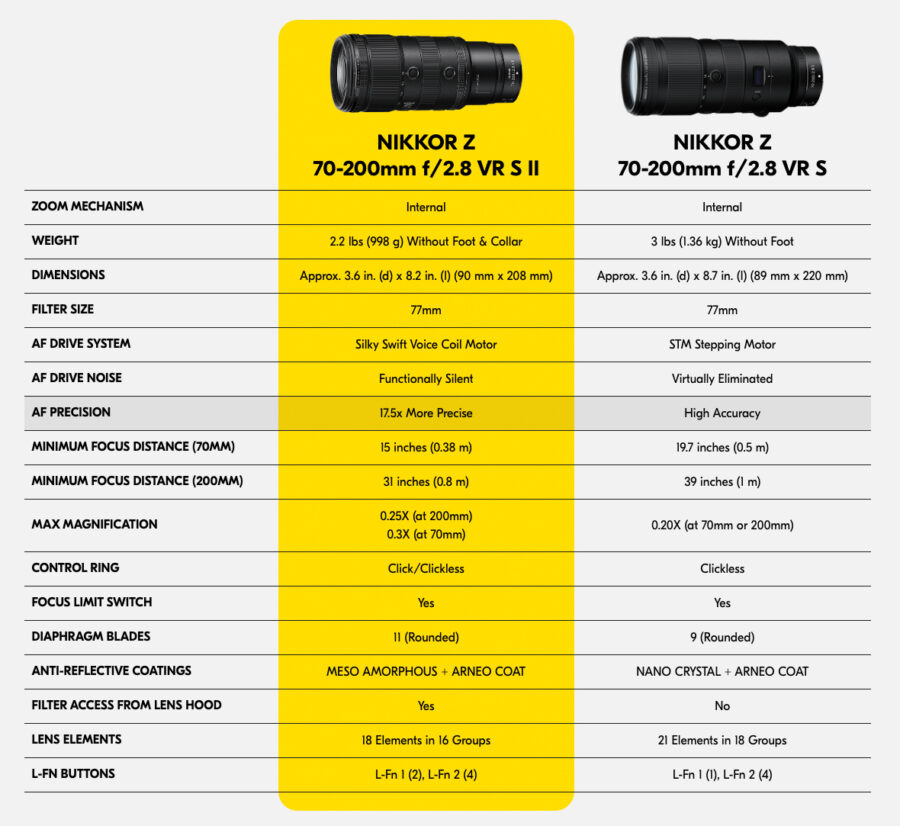 NIKKOR Z 70-200mm f/2.8 VR S vs NIKKOR Z 70-200mm f/2.8 VR S II. Image credit: Nikon
Just like with the first-generation model, as well as its 24-70mm S II sibling, the zoom mechanism is internal, so the length of the lens and center of gravity don’t change when zooming in and out. Given the more compact size, this makes it practical to use on a gimbal, for example, or pair it with a rod-mounted matte box.
Optical stabilization and new AF system
Moving on to the inside of the lens, another major improvement involves the autofocus system. The STM Stepping motors have been replaced by the SSVCM system (Silky Swift Voice Coil Motor) – the same found on the 24-70mm f/2.8 S II – which, paired with a new high-precision optical encoder, is claimed to be 3.5x faster and 17.5x more precise than the previous version, with focus tracking improved by 40% while zooming. According to Nikon, this level of performance comes with near-silent operation.
The lens features built-in VR (Vibration Reduction) technology, which is claimed to offer up to 6 stops of compensation. What’s interesting is that the lens’s built-in VR function can also be enabled from RED camera bodies. In my experience, this works pretty well and helps a lot when shooting handheld on a non-stabilized global shutter sensor, like KOMODO-X or V-RAPTOR.
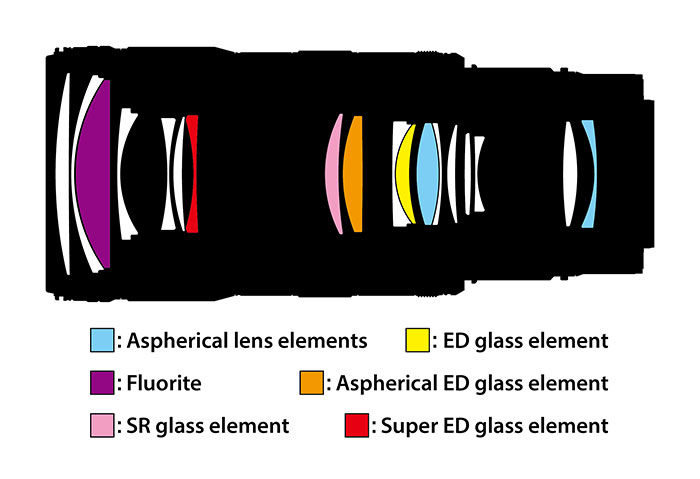 Optical design of Nikon NIKKOR Z 70-200mm f/2.8 VR S II. Image credit: NikonImproved optical design and bokeh
Part of the reason why this new version is shorter and lighter is that its optical design features fewer, thinner lens elements for a total of 18 elements arranged in 16 groups. As part of Nikon’s premium S-Line, the lens features the company’s best optical technology, with multiple types of special glass, such as fluorite, SD, ED, Super ED, and aspherical elements, as well as the proprietary Meso Amorphous and ARNEO coatings.
This should provide supreme image quality with plenty of detail, edge-to-edge sharpness, near-zero aberrations, and imperceptible focus breathing. Moreover, the number of iris blades has also been increased from 9 to 11, which should result in even smoother bokeh.
Close focus has also been improved significantly. This second-generation 70-200mm can now focus as close as 0.38m/15” at 70mm, and 0.8m/31” at 200mm. The maximum magnification ratio is 0.3x at 70mm and 0.25x at 200mm.
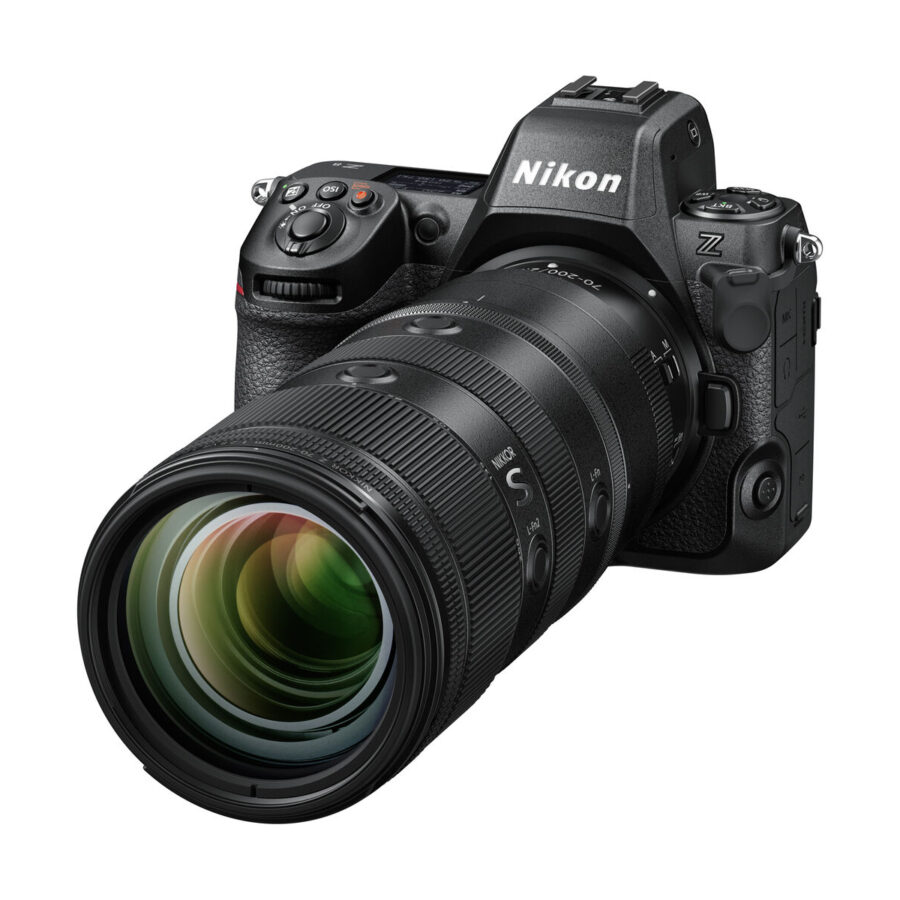 Nikon NIKKOR Z 70-200mm f/2.8 VR S II on Nikon Z8. Image credit: NikonOn-lens buttons and controls
Just like with the 24-70mm f/2.8 S II, the built-in OLED display is now gone, but the lens still retains an AF/MF switch, a focus range switch (limited/full), 4 customizable L-Fn buttons for both horizontal and vertical shooting, and a user-assignable control ring. Additionally, a new switch has been added, allowing you to adjust the feel of the aperture ring between stepped and de-clicked.
It’s worth noting that the on-lens buttons and controls can also be customized when pairing the lens with a Z mount KOMODO-X or V-RAPTOR, effectively expanding the number of user-customizable buttons available on your RED camera.
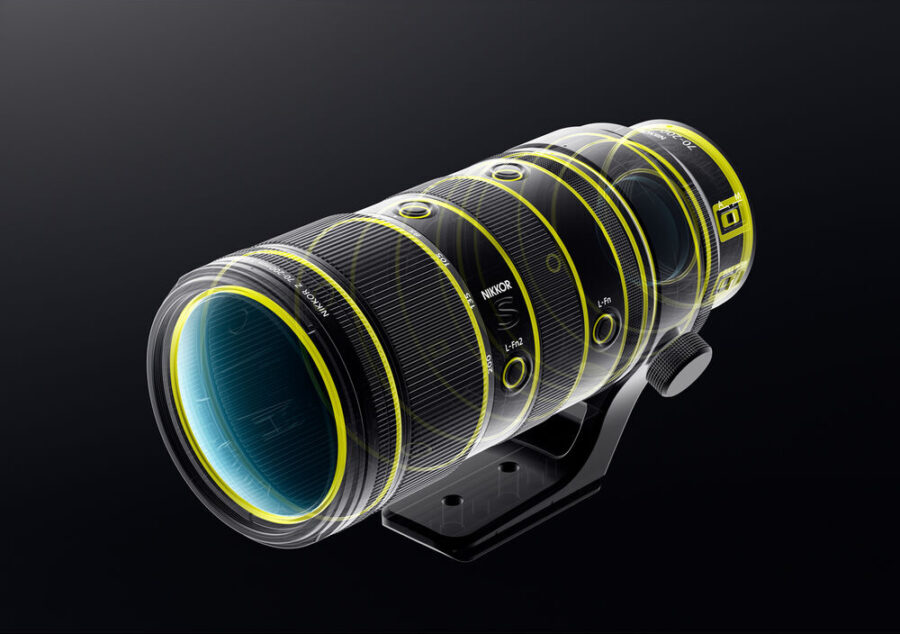 Weather sealing on Nikon NIKKOR Z 70-200mm f/2.8 VR S II. Image credit: NikonWeather sealing and physical design
Designed with professionals in mind, the Nikon NIKKOR Z 70-200mm f/2.8 VR S II features extensive weather sealing to prevent dust and moisture from entering the lens, while the hydrophobic fluorine coating of the front element repels water, dust, and moisture.
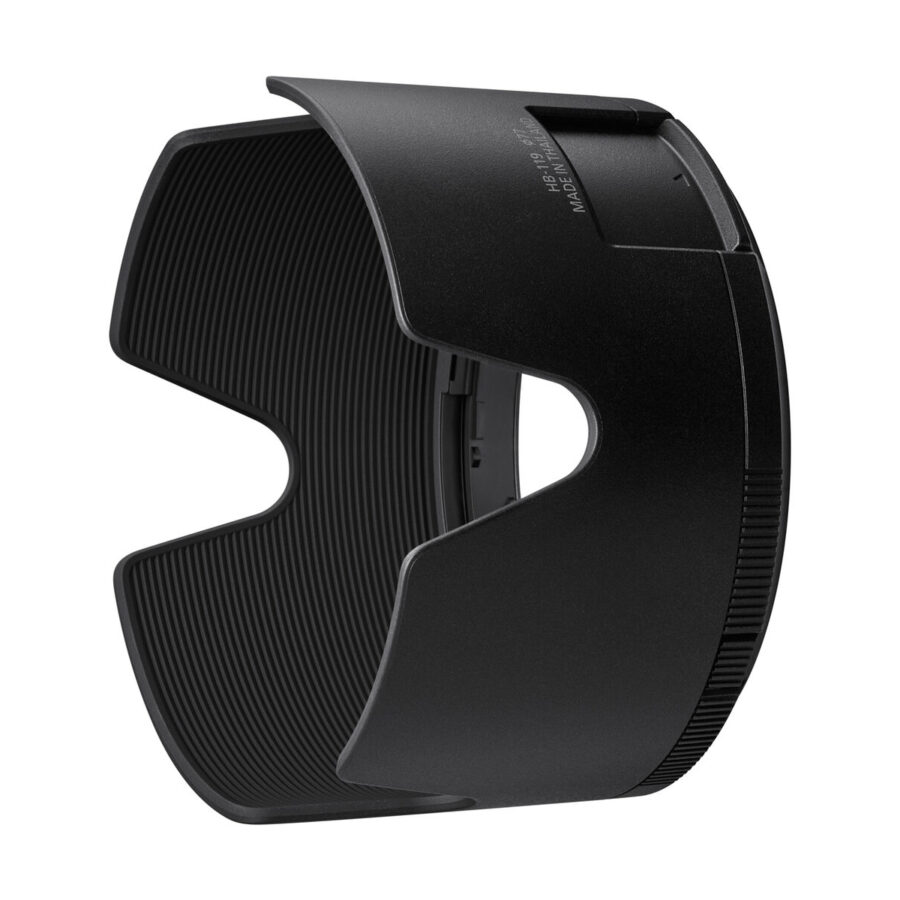 Lens hood of Nikon NIKKOR Z 70-200mm f/2.8 VR S II. Image credit: Nikon
The lens has a front filter thread of 77mm and comes with a redesigned lens hood with a built-in window that grants access to your ND or circular polarizer filter without removing the hood itself. A removable tripod collar with a built-in Arca Swiss interface is also included.
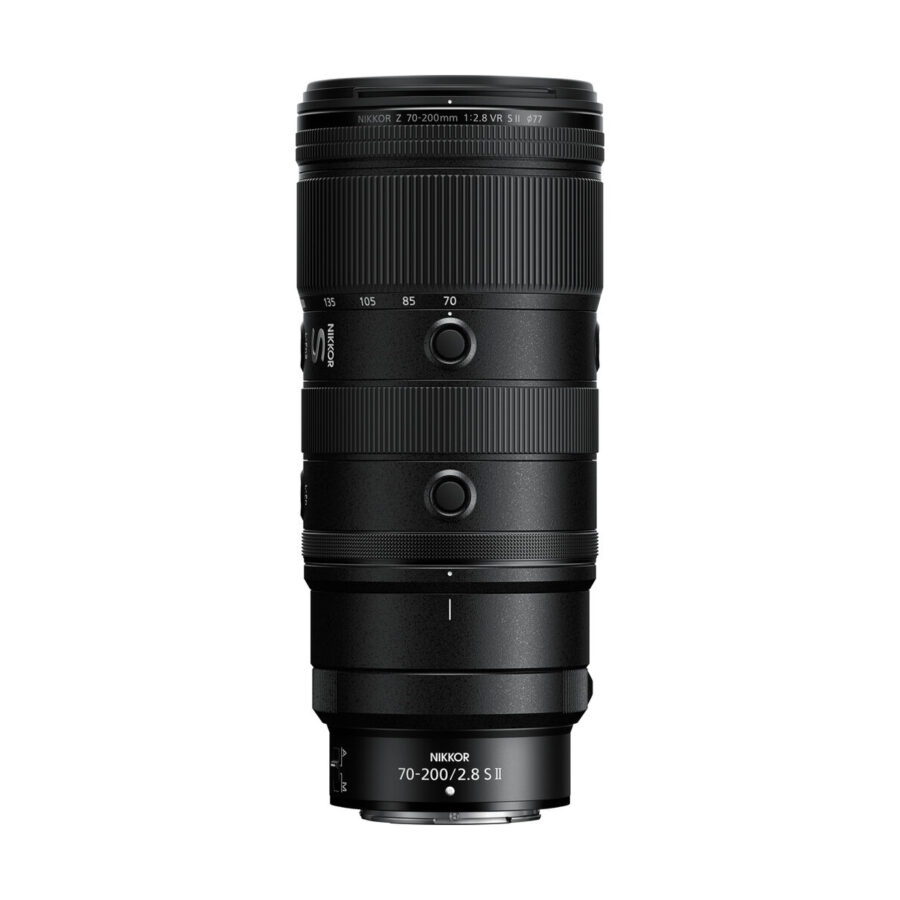 Nikon NIKKOR Z 70-200mm f/2.8 VR S II. Image credit: NikonPrice and availability
The new Nikon NIKKOR Z 70-200mm f/2.8 VR S II telephoto lens is now available to pre-order for $3,196.95 / €2,859.89. The lens will start shipping in late March. For more information, please visit Nikon’s website here.
Do you normally shoot with Nikon Z mount lenses? What do you think of these upgrades to Nikon’s 70-200mm f/2.8 lens? Let us know your thoughts in the comment section below!