
In the 1970s and 1980s, eight out of ten Australian children walked or rode their bikes to school.
Fast forward to today, and that number has dropped to just two in ten. It’s a dramatic shift – and one with serious consequences for our children’s health, independence, and connection to their communities.
The reasons for this decline are complex: busier roads, time-poor double-income families, sprawling suburbs, and safety concerns. But the solution is refreshingly simple. Active travel – walking, riding or even scooting to school.
For more than a decade, Bicycle Network’s nationwide Ride2School initiative has worked with schools, parents, students and local governments to get more kids moving. While the annual National Ride2School Day in March remains the flagship event, the broader year-round mission is to make it safe, normal, and fun for students to actively travel every day.
Enter Open Streets
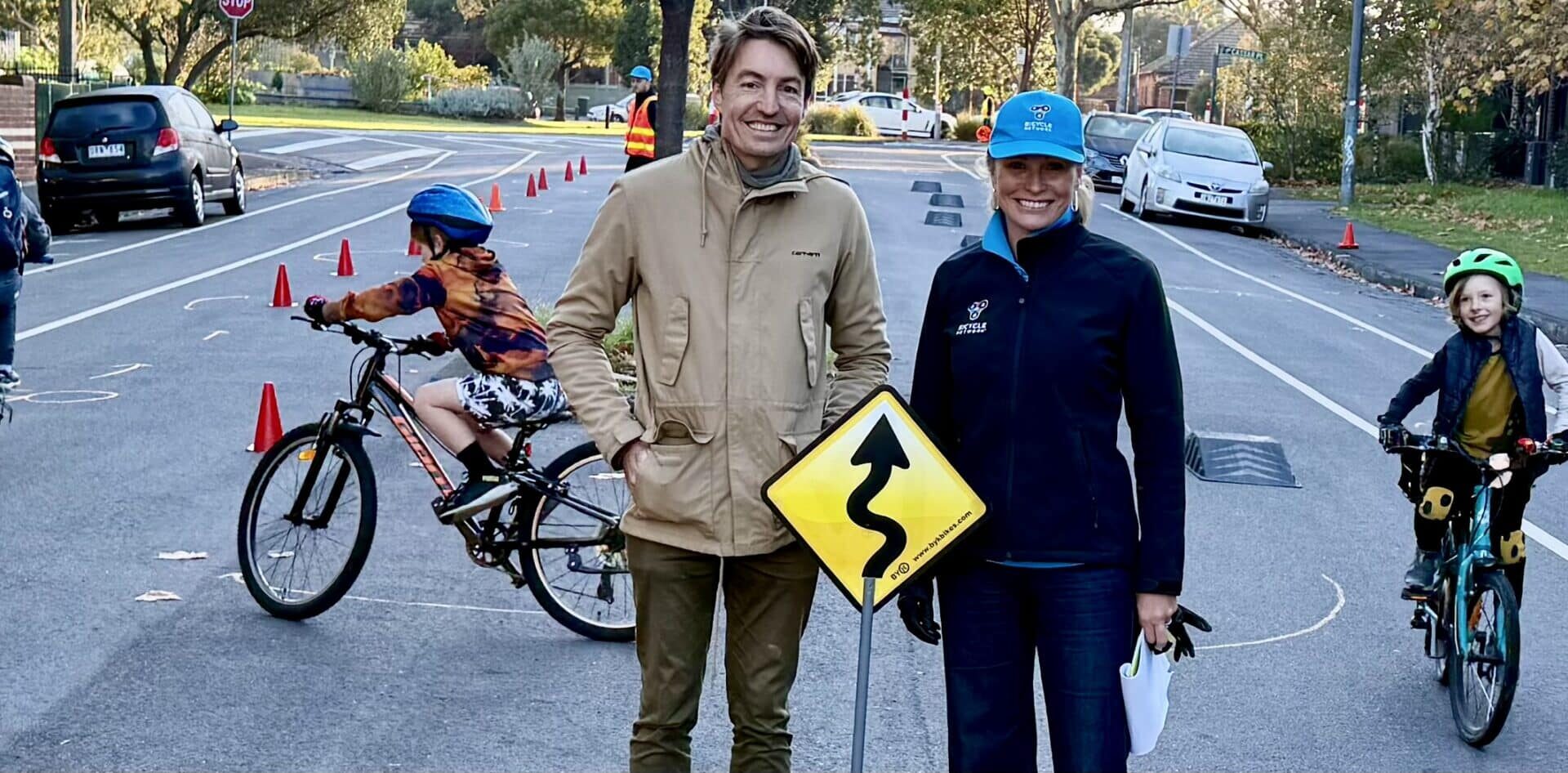
Launched in Victoria in 2021, Open Streets transforms the immediate area around schools into car-free zones during drop-off and pick-up times. By diverting motor vehicles, the program creates safe, welcoming environments where kids can walk, ride, and play – and where parents can breathe easier knowing their children are safer in the mornings and afternoons.
Having the opportunity to see the program in action, we visited Princes Hill Public School on a Thursday morning.
Upon arrival, instead of the usual sea of traffic and double-parked cars, it was a far calmer and more relaxed scene.
Princes Hill parent Nicholas Tyrrell was there with his commuter, having just ridden to the school with his son Ismo. A key advocate of the ride2School day since its inception, Nicholas explained how it came to be.
“I used to always ride with my son to school along this linear bike path – a safe and very popular cycling route through the suburbs,” he told Ride On.
“I noticed the last hundred metres between the bike path and the school was the most dangerous part of the trip. Even though it’s very short, there were parents parking their cars, opening doors and such things.
“So I thought ‘if we could just close this one intersection we could have our school directly connected to this huge safe route – kids could travel from 2 or 3 kilometres away without crossing a road. I put an application to Council about closing their street. They came back and asked me to put in an application through the Bicycle Network program,” he added.
“With the streets closed to traffic from 8am until 9am, and again from 3pm until 4pm, it makes such an enormous difference,” he said. “Everyone is very happy about it.”
A Different Type Of Parking Problem
Esme Capp, Principal of Princes Hill Primary School, said the benefits of the school’s active travel program go well beyond health and safety – they’re also about building a strong and connected community.
“The parents here are very much about sustainability – caring for the planet, caring for each other – and that deep sense of community is a big part of the culture,” she explained.
“Children and parents riding is something that’s embedded in the way things work around here. Having the facilities and support to do that safely has always been a priority.”
The school’s partnership with Bicycle Network, the City of Yarra, and strong parent involvement has helped bring that vision to life. “Families are living it at home, and it’s reflected in the curriculum too,” Capp told Ride On.
The full version of this article first appeared in Bicycle Network’s member magazine, Ride On. To subscribe to the print edition of Ride on CLICK HERE.