
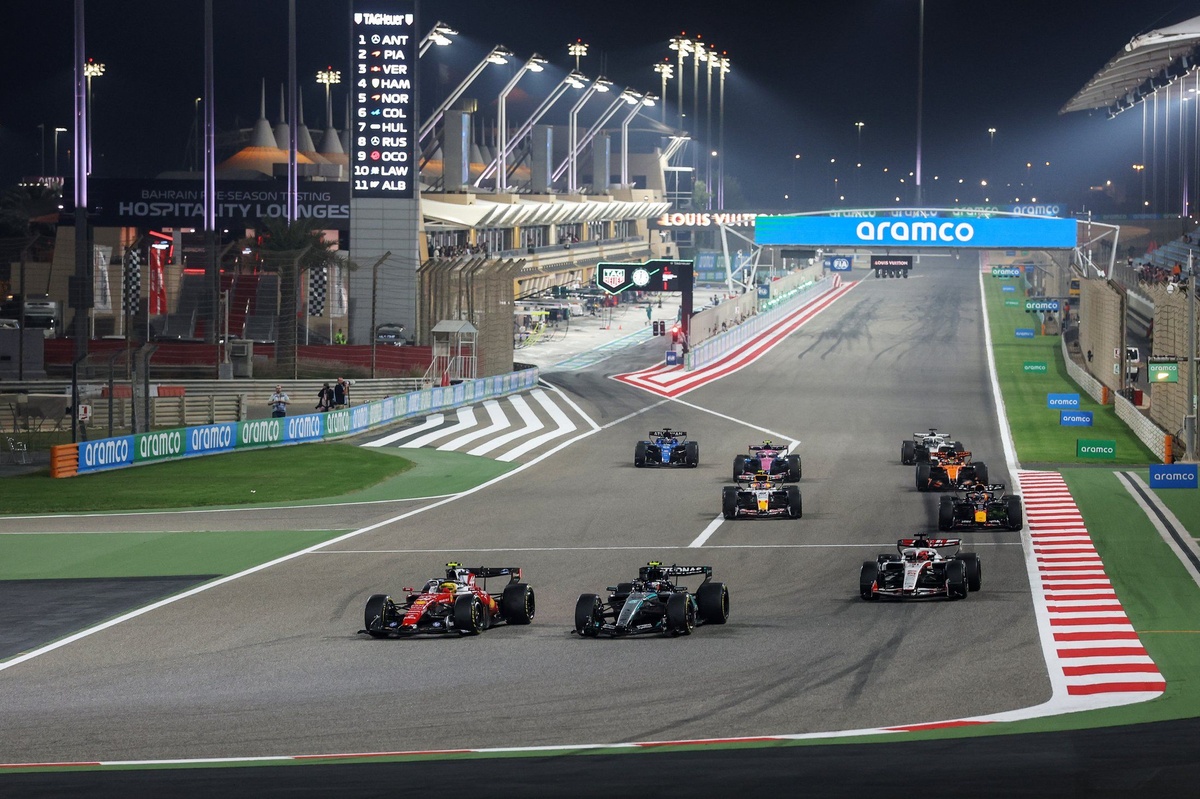
In the 2026 Formula 1 season, the driver is supposed to be even more at the centre of attention than in recent years – it was even cited as one of the key pillars of the new rules.
Drivers have more tools at their disposal than ever before, which initially raised some questions about the workload behind the wheel. But, FIA single-seater director Nikolas Tombazis made clear last year that, in his view, this may well serve as a performance differentiator.
“I think there’s a balance to strike between driving like a chess game of energy management, which we don’t want as one extreme, and then the other extreme where driving is just a steering wheel, a throttle pedal and a brake pedal,” he said.
The latter, Tombazis emphasised, is not the intention either. In his view, F1 should not become too simple. Drivers with greater mental bandwidth during a race should be able to gain a competitive advantage – something Tombazis said has always been part of the series.
“And that’s not only now, the mental bandwidth of drivers has been a factor for the last 20 years already – also in the younger days of my career, when I was working with [Michael] Schumacher for example,” he added. “I mean, obviously he was phenomenally talented, but a big part of what set him apart was that he could also think of all these other things during a race.”
How much freedom do drivers have over energy management?
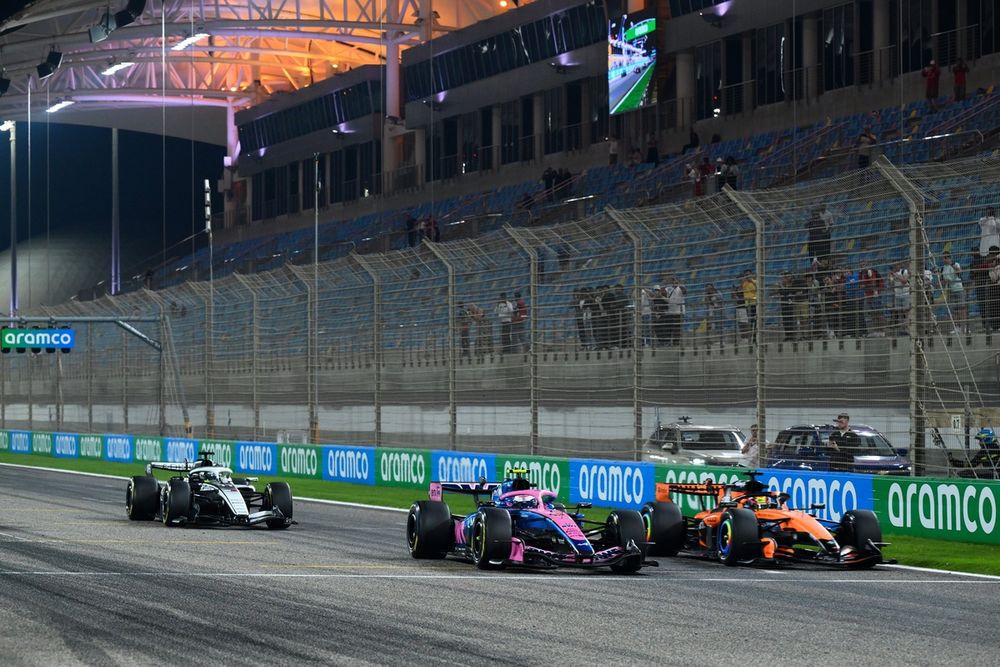
There’s been a regulation overhaul for 2026 with changes to both the chassis and power unit, which is now more reliant on electrical energy
Photo by: Simon Galloway / LAT Images via Getty Images
Although it is undeniably true that this has always been part of F1, based on the first impressions of 2026, two questions remain. First: how much of this is genuinely down to the driver?
After the testing days in Barcelona, Esteban Ocon explained that much depends on the preparations and that the person behind the wheel even needs to show some discipline. Given the current state of energy management, it is crucial to determine before the weekend what the most efficient approach will be. Behind the wheel, according to Ocon, the driver’s task is to execute that plan as well as possible.
“I think we are going to have more input prior to the session, to put the deployment where we want, where it’s more efficient, and how we feel quicker with that,” said the Haas driver. “Once the session is starting, it’s all up to the engineers to make it work, really. So I would say 20-80, 20% on us, 80% on the engineers.
“To drive, you need to respect it, but we are having such good tools at the moment, you know, to respect everything that we have to do that it’s not that complicated to follow.”
Braking as late as possible, carrying as much speed as possible through the corners, and getting on the throttle as early as possible should still be the core of F1, according to Verstappen – the combination of man and machine searching for the limit.
The optimal approach differs from circuit to circuit. McLaren team principal Andrea Stella distinguished between ‘harvesting poor’ and ‘harvesting rich’ tracks. Bahrain fell into the latter category, meaning drivers could recover nearly all energy under braking. Melbourne will be a different story due to its faster layout. There, according to many drivers – including home hero Oscar Piastri – more lift and coast will be required to achieve the fastest possible lap time.
Read Also:
In on-track battles, drivers do have much more scope to make the difference themselves, as it becomes more about tactical thinking than in recent years. Kimi Antonelli explained that in a wheel-to-wheel battle you need to anticipate what your opponent is going to do, and then adapt your own energy deployment accordingly in order to maximise the chances of making an overtake.
F1 must remain the ultimate challenge for man and machine
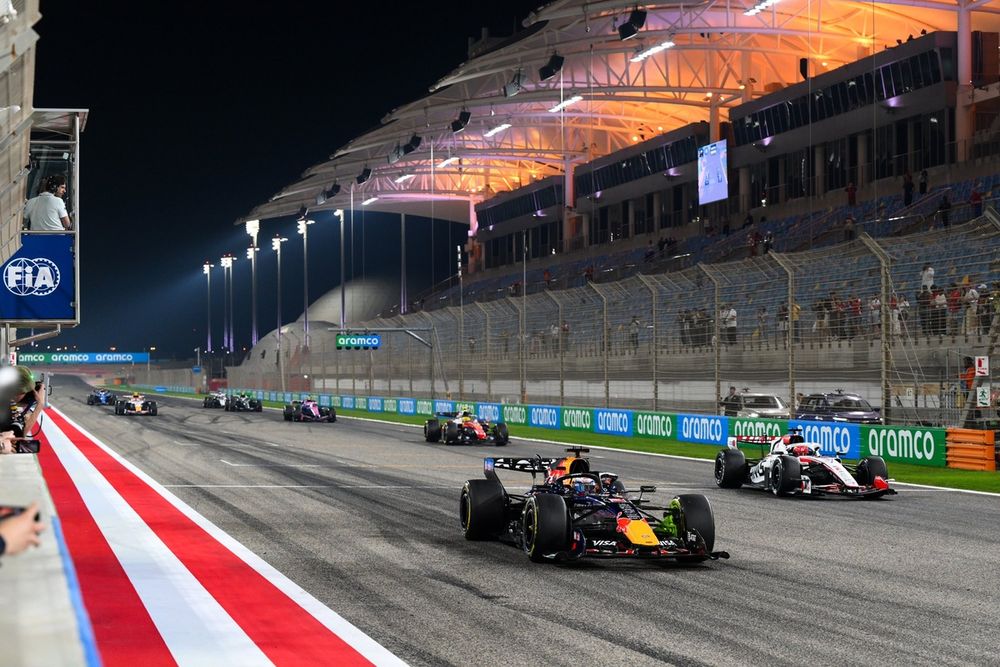
Verstappen has been outspoken against the ’26 regs, calling it “Formula E on steroids”
Photo by: Simon Galloway / LAT Images via Getty Images
This immediately raises a second question: is this the way fans want drivers to be able to make the difference?
Among others, Max Verstappen has stated that this tactical driving, in his view, feels more like Formula E. He would rather see F1 drivers fighting the limit of what’s possible – although it has to be said that tyre management has been a limiting factor for a long time. Braking as late as possible, carrying as much speed as possible through the corners, and getting on the throttle as early as possible should still be the core of F1, according to Verstappen – the combination of man and machine searching for the limit.
George Russell – who has been relatively positive about the new ruleset so far – pointed out that this will not necessarily be the quickest approach under the new regulations. On some circuits, taking a corner as fast as possible is no longer the best strategy for overall lap time.
“You have instances where when you go around the corners faster, you’re spending more energy and you’re harvesting less,” said Russell. “So you end up over the course of the lap having less energy to spend. You may gain a few tenths in the corners, but you may lose a couple of tenths on the straight.”
When these remarks were put to Verstappen during a Dutch media round in Bahrain, the Red Bull driver responded: “Yes, it’s more or less like that and that makes no sense at all, right? In certain corners and at certain circuits, you’re better off going through a corner a bit slower to recover more energy for the straight. Sorry, but that belongs in Formula E.”
It strikes at the heart of the matter: which skills does an F1 driver need the most in 2026, and in what way should he be able to make the difference behind the wheel? Most purists would argue that it should still primarily come down to ultimate car control and constantly pushing the limits.
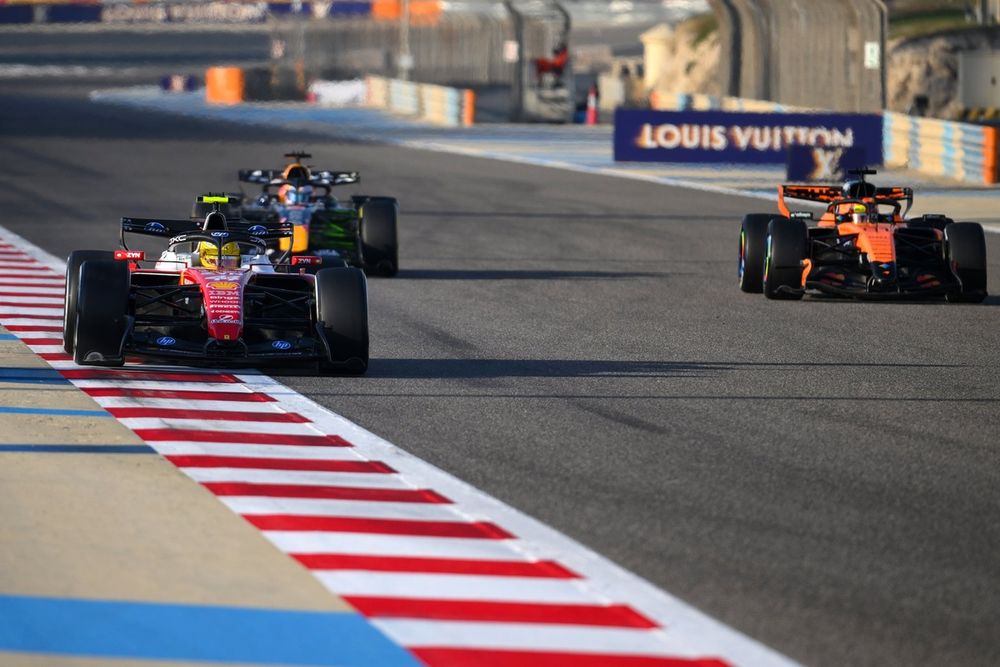
Despite much criticism of the new ruleset, more wheel-to-wheel battles should occur
Photo by: Simon Galloway / LAT Images via Getty Images
In that respect, these cars do have two positive aspects. First, they are slightly smaller and lighter, which should benefit wheel-to-wheel battles. Second, they have considerably less downforce, meaning drivers – particularly given the immense acceleration out of corners – slide more. On the onboard footage it is already visible that drivers are fighting the wheel more than last year, which is a positive development compared to the ground-effect machines that at times seemed to run on rails.
For now, however, energy management overshadows most of these positive elements – and that is exactly what F1 must be careful about. Ultimately, the best driver on the grid should still be rewarded, not the best manager. There is already a world championship for managing a limited amount of energy, meaning F1 must remain the ultimate challenge for both man and machine. And that core value – no matter how complex the technical regulations may be – must never be lost.
Yes, legendary drivers such as Schumacher and Ayrton Senna could indeed use their extra brain capacity, as Tombazis said. But they could apply it to think strategically with the team or to outsmart their rivals in on-track battles – not for unnatural situations, such as going slower through a certain corner because it brings better lap times.
And that is an important difference.
According to Stella, the solution for all of this does not necessarily have to be drastic. In race trim, the electrical power could theoretically be reduced to 250 kW to ensure drivers are less ‘energy poor’ at the end of the straights, and Stella himself advocated increasing super clipping to 350 kW – which would require less lift and coast and fewer unnatural elements behind the wheel.
Either way, this aspect should be kept firmly in mind. Yes, the driver should be able to make a bigger difference in 2026 – but preferably through pure driving skill, not by becoming half a manager.
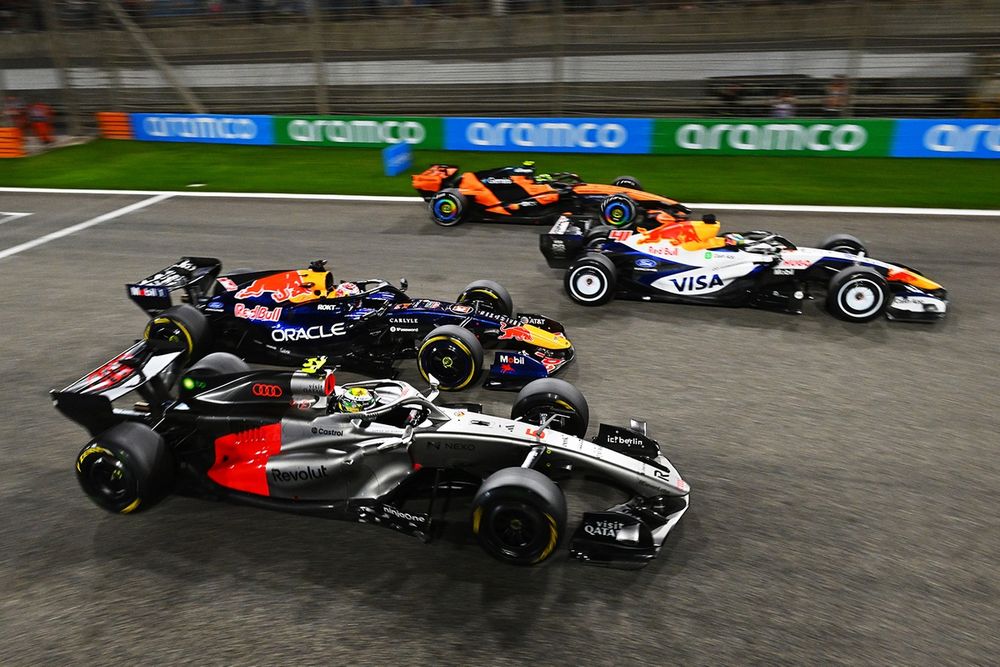
The 2026 F1 title should go to the best overall driver, not who maximises the energy management the most
Photo by: Mark Sutton / Formula 1 via Getty Images
We want to hear from you!
Let us know what you would like to see from us in the future.
– The Autosport.com Team