
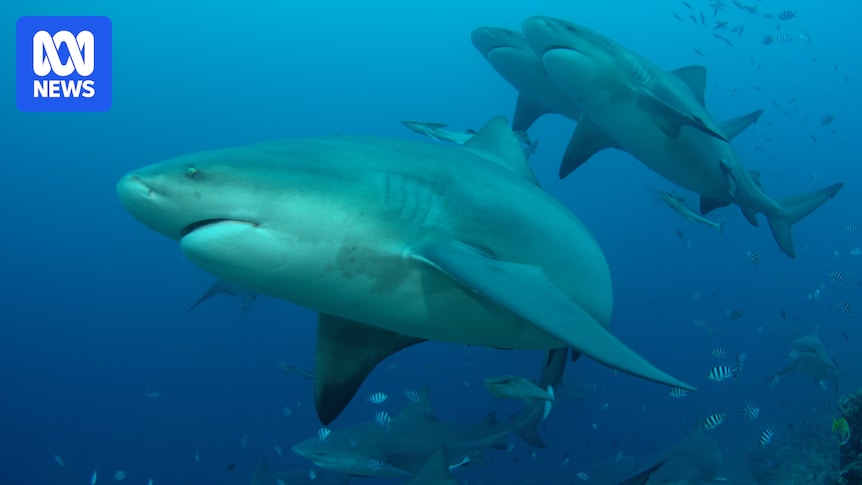
Local authorities in New Caledonia have announced they will resume culling sharks after a man died in an attack on Sunday.
The 55-year-old wing foiler was found dead near the popular beach of Anse Vata, in New Caledonia’s capital Noumea.
The fatality follows an attack earlier this year, where a scuba diver sustained injuries to his upper limbs.

Anse Vata beach has been impacted by the swimming ban. (ABC News: Nicolas Job)
In a statement, the South Province and the City of Noumea expressed “profound sadness and deep emotion” following the fatal shark attack, the first since 2023.
In response, authorities announced they would “relaunch a targeted campaign to cull tiger and bull sharks”, beginning on Tuesday, local time, and prohibit swimming and water activities within 300 metres of the Noumena coast.
The restrictions will be in effect until March 4.
The response has prompted concern from environmental groups, who say the decision is legally indefensible and politically irresponsible, given a New Caledonian court banned shark culls in 2023.
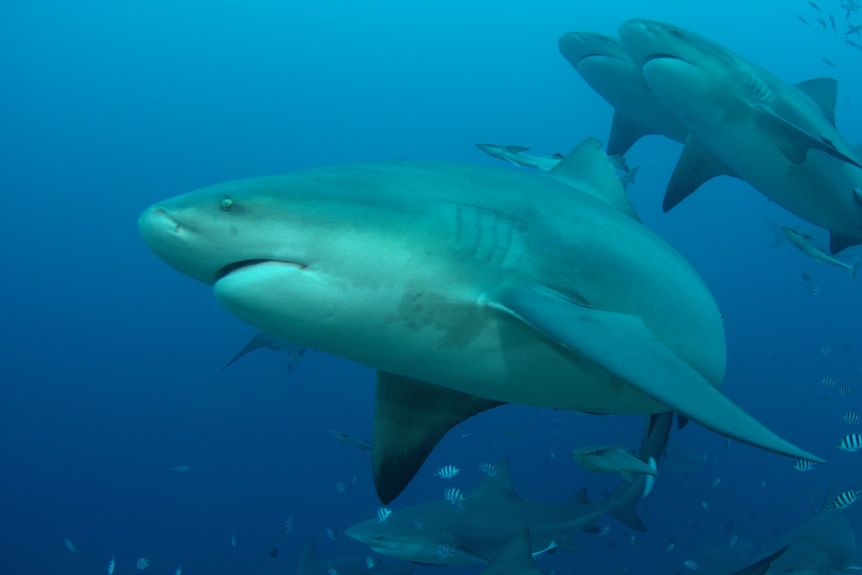
The South Province and the City of Noumea have announced that “targeted” culling of tiger and bull sharks is to resume. (ABC)
Shark behaviour expert Eric Clua said that indiscriminate shark culling was an ineffective and unscientific strategy for preventing human-shark interactions.
“I’m very frustrated because I know very well the place and I think that New Caledonia is not implementing the right strategy to face the problem they have,” he said.
Lacking ‘solid scientific basis’
After a series of incidents in 2023, including the death of Australian tourist Chris Davis following a shark attack, the Noumea provincial government commenced a tiger and bull shark culling program.
But environmental group Ensemble Pour La Planete (EPLP) mounted a legal challenge, and in December 2023 a New Caledonia court ordered authorities to stop culling sharks.
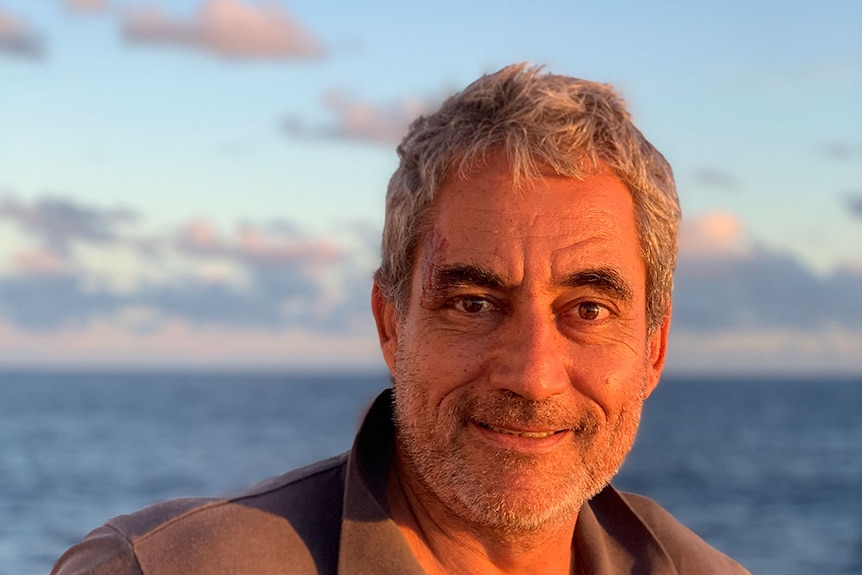
Eric Clua is an expert in shark behaviour. (Supplied)
In the statement this week, authorities said the decision to resume culling was made in light of the seriousness of the tragedy.
In a social media post, South Province president Sonia Backes said divers had warned of an increase in sharks but the court ruling prevented them from acting.
“If there are any appeals against our decision, I hope the court will take the situation into account,” the post said.
The decision to reintroduce a near-identical measure to that banned by the courts has been met with concern.
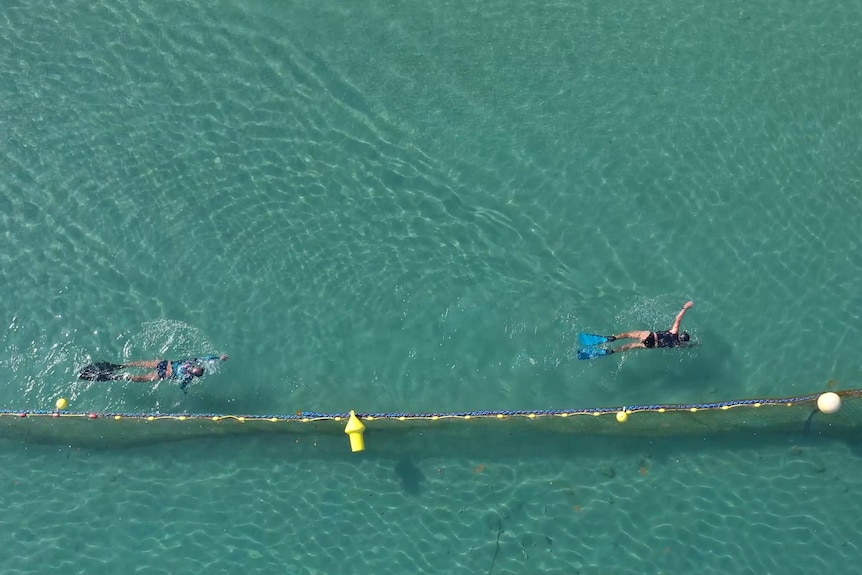
Two swimmers swim along a roped-off area at a beach in New Caledonia. (ABC News: Nicolas Job)
“Killing legally protected species without a solid scientific basis is not public policy, it is a visceral reaction,” said EPLP’s Martine Cornaille.
“In a democracy governed by the rule of law, court decisions are not optional.”
In a statement to the ABC, Ms Cornaille said EPLP had filed an emergency suspension request.
“We are asking the Administrative Court to immediately halt any lethal operations and to annul the decision entirely because governing does not mean placing political reaction above the law,” she said.
When asked what scientific evidence the decision to resume culling was based on, Noumea mayor Sonia Lagarde said authorities were relying on reports of a recent increase in sharks along the coastline.
“Numerous reports from residents, as well as from fishermen, inform us of sharks being present in very large numbers,” she told the ABC.
“These reports lead us to deploy municipal police drones and mobilise firefighters who intervene at sea.”
Rather than “culling”, Cr Largarde said the authorities would be conducting “regulation” of sharks.
“During the most recent regulation campaign conducted within the 300m coastal band around the bays surrounding Noumea, we recorded no attacks,” she said.
“We therefore experienced three years of respite following the previous attack.”
Cr Lagarde said the legality of the decision to resume culling would be decided by the courts.
“However, as mayor, I have a duty to protect my residents,” she said.

Martine Cornaille is a representative of the environmental group Ensemble Pour La Planete. (Supplied)
Culling strategy ‘useless’
Professor Clua spent a decade in New Caledonia researching the role of sharks in tropical ecosystems and their interactions with humans.
He said past “blind-killing campaigns” did not prevent shark attacks.
“Shark attacks are [a] tragedy but what they [authorities] are doing, it’s useless,” he said.
Professor Clua called on the government to implement a different strategy that would identify the “problem shark” by its DNA.
“I am not against killing sharks but what I’m proposing is being as efficient as possible by targeting the offender and avoiding that offender to repeat any other attack,” he said.
“Once you [tag the shark], like people dealing with terrorism, you have your database of reference and your potential offenders, and when it happens, then you look specifically for that shark and you remove it without culling all the other sharks.”
Professor Clua said this would better reflect the changing global attitude towards sharks.
“If we were doing the same with people, just imagine you have a serial killer in Sydney and you send the police in the street and you tell them, ‘OK … every human you see, you just kill it and we will solve the problem of the serial killer,'” he said.
“People will understand that you will never solve [the] problem that way, and unfortunately that is what we are doing with sharks.”