
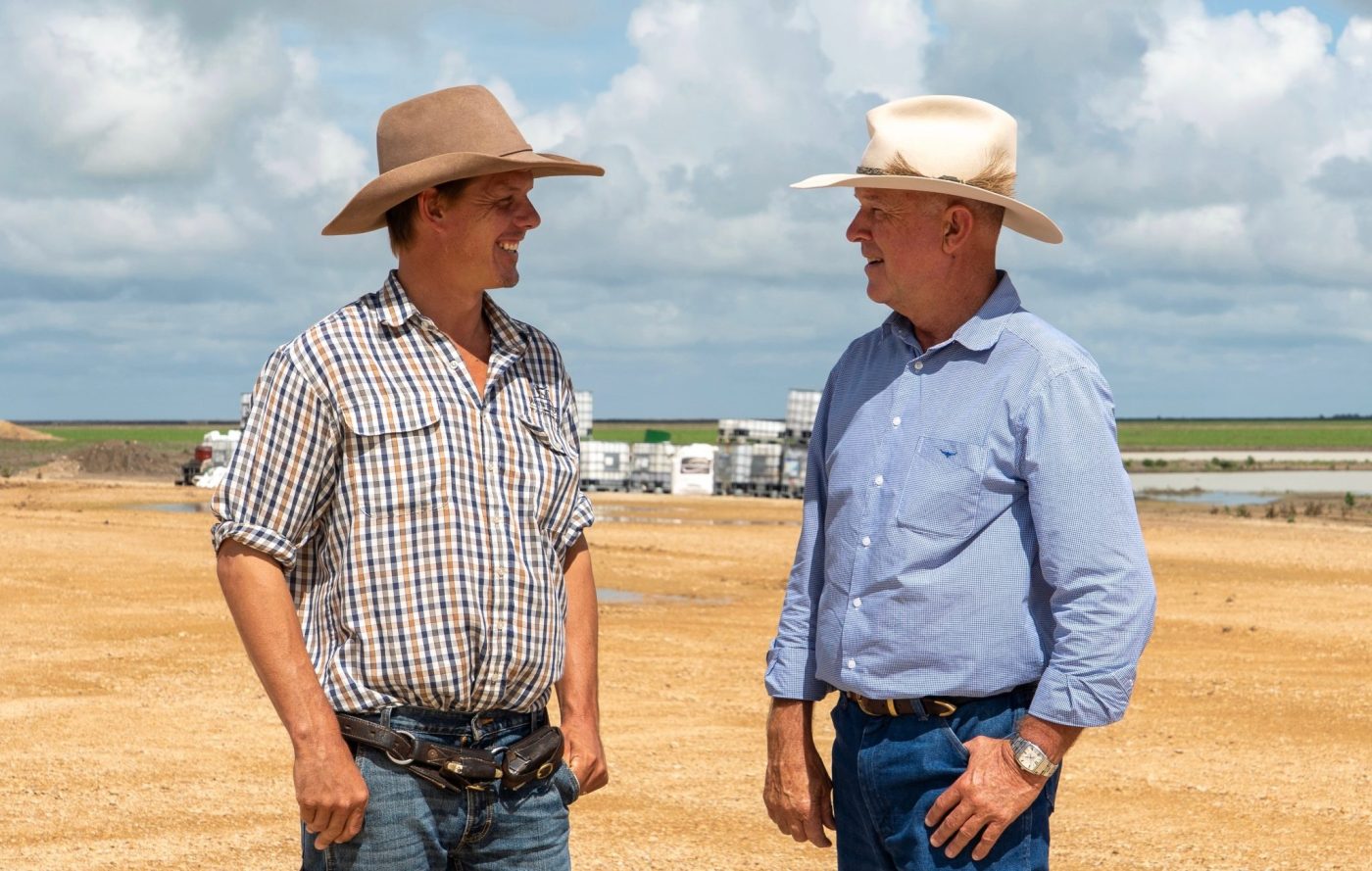
Minister Tony Perrett met with Jake Webster from “Balootha” near Julia Creek.
RAIN is continuing to fall on saturated paddocks in Queensland’s North-West, where the number of livestock deceased or missing as a result of floods earlier this year has risen to 94,824 head.
Qld’s Minister for Primary Industries Tony Perrett is this week visiting flood affected producers in the North-West to gain a first-hand understanding of the community’s needs from his government.
In the 24 hours to 9am today, 56mm has fallen in Julia Creek according to the Bureau of Meteorology.
Jake Webster from Balootha near Julia Creek flew the Minister around his property on Tuesday to show him the extent of the flooding, before more rain fell this morning.
“There was a system north of Julia Creek that dropped 80-120mm in a short amount a time,” Mr Webster said.
“The Flinders is already saturated, so any more rain is just going straight down the river, and we are not getting any benefit from it, so it’s not ideal.”
Mr Webster said he was running 7000 head of cattle when the January floods hit and estimates he’s lost 2000 head as a result of that event.
“The cattle that have survived were going surprisingly well; they did have rain scald, but the bit of dry weather and green feed has helped them,” he said.
“The grass has gone mad here, but this rain has saturated things again so it will take a toll on the cattle.”
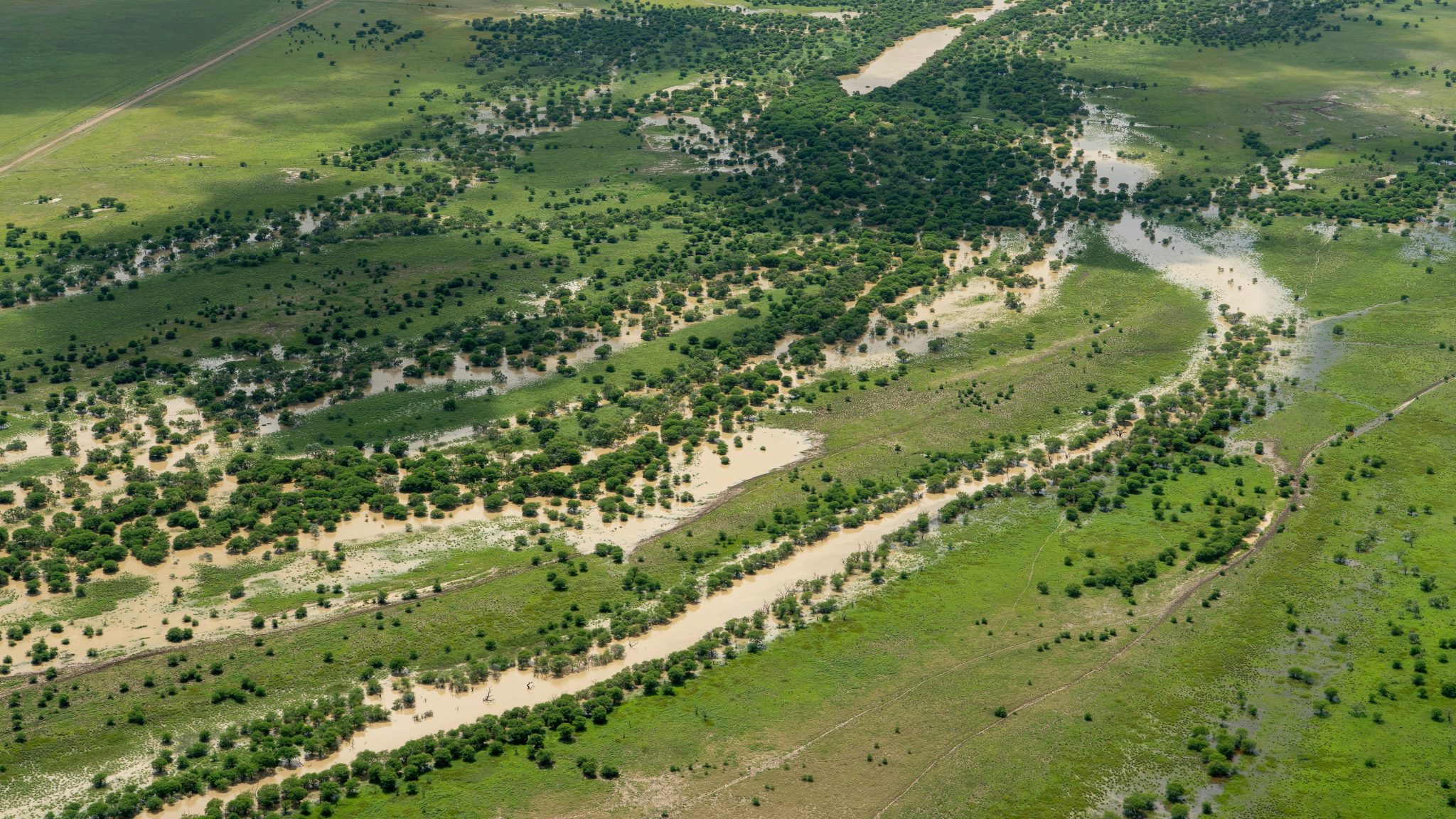
Saturated paddock near Julia Creek.
The Minister also met with Mayor of McKinlay Shire Janene Fegan and councillors, as well as members of the community involved with recovery and fodder drops at the peak of the flooding.
“The country is absolutely saturated, flood water from last month has been closely followed by more rain and the country is just not getting the chance to dry out,” Minister Perrett said.
“The looming weather systems continue to disrupt people’s ability to get a clear picture of the impact of the flood, and the storms and systems rolling through are fraying nerves further.
“The economic and emotional toll graziers endure when dealing with significant stock losses is not lost on me, nor is the economic flow on to the towns and small communities – there has been significant impact in the North-West.”
Minister Perrett said he is working closely with the Federal Government to provide disaster recovery support.
“This is my third trip to the North-West this year to hear directly from people affected, because the region needs to know we are listening, they are not forgotten and we back them,” he said.
Mr Webster said he is pleased the State Government amended the Queensland Rural and Industry Development Authority (QRIDA) recovery grants to allow producers who own other small business to access the funding.
“There are a lot of small business owners in the area that also run cattle, but they weren’t eligible for assistance because of their businesses, even though they are primary production related,” Mr Webster said.
“The floods were really hard on them, with some losing 80 to 90 percent of their cattle.
“They were the people helping with hay drops and lending a hand everywhere, so it is good to see changes were made to give them access to grants.
“I know there is still trouble with people getting applications through QRIDA if they could streamline that process, that would be good.”
State and Federal Government disaster support available
Primary producers in the McKinlay Shire Council area can access a range of financial assistance to support recovery:
Disaster Assistance Loans of up to $250,000 to re-establish normal operations
Essential working capital loans of up to $100,000 to cover essential costs
Primary producer disaster recovery grants of up to $75,000 for eligible primary producers
Freight subsidies up to $5,000 per property to move essential material including:
Fodder
Building and fencing material
Machinery
Restocking livestock
In addition, the Primary Producer Industry Support Package provides funding support for:
Rural Financial Counsellor
Mental Health Counsellor
Industry Recovery and Resilience Officers
Invasive Pest, Locust and Weed Response
Community Event Fund