
A dragonfly chasing prey and a starfish inching across the seafloor may live in the same world, but they do not experience time the same way.
New research shows that fast-moving animals process visual information in shorter time frames than slow-moving species. That difference reshapes how predators hunt, how prey escape, and even how artificial light affects wildlife.

By analyzing 237 species across insects, birds, fish, and mammals, scientists found that visual speed closely tracks lifestyle – revealing that evolution tunes perception to match how animals move through their environments.
Visual speed across animals
Working across Trinity College Dublin (TCD) and the University of Galway, Dr. Clinton Haarlem and colleagues documented that flying species and pursuit predators consistently detected rapid visual changes that slower or sedentary species missed.
That pattern held across distant branches of the animal kingdom, linking rapid perception to lifestyles built on maneuverability and sustained chase rather than to any single lineage.
By tying visual tempo directly to ecological pace, the findings set the stage for understanding how energy limits, light conditions, and hunting strategies further refine what each species can see.
When flicker becomes sight
Scientists measure critical flicker fusion (CFF), the maximum speed at which a flickering light can still be perceived as separate flashes, to compare how quickly different eyes process change.
When a light flashes faster than an animal’s CFF, the brain blends the pulses into a steady glow instead of separate beats.
Some insects and birds detect changes at more than 200 flashes per second, while slower animals miss much of that motion.
“From a dragonfly tracking prey in mid-air to a starfish grazing slowly across the seabed, animals live in very different perceptual worlds,” said Dr. Haarlem.
Flying requires faster vision
Flight stood out immediately. Flying species showed CFF values roughly twice as high as those of non-flying animals.
At high speeds, wings and bodies change direction rapidly, so eyes must register obstacles and prey with almost no delay. Even a brief blur can mean a missed catch or a crash, pushing natural selection toward faster neural updates.
That speed only matters if muscles can respond just as quickly, tying high CFF to whole-body performance rather than to eyes alone.
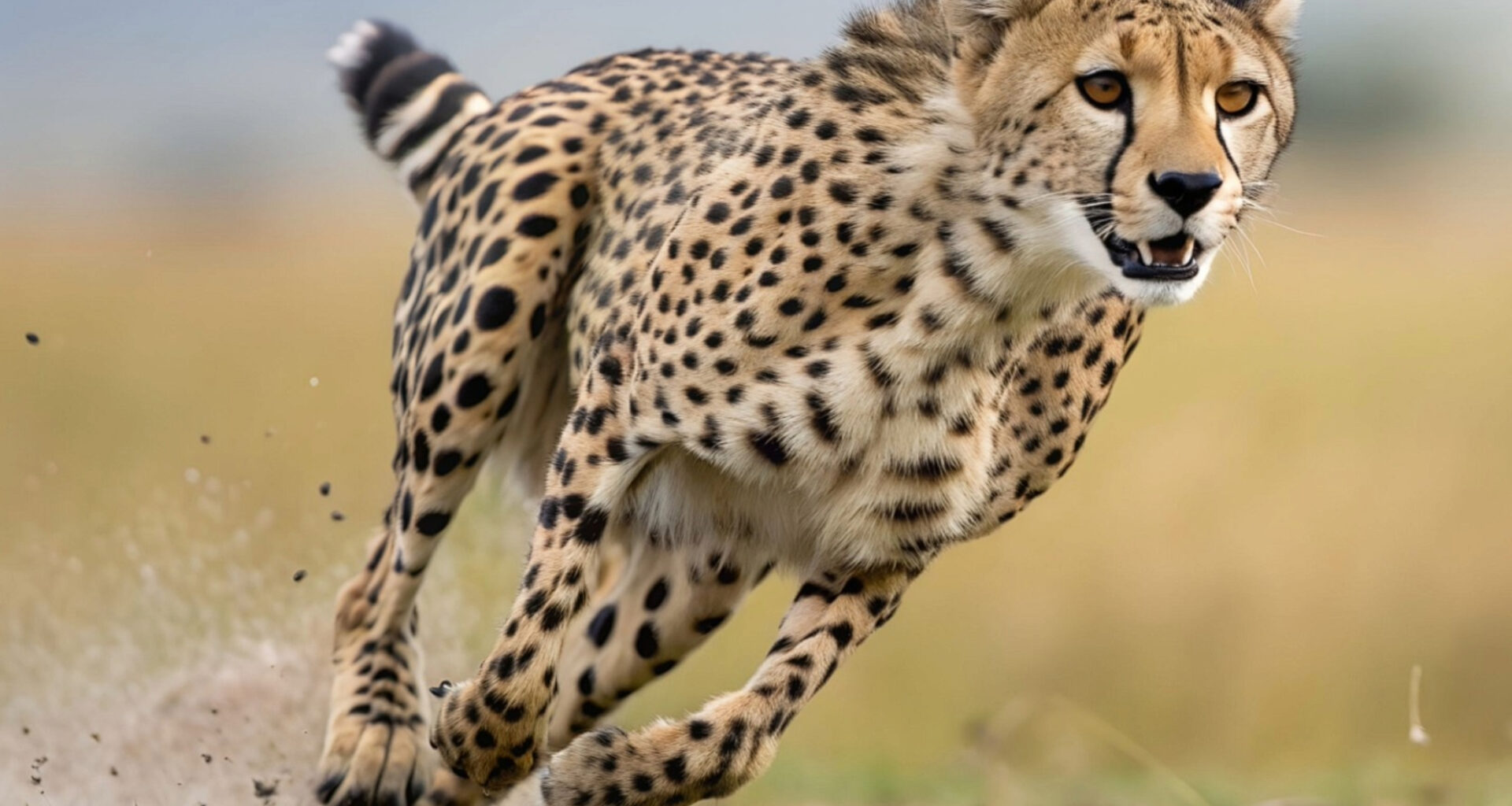
The same pattern appeared among hunters. Animals that chase fast prey showed CFF values about 1.5 times higher than those feeding on still or slow-moving food.
When a target constantly shifts position, the predator needs rapid visual updates to steer and strike. But when a meal barely moves, slower visual cues are often enough, allowing animals to conserve energy for growth or reproduction.
Together, those patterns show that perceptual speed tracks ecological pace – not just lineage or body type of animals.
Fast sight drains energy
High-speed vision comes at a cost. Nerve cells must fire more frequently to keep pace with rapid change, demanding constant energy.
Shorter integration windows in the retina make vision faster, but they collect fewer photons – the particles of light that hit the eye – in dim conditions. In low-light habitats, that tradeoff becomes unavoidable.
Bright environments, by contrast, allow eyes to sample scenes in shorter bursts while still gathering enough photons to form a clear image.
That helps explain why fast CFF values were most common in well-lit settings, while darkness and deep water favored slower processing that prioritizes sensitivity over speed.
In aquatic environments, body size added another layer. Smaller species tended to see faster than larger ones, especially when living and hunting in bright water.
Smaller bodies can turn and brake quickly, so delayed visual signals can disrupt a chase or escape. Larger aquatic animals often move with steadier momentum, and their CFF dropped as body mass increased under high light.
These findings suggest that energy demands, habitat lighting, water physics, and body design all place boundaries on how fast evolution can push visual processing.
Electric lights and animal vision
Flicker from many electric lights can appear to wildlife as rapid flashing, even when people see steady light.
“These findings suggest species with fast visual systems may be especially vulnerable to flickering artificial lights,” said Dr. Haarlem.
Designing outdoor lights with steadier output could reduce invisible stressors for animals that depend on rapid visual updates.
Evolution fine-tunes vision
The results support Autrum’s hypothesis – the idea that an animal’s senses are shaped by its way of life rather than by random quirks of evolution.
Natural selection can fine-tune eye cells and brain circuits for speed or sensitivity, depending on what best supports survival in a given animal habitat.
Different animals may share the same physical space, yet their brains slice motion into very different time units, shaping how they hunt, escape predators, and navigate their world.
“Understanding how animals perceive time helps us understand how they behave, evolve, and respond to environmental change,” said Haarlem.
Recognizing that tight link between perception and lifestyle could also help scientists predict which species are most vulnerable as environments shift rapidly.
Future research can expand to more species and track changes in lighting and habitat conditions – helping conservation planning better align with how animals actually see and experience their world.
The study is published in the journal Nature Ecology & Evolution.
—–
Like what you read? Subscribe to our newsletter for engaging articles, exclusive content, and the latest updates.
Check us out on EarthSnap, a free app brought to you by Eric Ralls and Earth.com.
—–