

In a shocking twist after a months long bidding war, Paramount has emerged as the apparent victor in the fight to acquire Warner Bros Discovery.
Netflix, who backed away from the deal this week, had hoped to win the movie studio and its vast film library.
Almost 10 years ago, Hollywood’s big six became the big five when Disney bought most of 20th Century Fox.
Now the big five looks like it’s destined to become the big four, including Universal and Sony, and the business of Hollywood movie making is once again in a time of profound transition.
Here’s what we know and what this means for the movies.
Why did Netflix bow out of the fight?
Simply put, it was no longer “financially attractive”, the company said.
In December, Netflix had reached a deal to acquire some of Warner Bros. Discovery’s assets including their library, movie studio and HBO.
Netflix declines to raise offer for Warner
Almost immediately Paramount, who months earlier had expressed interest in purchasing Warner Bros, initiated a hostile takeover bid for the whole company, which culminated in a $US31 per share offer this week.
Netflix, whose previous offer was $US27.75 per share, declined to counter.
“We believe we would have been strong stewards of Warner Bros′ iconic brands,” Netflix’s co-CEOs Ted Sarandos and Greg Peters said in a joint statement.
“But this transaction was always a ‘nice to have’ at the right price, not a ‘must have’ at any price.”
David Zaslav, the chief executive of Warner Bros Discovery, said in a statement that they were excited about “the potential of a combined Paramount Skydance and Warner Bros Discovery and can’t wait to get started working together telling the stories that move the world”.
What are Paramount’s plans with Warner Bros?
Paramount Skydance chairman and CEO David Ellison has said that he would like to grow their combined slate to more than 30 movies a year, keeping Paramount and Warner Bros as stand-alone operations.
In documents filed to the Securities and Exchange Commission last month, Paramount said:
“Our priority is to build a vibrant, healthy business and industry — one that supports Hollywood and creatives, benefits consumers, encourages competition, and strengthens the overall job market.”
They’ve also said they would look for ways to save some $US6 billion through job cuts in “duplicative operations”.

Paramount CEO David Ellison said the company wants to produce more than 30 movies a year. (AP: Alberto Pezzali)
Executives at Paramount have argued that merging with Warner will allow it to compete with bigger rivals, particularly in the streaming space, and bring larger content libraries for its customers.
Is this a better outcome for movie theatres?
Cinema United, the trade organisation representing movie theatres, was opposed to a Netflix-owned Warner Bros for fear of what it might mean for the future of films.
Exhibition and box office has not fully recovered since the pandemic — previously the annual domestic box office would regularly surpass $US11 billion.
Since 2020, it has only exceeded $US9 billion once.
But consolidation is also a concern.
Although Paramount has an established background in theatrical distribution, Cinema United is worried about that outcome as well, which they explained in a statement to the Senate Judiciary subcommittee hearing in early February.
They noted that a combination of Paramount and Warner Bros would consolidate as much as 40 per cent of each year’s domestic box office in a single studio.
“We have been clear from the outset about our concerns around consolidation, and nothing that has occurred within the past 36 hours has changed that,” said Cinema United’s president and CEO Michael O’Leary in the statement.
“Studio consolidation historically leads to fewer movies being made, and at this juncture, there is no reason to believe the outcome here will be any different. We continue to urge regulators to heed the lessons of the past.”
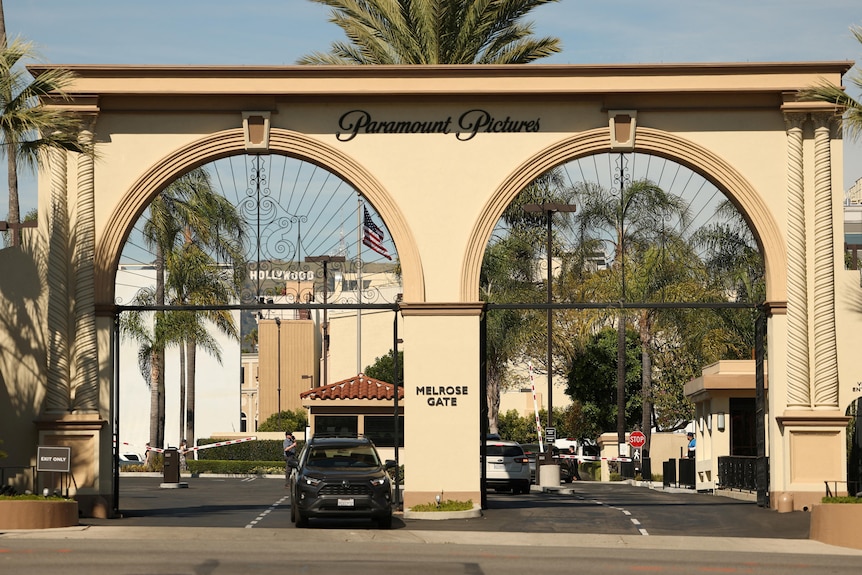
Some people are skeptical the possible merger between Warner Bros and Paramount will benefit movie theatres. (Reuters: Mario Anzuoni)
In theory, a guaranteed 30 films a year would be a good thing for movie theatres, assuming they are all shown on the big screen and it’s not a combination of theatrical and streaming titles, as has happened with a Disney-owned 20th Century Studios.
But some are skeptical that will pan out.
Hollywood historian and author Mark Harris wrote on Bluesky that “the idea of a Paramount-WB merger producing 30-40 movies a year is an absurd fiction”.
He predicted that first Warner Bros would become the “classy” label within Paramount, “then it will become the specialty or streaming label. Then it will die”.
Actor Jane Fonda had previously said that regardless of who acquired the company, a “consolidation at this scale would be catastrophic for an industry built on free expression”.
The current state of Paramount movies vs. Warner Bros
Warner Bros, among the most filmmaker-friendly studios operating, has had a banner year with major blockbusters and critical successes.
This year they collected 30 Oscar nominations thanks to Sinners and One Battle After Another.
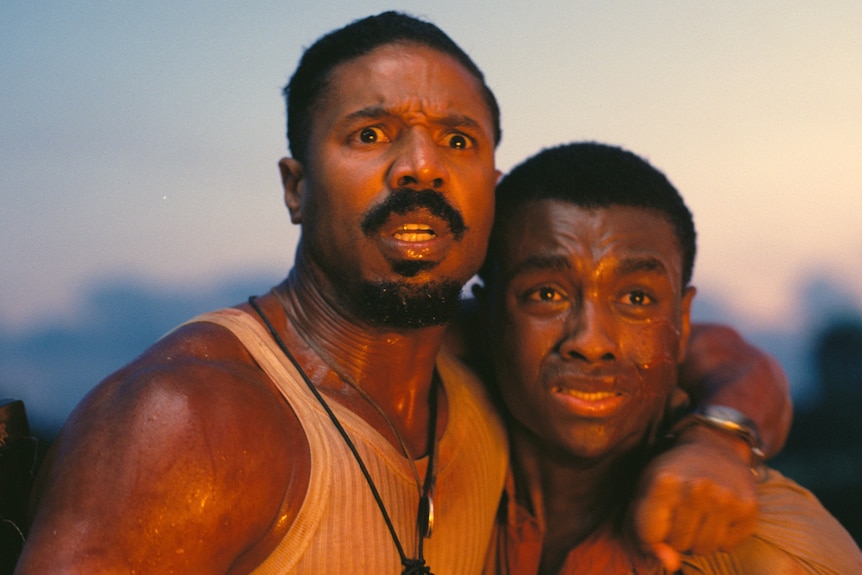
Sinners was one of Warner Bros’ major blockbusters in 2025. (Warner Bros)
Paramount films received zero.
In 2025, Warner Bros movies (including A Minecraft Movie, Superman and Sinners) also accounted for 21 per cent of the domestic box office.
Paramount’s market share was only 6 per cent, driven largely by Mission: Impossible — The Final Reckoning, which didn’t even place in the top 10.
In November, Paramount pledged to up its 2026 theatrical output to at least 15 movies.
While Warner Bros has succeeded with a combination of original and franchise films, Paramount’s slate is decidedly more franchise heavy with intellectual property such as Transformers, Scream, Sonic the Hedgehog and Paw Patrol in their arsenal.
Will HBO Max and Paramount+ combine?
That remains unclear.
It’s possible there will be a bundling situation as with Disney+ and Hulu.
Will regulators approve the deal?
That remains to be seen.
The US Department of Justice has already initiated reviews, and other countries are also expected to do so.
AP