

Richard Collier-Keywood and Julius Caesar might have had their differences, but indulge me for a moment, Sports Reporter Matthew Southcombe writes.
When Caesar fell, his assassins believed they had killed not only the man, but the movement. Rome proved them wrong.
Caesar’s allies regrouped and, in time, the Empire was reshaped in his image.
The late Roman General’s views on whether Welsh rugby should reduce from four to three professional clubs were never sought, even if he did know a thing or two about political unrest.
 Julius Caesar’s views on whether Welsh rugby should reduce from four to three professional clubs were never sought, even if he did know a thing or two about political unrest, writes Matthew Southcombe.
Welsh rugby might be a long way from Ancient Rome. Yet as Richard Collier-Keywood faces a vote of no confidence amid fury over governance reform and the future of the professional game – including the proposed reduction of regions that could see the Ospreys cease to exist – the same question lingers: Is this a reckoning for the leader or the direction of travel?
Because history tells us that stopping the person at the top doesn’t always stop the movement.
In the coming weeks, WRU Chair Collier-Keywood will face a vote of no confidence. If there is hope that ousting him will salvage Welsh rugby’s status quo, it is likely misguided.
Even if the chair is removed, the reforms are likely to endure because they have the support of the wider WRU governance structure, not just one man.
It is a point that was repeated during the WRU’s audience with MSs at the Senedd on Thursday.
The reforms of professional rugby in Wales were devised by the WRU’s executive team, led by CEO Abi Tierney and Director of Rugby Dave Reddin.
They were then ratified unanimously by the WRU’s 12-person Board, which includes Independent Non-Executive Directors, figures from the Community Game and modern elite men’s rugby experience in the form of Jamie Roberts.
 Richard Collier-Keywood’s leadership is under threat after member clubs called for an Extraordinary General Meeting (EGM). (Credit: PA)
It will take over 50% of the vote share to remove Collier-Keywood at the EGM – which must take place before April 12. But it will take a lot more to reverse this.
It is almost unfathomable that a new Chair would come in and detonate a proposal that has already been adopted with so much internal support.
If we stray into hypothetical situations, that’s where things could start to turn. Were Collier-Keywood to go, we don’t know how his lieutenants would react.
A new Chair may well want their own CEO. Tierney may well make that decision on her own.
And what would Reddin make of it all? He has been in post for less than a year but has quickly become a pariah in the eyes of his detractors.
All three have endured personal abuse in recent months – and a line has been crossed in that regard. But their appetite for this process may wane. If the Chair goes, others could decide to follow.
And if Reddin, the real architect of these plans, leaves, then the pressure to abandon them altogether might be too much for the WRU to bear.
But even in that scenario, danger would linger. How would Y11 react? The Ospreys owners have placed the Swansea-based region in peril by also entering negotiations to take over Cardiff.
If Welsh rugby’s governance structure collapses, they may decide the chaos is too much and walk away from the game altogether, taking their money elsewhere, leaving two clubs in dire straits.
This is all hypothetical and it is a chain of events that is almost too combustible to fathom. But you should never underestimate Welsh rugby’s penchant for mayhem.
For now it appears that the Union is not backing down. Their visit to the Senedd represented a tone shift. There was less deference in their answers to politicians this time, they were more unapologetic.
They were digging their heels in, not conceding ground.
But opponents to these plans can also turn to history for solace.
Whilst Caesar’s ideologies endured after his death, they did not last forever.
Even the Roman Empire fell, eventually.
 Rhun ap Iorwerth told his party’s conference that this year’s Senedd Election is ‘a straight choice between Plaid and Reform’. (Credit: PA)
There’s no doubt that Plaid Cymru members meeting in Newport are in high spirits and they have every right to be, writes Adrian Masters, ITV Wales’ Political Editor.
The conference at the ICC is one of the slickest of theirs that I’ve attended: it’s glossy, big and there certainly seem to be more members here than I’ve seen for a while.
There are more and bigger lobbying organisations and third sector groups here, along with an increased UK media presence – all sure signs that people are paying attention to Plaid in a way that they haven’t always.
So yes, those members gathering here in Newport are enthusiastic, but Plaid Cymru members are (nearly) always enthusiastic and that hasn’t always translated into voting success in the past – in fact it rarely has.
Things are different this time though. Successive polls have put Plaid Cymru in the lead ahead of May’s Senedd election. Not just that, but the party has a recent actual election victory – in Caerphilly – to point to.
 Plaid Cymru’s leader addressed larger-than-usual crowds at the party’s conference. (Credit: PA)
All of this means that Rhun ap Iorwerth announcing his plans for the first 100 days of a Plaid Cymru government is being greeted with scrutiny not scorn as it might have been in the past.
Some of that scrutiny could prove to be uncomfortable. For instance, the same polls that show Plaid Cymru’s popularity also show that far fewer – 26% – back independence, which is the party’s raison d’être after all.
Rhun ap Iorwerth has been clear that there won’t be a referendum on independence in the first term of a Plaid government, but that he would use that time to make a case.
So that COULD mean a referendum some time after 2030, which doesn’t sound that far away.
Then there’s the question of the language. Would a Plaid Cymru government step up the use of Welsh and guarantees for Welsh speakers in a way that could alienate non-Welsh speakers?
When I asked Rhun ap Iorwerth about that recently, he insisted a government led by him would govern for everyone in Wales, not just Welsh speakers and independence supporters.
There are difficult questions ahead for him and Plaid Cymru, but the fact that they are both being asked those difficult questions and gaining a hearing for the answers, is a big change that they’re welcoming. They want another big change to happen on May 7th.
ITV is one of Britain’s most trusted providers of news. You can access our expert analysis, correspondents and content on platforms beyond ITV1.
Our streaming platform ITVX has all Welsh and UK news programmes, plus original content and a regularly updated bulletin.
Visit our website or download the news app on Apple or Android.
We’re on social media platforms: Instagram; Facebook; X (Twitter); and YouTube.
All our journalists work to the Ofcom code.

It was never supposed to be a referendum on assisted dying. But, perhaps inevitably, that is what it became, writes Health Reporter Katie Fenton.
On Tuesday Senedd members were asked to debate and vote on specific details of the Terminally Ill Adults (End of Life) Bill in a narrowly-worded legislative consent motion – most crucially, whether they should have power over how it is implemented in Wales.
It was not a vote on the principle – that remains a decision for Westminster – but many members felt this was their first and only chance to put their support for or opposition to assisted dying on the record.
The Senedd has twice previously rejected the idea of assisted dying.
The debate had already been allotted more time than usual to allow everyone to have their say on what is a highly emotive and controversial issue. It ended up lasting almost two hours.
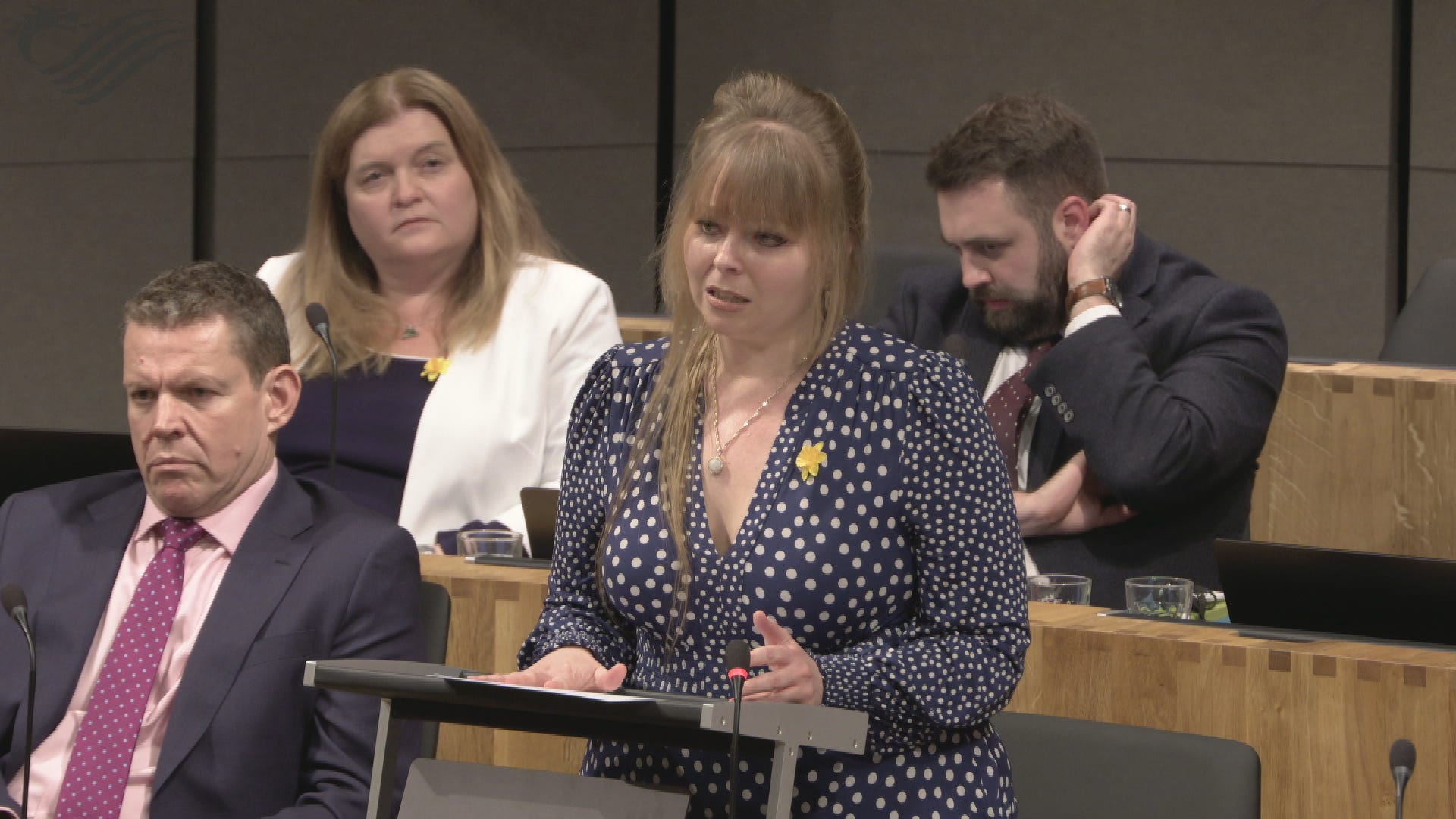
The Welsh Government took a neutral stance, allowing Labour members to vote freely.
Those against felt faced with a difficult decision – vote for the motion and appear in support of the idea, reject it and risk losing their ability to design those services in future.
They raised concerns over coercion and vulnerable people feeling like a burden and obliged to have an assisted death.
More than 250 health professionals in Wales have previously urged members not to back the Bill, with fears it has been designed with a “perfect” health service in mind, when in reality it’s “crumbling”.
But members in favour felt it crucial to ensure implementation, regulation and oversight of assisted dying is done in Wales by Welsh politicians.
Supporters outside the Senedd say the Bill would help dying people avoid painful, lonely and undignified deaths.
Recent polling showing huge public support will also have been weighing on members’ minds.
In the end the motion passed with 28 members in favour, 23 against and two abstaining.
What happens next lies in Westminster, where parliamentary rules mean the Bill must get through before May or face being scrapped entirely.
It is currently being debated in the House of Lords, but with some 1,200 amendments still to be voted in, some have accused opponents of running down the clock.
If passed, it remains unknown whether assisted dying services would be run by the NHS, privately or both.
Whatever happens, this vote marked a historic and deeply divisive moment in Welsh politics.
A decision with consequences that could redefine how the law and society confront life and death.
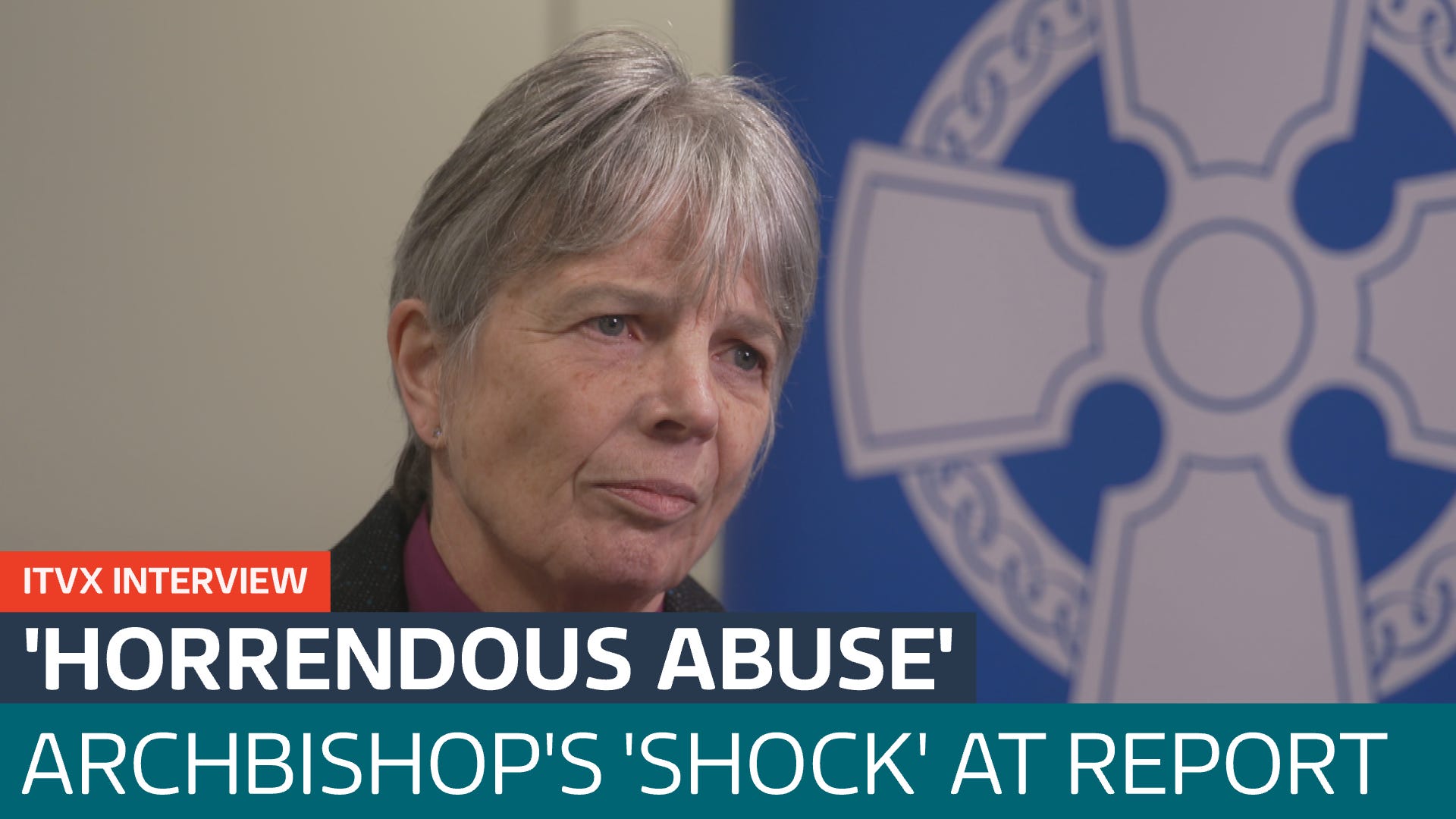
This week saw the publication of a highly critical review revealing senior clerics in the Church in Wales knew a vicar was accused of sexually assaulting a child – but did not act and still allowed him to be promoted to Bishop of Brecon and Swansea. Digesting the findings, current Archbishop Cherry Vann sat down with Political Editor Adrian Masters.
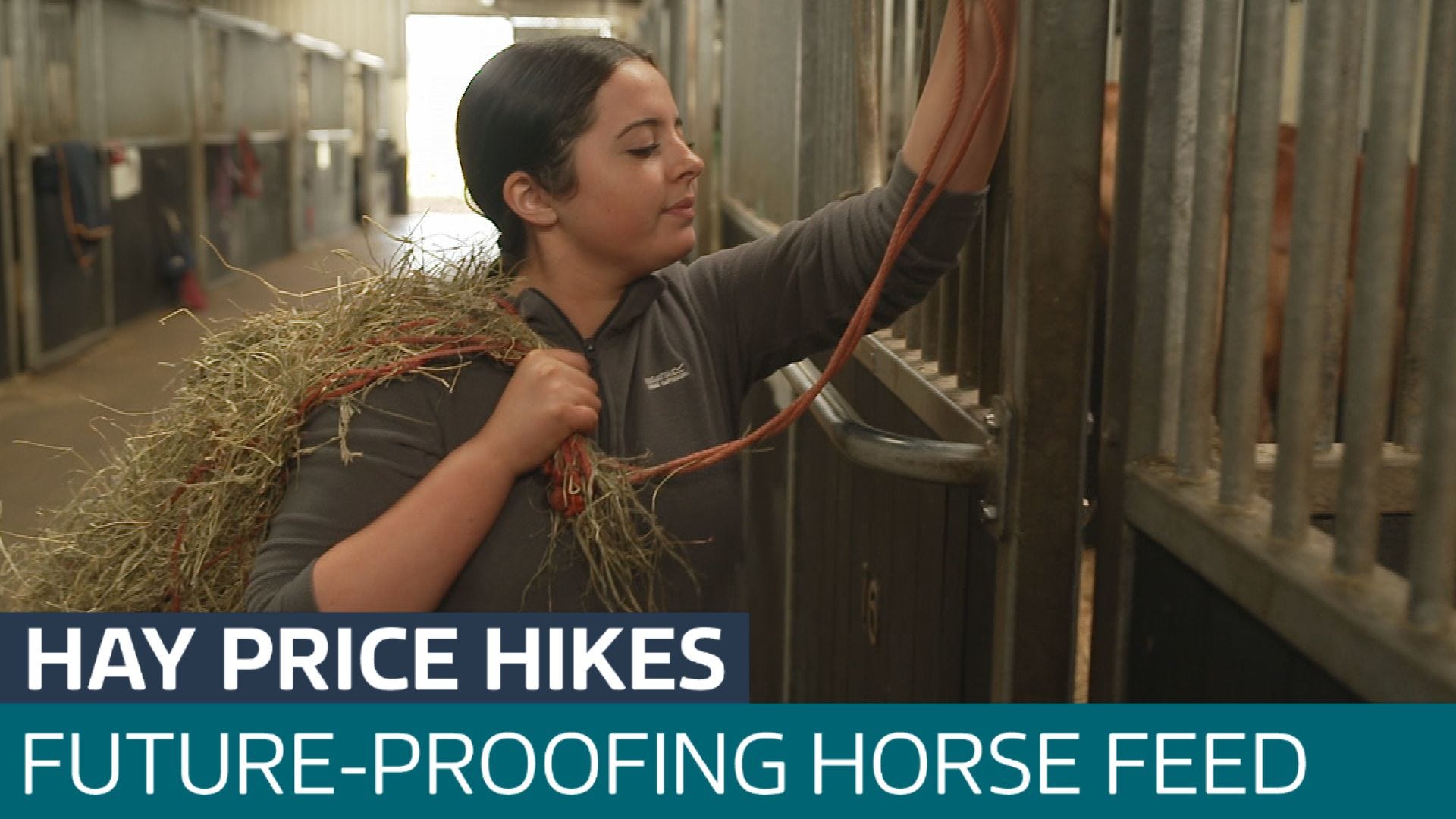
Horse owners report a significant spike in hay prices this year, with costs nearly doubling compared to last year. Rural Affairs Correspondent Hannah Thomas met with equestrian students to find out what knock-on effects this could have.
Saturday, 28 February: Wrexham take on Charlton Athletic away in the EFL Championship while Swansea are up against Ipswich. Meanwhile in League One Cardiff will play Doncaster and League Two’s Newport face Fleetwood.
Tuesday, 3 March: Wales begin their Women’s World Cup qualifying campaign, facing Czech Republic at the City Stadium in Uherske Hradiste. The Czech Republic have never qualified for a women’s major tournament, but there’s all to play for as they are ranked 31st in the world by Fifa – one place higher than Wales.
Friday, 6 March: The Welsh Liberal Democrats will hold their Spring Conference at Cardiff Arms Park.

ITV Wales on Instagram: “US rapper Snoop Dogg is in Swansea ahe…
US rapper Snoop Dogg paid a visit to watch Swansea City for the first time since becoming a co-owner of the club. Last July, The Drop It Like It’s Hot rapper joined the likes of US TV host and author Martha Stewart and Croatian footballer Luka Modric and became a part-owner of the Championship club.