
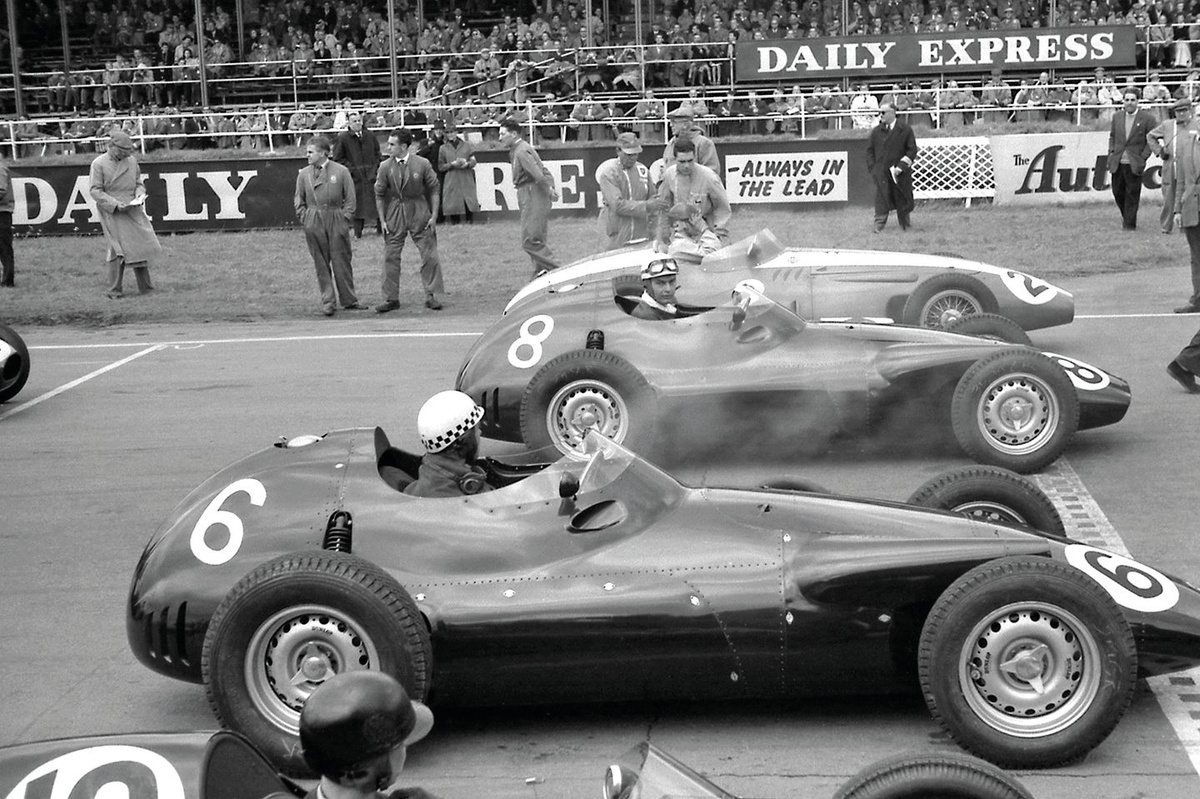
Among the many cups and trophies acquired in a glittering racing career, Jackie Stewart’s cabinet boasts an inscribed tantalus decanter as the first 19-Vat-69 Sportsman of the Year, in 1969. A somewhat curious award dreamed up by whisky distiller Wm Sanderson & Son Ltd and very much as a branding exercise to promote its VAT69 label – it probably goes without saying his prize also included a case of the national beverage!
Over time this VAT69 award has been viewed as a British F1 series whereas, in fact, it was actually rather less prosaic than that, being awarded to Sportsmen scoring 69+ points in their respective championships. Given that no previous F1 champion had managed to achieve such a total, the promoters decided to award double points as well as incorporating the Race of Champions at Brands Hatch and the BRDC International Trophy at Silverstone into their calculations.
Victory around Zandvoort’s sand dunes in June gave Stewart his fourth F1 win in six races, allowing him to sail serenely past 69 points and claim his prize.
To quote Thunderclap Newman’s chart-topping hippy anthem that summer, there’s ‘something in the air’. The inclusion of the Race of Champions and the International Trophy in a points-paying championship got this writer thinking. Just how might an F1 series have looked if it were held just for these non-championship races; an oxymoron if ever there was one?
Maybe not quite so irrational, though. Cast your mind back to 1964 and the instigation of the Tasman Cup, which effectively incentivised those disparate individual Southern Hemisphere races that had long held an attraction for many a European team. The Tasman format duly gathered these together into an informal ‘winter’ series for F1 chassis fitted with 2.5-litre engines.
The inevitable question is which F1 races to include in a ‘championship of non-championship races’, particularly in the early 1950s when Formula Libre events proliferated. That’s exacerbated by the lack of a credible secondary formula, so that a plethora of events were run to loose F1 rules. Should, for example, the same weight be applied to a 20-minute, 15-lap thrash around Castle Combe, with half-a-dozen local entries, as the two-and-a-half-hour, 70-lap Syracuse GP that played host to works grand prix stars from Ferrari, Maserati and Gordini?
It does become a slightly easier exercise as the decade unfolds. The introduction of the popular 1.5-litre unsupercharged F2 in 1957 leaves only a handful of F1 non-title races for genuine consideration.
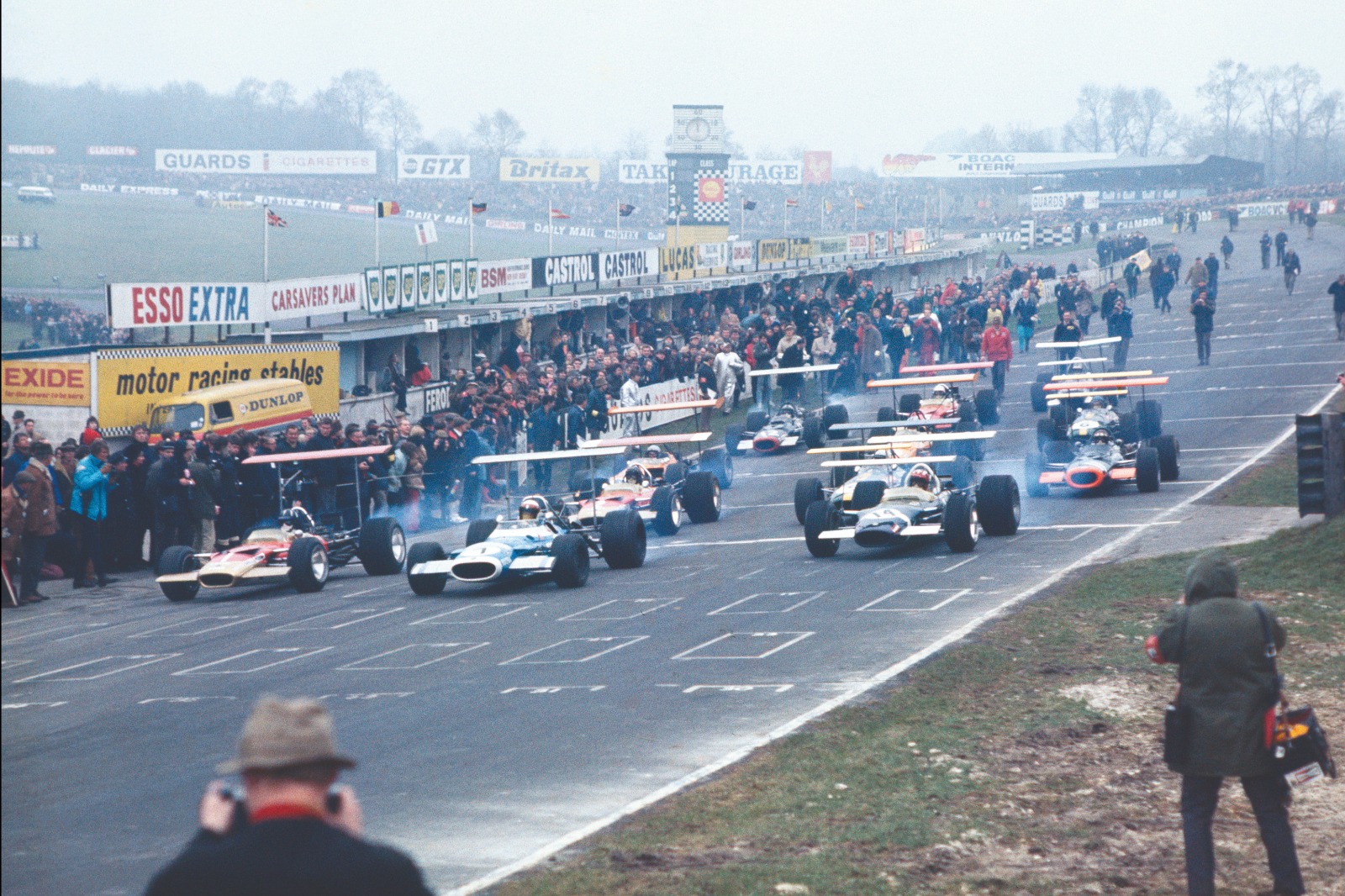
Victory in the Race of Champions at Brands Hatch in 1969 was part of Stewart’s win tally on his way to becoming ‘Motor Racing Sportsman of the Year’
Photo by: Getty Images
Of course, the roll-out of the controversial 1.5-litre engine restriction for GP cars in 1961 returned everything to square one. Over the next three years the number of F1 races expanded to unacceptable levels. Colin Chapman was one of those who pushed for an interim formula, writing in 1964: “When F2 was first announced I was very much in favour. The F1 calendar has become hopelessly overcrowded. It just isn’t possible to support all the races. My firm view – and one which seemed to get a lot of support – is that all existing F1 races, other than Grandes Epreuves, should in future be for F2 cars.”
And thereafter, Chapman’s argument broadly prevailed. From 1965 the number of F1 races outside the championship shrank to just a few hardy perennials. True, there was a sudden burst of enthusiasm at the beginning of the 1970s but, once the constructors began organising themselves and speaking with one voice, it became ever clearer that Grandes Epreuves were the only game in town. The non-championship race organisers had been put on notice.
Events at Silverstone in 1978 at the International Trophy certainly did not help. Biblical race-day rainfall soon had the newly resurfaced Northamptonshire track flooded. The shame of it was that a quality grid had been assembled including some shiny new designs. Many would never make it to the next GP in California.
On the opening lap much of the field aquaplaned at Abbey trying to negotiate the river running across the track. Some rejoined, others slid off at Woodcote and became trussed-up in the catch-fencing. It was the motor racing equivalent of the 1967 ‘Foinanvon’ Grand National. Ultimately only the freakish car control of Keke Rosberg and that wily old fox Emerson Fittipaldi managed to sidestep the carnage and continue racing. Should the organisers have stopped it sooner, as they did in 1951? Most agreed. The sourest voices came from the constructors who had to pick up the bill for some seriously bent machinery. For them, the 30th running of the International Trophy was one too many.
Honouring his commitment to John Webb and Brands Hatch, Bernie Ecclestone ensured the Race of Champions staggered on for a little longer before the curtain came down for good in 1983.
So, who might have emerged with our hypothetical non-championship titles? Our table (below) shows the potential winners with a note of the number of points and races.
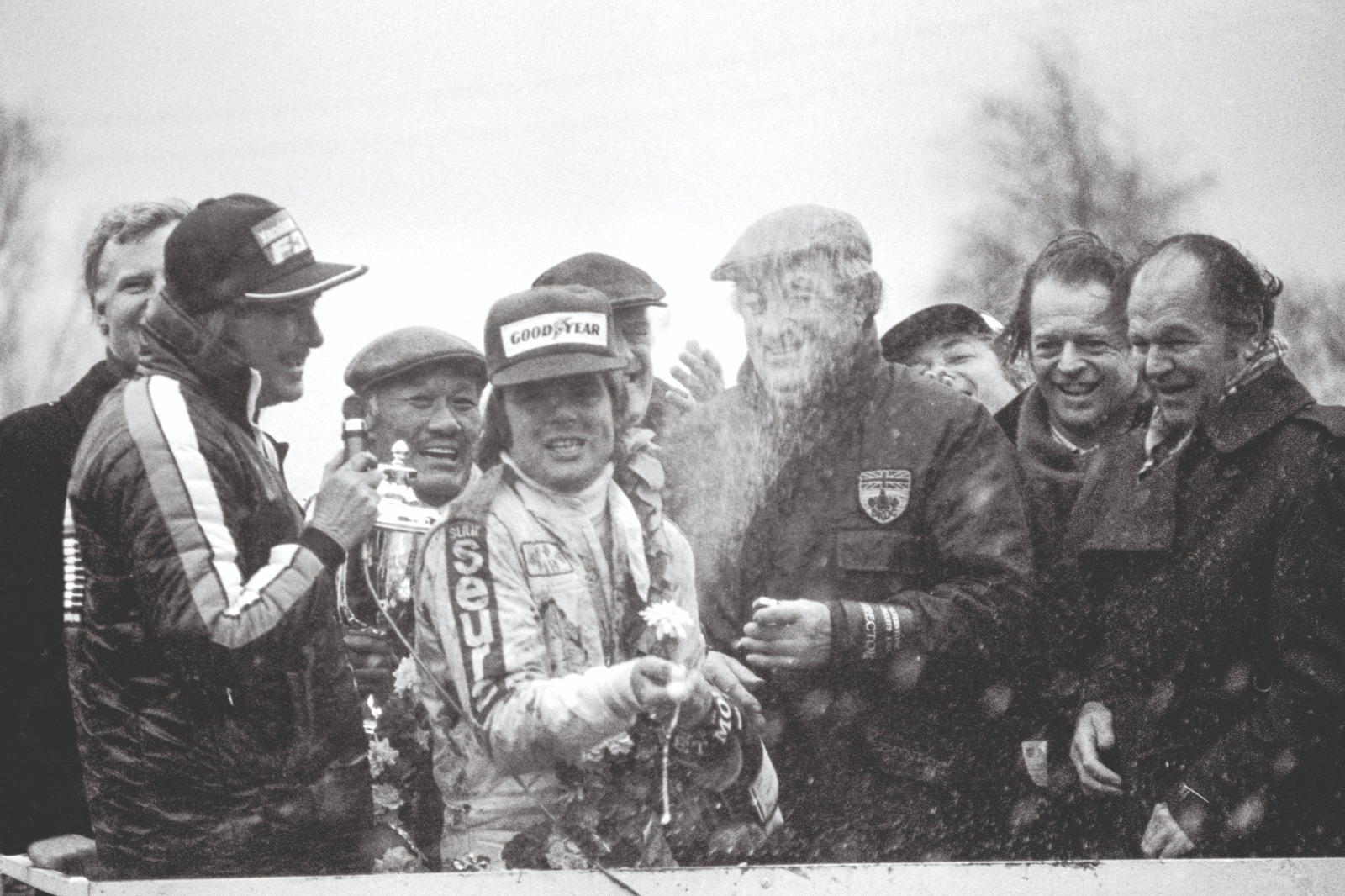
Rosberg survives the carnage to win the 1978 International Trophy at Silverstone
Photo by: Getty Images
Multiple champions
Underlining his domination of 1.5-litre F1, Jim Clark rules the roost with four titles between 1962 and 1965 – pipping Graham Hill by just a point in 1964. Jack Brabham, always a factor, annexes three titles as do both Stirling Moss and Jackie Stewart, although in the Scotsman’s case only narrowly ahead of his great friend and rival Jochen Rindt in 1969-70.
Unexpected British champions
Wins at Goodwood and Aintree, alongside consistent finishes, helps Roy Salvadori’s Gilby 250F finish ahead of fellow Maserati runners Jean Behra and Stirling Moss in 1955.
De facto Lotus team leader Innes Ireland was often competitive in the shorter-form non-title races and takes our crown in 1960 with victories at Goodwood, Silverstone and Snetterton ahead of Brabham’s Cooper.
File under ‘didn’t see that one coming’, our 1975 title winner is none other than John Watson. Although the Surtees TS16 was rarely a match for the pacesetting Tony Southgate-designed Shadow DN5, ‘Wattie’ could be relied upon to put in a competitive showing. Second at Brands, fourth at Silverstone and fifth at Dijon gives him the title.
Unexpected overseas champions
Not christened ‘Le Metronome’ for nothing, Louis Rosier’s Talbot-Lago was rarely the fastest but he was invariably around at the finish and is our 1951 title winner. His Ecurie Rosier team also provided an important un coup de main to the careers of Legion d’Honneur recipients (and ‘non-title’ champions!) Maurice Trintignant and Behra.
Trintignant’s consistency helped ‘Le Petoulet’ see off the challenges of fellow Ferrari team-mates Jose Froilan Gonzalez and Mike Hawthorn in 1954, while ‘Jeannot’ Behra – always unlucky in GP races – was a serial winner in the non-title events, notching up no fewer than five victories in 1957 with Maserati and BRM machinery.
Played by Hollywood heart-throb Patrick Dempsey in Michael Mann’s 2023 Ferrari biopic, Piero Taruffi is our 1952 champion by a silver hair’s width from fellow Italian Luigi Villoresi.
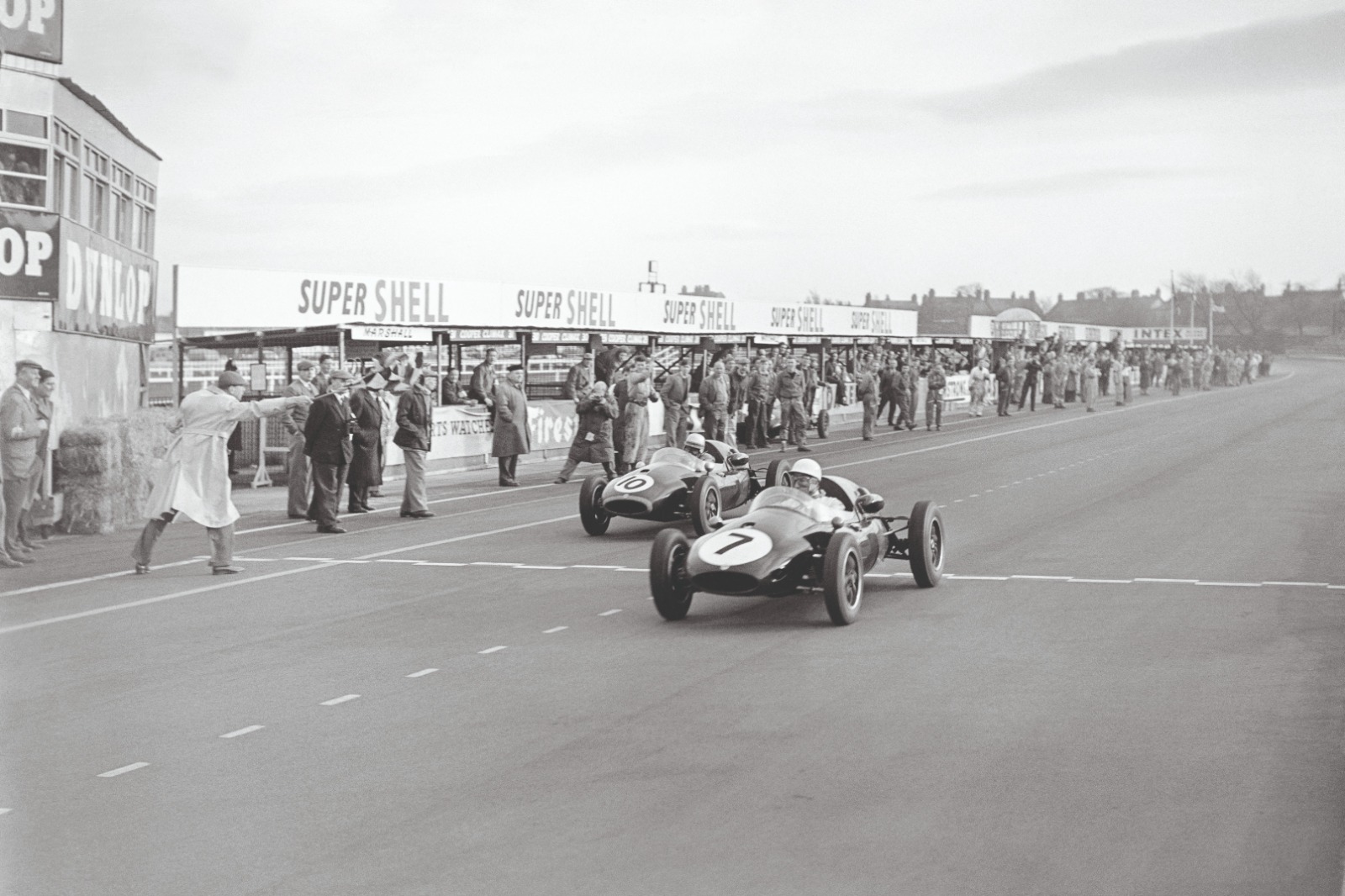
Moss fends off Brabham for BARC 200 win at Aintree in 1958
Photo by: Getty Images
Standout seasons
Roman holiday, 1958
The Ferrari squadron of Mike Hawthorn, Peter Collins and Luigi Musso each took a win on their ‘home’ ground with their front-engined V6 246s, while Juan Manuel Fangio’s Maserati 250F did likewise at a rainy Buenos Aires. The rear-engined Cooper duly stepped up to the plate in Stirling Moss’s hands at both Aintree and Caen for him to become ‘champion’.
“One of my favourites [non-champ] was the BARC 200 at Aintree,” said Moss. “I remember having my hands full there with a challenge from Jack Brabham. My engine was overheating at the end and he made up nearly four seconds on the last lap. But he ran wide on the last corner and I just beat him to the line.”
Six races but how about this as a title decider: the Monzanapolis 500? Musso’s bravura performance in his 4.2-litre ‘bucking bronco’ Ferrari helped net third place. Consider too that Moss, Fangio and Hawthorn were also in the field. If that race counts (very much straying beyond F1 at this point! – ed) the Roman takes our title with 17.33 to Moss’s 16.5!
Anzac rules, 1968
Just three non-championship races but the field for each would have done justice to any GP. For once Ferrari sent along multi-works entries while Lotus, BRM, Matra and Brabham were well represented.
It was, however, the stylish Robin Herd-designed McLaren M7A that hit the ground running, with Bruce McLaren taking a flag-to-flag victory in the opener at Brands Hatch. As McLaren wrote in his Autosport column: “Delighted to win the race and to finish two cars [team-mate Denny Hulme was third]. Mine looked as though we’d only just warmed it up. There wasn’t a drop of oil on it. Once Denny gets used to the car, I’m going to be following him.”
Indeed so. A month later Hulme led the ‘gaffer’ home in an M7A 1-2 at Silverstone’s International Trophy, Chris Amon completing the Kiwi podium for Ferrari. Amon himself would be the star of the show at the Oulton Park Gold Cup, where he relentlessly chased Jackie Stewart’s Matra, equalling the Scot’s lap record in a vain chase of victory.
Missing from Oulton were the papaya pair since the McLaren team was preparing for another assault on the lucrative Can-Am sportscar series. But victory at Brands and second at Silverstone ensured our title went deservedly to Bruce himself with 15 points. Hulme and Amon shared the runner-up spot with 13.
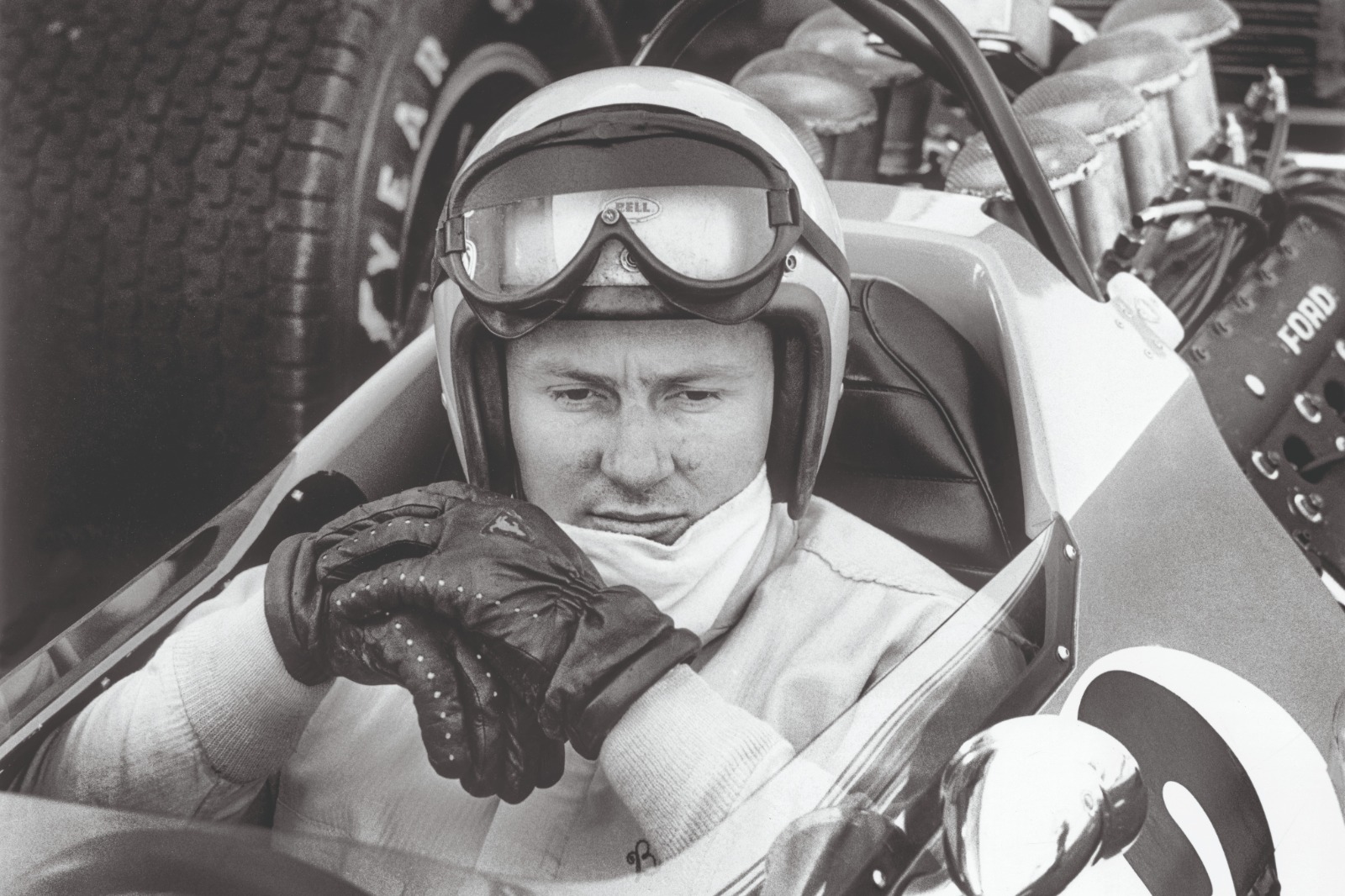
McLaren expressed his delight at taking a flag-to-flag victory in the opener at Brands Hatch in his Autosport column
Photo by: Getty Images
The non-championship races also provided a chance to get new drivers some experience, as Howden Ganley remembers: “Bruce McLaren asked me to test their F1 car at Goodwood in 1970. He told me he was going to be stopping at the end of the year and I would replace him for 1971, his protege in effect. His plan was to give me some non-championship races to get used to the power.”
BRM success turns to tragedy, 1971
An expanded number of non-title races brought about by a combination of GP cancellations, the return of Argentina and a novelty ‘challenge’ event around the Ontario Speedway pitching some of United States Auto Club’s finest against the cream of European F1.
Fastest out of the blocks were the 12-cylinder runners Ferrari and Matra (Chris Amon again proving he could win in F1), picking up four wins between them and leaving the V8 Cosworth runners, headed by Jackie Stewart’s Tyrrell, initially struggling to keep up.
Quickest of the V12s though was BRM, particularly in the hands of Pedro Rodriguez. The Mexican’s Yardley-sponsored P160 recorded fastest lap at Ontario, a dominant win in the Spring Cup at Oulton Park, and only a puncture denied him overall victory at Silverstone.
“The engine was at its peak then, although reliability was a problem,” recalls BRM designer Tony Southgate. “We had only ever had about a dozen V12s, most of which were repaired at some point. We were sometimes running five cars and I was designing throughout the week and then engineering Pedro and Jo [Siffert] at the weekend. You certainly didn’t knock off at 5.30 on a Friday!”
Ganley, meanwhile, did his reputation no harm with some impressive BRM outings, particularly at the Gold Cup: “The bottom link in the wishbone broke. I was actually lucky to finish second as it was only held on by the outer skin at the end.”
The final event of the season was the hastily arranged ‘Victory’ race at Brands Hatch. Tragically, BRM poleman Siffert was killed when his P160 crashed and caught fire. A following Mike Walker witnessed the tail end of the accident: “John Surtees was the last one through – almost tagging the burning wreckage. Alan [Rollinson] threw up his arm in warning and brought us all to a halt at Hawthorns. One look at the scene, we knew it was hopeless.”
The race was abandoned after 14 of the 40 laps. As it had not reached half-distance it seems only correct to attribute half points – as would be the case in 1975 with the Spanish and Austrian GPs.
So our 1971 ‘non-title’ goes to Stewart by just half a point from Surtees in his eponymous TS7, and a point and a half from Peter Gethin, who had replaced the much-missed Rodriguez at BRM.
Perhaps best leave the final word to Southgate and an unexpected legacy, courtesy of the team’s lost leader: “I really only met Jo for the first time at Oulton. During practice I asked him to describe what the car was doing and he said, ‘It’s ‘yumping’. I thought, ‘OK, er what is he talking about?’ He’d actually just coined a new term.”
F1 non-championship title winners
Year
Driver
Races
Points
1950
Juan Manuel Fangio
17
47.5
1951
Louis Rosier
13
44
1952
Piero Taruffi
6
23.5
1953
Giuseppe Farina
4
17
1954
Maurice Trintignant
19
49
1955
Roy Salvadori
14
35.5
1956
Stirling Moss
10
31.5
1957
Jean Behra
11
55.5
1958
Stirling Moss
6
16.5
1959
Jack Brabham
5
26
1960
Innes Ireland
6
25
1961
Stirling Moss
21
75
1962
Jim Clark
20
58.5
1963
Jim Clark
14
53
1964
Jim Clark
8
24
1965
Jim Clark
6
24
1966
Jack Brabham
4
18
1967
Jack Brabham
7
28
1968
Bruce McLaren
3
15
1969
Jackie Stewart
3
13
1970
Jackie Stewart
3
15
1971
Jackie Stewart
8
18
1972
Emerson Fittipaldi
7
42
1973
Peter Gethin & Jackie Stewart
2
9
1974
Emerson Fittipaldi
3
13
1975
John Watson
3
11
1976
James Hunt
2
18
1977
James Hunt
1
9
1978
Keke Rosberg
1
9
1979
Niki Lauda
3*
11
1980
Alan Jones
1
9
1981
Carlos Reutemann
1
9
1983
Keke Rosberg
1
9
*events
Notes:
i.) includes Buenos Aires City GP, a libre event to allow local machinery to compete, but included a full European F1 contingent. In 1955, for example, both Mercedes and Ferrari used three-litre sportscar engines in their W196 and 625A.
ii.) includes the Springbok races from 1961 to 1965, which strictly speaking were not F1 events as they were run to local rules allied to F1 regulations that allowed sportscar bodies. These were true internationals, though, and the entries often included top European cars.
iii.) excludes the ‘Monzanapolis 500’ event, but the Indianapolis 500 was part of the championship during the 1950s even though the Offenhauser-powered cars were not aligned with the F1 rules of the day.
iv.) excludes the ‘Tasman Cup’ races, which were part of a separate championship and allowed 2.5-litre engines.
v.) excludes the ‘Intercontinental’ series of races in 1961, which were intended to be part of a separate championship and were run for the 2.5-litre F1 machinery outdated after 1960.
vi.) the same points system is used as applies in the world championship for drivers (8-6-4-3-2 + 1 for fastest lap) for the years 1950-58 and then (8-6-4-3-2-1) for 1959, increasing to nine for victory from 1960 through to 1983. As with the latter years of the Tasman Cup, all ‘rounds’ count for points.
This article is one of many in the monthly Autosport magazine. For more premium content, take a look at the March 2026 issue and subscribe today.
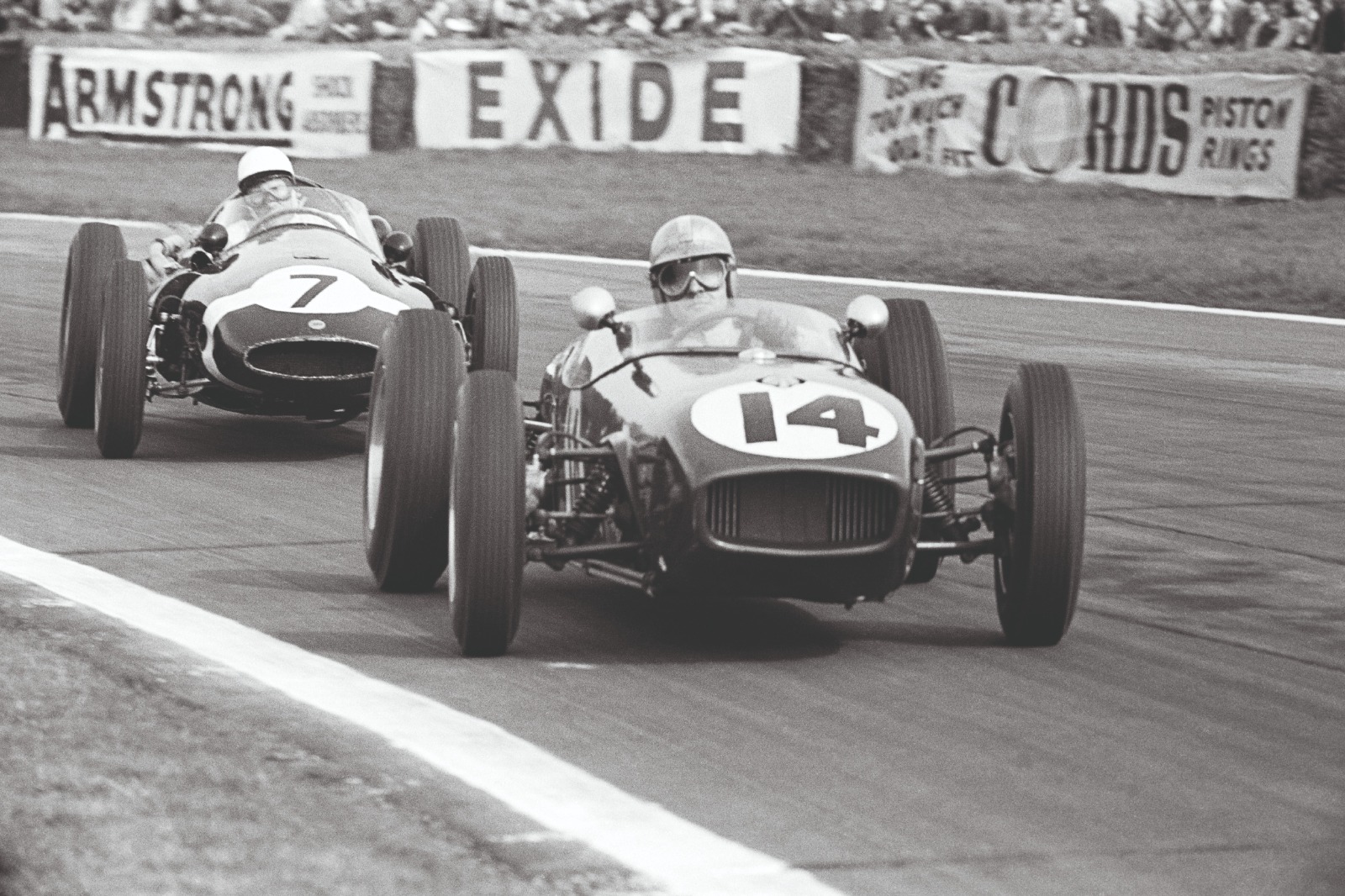
Our 1960 champion Ireland leads Moss in Glover Trophy at Goodwood
Photo by: Getty Images
We want to hear from you!
Let us know what you would like to see from us in the future.
– The Autosport.com Team