
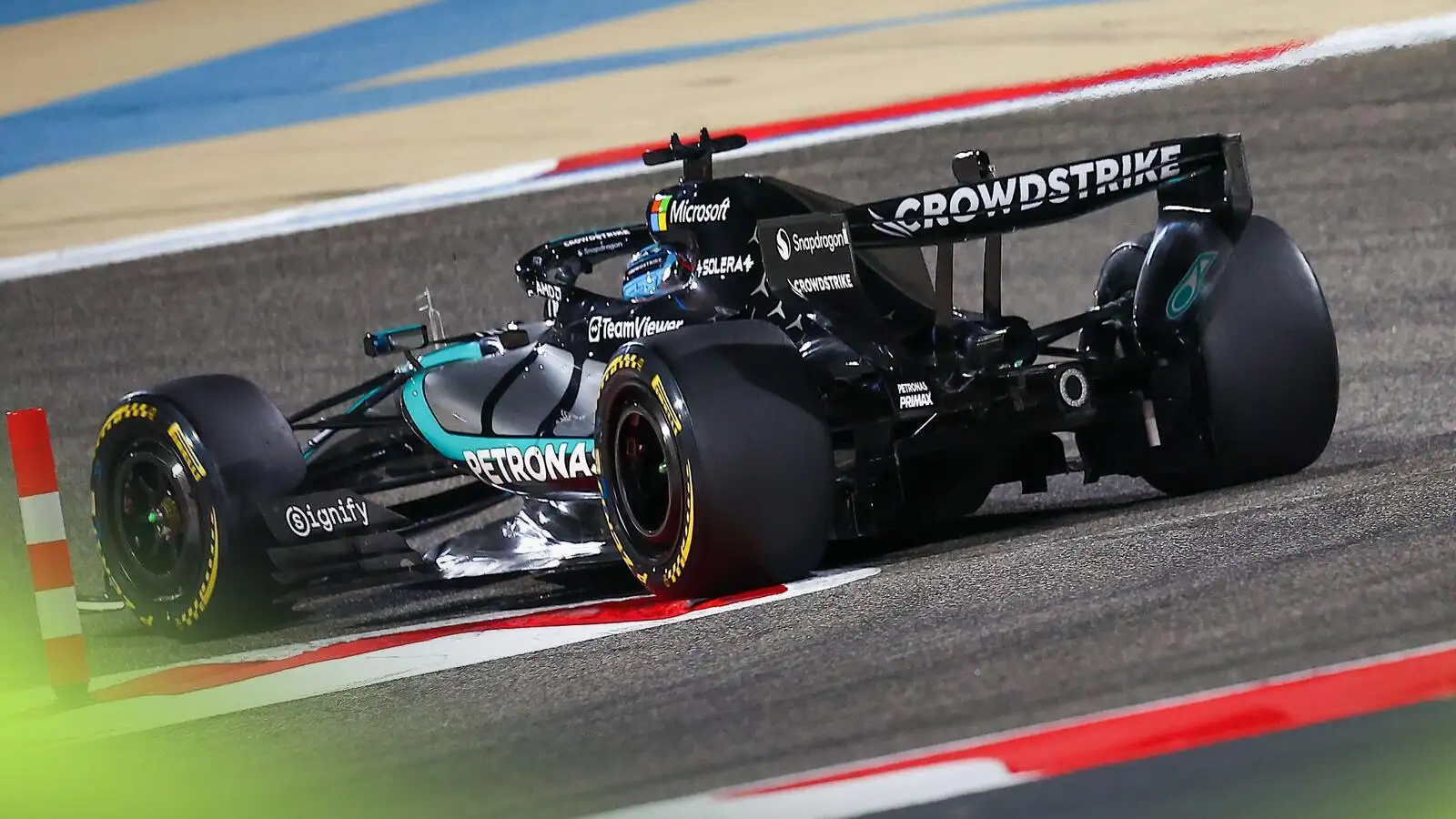
David Coulthard believes the FIA could have avoided Formula 1’s latest engine controversy with tighter wording in its regulations.
Formula 1’s new era, for both chassis and power units, has begun with a controversial bang amidst reports that Mercedes, and potentially Red Bull Powertrains, found a loophole in the wording of the engine regulations relating to compression ratio.
David Coulthard criticises FIA over compression ratio loophole
Want more PlanetF1.com coverage? Add us as a preferred source on Google to your favourites list for news you can trust
This year, the ratio has been reduced from 18:1 to 16:1 when measured in “ambient” conditions.
But Mercedes, it’s been claimed, has found a way to increase the ratio to 18:1 when the engine reaches operating temperature. This was because the measurement was taken in static conditions. However once running at temperature, the Mercedes was able to reach 18:1, thereby giving it a performance advantage and also aiding fuel consumption.
Rival power unit manufacturers – Ferrari, Audi, Red Bull Powertrains and Honda – were keen to end any advantage Mercedes may have gained through the loophole, prompting the FIA to launch an e-vote.
That has resulted in a change in the wording of the regulation.
Outlining that, the FIA announced that the criteria for measuring the temperature of the power unit must be measured at 130 degrees Celsius, as well as the original specification of ambient-temperature testing. That change, though, only comes into effect midseason.
Article C5.4.3 of the technical regulations now reads:
– No cylinder, as referred to by C5.1.3, of the Engine may have a geometric compression ratio higher than 16.0, measured in the following conditions:
– Until 31 May 2026: when the Engine is at ambient temperature
– From 1 June 2026 to 31 December 2026: when the Engine is at ambient temperature as well as when the Engine is at 130degC. Any component, assembly, mechanism, or integrated arrangement of components that is designed or functions to increase the compression ratio in operating conditions beyond 16.0 is prohibited.
– The procedure which will be used to assess compliance with this article must be defined by each PU Manufacturer according to the instructions detailed in the document FIA-F1-DOC-042. This procedure must be approved by the FIA Technical Department and included in the PU Manufacturer homologation dossier.
The latest on F1’s compression ratio saga
FIA closes compression ratio loophole with F1 2026 rule change
Toto Wolff says Mohammed Ben Sulayem backed Mercedes in engine row
But finally resolved after weeks of back-and-forth and behind-closed-doors meetings, former F1 driver Coulthard believe the FIA could’ve avoided the conflict altogether by tightening up the ambiguity in its own regulations.
“Well, here’s the thing,” he said on the Up to Speed podcast. “You mentioned the FIA, the Fédération Internationale de l’Automobile. They are the governing body of Formula 1.
“And I’ve read recently they’re going, ‘Well, we’re only about 20 people writing the rules and Formula 1 teams of hundreds of people, which is why we didn’t figure out the loophole and then close it down’.
“If the regulation makers did a better job, quite frankly, of understanding the operational window of a Formula 1 car…
“An operational window of a Formula 1 car isn’t sitting in a garage at ambient temperature. It is out on track. The engine temperature at 110°, everything red hot, brakes at over 1000°.
“That’s where they should be designing the rules and regulations.”
The FIA, however, faces a battle whenever new regulations are written out as teams employ the brightest of technical minds to find a grey area that they can exploit. It’s been that way since the beginning of F1’s history, and, some would argue, should be applauded.
Speaking to PlanetF1.com and other media during pre-season testing and ahead of the e-vote, Williams team principal James Vowles, whose F1 cars are powered by Mercedes, said: “We as a sport have to take care that this is a meritocracy where the best engineering outcome effectively gets rewarded as results, not punished as results.
“I’m sure other teams are pissed off they weren’t able to achieve what Mercedes did. But we also need to take care of right now. I don’t think there’s a person in the pit lane that can tell you what is the best for you.
“My hope is the sense prevails, and that we as a sport recognise that we are here to be a metric. The best engineering solution wins as a result of it, and therefore we are where we are.”
Want to be the first to know exclusive information from the F1 paddock? Join our broadcast channel on WhatsApp to get the scoop on the latest developments from our team of accredited journalists.
You can also subscribe to the PlanetF1 YouTube channel for exclusive features, hear from our paddock journalists with stories from the heart of Formula 1 and much more!
Read next: McLaren trailing ‘clear group’ at the front ahead of Australian Grand Prix