
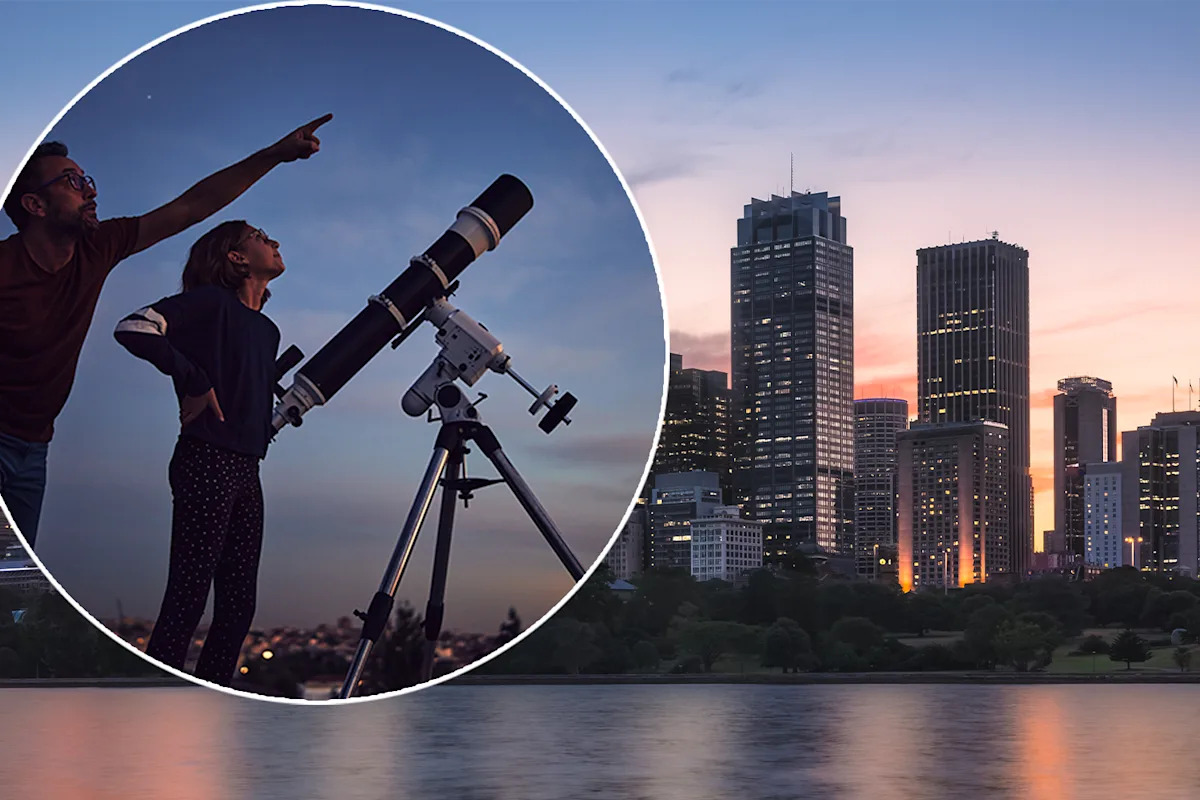
Aussie skywatchers are in for a rare cosmic treat this week, with a total lunar eclipse, known as a blood moon, set to bathe the night sky in deep red. From coast to coast, anyone with a clear view of the stars can watch the moon slowly slip into Earth’s shadow, transforming it into a glowing, copper-red orb.
Swinburne University of Technology astrophysicist Dr Rebecca Allen described the upcoming spectacle as both “beautiful and rare”. The event will occur on Tuesday evening and won’t be seen again until 2029.
What is a blood moon?
A blood moon is a total lunar eclipse, when the moon passes completely into Earth’s shadow and takes on a reddish glow.
“An eclipse is an astronomical term for when we’re silhouetting,” Dr Allen told Yahoo News Australia.
“If you were on the moon’s surface during a lunar eclipse, we basically would see Earth moving right in front of the sun and blocking it.
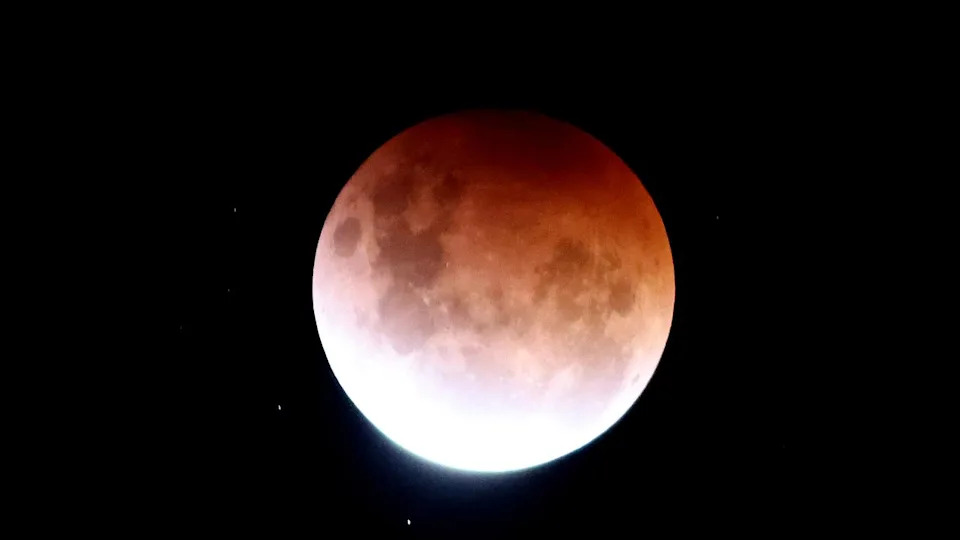
The last blood moon was seen from Australia in September, 2025. Source: NCA Newswire/Damian Shaw
“And essentially what we’re seeing is the earth’s shadow or silhouette cast onto the surface of the moon, so that reddish colour only happens when we’re essentially at totality.”
In other words, the moon turns red because the only light reaching it has filtered through earth’s atmosphere, bending and scattering just like the colours of a fiery sunset.
Dr Allen said it’s like a giant “red light filter” in the sky, giving the moon its crimson glow.
Not every lunar eclipse turns into a blood moon, though — the moon’s orbit wobbles slightly, so the alignment has to be just right.
“We kind of think of it as like a floaty and like a pool or something, where it’s bobbing up and down a little bit,” Dr Allen explained.
Only when the moon is full and perfectly positioned does Earth block all the sun’s light, creating the full, red-tinted spectacle.
Partial eclipses are more common, but they can sometimes appear darker than a total eclipse because less light bends around Earth’s edges.
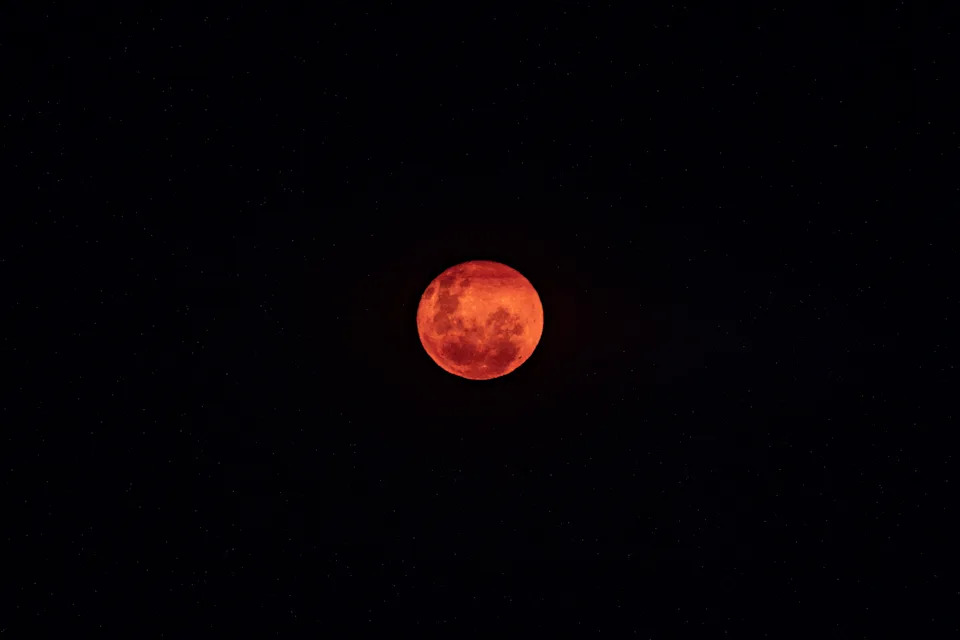
The next blood moon won’t appear until 2029. Source: Getty
(Abstract Aerial Art via Getty Images)
This event is rare, especially for any one location.
“If you’re on the nighttime side of earth, and it’s a lunar eclipse, chances are you’re going to get to see it… total lunar eclipses usually happen every one and a half to three years in the same kind of region,” Dr Allen said.
How to catch a glipse of rare blood moon
For Australians, that makes this week’s eclipse extra special, the next one visible from here won’t be until 2029.
The show will last several hours, and the partial eclipse begins just before 9pm (AEDT), with totality starting around 10pm.
The moon will be at its deepest red at roughly 10.30pm, before the shadow slowly slides away, ending by 11pm.
Autumn skies make the viewing even more magical
As the moon climbs higher over the horizon, everyone should get a good view, Dr Allen said.
Jupiter will also be visible nearby, adding to the excitement.
The early stages offer a “golden moment” — moonrise around 8pm, with the partial eclipse beginning an hour later.
“There might be this kind of golden moment around 8.30 when the moon isn’t too high above the horizon, and the partial eclipse is just beginning,” Dr Allen said, adding that blood moons have long inspired awe and superstition.
Dr Allen said because Australia is approaching the vernal equinox — the point when day and night are roughly equal — it’s an ideal time to observe the night sky.
Around this time, the sun sits directly above the equator, which means planets and the moon appear higher, giving better visibility for stargazing.
“It’s a really good time to be looking at things in the night sky, because things like the planets and the moon will be a bit higher over the horizon,” she said.
Lunar eclipse cycles have been tracked for thousands of years
In Australia, First Nations people have observed and recorded these cycles for tens of thousands of years.
Dr Allen said blood moons and other celestial events have been carefully observed by First Nations people for tens of thousands of years.
Their songlines and stories tracked these events long before modern astronomy existed.
While other cultures often treated eclipses as bad omens, Aboriginal traditions preserved detailed knowledge of the sky, showing how patterns like blood moons repeat over time.
She emphasised that looking back at these stories helps us appreciate both the science and the deep cultural connection to the night sky.
The best times to catch totality in your city
For anyone wanting to catch the eclipse, the advice is simple: find a dark spot away from city lights, keep an eye on the eastern horizon, and give yourself a moment to stare up.
It’s a show that doesn’t need a telescope, just clear skies and a bit of patience.
Sydney – starts 10:04pm, ends 11:02pm
Canberra – starts 10:04pm, ends 11:02pm
Brisbane – starts 9:04pm, ends 10:02pm
Melbourne – starts 10:04pm, ends 11:02pm
Adelaide – starts 9:34pm, ends 10:32pm
Hobart – starts 10:04pm, ends 11:02pm
Darwin – starts 8:34pm, ends 9:32pm
Perth – starts 7:04pm, ends 8:02pm
Do you have a story tip? Email: newsroomau@yahoonews.com.
You can also follow us on Facebook, Instagram, TikTok, Twitter and YouTube.