
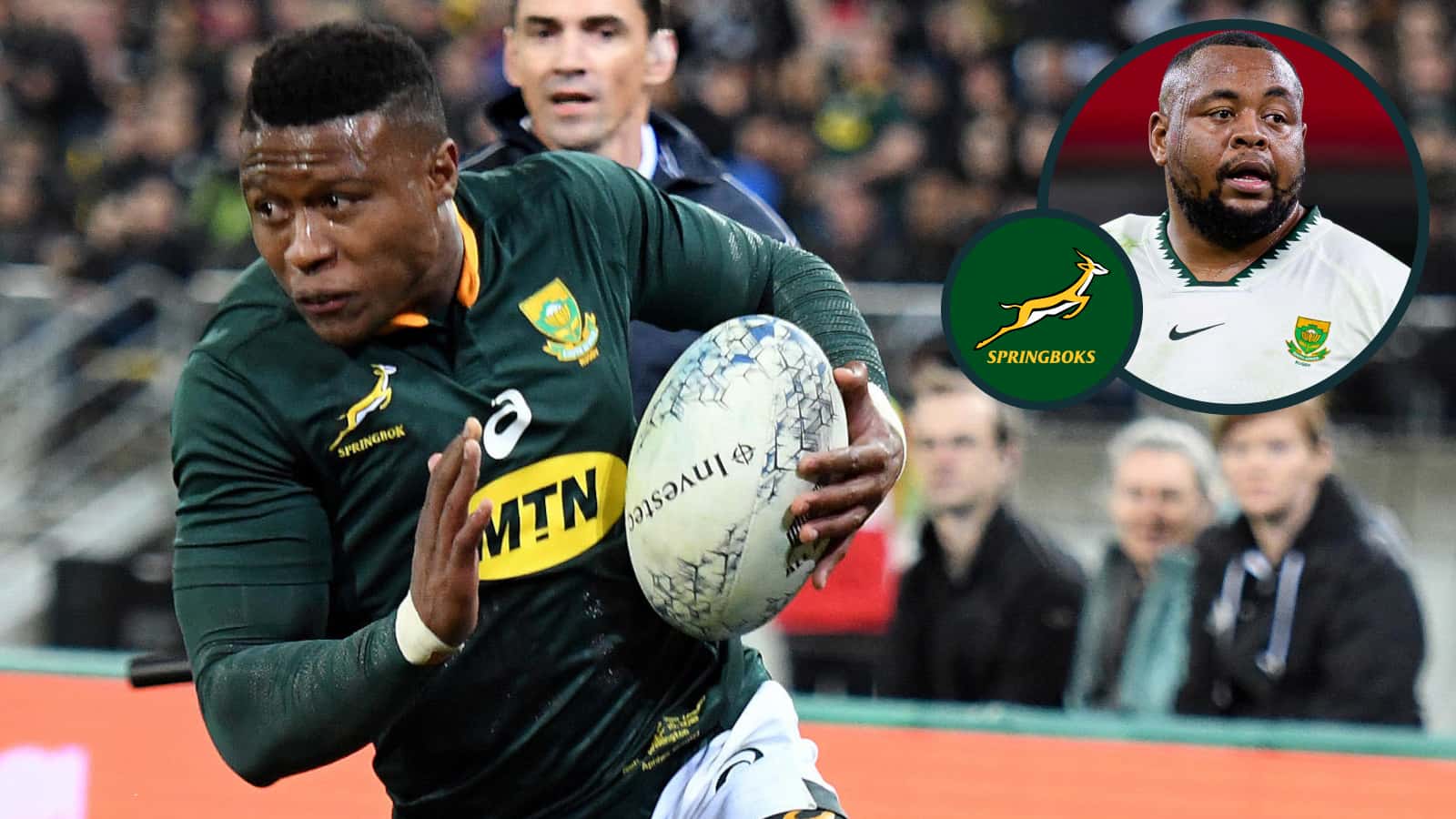
South Africa are facing more questions around their doping record after it was revealed that there has been a significant drop in tests on players.
They have been the biggest offenders over the years with Elton Jantjies and S’busiso Nkosi two Springboks currently serving bans for taking banned substances.
Asenathi Ntlabakanye also remains under a doping cloud after testing positive, but has continued to play for both the Lions and the Boks, and has denied any wrongdoing.
The tighthead prop missed the United Rugby Championship clash with the Stormers on Saturday, but faced the Sharks the week prior and also turned out for South Africa against Wales in the Autumn Nations Series.
Ntlabakanye returned a positive sample despite testing being significantly reduced since their Rugby World Cup triumph, according to the Telegraph.
Decrease in tests
They revealed Wada records show that the numbed of tests carried out by the South African Institute for Drug-Free Sport (Saids) reduced from 785 in 2015 to 127 in 2024, a sixfold decrease.
In comparison, testing has been increased by UK Anti-Doping (Ukad) during that period with it going up from 998 to 1,241.
Chief executive of Saids has blamed the suspension of Africa’s only anti-doping lab in March 2024 on the recent decrease in tests.
World Rugby also test South African players, with the governing body carrying out 2,182 worldwide in 2024, which was the lowest since 2015 outside of Covid years.
A World Rugby spokesperson told the Telegraph: “South African players, alongside many other nations, will be in our testing pool so we test them all year round, including out of competition. Our out-of-competition testing includes home visits.
“Players will also be tested by us at Rugby World Cup, European Professional Club Rugby competitions if they play in them and as part of [what was] the autumn international series.
“Lab issues in South Africa have occurred before and where we face those issues in that country or any other, samples are shipped overseas, which is established and acceptable, provided shipment follows Wada guidelines.”
Springboks prop’s ‘realistic hope’ after second doping charge
South Africa’s doping issues
However, it still raises for questions on a country that has been marred by positive doping tests over the years.
The Telegraph state that South Africa had “89 violations” during the period which coincided with their back-to-back Rugby World Cup triumphs in 2019 and 2023, which accounted for “20 per cent of the entire total worldwide”.
That included wing Aphiwe Dyantyi, who was named Breakthrough Player of the Year in 2018 but missed the World Cup success a year later due to a doping ban.
Dyantyi was suspended for four years between August 2019 and August 2023 and since returning has struggled to recapture the form which made him one the sport’s hottest prospects.
Want more from Planet Rugby? Add us as a preferred source on Google to your favourites list for world-class coverage you can trust.
Several other Springboks have found themselves suspended for failing drugs tests, including Cobus Visagie and Johan Goosen, although the former was later cleared after appealing against his ban.
On a 2010 tour to Europe, Boks duo Chiliboy Ralepelle and Bjorn Basson tested positive, but they were only given a reprimand after it was traced to a supplement given to all South African players.
However, Ralepelle was later given two separate bans, in 2014 and 2018, after testing positive once, and he was joined on the sidelines by Gerbrandt Grobler, who never earned a Test cap, and Ashley Johnson.
READ MORE: Springboks: Rugby World Cup winner learns his fate after failed drugs test