

Osman SamiuddinMar 3, 2026, 11:29 PM
CloseOsman spent the first half of his life pretending he discovered reverse swing with a tennis ball half-covered with electrical tape. The second half of his life was spent trying, and failing, to find spiritual fulfillment in the world of Pakistani advertising and marketing. The third half of his life will be devoted to convincing people that he did discover reverse swing. And occasionally writing about cricket. And learning mathematics.
Multiple Authors
It is (checks notes) 2026 and the PCB is (checks notes again) fining its players PKR 5 million each (about US$18,000) for (checks more notes) losing at the T20 World Cup.
Don’t get me wrong. Pakistani players being punished by the Pakistan Cricket Board is not a new ride. Doping, corruption, indiscipline, insubordination, rebellions against the captain, all of this is familiar terrain. Shoaib Akhtar alone is a separate subhead under PCB Punishments, having been dropped from a squad once for, well, you’re either familiar with the PCB’s most legendary press release or you’ll want to read about it. Imagine hitting a team-mate with a bat in the dressing room not being the main disciplinary infraction of your career.
After the infamous loss-full (“winless” doesn’t quite do it justice) 2009-10 trip to Australia, seven players were banned or fined for indiscipline, infighting and, according to Intikhab Alam, the coach on that trip, not knowing how to wear their clothes properly or being able to hold a conversation.
Editor’s Picks
2 Related
The point being, we’re in fertile land here. But it’s difficult to recall another occasion – certainly in the modern era – when the players were fined simply and straightforwardly for losing games of cricket. Fined for the indiscipline and factionalism, or corruption, that contributed to the losing, yes; but fined outright for losing? It’s literally one of two results that can happen in the white-ball formats, so to be fined for one – which, theoretically if all things are equal, starts a 50% chance – is a little tough.
Poor performances leading to reviews of central contracts, sure – a point already driven home by the PCB a few months ago. Suspending no-objection certificates for playing in T20 leagues, archaic and problematic as it is, as the PCB did after the Asia Cup, also remains very much in the wheelhouse of Modern Cricket Administration.
That one came after three successive losses to – a vastly superior – India. So too was this fine imposed after the comprehensive loss to India in Colombo, though with the prospect of it being waived dangled if they qualified for the semis. Turns out that for Pakistan’s players, if not for the global economy of cricket, boycotting that game might have been the more financially rewarding move.
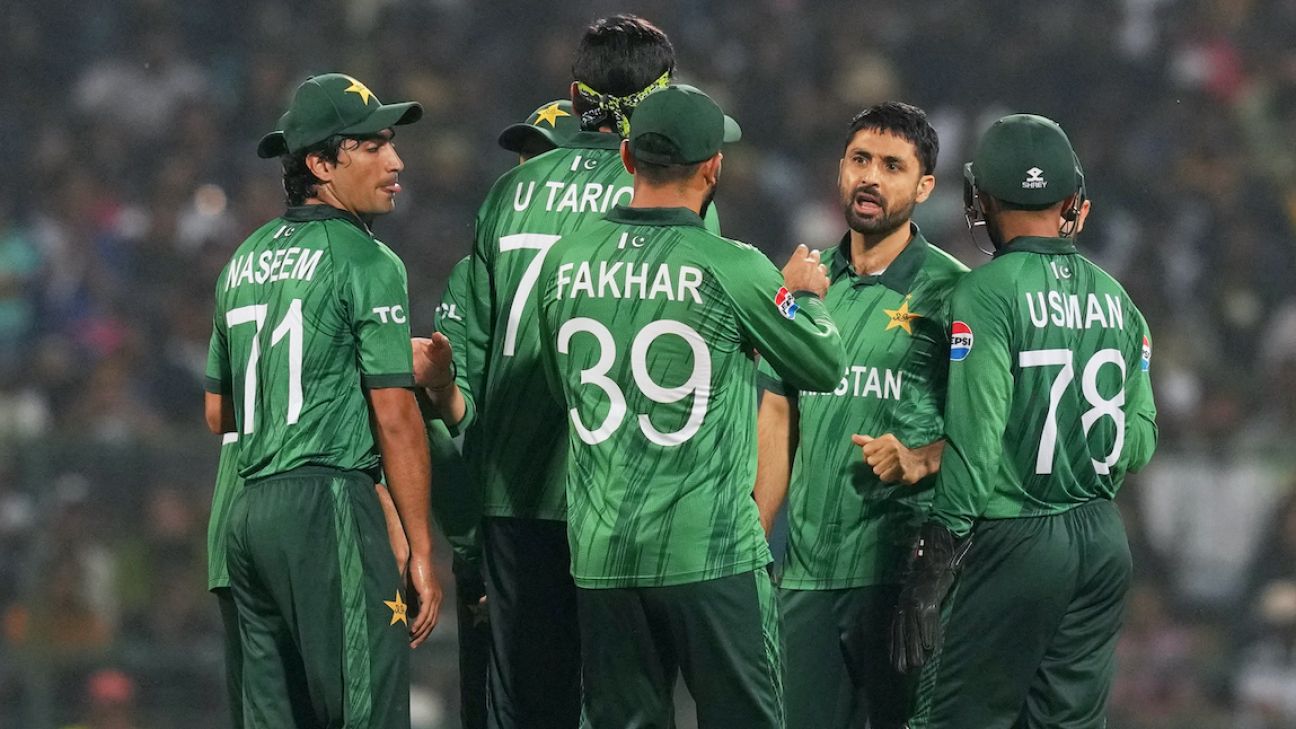
Clearly losses to India sting this PCB leadership more than any others, because other than those losses – and yes, this doesn’t mean much other than in the very specific context of this point – Pakistan have been winning loads of T20Is. The most since February last year, with the second-best win-loss ratio. That winning doesn’t count for much. Nor does being the one guy who was categorically not a failure in this campaign. Sahibzada Farhan’s reward for a record-breaking tournament, in which he carried Pakistan’s batting, is a PKR 5 million fine. Nor does hardly being involved, like Naseem Shah, who had but one opportunity to impact on-field results, and whose stats from that game should now read 4-0-5,000,000-1. That’s a pretty expensive spell.
There is always a chance the fines will not be imposed. Those NOCs weren’t ultimately suspended after the Asia Cup final – in fact, more were handed out than has been the case for a while. This PCB administration likes floating stuff out there, gauging public reaction and only then actually moving on it, if at all. It probably doesn’t matter much to this board but legally such fines feel troublesome. There’s no obvious clause in the players’ central contracts that accounts for them. At a stretch, perhaps clause 9.7 under “Incentives”, which authorises the board “to deduct from the said amounts any and all amounts of fines imposed against the Cricketer under the terms hereof”. It’s hardly watertight.
This is classic overthinking, though, giving this situation far more consideration and seriousness than it deserves. Because it hardly needs writing out that in 2026, a sports institution fining its athletes for losing is the punchline to a bad joke. We’re in an era where players, teams and boards are striving harder than ever to better themselves. Smart tech, deep data-based strategising, radical new training methods, laser focus on nutrition and rehabilitation; anything to hit those marginal gains, to find that extra one per cent. Meanwhile the PCB is offering its players a carrot-and-stick approach, except in a novel twist, there’s no carrot. Beat India, or else. In 2026, I dunno, this feels more than a little basic.
Also, of course, it feels misdirected. Perhaps the board should be pointed in the approximate direction of a mirror. No semi-finals in four successive ICC tournaments now, bottom of the last World Test Championship cycle table, are all on-field failures, yes. But they haven’t occurred in a vacuum. They are the consequences of decisions taken off the field, decisions reflected in the churn of captains and coaches, in the vast merry-go-round of selectors (all of whom, put together, still can’t figure out a way to not pick Babar Azam for T20s), in the waste of endless money on domestic tournaments and mentors who don’t last, in an NOC policy that actively harms the growth of Pakistan’s players, or… we could be here a while.
A few weeks ago, soon after the PCB agreed to withdraw its threat to boycott that India game, one official explained to me it had all been about taking a principled stand on how the ICC had dealt with Bangladesh. There was something to their words. For all that the entire episode was essentially geopolitical sparring funnelled through cricket, the PCB did briefly force the cricket ecosystem to confront its own deep dysfunction. In the process, the official said, it had given the world ample evidence of the value Pakistan brings to cricket. Perhaps, though sadly for them this latest bit of tinpottery also reveals plenty about that value.