
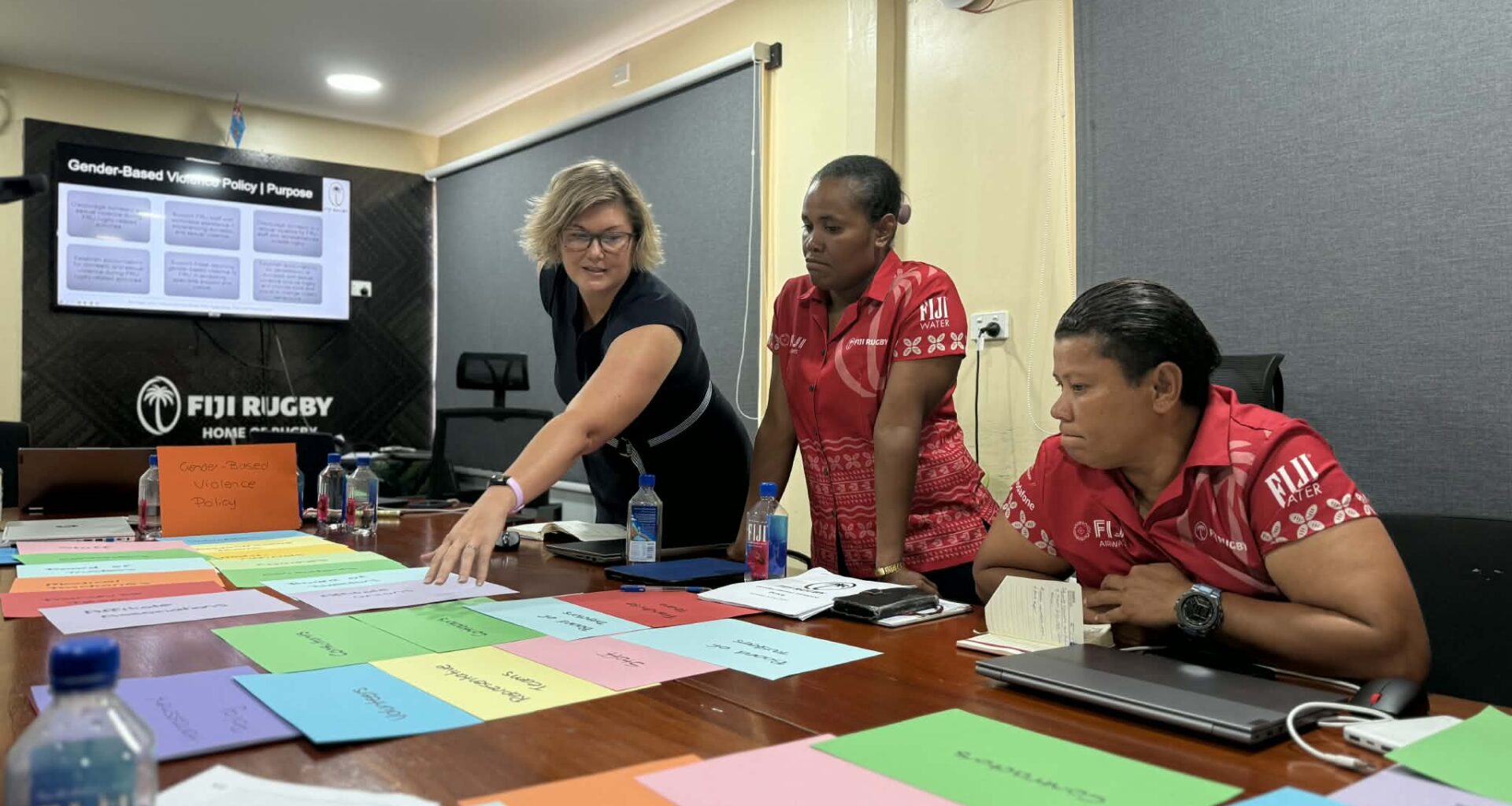
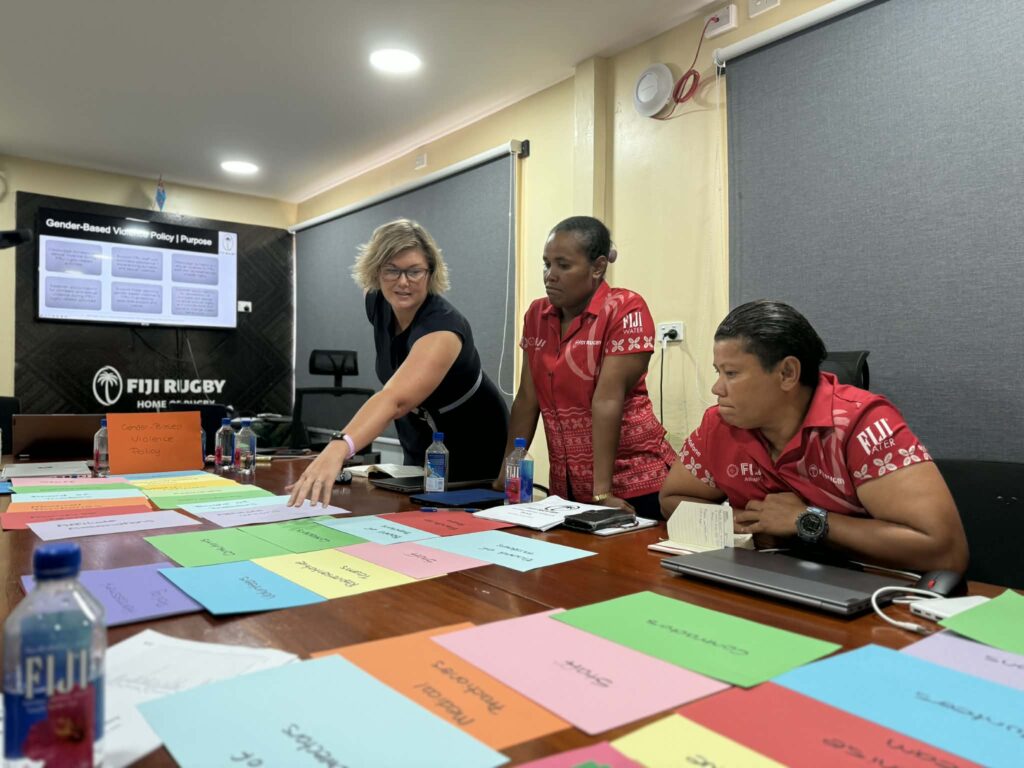
Fiji Rugby Union (FRU) this week commenced the implementation of three key policies aimed at strengthening measures and ensuring the safe, respectful and inclusive environments for everyone involved in rugby across Fiji. The Safeguarding Policy, Workplace Harassment Policy, and Gender-Based Violence Policy, endorsed by the FRU Board in November last year, represent an important milestone in strengthening governance, workplace protection and player welfare throughout the organisation and wider rugby community.
Delivered by Oceania Rugby with the support of the Australian Government and in collaboration with World Rugby and Fiji Rugby Union, the three-day program brought together FRU staff and designated safeguarding personnel to build their understanding of the new policies and strengthen their capacity to implement them effectively. The initiative forms part of broader regional efforts to enhance safe, inclusive and equitable sporting systems across the Pacific.
The program commenced on Monday 23 February with a policy induction session attended by 36 FRU staff, who were introduced to the new safeguarding, workplace harassment and gender-based violence policies prior to signing the revised Code of Conduct.
On Tuesday, 14 Safeguarding Focal Points undertook specialised training focused on safeguarding principles, response protocols, and referral pathways. The final day centred on clarifying the roles and responsibilities of safeguarding leads and human resources personnel who will oversee awareness, implementation and compliance across FRU, its Provincial Unions, and school rugby programs. A further policy induction session for FRU Board members is scheduled for Saturday 28 February to ensure strong leadership alignment and governance oversight.
The three-day training focused on:
Strengthening safeguarding policy implementationAddressing and preventing gender-based violence in sportEnhancing workplace conduct and protection measuresTraining designated safeguarding focal points within FRUImproving response mechanisms and referral processes
Participants engaged in practical discussions and scenario-based learning to better understand how to identify, respond to and report safeguarding concerns appropriately.
Tihrani Uluinakauvadra, Rugby Participation and Pathways Manager at Oceania Rugby, said the training reflects a shared commitment to protecting everyone involved in the game.
“Safeguarding is about creating environments where players, staff and volunteers feel safe, respected and supported. By strengthening policies and building the confidence of focal points to respond appropriately, Fiji Rugby Union is taking important steps to ensure rugby remains a positive and protective space for all.”
FRU Acting Chief Operation Officer Talemo Waqa emphasised the importance of embedding safeguarding across all levels of the organisation, noting that Fiji Rugby Union officially launched its Safeguarding Policy in October last year, with this week’s training marking an important step in building momentum behind its implementation.
“As the national governing body for rugby in Fiji, we have a responsibility to lead by example. Following the launch of our Safeguarding Policy in October, this training represents an important next step in turning that commitment into action. It helps us strengthen our systems, empower our staff and later membership, and ensure that safeguarding and the prevention of gender-based violence are not just policies on paper, but practices embedded in our daily operations.”
Trailblazing Fijian rugby referee educator and former international referee Kuini Vuli contributed to the workshop, sharing her experience and reinforcing the importance of safeguarding across all levels of the game.
“As someone who has been part of rugby both on and off the field, I’ve seen how important it is to create environments where everyone feels safe and respected. Safeguarding is not just the responsibility of one person, it’s a shared commitment. Education like this empowers us to respond confidently and ensures our systems truly protect players, officials and staff.”
Additional safeguarding sessions and follow-up training are scheduled in the coming weeks to continue strengthening capacity across the organisation and ensure sustained implementation of these policies.