
WARNING: This story contains details some readers may find distressing.
A friend of a family found dead in their Perth home after an apparent double murder-suicide says it is difficult for people not impacted by severe disability to understand what it is like.
The entire family were found dead in their Mosman Park home in January — brothers Otis, 14, and Leon, 16, and their parents Jarrod Clune, 50, and Maiwenna Goasdoue, 49.
If you or anyone you know needs help:Lifeline on 13 11 14Aboriginal & Torres Strait Islander crisis support line 13YARN on 13 92 76Beyond Blue on 1300 224 636Headspace on 1800 650 890ReachOut at au.reachout.comMensLine Australia on 1300 789 978SANE on 1800 187 263
Police believe the parents killed their boys before taking their own lives.
The boys experienced “significant health challenges”, according to police, which friends say was a severe level of autism.
Simon Lewis knew the family, having met them at the early intervention centre they attended with their sons, and where Mr Lewis and his wife took their own severely autistic daughter Madeleine, now 16.
“I can most definitely relate to what they were going through,” Mr Lewis said, while not justifying the parents’ actions.
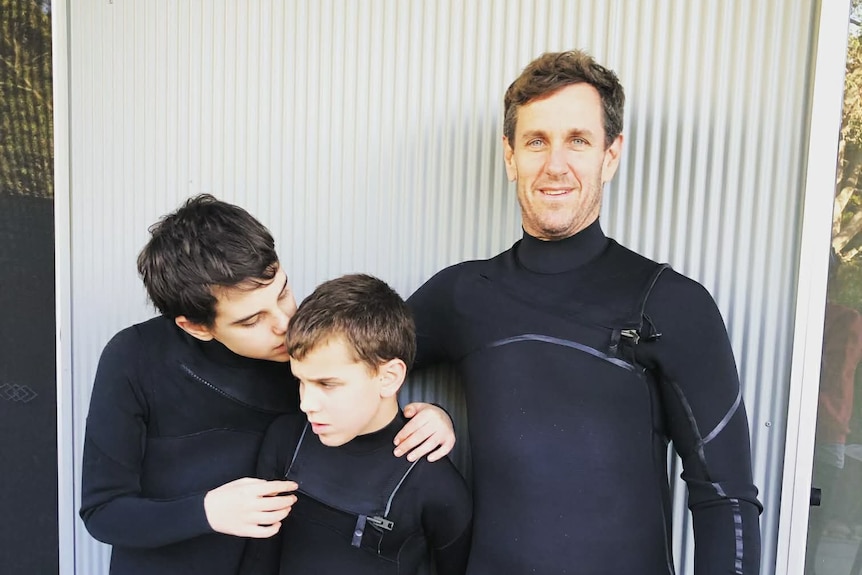
Leon (left) and Otis Clune with their father Jarrod, who is believed to have killed them in their Mosman Park home. (Supplied)
“Obviously it’s a horrible tragedy,” he told ABC Radio Perth in an emotional interview detailing his own family’s experiences.
He said Otis and Leon “were lovely kids, just like Madeleine is.”
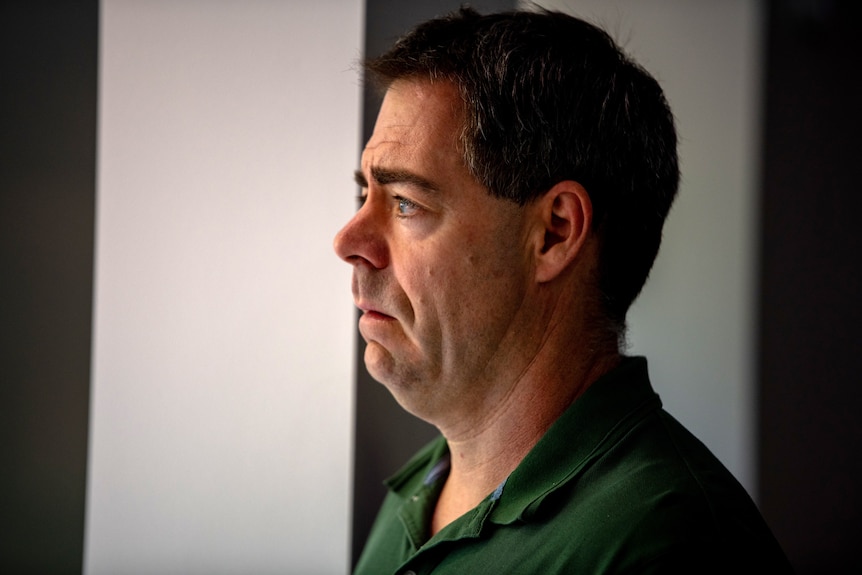
Simon Lewis said the death of the Clune family was “still a big shock”. (ABC News: Andrew O’Connor)
“It’s obviously something that people outside the tent don’t actually really understand,” Mr Lewis said.
“You can probably hear me getting a little bit emotional but it is still a big shock.”
Loading…Confronting and isolating
Mr Lewis described the “harrowing” and “heartbreaking” experiences his family have endured with Madeleine, who has level 3 autism.
Stressing his profound love for his daughter, Mr Lewis said he and his wife had been pushed to the limit by some of her behaviours, which were outside her control.
Madeleine is not verbal and cannot articulate her needs or feelings, and requires 24-hour care so she does not harm herself or others.
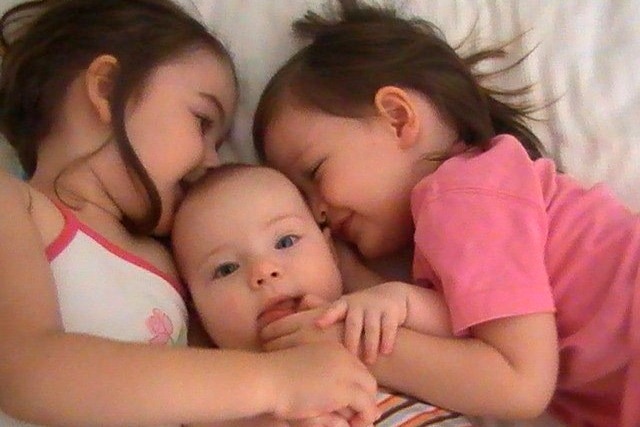
Madeleine as a baby with her sisters Alexandra (left) and Josephine (right). (Supplied: Simon Lewis)
Mr Lewis said as a baby and small child, she would often scream for hours, and was awake between the hours of 1am and 6am, meaning he and his wife would often go to work on less than two hours’ sleep.
“It is frightening, it is confronting, it is isolating. It pushes you into places you would have never thought you would have been,” he said.
When medical staff assessed her developmental delays shortly before her second birthday, Mr Lewis said he was told there would be a two and a half year wait for a formal diagnosis.
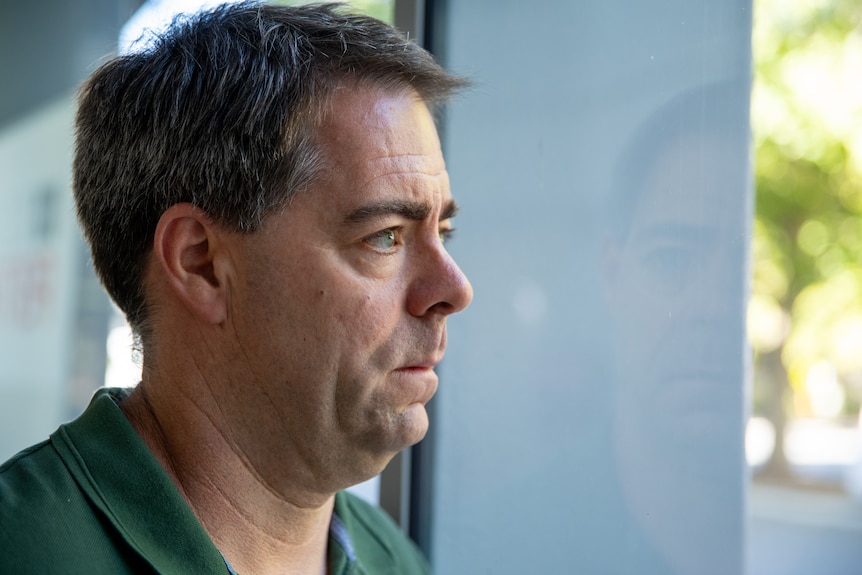
Mr Lewis speaks candidly about his experiences raising his daughter. (ABC News: Andrew O’Connor)
“No diagnosis means no services,” Mr Lewis said, recalling how he went home and broke down in his backyard, not knowing what to do.
Reflecting on the Clunes
Mr Lewis said he would wake up bathed in sweat from the stress and anxiety of his family’s situation, and felt there was no help available for parents.
“The pressure on families such as mine is through the roof — there’s not even a counselling service to ring up,” he said.
“We’re just trying minute by minute to keep it together.
“I reflect very much on the Clunes because their eldest boy was I think six months older.”
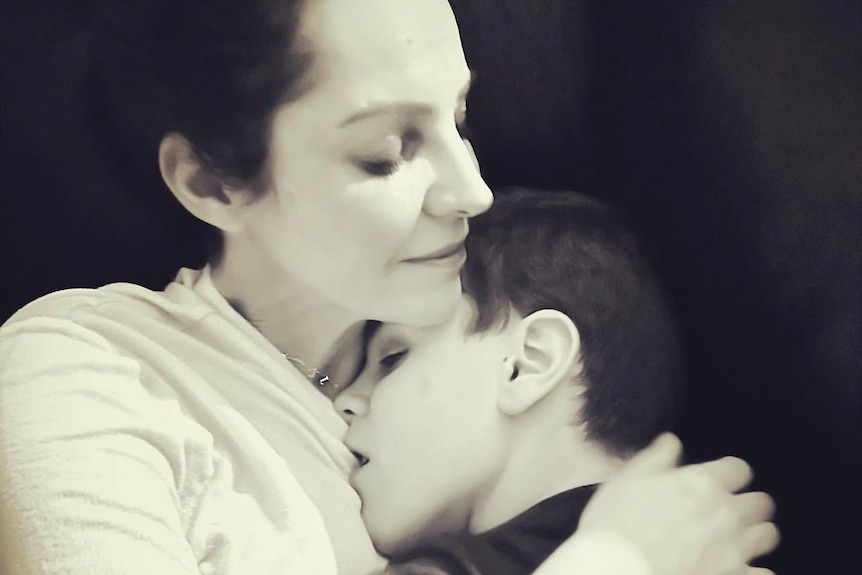
Maiwenna Goasdoue cuddling her teenage son Otis. (Supplied)
He said it was “heartbreaking” to watch his daughter’s distress and be unable to understand what was troubling her.
Occasionally this took the form of sudden violence inflicted on her mother, while at other times it made her grimace in apparent pain that her parents found it almost impossible to diagnose.
One time, he said, she was grimacing and holding her tummy, so he gave her a warmed wheat bag to try to soothe her — but she almost immediately ripped it to shreds and began eating the raw wheat inside.
“It is so intense — these children are often frightened, they are frustrated,” he said.
Autism tropes disputed
Describing Madeleine’s condition as “incredibly cruel”, Mr Lewis said he was sick of autism being construed as a superpower.
“Autism has been hijacked into something of a quirk,” he said.
“[But] the autism I see through my lens is not a superpower.”
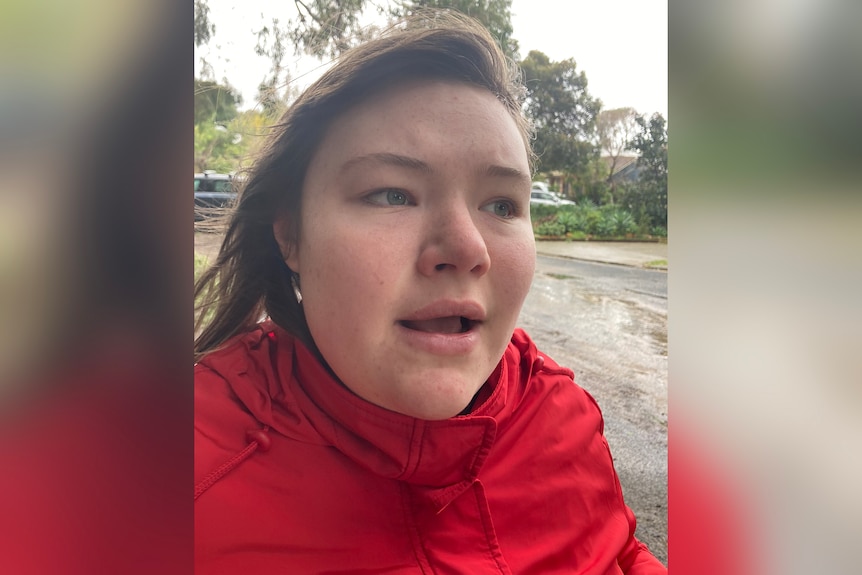
Teenager Madeleine Lewis is not verbal and cannot articulate her needs or feelings, and requires 24-hour care so she does not harm herself or others. (Supplied: Laura Clarke)
Mr Lewis said Madeleine was also capable of moments of extreme tenderness and joy.
“My favourite moment with her is when we would swim together in the ocean … she would be squealing with delight,” he said.
“She is extremely, extremely loving.
“She is a very happy girl. She is much loved … but this beast of a condition — and it’s not the person, it’s the condition — places so much impact on families.”NDIS stress
Mr Lewis said the stress had driven him and his wife to the brink of divorce, and their marriage was only saved when a GP friend helped him get psychological help.
He said it had been trying for his two older daughters too, as he and his wife tried to keep the family together.
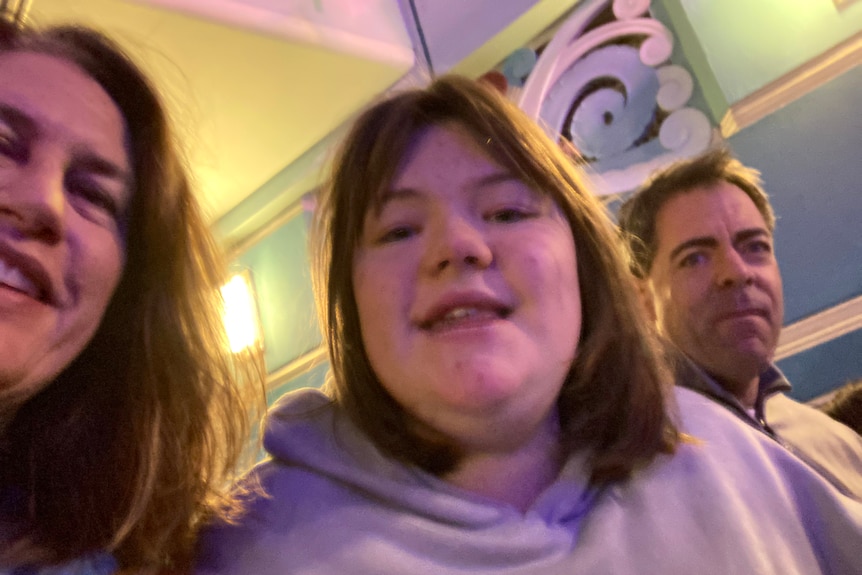
Madeleine Lewis with her parents Simon Lewis and Laura Clarke. (Supplied: Laura Clarke)
“It is absolutely high octane, high pressure,” he said.
Mr Lewis said another source of pressure was his enduring fear that Madeleine’s NDIS funding, which enabled the family to employ carers and psychological help for Madeleine, could be cut.
Describing the National Disability Insurance Scheme as a “wonderful initiative”, he said he and his wife were forced to recount the “harrowing” details of their daily life annually in order to maintain their daughter’s plan funding, and knew of families whose funding had been abruptly cut.
“If that [the funding] gets taken away or reduced, I don’t know where I’ll be,” he said.
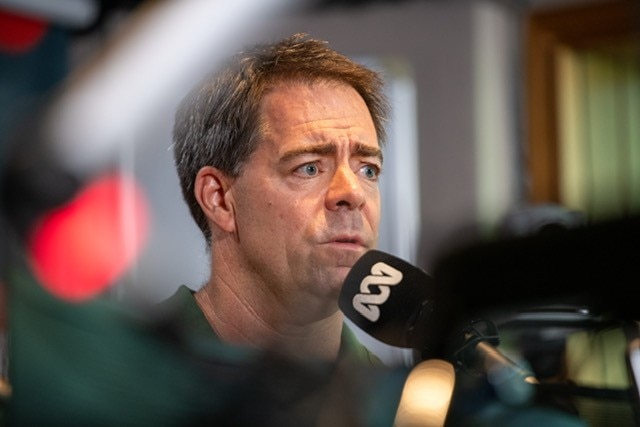
Simon Lewis has detailed his often “harrowing” experiences of living with a severely autistic daughter. (ABC News: Andrew O’Connor)
Mr Lewis said he was speaking out about his daughter because families like his were often invisible to society, unable to participate in community life and hidden behind the doors of their homes.
“There are families going through this today, and there’ll be families going through this tomorrow, and it’s time that the severe end of the community is noticed and is helped,” he said.