

The number of moles on children’s bodies has almost halved over a 25-year period, with predictions of a significant reduction in their melanoma risk as they age, a long-running Australian study has found.
Scientists at QIMR Berghofer Medical Research Institute tracked mole development in twins turning 12 or 13 each year between 1992-2016, and their siblings.
The average mole count plummeted from 87 in 1992 to 46 in 2016 — a 47 per cent reduction.
Almost 4000 children from sun-drenched south-east Queensland were involved in the study, published in the British Journal of Dermatology.
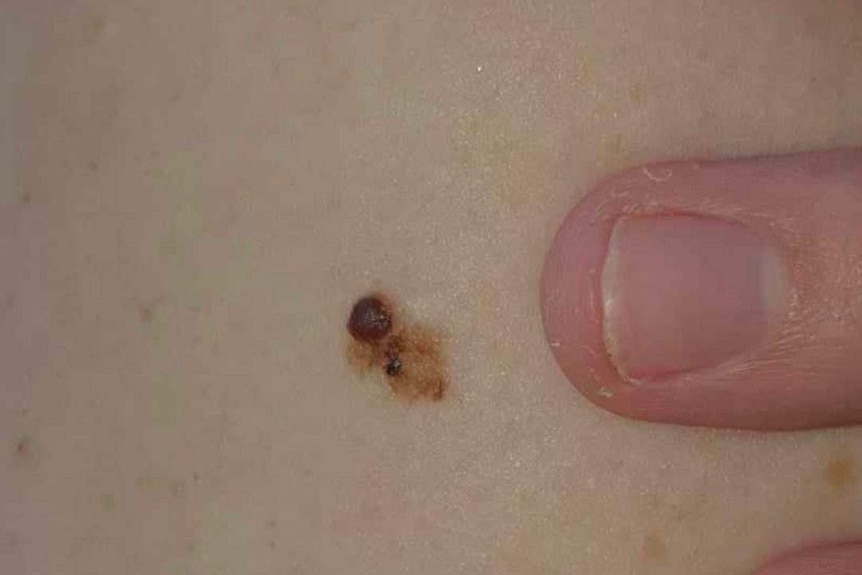
Melanoma can quickly turn deadly if not discovered soon enough. (Supplied: Crystal Newton)
Australia has the highest rates of melanoma in the world. About 1,300 Australians die from the skin cancer every year.
Mole count is one of the strongest predictors of lifetime melanoma risk, particularly in pale-skinned populations exposed to high levels of ultraviolet (UV) radiation.
Reduced sun exposure for children
The researchers believe the most likely reason for the big drop in average mole counts between children born in the 1980s and those born after 2000 is reduced sun exposure before the age of 12, aligning with the iconic Slip, Slop, Slap campaigns and other sun prevention measures.
“We estimate it would only take an approximately 11 per cent fall in sun exposure over 25 years to get the needed fall in mole numbers,” they wrote in the journal.
They found changes in ethnicity and skin colour across the population did not explain the drastic decrease.
Loading…
Geneticist Nick Martin, who led the study, said the success of the Slip, Slop, Slap campaign showed how science could inform robust public health campaigns that changed habits and would “help save lives in the future”.
“I think it’s pretty sensational,” he said when asked about the study’s findings.
“I think it’s worth shouting from the rooftops. At last, we’ve got a good news story.”
The researchers speculated the fall in average mole counts in children over a quarter of a century should “lead to a fourfold drop in lifetime melanoma risk” for people born this century compared to those born in the 1980s.
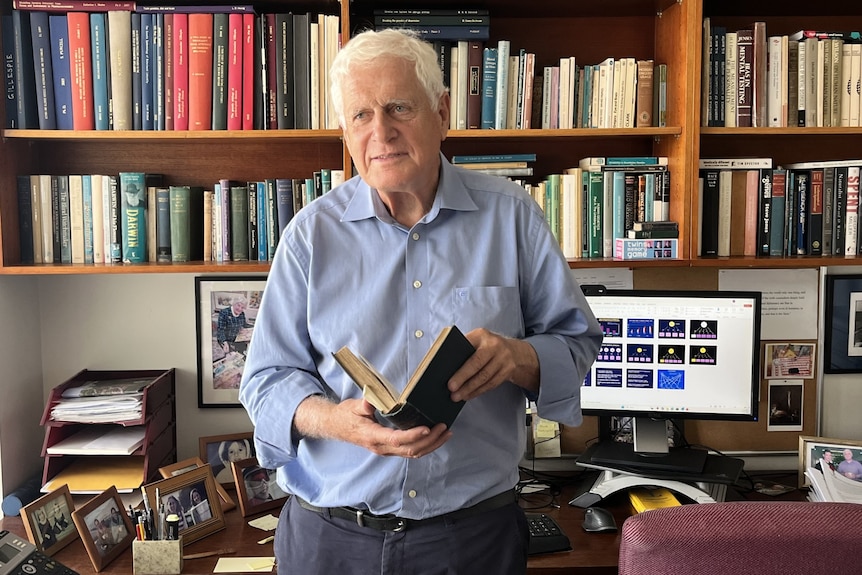
Professor Nick Martin is a geneticist who founded the Australian Twin Registry. (ABC News: Emma Pollard)
Professor Martin described the research as the longest running twin study in the world looking at mole counts.
“It’s only with the longitudinal perspective, that we can actually see this trend,” he said.
Awareness and adherence essential
Skin cancer expert Rachel Neale, who is based at QIMR Berghofer but was not involved in the study, hailed the findings but said it was vital Australians continued to protect themselves from the sun throughout their lifespan.
“It’s important that we build on this and continue to protect our skin as we get beyond that childhood period,” Professor Neale said.
“We do a fantastic job with our younger children and it’s not only parents and carers, it’s also our education system with the ‘no hat, no play’ policy that does a fabulous job in the earlier years.
“When we get to adolescence, we’re less likely to want to protect our skin.”
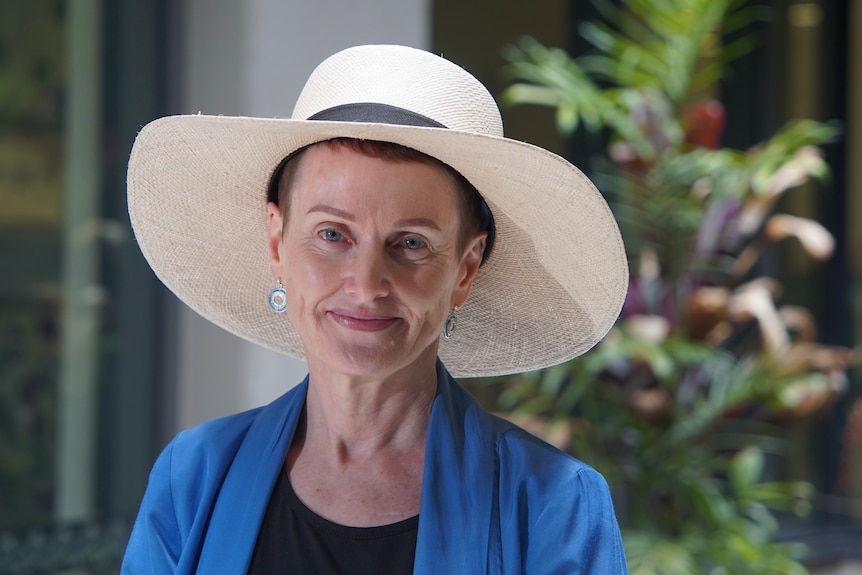
Professor Rachel Neale says it is important for people to maintain good sun safety beyond their childhood years. (ABC News: Janelle Miles)
Professor Neale said it was also crucial for Australians to think about sun protection beyond just sunscreen.
“We need hats, we need to cover as much of our body as possible with clothing and then be using sunscreen to back that up for the bits that we can’t get clothes on,” she said.
“Too often I’m seeing people in places like the beach wearing just a bikini, for example, and relying on sunscreen to protect their skin.
“Clothing is much more effective and long-lasting than sunscreen. There is definitely more work to do.”
Slip, Slop, Slap campaign ‘a major contributor’
Kate Clark took part in the study with her twin brothers in the 1990s.
She said sun safety had always been front of mind for her with a history of melanoma in her family.
Her father’s cousin was just 28 when he died of a melanoma on his foot and Ms Clark recalls the Slip, Slop, Slap campaign being prominent as a teenager.
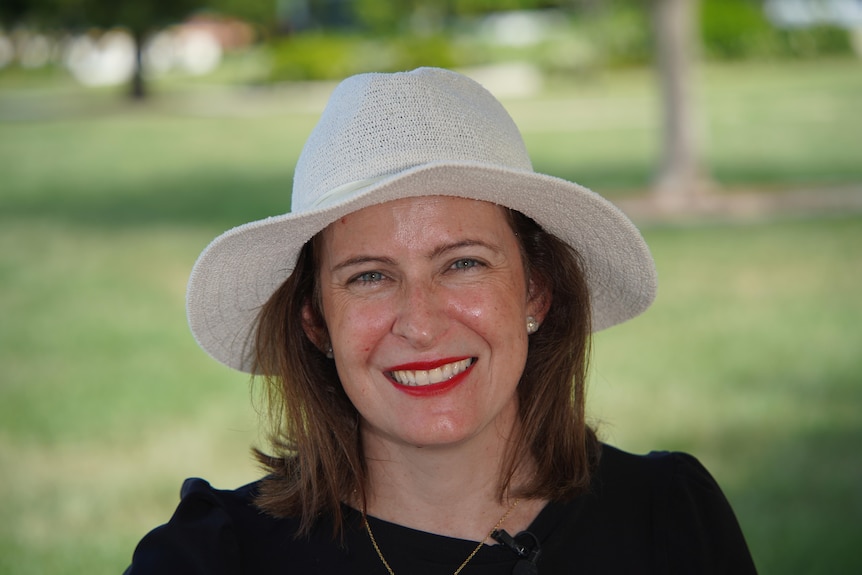
Kate Clark participated in the study and says she wants to see the Slip, Slop, Slap campaign resurrected. (ABC News: Janelle Miles)
As the mother of two sets of twins aged nine and seven, the 42-year-old said she continued to practise sun safety in her household.
“I’m always kind of nagging the kids but also doing their sunscreen for them or getting zinc and getting the swim outfit,” she said, adding she made sure her children wore rashies if they had swimming after school.
Ms Clark said she would like to see the Slip, Slop, Slap campaign rejuvenated to inform the habits of the latest generation of Australians.
“I feel like it’s dropping off a bit,” she said.
“You don’t see as many people wearing hats … these days and caring about their skin as much, which is a shame.”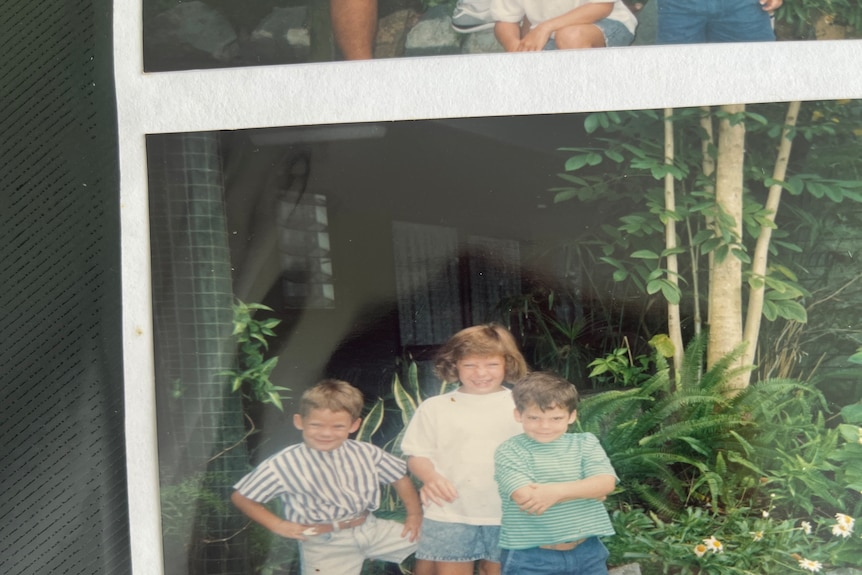
Kate Clark with her twin brothers as children. (Supplied: Kate Clark)
Melanoma Institute of Australia epidemiologist Anne Cust, who was not involved in the study, praised the research as “really important”.
“Queensland does have the highest rates of melanoma and other skin cancers in the world so it’s a good place to be able to detect changes in mole counts in children because most children will develop moles,” Professor Cust said.
Skin cancer gets its time in the sun
The Sydney-based professor said Australia’s melanoma rates had been reducing over time in people aged under 40, with the Slip, Slop, Slap campaign “thought to be a major contributor to that”.
“These data reinforce that,” she said. “It’s probably one of the most successful public health campaigns ever. It’s important to keep that messaging going.”
Apart from informing the world about moles and sun safety, the Brisbane Longitudinal Twin Study has made significant contributions to the understanding of genetic and environmental factors in other disorders, including anorexia.
Ms Clark has vivid memories of being told by the researchers as a teenager she had a “one in four or one in five” chance of having twins because her mum and aunt had both given birth to non-identical twins.
“I was pretty shocked by that at the time,” she said.
“And then, of course, I ended up having twins myself.”