
At long last, the Prospects Live dynasty squad has arrived at the most exotic, intoxicating, irresistible position of all…relief pitcher! No? No one?
Okay, maybe not. But the deeper the league, and the more scarce the format, the more helpful it is to select the right long-term relievers in your dynasty leagues. Some 30-teamers will use both Saves and Holds as separate categories, which means you may even run into some situations where you have *too many* closers, and not enough setup men. While there isn’t an exact, objective science to predicting which pitchers can handle the 9th inning, there are certainly factors you’ll want to consider.
Before we get into predictive factors of finding saves in a deep dynasty, let’s acknowledge that even the best RPs are vulnerable to being dealt out of a closer’s role and into either a closer-by-committee or an outright setup role. Some managers prefer one solid guy in the 9th while others are willing to roll out a myriad of arms dependent on the situation, and it’s sometimes impossible to tell when a player is about to be dealt in the middle of a season. In our dynasty game, there is a decent argument in favor of ditching the development of a reliever altogether, instead choosing to stack up other positions and then trading them away for a top RP from a non-contending team at the deadline. That said, there have been times when those trades occur, only for the incoming reliever to lose their job a week or two later anyway.
While many in the industry fear their starting pitching prospects will become relievers, it could be said that there is wisdom in seeking out elite young arms that are already considered high-leverage RP prospects. These assets typically come at a discounted (see: free) rate, and you won’t have to pay an arm and a leg for a potentially temporary 9th inning option at the deadline.
When considering the likelihood that a reliever will become a closer, think like a manager. Many of MLB’s skippers prefer a large, imposing figure on the mound who either keeps his cool or is kind of a psycho on the mound. Some guys are fine pitchers, but there is a naturally added pressure when every single pitch matters at the end of the game. Your team just came back and is up by a run after 9 innings of grinding away and giving their all…do you have what it takes to shut the door? A big fastball is not always necessary, but it is also something typically sought after when it comes to traditional closers. What *is* almost always necessary is an ability to miss bats, to the point that managers are willing to overlook wild arms if the stuff is filthy enough.
There feels like an extra layer of uncertainty at the closer position heading into the 2026 season, as several household names like Robert Suarez and Kyle Finnegan (after he actually improved his profile dramatically) appear to be stepping into setup duties, Ryan Helsley and Devin Williams are coming off concerning campaigns, and people still aren’t sure if Carlos Estevez is actually good at baseball or not. While concerning in a way, it’s also a golden opportunity to go out and get the guys you think will be next up at a time where very few relievers will have a long leash in the 9th inning.
2026 Dynasty Position Preview – Prospects Live
 1. Mason Miller, SDP, RHP (MLB)
54 PLIVE-, Peak Projection: 3.03 ERA, 38.3% K, 10.3% BB, 28.0% K-BB, 37.8% GBC
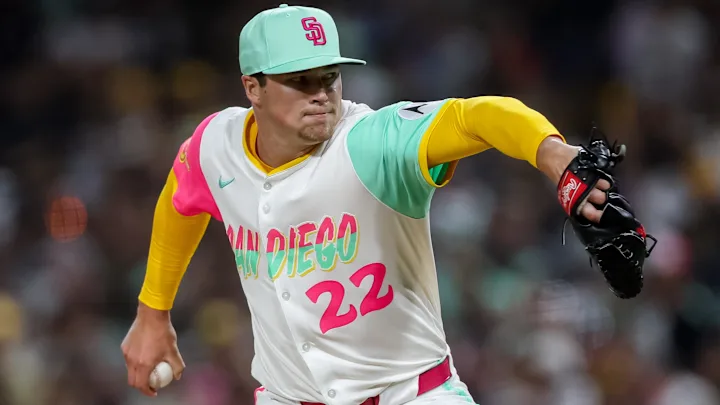 Photo Credit: Chadd Cady
In what was a shocking move at last year’s trade deadline, the Padres acquired Miller with JP Sears for Leo De Vries and 3 additional prospects. Miller rewarded them with an insane 54.2% K over 23.1 IP in the regular season and a postseason of 2.2 IP consisting solely of 8 K and a lone HBP. This offseason there was noise around San Diego moving him back into a starter’s role, but the latest news on their plan is that Miller will remain a reliever, and the presumptive closer with Robert Suarez a free agent. He should be valued as the top closer in dynasty as long as the Padres don’t decide to screw around with him as a high-leverage arm. – Smada
2. Edwin Diaz, LAD, RHP (MLB)
61 PLIVE-, Peak Projection: 3.39 ERA, 34.0% K, 9.1% BB, 24.9% K-BB, 43.5% GB
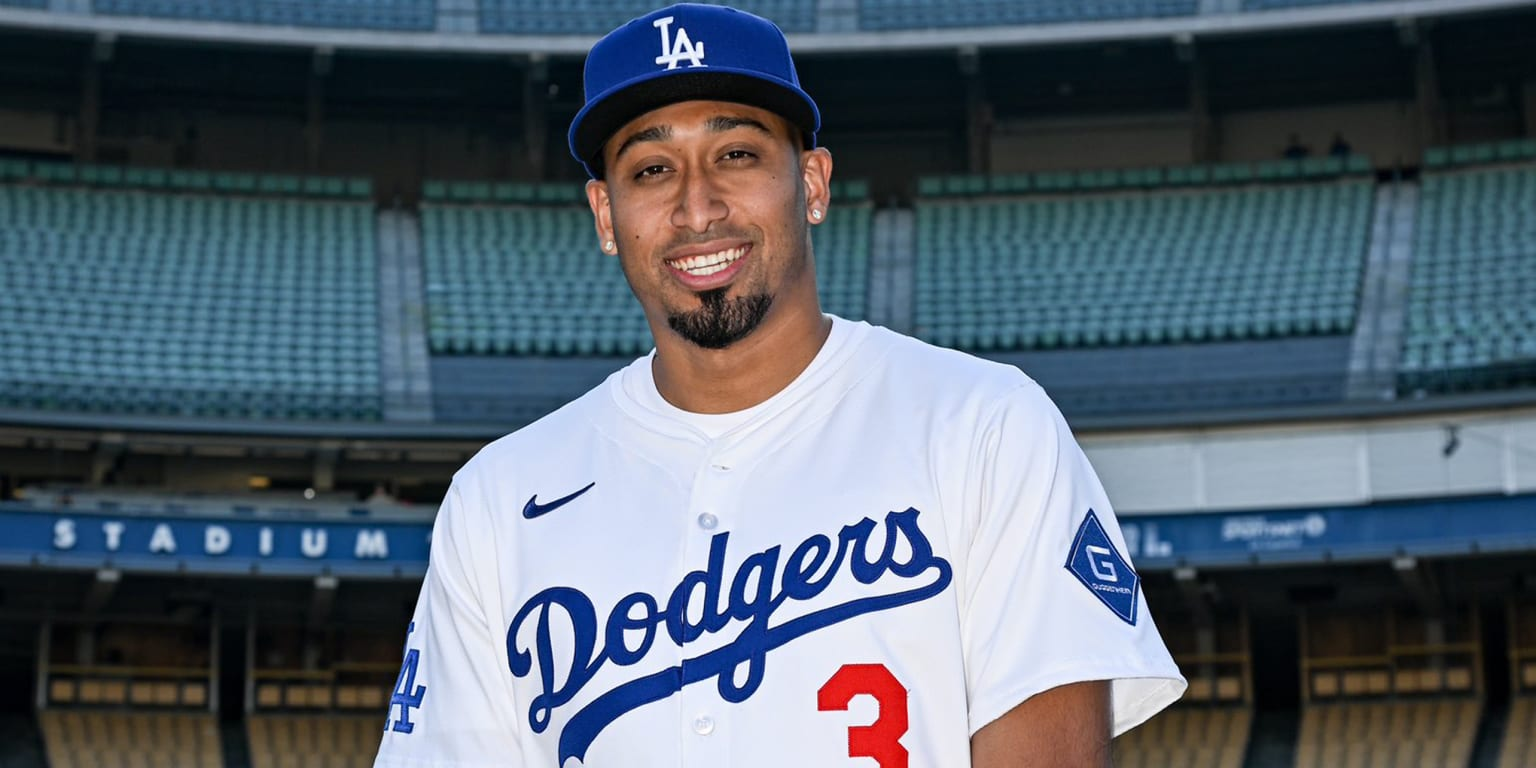 Photo Credit: mlb.com
Since his MLB debut in 2016, Edwin Diaz has alternated between great and okay seasons each year. He has posted ERAs of 2.79, 1.96, 1.75, 1.31, and 1.63 in his first, third, fifth, seventh, and ninth seasons, and ERAs of 3.27, 5.59, 3.45, and 3.52 in his second, fourth, sixth, and eighth seasons. His peripherals have been consistently good since 2020, though, with his worst season by FIP being 3.02 in that span. 2026 will be Diaz’s first season with Los Angeles after signing a three-year, $69M contract with the Dodgers this offseason. The main weakness of this Dodgers team was the bullpen, and Diaz should provide a reliable presence with his swing-and-miss arsenal. He’s a top closer in all league formats for 2026. – Raj Mehta
3. Jhoan Duran, PHI, RHP (MLB)
56 PLIVE-, Peak Projection: 3.15 ERA, 29.9% K, 8.2% BB, 21.7% K-BB, 57.1% GB
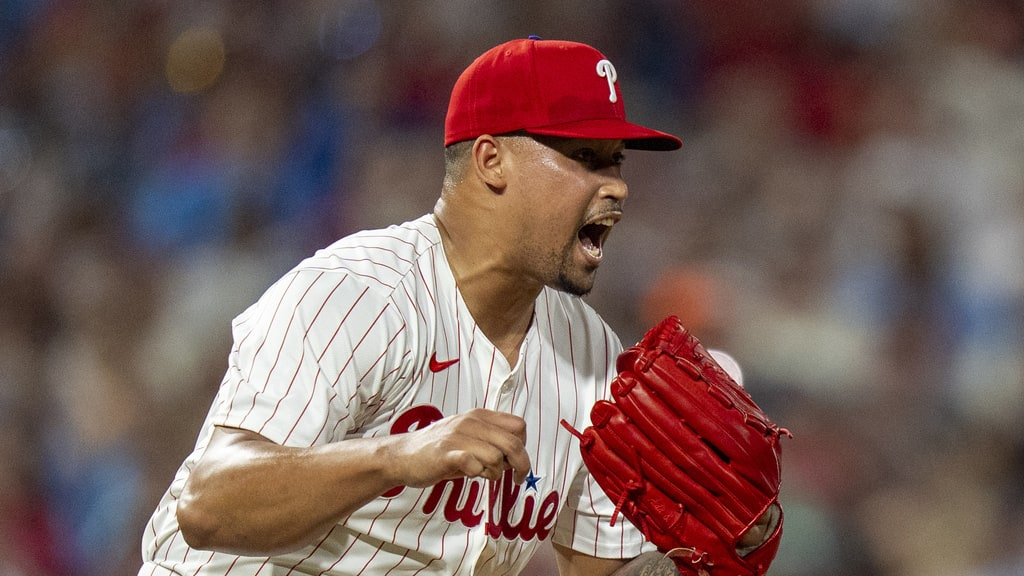 Photo Credit: mlb.com
Entering his age-28 campaign, Duran has positioned himself as one of the top closers in all of baseball. He’s a 6’5, 230 lb presence out there in the ninth inning, and should continue generating plenty of saves during his tenure in Philly. The righty introduced a 4th pitch (sweeper) in 2025, which wasn’t entirely necessary considering his already-filthy triple-digit heater combined with his upper-90s splitter and hard curveball. In terms of dynasty leagues, it’s pretty obvious: this guy is a young stud, and you should hold him if you’re contending anytime soon. The only time to send him packing is if you’re heading toward a rebuild, and even then – don’t sell yourself short! – Darren Eisenhauer
4. Cade Smith, CLE, RHP (MLB)
67 PLIVE-, Peak Projection: 3.66 ERA, 31.7% K, 7.8% BB, 23.8% K-BB, 43.4% GB
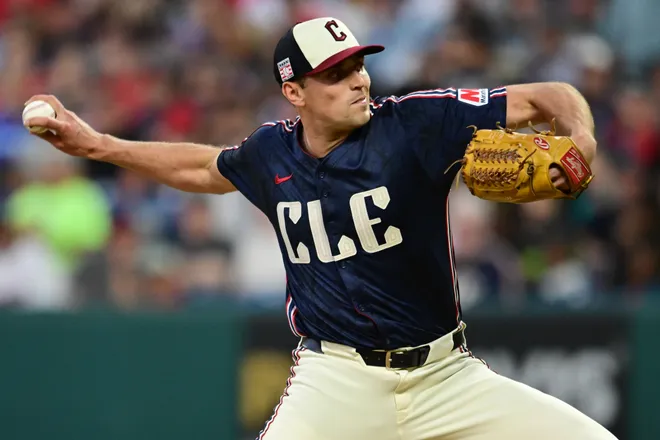 Photo Credit: Ken Blaze
Cade Smith was the most valuable relief pitcher by fWAR in 2024, but nobody bet on him to become the primary closer by the end of 2025 — not even Emmanuel Clase — since Clase was on a team-friendly contract that could have kept him in Cleveland for a while. Clase wound up throwing one too many cutters in the dirt, and Cade Smith replaced him without missing a beat, pitching to a 2.79 ERA and a 1.76 FIP and notching 13 of the team’s 17 saves since Emmanuel Clase was placed on administrative leave on July 28th. Overall, he pitched to a 2.93 ERA and a 1.95 FIP in 73.2 IP, and repeated as MLB’s most valuable relief pitcher by fWAR. Smith was already a stud in leagues where holds are a tracked stat category, but now that he’ll be entering the year as the closer, he’ll be highly sought after in saves-only leagues as well. That, along with most ERA estimators considering his sub-3 ERA unlucky, should make him one of the first relievers off the board in redraft leagues, and have a relatively high cost to acquire in dynasty leagues. – Raj Mehta
5. Andres Munoz, SEA, RHP (MLB)
69 PLIVE-, Peak Projection: 3.75 ERA, 29.5% K, 10.6% BB, 18.9% K-BB, 50.1% GB
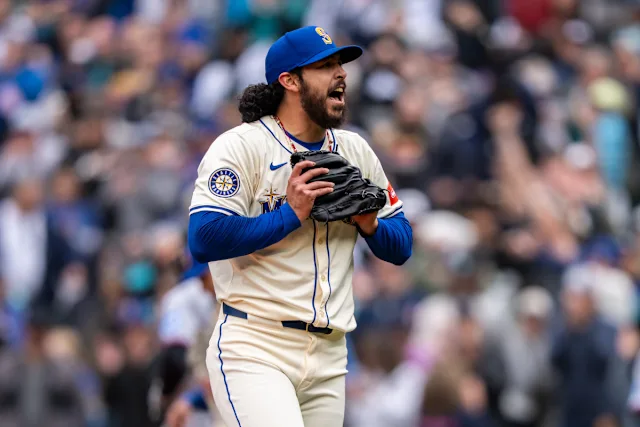 Photo Credit: Yahoo Sports
Seattle boasted one of the league’s better bullpens last season, thanks in large part to the heroic efforts of the flame-throwing Muñoz. Sitting at just over 98 mph on his four-seamer, Muñoz delivered 24 consecutive appearances without allowing an earned run to begin 2025, and he finished the campaign with a pristine 1.87 ERA to go along with a 2.43 FIP. The Mariners’ closer also saved a career-high 38 games while holding opposing hitters to a mere .162 batting average. His strikeout rate (32.7%), whiff rate (36.5%), and fastball velocity were all in the top five percent of qualified pitchers as well. Muñoz figures to remain atop the bullpen hierarchy in Seattle in 2026, and a compelling case could be made that he is the best closer for dynasty purposes at the moment, given that he turns just 27 in January. – Lucas Morel
6. Josh Hader, HOU, LHP (MLB)
73 PLIVE-, Peak Projection: 3.96 ERA, 33.1% K, 9.4% BB, 23.7% K-BB, 28.5% GB
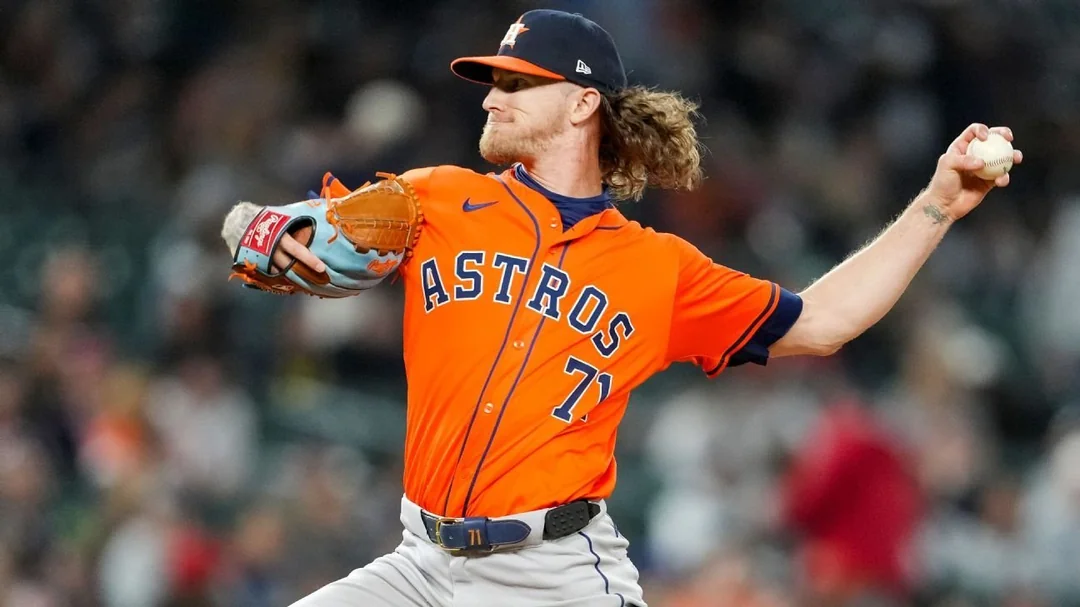 Photo Credit: espn.com
Josh Hader is an elite closer, and there are no indications that will change anytime soon. He’ll turn 32 in 2026, meaning there should be at least another 3 or 4 seasons of dominance to come. He actually registered better command numbers (7.8% walk rate, 68% strike rate) than he’d ever had in his career this past season, which means there could actually be an even higher level to Hader’s game than previously seen. There’s not much to say with Mr. Hader: even with elite Bryan Abreu behind him in Houston, there’s no questioning his high-level swing and miss stuff in the 9th inning. Even if he were to be traded at some point, he’d become the closer immediately. The lefty is as strong a dynasty buy as ever. – Darren Eisenhauer
7. David Bednar, NYY, RHP (MLB)
74 PLIVE-, Peak Projection: 4.04 ERA, 29.1% K, 8.8% BB, 20.3% K-BB, 38.4% GB
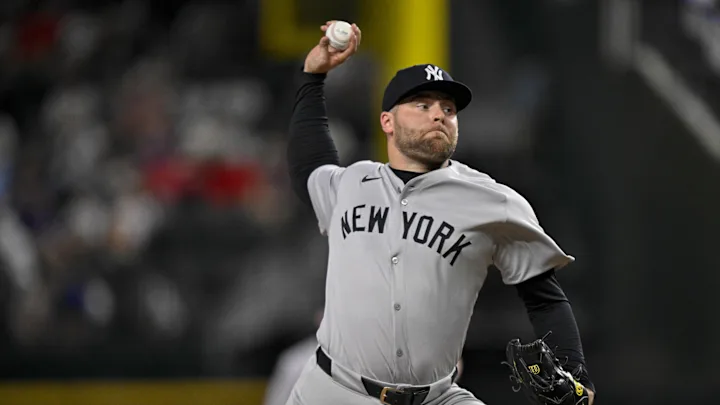 Photo Credit: Jerome Miron
Bednar outpitched Devin Williams down the stretch after being acquired at the trade deadline and looked solid in the closer’s role. After his disastrous 2024 season (5.77 ERA) in which he was removed from the closer’s role in Pittsburgh, Bednar came back in 2025 with a vengeance as he posted the highest strikeout rate of his career (34.3%). Bednar’s walk rate regressed back to normal rates (7.6%) after ballooning into the double digits in 2024. What changed for Bednar? He threw more strikes (65% in 2024, 67% in 2025) and the quality of the strikes were also better, especially with his secondaries. This could be for a number of reasons: improved health, better execution, a mechanical tweak, etc. Regardless of how it happened, Bednar was back to his old self and dominating in high leverage. With the departure of Williams, consider Bednar as a second-tier closer for a good team who should get a good share of save opportunities. – Greg Hoogkamp
8. Devin Williams, NYM, RHP (MLB)
69 PLIVE-, Peak Projection: 3.79 ERA, 31.8% K, 10.0% BB, 21.7% K-BB, 43.8% GB
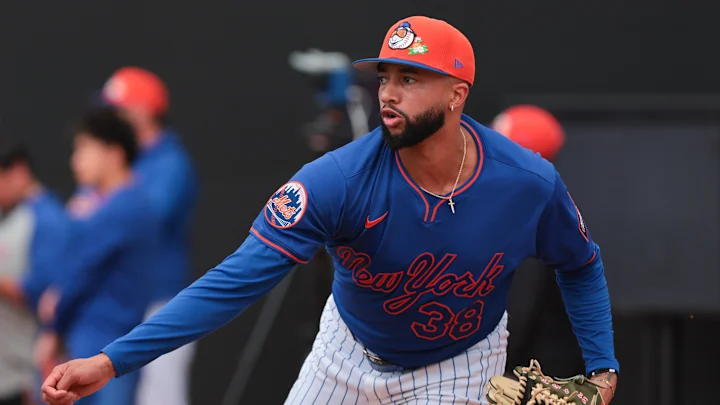 Photo Credit: Sam NavarroT
Devin Williams will be staying in New York for the 2026 season, but he’ll be switching boroughs as the 31-year-old is headed to Queens after signing a three-year, $51 million contract with the New York Mets. Williams’s single season in the Bronx was a mixed bag; his ERA of 4.79 was easily the highest of his career, and he lost the closer role after the trade deadline when the Yankees brought in David Bednar. At the same time, his 34.7% strikeout rate, 99th percentile whiff rate, and extremely low 55.2% left on base percentage suggest that Williams’s results were plagued by a fair bit of bad luck. While it’s little consolation to Yankee fans, fantasy managers should feel confident that Williams was largely the same pitcher in 2025 as he was in Milwaukee. The one question regarding Williams’s outlook is a big one: how the Mets will structure their bullpen in 2026, as it’s not guaranteed that Williams will enter 2026 as the closer. That being said, if an owner in your league is nervous about this possibility, it could be a prime opportunity to acquire an All-Star closer at a discount. – David Gofman
9. Aroldis Chapman, BOS, LHP (MLB)
68 PLIVE-, Peak Projection: 3.74 ERA, 33.6% K, 10.8% BB, 22.8% K-BB, 40.8% GB
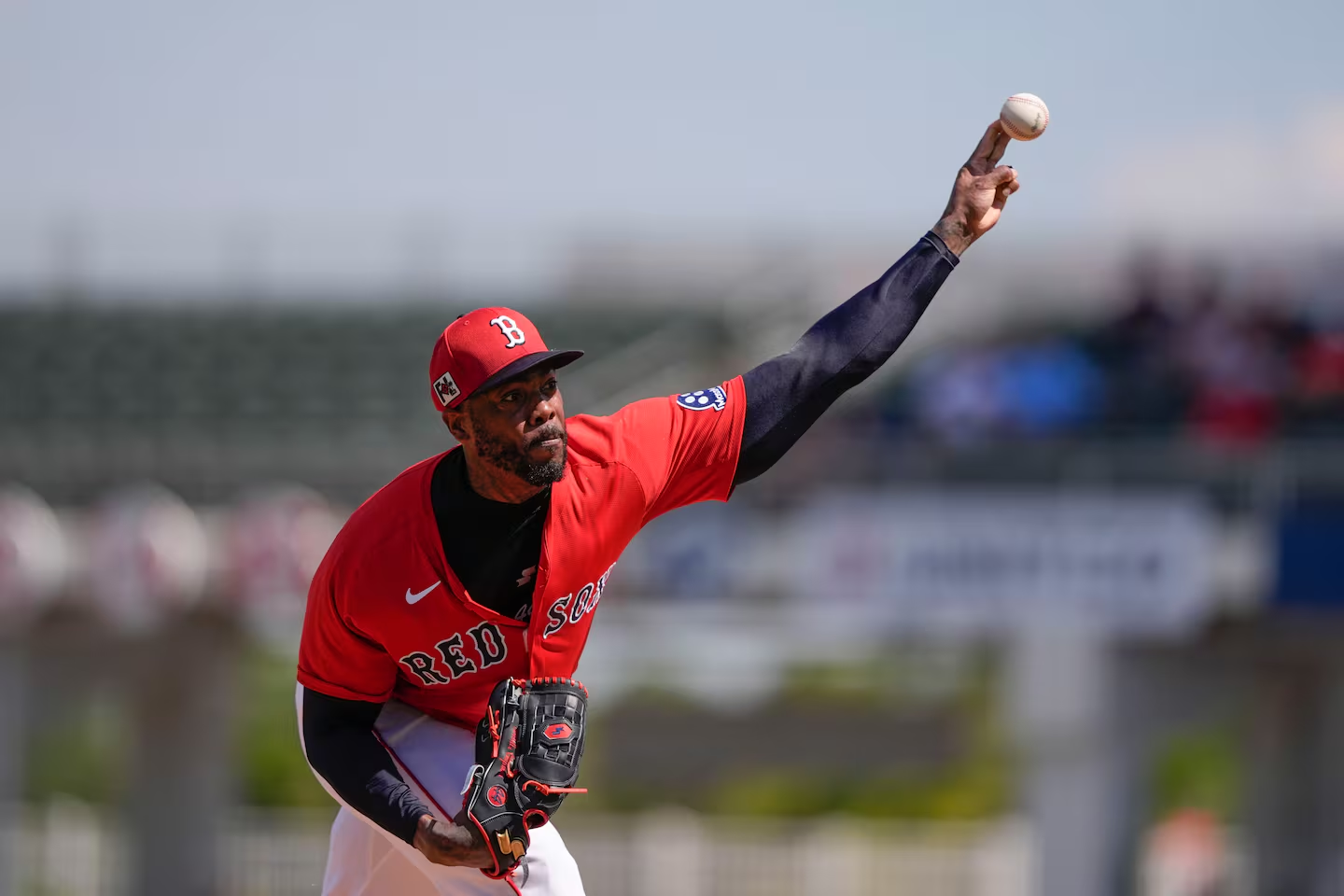 Photo Credit: mlb.com
What more can you say about Chapman? He’s an absolutely incredible athlete who turned back the clock in his age-37 season, posting one of his best (if not his very best) seasons as a professional. Chapman averaged 98.8 mph on his fastball and touched 103.8(1!) early in the season. He actually threw his sinker harder than his 4-Seamer, averaging 99.4 mph and bumping its usage to nearly a third of the time. High sinkers have been all the rage in recent years, and it was certainly an effective pitch for Chapman; batters hit just .115 on the pitch with a .259 slugging percentage. When the ball is coming in at 100, it’s nearly impossible to guess if the pitch will stay on plane (4Seam) or drop (sinker), and forget about squaring anything up when you toss in his slider (48.1% whiff) and splitter (44.8% whiff). When you look back on his career, Chapman has been a very durable pitcher considering the amount of rotational torque he puts on his body; he’s truly a freak. Chapman is under contract with the Red Sox for 2026, with an option for 2027 that vests if he pitches 40 innings. He remains a top closing option for your dynasty team. – Greg Hoogkamp
10. Pete Fairbanks, MIA, RHP (MLB)
76 PLIVE-, Peak Projection: 4.11 ERA, 25.8% K, 9.0% BB, 16.8% K-BB, 43.2% GB
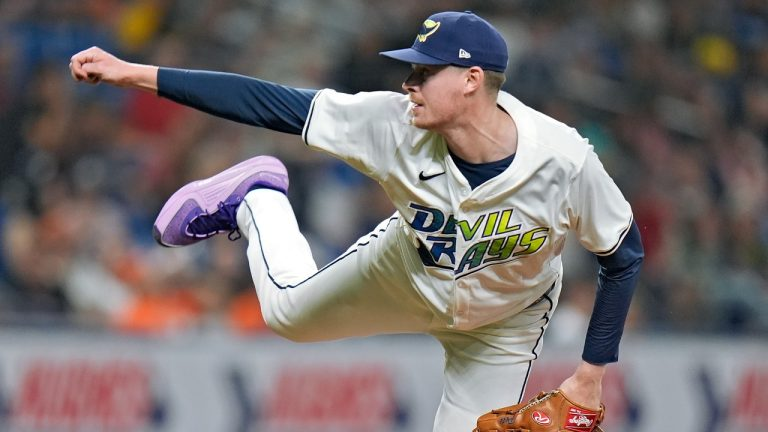 Photo Credit: Chris O’Meara
Fairbanks set a career high with 27 saves, along with a 2.83 ERA and 16.8% K-BB rate, in what was another great season for the Rays’ closer. Tampa Bay has employed a more traditional closer role over the last two seasons, and Fairbanks has been the “guy” notching 50 saves over that time. Even in 2023, when he had 25 saves, Jason Adam recorded 12, making it difficult for Fairbanks owners. Fairbanks is a slightly different pitcher than he was even two seasons ago; his strikeout rate has dropped significantly from the mid-to-high thirties to 24% over the past two seasons. All of his other metrics are stable, and he should have the 9th inning in Miami, making Fairbanks is a solid second-tier saves option in all league formats. – Greg Hoogkamp
Sign up for Prospects Live
Your one stop shop for Dynasty Fantasy Baseball, MLB Draft, Baseball Card & MiLB Baseball content. Blending Data & Scouting into our Player Evaluation
No spam. Unsubscribe anytime.