
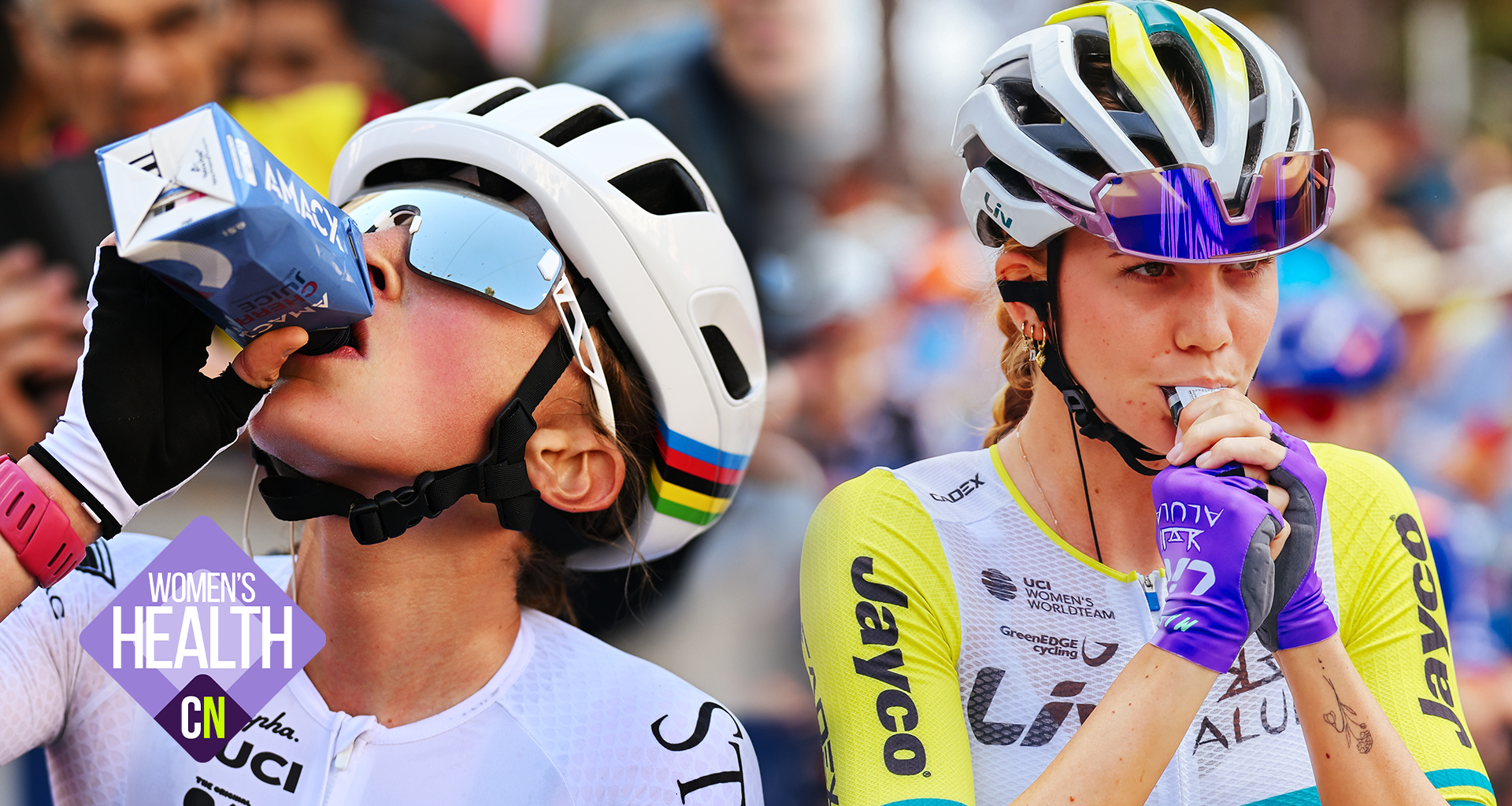
The science behind training and performance has advanced significantly in women’s cycling over the last decade, including a deeper understanding of how athletes fuel their bodies for training and racing.
As the peloton gets stronger, race distances get longer, and the competition season extends to nearly 10 months, it’s more important than ever for athletes to dial in their nutrition and hydration strategies. And what athletes intake as fuel sources, and when, must also align with the physical demands of high-performance training, menstrual cycles and hormone fluctuations, changes in body temperature, sweat loss and potential supplementation needs – all have a major impact on an athlete’s ability to adapt to the physical demands of sport.
Read more from our women’s health series
(Image credit: Getty Images/Illustration by Michael Rawley)
“Metabolism hasn’t really changed so much over time, and so the fundamentals, such as our macro nutrients needs – proteins, carbohydrates, fats and nucleic acids – the major biomolecules are the same, and you have to fuel with these things. What has changed are the recommendations and the awareness, which is more present now,” says Dr Logan Sprenger, who has worked directly on nutrition and performance with individual athletes and teams, zeroing in on the importance of adequate fuelling to help avoid symptoms of Relative Energy Deficiency in Sport (RED-S).
RED-S occurs when the body doesn’t get enough energy from food to fuel both the demands of exercise and essential daily functions like breathing, digestion, and repairing tissues and can lead to serious physical and mental health problems, according to Project RED-S. Physical symptoms include unexplained fatigue, low energy, and persistent illness and injuries.
“Energy availability is really the cornerstone of female performance. So chronic under-fuelling has always been around. It quietly erodes power, recovery, and endocrine health. What I’ve seen working with lots of different sports teams on is that low energy availability is one of the most under-recognised threats in women’s cycling; it disrupts the menstrual cycle before affecting body weight.”
“Your menstrual cycle is really important because it’s one of the earliest warning signs of under-fuelling; you lose your menstrual cycle. If the focus on nutrition is about female physiology, then there are a number of key areas that are important to consider for athletes.”
Iron status – a key performance factor
At the top of Dr Logan Sprenger’s list is iron status, which she says is a key performance factor for female endurance athletes, not just a health concern. Regularly monitoring serum ferritin and iron levels can be essential for proper oxygen delivery, which directly affects training consistency and performance.
Ultimately, she says, athletes need an optimised internal physiological environment to adapt to training loads effectively; without it, even well-structured training will not lead to meaningful improvements.
“Iron status is not just a health issue, it’s a performance limiter for female endurance athletes,” she says. “It is highly overlooked, in my opinion, and yet, it could be having two or three blood samples a year to make sure an athlete’s serum ferritin is within a range that will allow them to adapt to the training load.”
What is an optimal serum ferritin range? Dr Logan Sprenger says there are ranges for female endurance athletes; however, it’s important for each individual to discuss them in consultation with their sports physician and sports dietician.
“Iron does fluctuate during the menstrual cycle. However, it is more of the consistency of making sure an athlete is getting samples on a regular basis to track those levels, to make sure the serum ferritin is in their [optimal] range. An athlete’s checklist should include getting serum ferritin levels checked routinely at least twice a year, maybe more.”
She suggests maintaining a diet rich in iron helps support performance and adaptation, but nutrition alone may not always be enough. Understanding your serum ferritin levels is important for athletes to determine whether supplementation or other interventions might be needed.
Carbohydrates intake
Eating enough carbohydrates is the second key consideration that Dr Logan Sprenger says endurance athletes should aim for, with the recommended intake of 5-10g/kg of body weight daily. However, she explained that while many endurance athletes consume enough protein for muscle repair, they often fall short on carbohydrates, which are essential for fuelling performance.
“Most endurance athletes don’t have a protein problem; they have more of a carbohydrate problem. They’re eating enough to repair muscle, but not enough to fuel performance,” she says.
“We live in a culture where protein is overemphasised in terms of recovery, being lean, and being strong, so athletes tend to prioritise protein, and then they deflect carbohydrate off the plate, so to speak. Yet, most of the endurance athletes and cyclists that I’ve worked with don’t get enough carbohydrates, and so that’s where carbohydrates are chronically under-consumed.”
Dr Logan Sprenger lists some of the health concerns that can arise from inadequate carbohydrate intake, including impaired performance and overall health, reduced training quality, increased stress hormones, disrupted sleep, hindered recovery and immune function, and an increased risk of low energy availability.
She stresses the importance of protein intake, too, but says that many female cyclists and endurance athletes she has worked with usually eat enough protein. However, she suggests that the timing of protein intake around exercise is crucial and that athletes, in general, need to be aware of pre- and post-exercise protein intake.
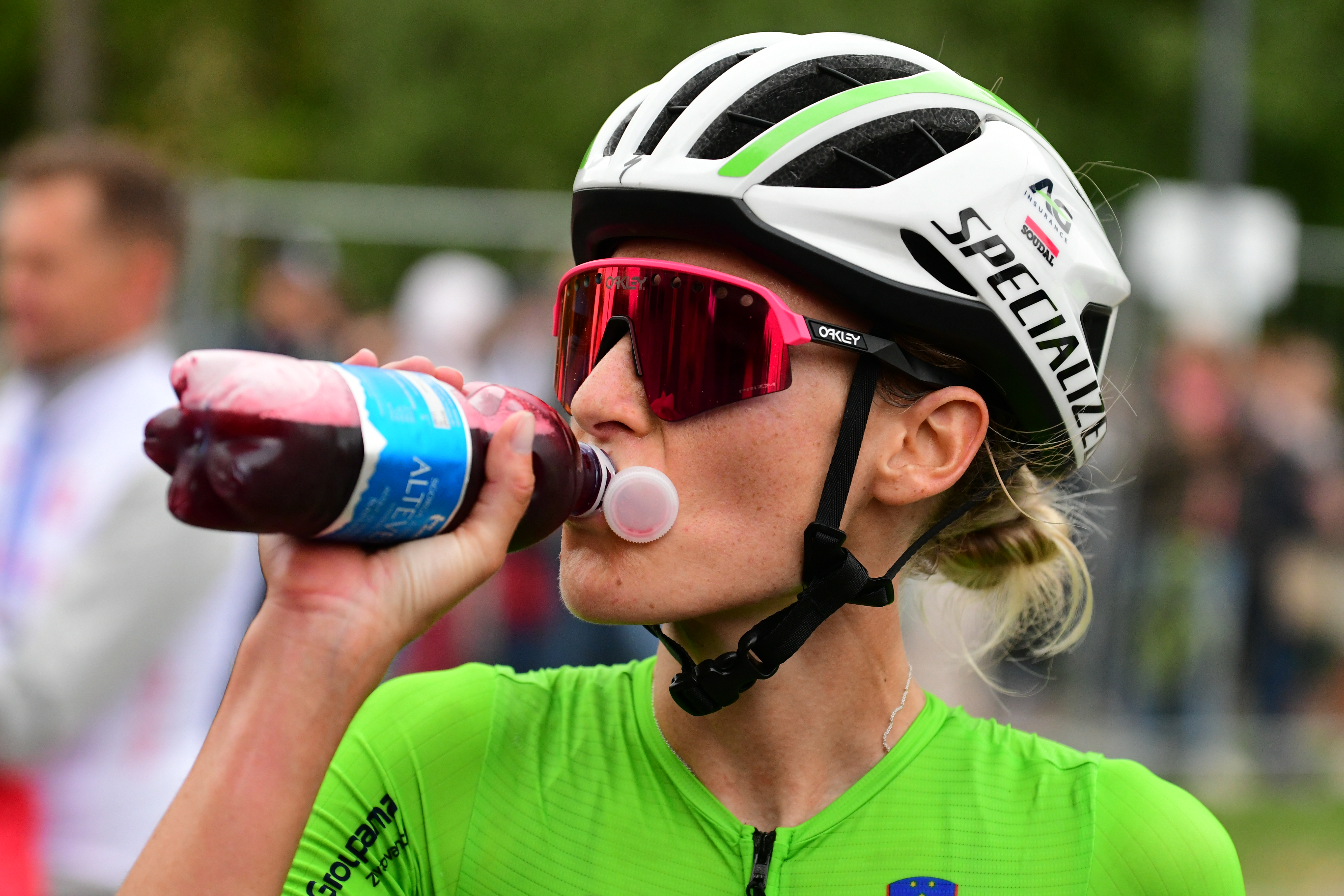
Cherry juice has rapidly become the go-to recovery fuel in the pro peloton thanks to its strong anti‑inflammatory and high carbohydrate properties (Image credit: Romain Doucelin/NurPhoto/Getty Images)
Menstrual cycles and phase-based nutrition
Let’s go back to the basics. The menstrual cycle begins on the first day of your period, which is considered day one. It is divided into four phases: menses, follicular, ovulation, and luteal. The luteal phase runs from ovulation to the start of the next period, usually around days 14–28/30, and is marked by a rise in basal body temperature.
However, because the baseline core temperature is higher in the luteal phase, this can reduce heat tolerance. Dr Logan Sprenger says that this is when hydration and cooling strategies matter more than most women realise.
Whether training or racing, it’s important to have a performance plan to ensure an athlete can thermoregulate, or tolerate heat better. She says it’s this rise in body temperature that explains why some indoor sessions and or training and racing in the heat can feel harder later in the menstrual cycle.
“Essentially, proactive management is needed, just to be aware. I say this with the caveat that every female is different. Some people don’t notice, while other people feel hotter and can’t tolerate the heat as well in the luteal phase,” says Dr Logan Sprenger.
She says that athletes often find ways to stay cooler before races and exercise by implementing proactive heat and hydration management. Dr Logan Sprenger cautioned that while some women feel bloated in the luteal phase, that doesn’t equate to being hydrated; in fact, it can often be a sign of beginning exercise dehydrated.
“What I’ve noticed in the female cyclists I’ve worked with is that in the luteal phase, they can start rides more hypo-hydrated, meaning they are more dehydrated because they feel bloated, so they don’t drink as much,” she says.
“Most of that fluid has moved from their blood and from their plasma to the interstitial space, between tissues and within cells. And so, their actual hydration needs increase during the luteal phase. This all helps with thermoregulation.”
What is sweat rate and why is it important?
Sweating is one of the most important byproducts of training, and the rate at which an athlete sweats increases with metabolic rate, so the harder they work, the more heat their bodies produce.
Dr Logan Sprenger explains that since the body must maintain a core temperature of 37°C, it activates sweating as a cooling mechanism when the temperature rises above this point. However, sweating leads to fluid, electrolyte, and other essential nutrient losses that need to be replenished.
“I believe that every endurance athlete needs to do a sweat analysis to find out their sweat rate; assessing your body mass changes over an hour of exercise to see how much body mass you’re losing based on fluid loss, and making sure you’re drinking to your sweat rate,” she says.
“Sweat rate is individually variable, it’s genetically determined, it can change with training and acclimation or acclimatization to different environments. How much you sweat is different from how much I sweat, and so you can’t do a generic, ‘drink this much’, to the entire cycling team.”
She advises athletes to know their individual sweat rate so they can implement a hydration performance plan for training or racing. She cautioned that showing up to training or a competition dehydrated can cause a range of problems, including exacerbating the core temperature response, raising heart rate, increasing fatigue, and making the rating of perceived exertion feel heightened.
“First, arriving hydrated, making sure you’re drinking 500ml, at least, in the hour before exercise. Second, knowing your sweat rate by doing a sweat loss analysis. And then, you know exactly how much, what your performance plan is for hydration, and drinking to minimise your body mass losses,” she says.
“Lastly, post-exercise, whatever you’ve lost in sweat losses, you should replace 150% of your sweat losses. For example, if you lose a litre of fluid during a race, you should drink 1.5 litres in the few hours during recovery to ensure you replenish your body’s water losses. This is really important, especially for subsequent days of racing or a Grand Tour.”
She recommends athletes do a sweat analysis to determine their sweat rate once a year or at the beginning of the season. However, the analysis can also be done during the hot summer months to ensure athletes are dialled in, because as they become more trained or more acclimatised to their environment, their sweat rate can change.
“Having that sweat analysis and knowing your sweat rate is a fundamental that every athlete should know because it significantly affects performance,” she says.
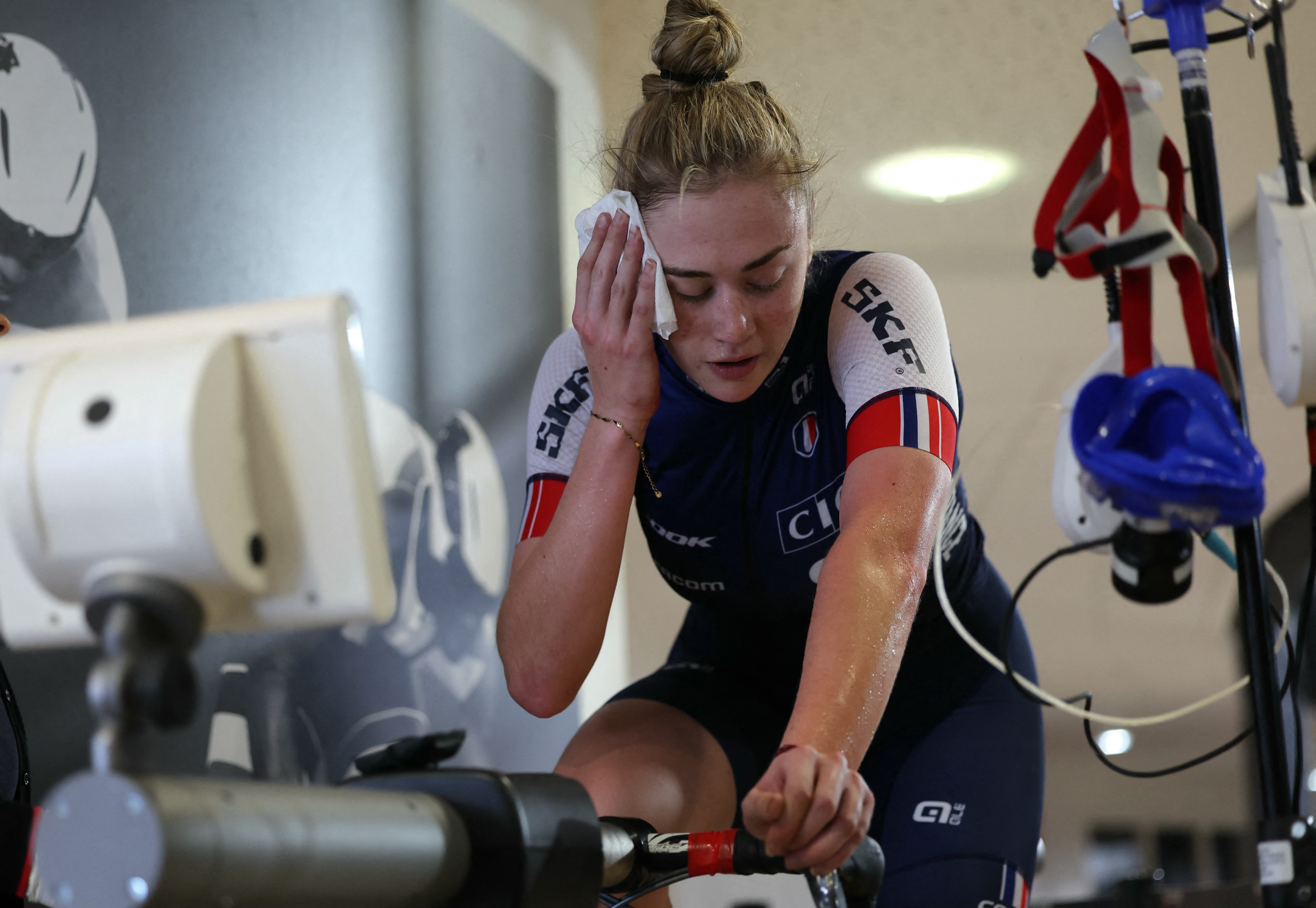
French cyclist Lara Lallemant undergoes tests to study her physiological profile (Image credit: Thomas Samson/Getty Images)
“You can’t supplement your way out of a poor diet”
There is a lot of discussion about the use of supplementation in sports, but Dr Logan Sprenger argues for the benefits of adequate nutrition and stresses the importance of athletes consulting their physician to determine whether additional supplements are needed.
“You need to dial in your nutrition; that’s the foundation, before you’re adding or layering on supplements,” she says.
She explained that, in some cases, supplements such as Vitamin D to support metabolism, Omega-3 fatty acids to support myelination of neurons, and increased iron intake to support serum ferritin levels are carefully considered based on blood sample analysis.
“To me, those are fundamentals, and besides that, it depends, but supplements are not a cover-up for a bad diet. You can’t supplement your way out of a poor diet,” she says.
“It’s really important to eat whole foods and make sure you’re getting all the biological molecules. It’s important to have a wide range of food groups and make sure your nutrition is dialled in before you add on supplements.”
As Dr Logan Sprenger emphasises, the fundamentals of metabolism have not changed, but the sport’s understanding of how female athletes apply them has continued to grow over the last five to seven years.
Adequate energy availability through a well-constructed, whole-food diet helps athletes adapt to training, along with iron status, carbohydrate intake, menstrual cycle awareness, hydration strategy, and sweat rate analysis, which have become key performance considerations for athletes to perform at their peak.