
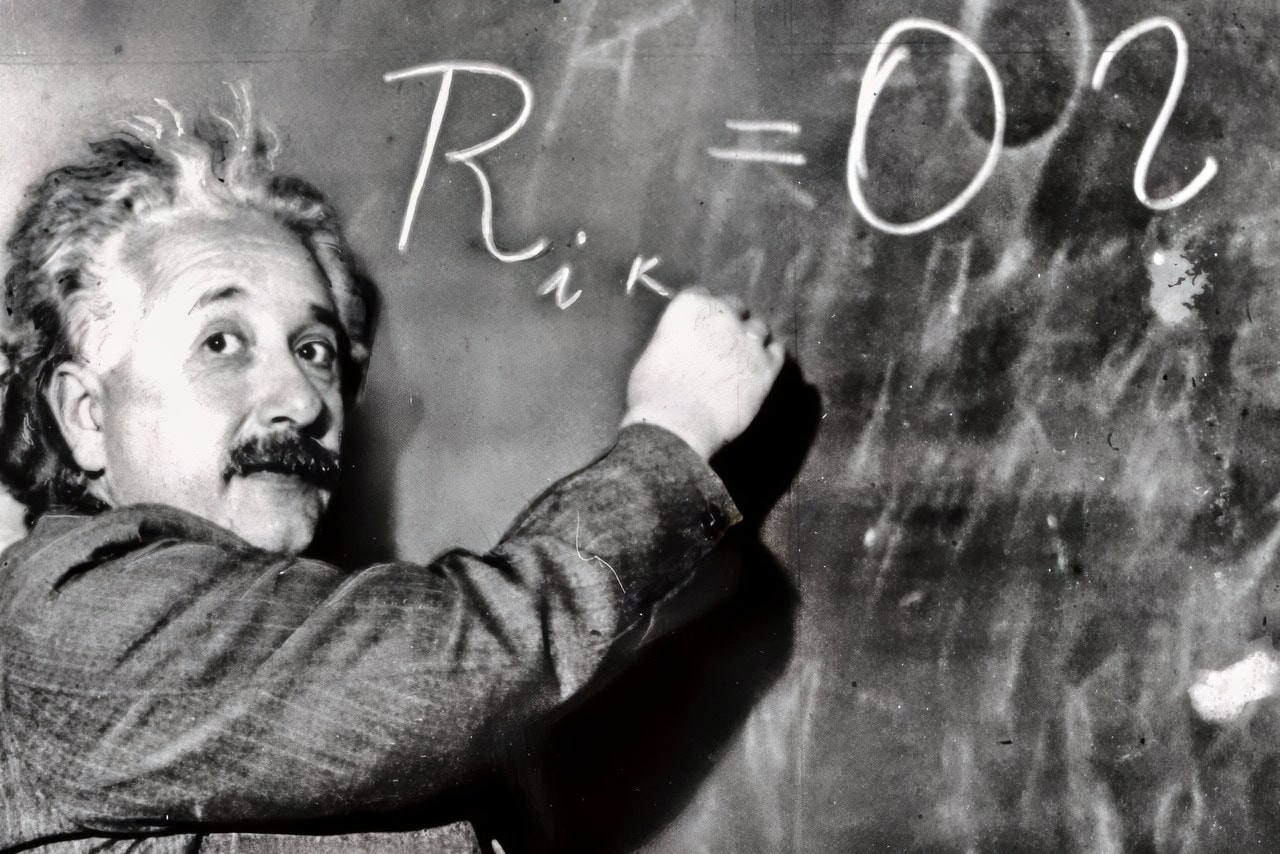
Summary and Key Points: Dr. Brent M. Eastwood, a national security expert and author, evaluates the tragic domestic history of Albert Einstein and his youngest son, Eduard Einstein.
-While the elder Einstein is celebrated for the General Theory of Relativity and his Nobel Prize, his personal life was marked by an inability to navigate Eduard’s descent into schizophrenia.
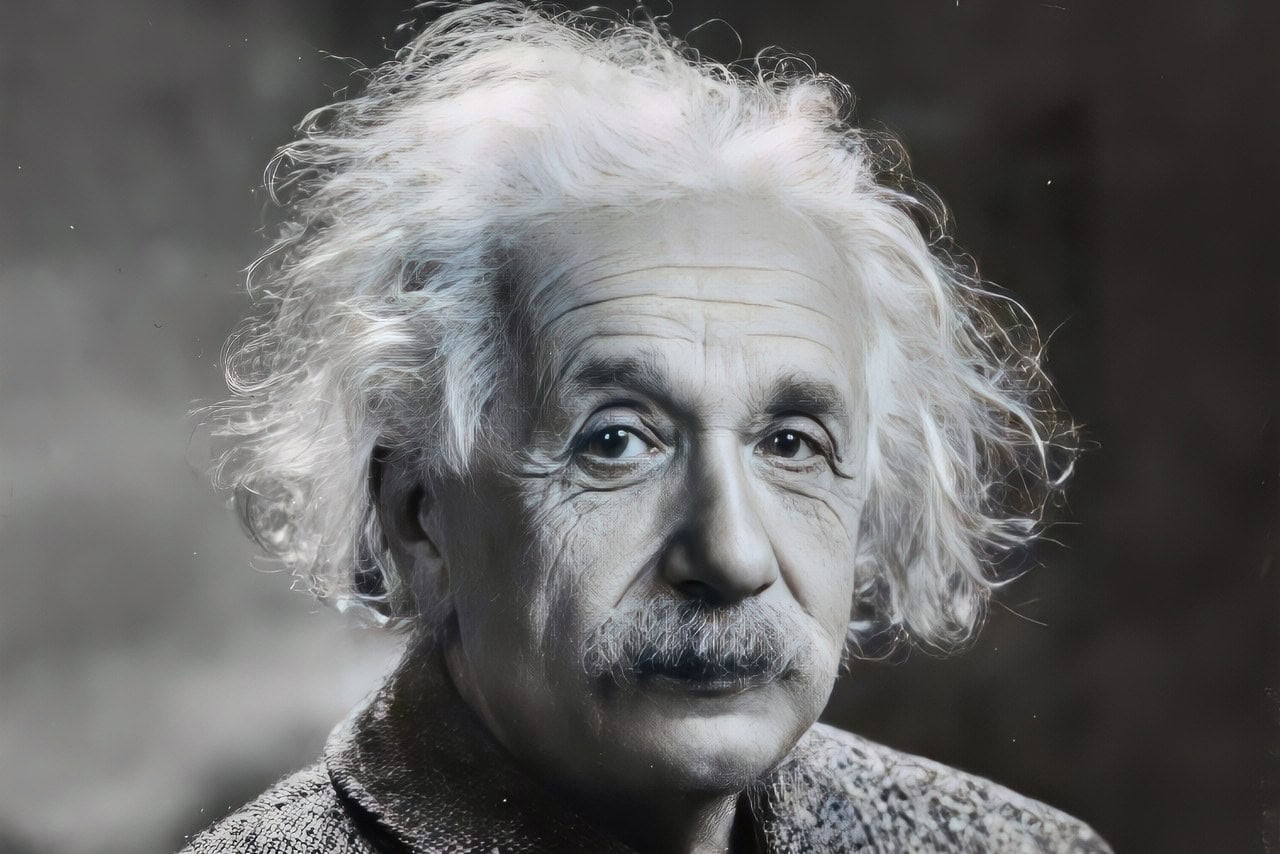
Albert Einstein. Image Credit: Creative Commons.
-This 19FortyFive report analyzes the 1930 “bicycle” quote, exploring how a lack of modern psychiatric understanding led to a permanent rupture between the scientific genius and his son.
-Eastwood concludes that while Einstein’s advice was perfect for the healthy, it failed the afflicted.
Albert Einstein In 1 Quote
Quote of the Day – “Life is like riding a bicycle. To keep your balance, you must keep moving.” – Albert Einstein.
You can’t beat getting astonishing inspiration, a special kind of rejuvenation, and an all-around kick in the pants from the brilliant role model Albert Einstein.
He was the top-notch genius of the 20th century and a thinker clearly ahead of his time. Known for escaping the Nazis and setting up shop at Princeton University, where he developed some of the most advanced theories in scientific history, he rarely disappointed, but sometimes he could be brittle in his thinking and not the best father or husband.

DAYTON, Ohio — “Fat Man” atomic bomb at the National Museum of the United States Air Force. (U.S. Air Force photo)
Context Behind the Quote
The above quote was addressed to his son Eduard in a letter dated February 5, 1930. Eduard was likely struggling to live in his father’s shadow. The story of Eduard is a tragedy. Albert’s offspring suffered from schizophrenia.
He spent 30 years in a mental health facility, and his father was always exasperated during a time when psychiatric problems were mostly untreatable.
Eduard and Albert Did Not Have a Close Relationship
Eduard grew up a sickly boy. He was small in stature, and while extremely intelligent, Einstein the elder was more devoted to his research and probably did not spend enough time with his son. Eduard continued to have elevated fevers and different illnesses throughout his adolescence. Eduard wanted to become a psychiatrist, and he enrolled at the University of Zurich. Meanwhile, Albert was awarded the Nobel Prize for physics in 1921. Both father and son frequently communicated by letter.
Eduard had little confidence in himself. “It’s at times difficult to have such an important father because one feels so unimportant,” Eduard wrote. He further mused that ‘people who fill their time with intellectual work bring into the world sickly, nervous at times even completely idiotic children (for example…me),’’ according to AllThatIsInteresting.com.
His Mental Health Downfall Was Sad
Eduard was frustrated, depressed, and longed for peace of mind. He tried to end his life and was forced into a mental institution in 1931 with a diagnosis of schizophrenia. Albert left Europe for the United States and never saw his son again.
This may have been one of the most tragic aspects of Albert’s life. He had no understanding of Eduard’s condition beyond what the doctors said, and he surely hated the lack of treatment options for his son.
The Stigma of Mental Illness
The quote referenced above showed just how much mental health was not understood at the time. Eduard’s sickness was part of his brain chemistry, and without modern pharmaceuticals, he would never improve. Einstein’s reaction would be considered unhelpful to a person who was afflicted with a chemical imbalance that was not his fault.
Not a Good Quote for Eduard
Eduard was not going to be able to get on a bike and ride figuratively and literally. This was an inspirational quote for a healthy person who was physically and mentally fit. Albert should have visited his son and shown him unconditional love. Instead, he made an unrealistic demand better suited to people without mental health afflictions. Albert was correct about his quote, but he did not read the room well, and that was being kind; this lack of a relationship with his son would haunt him for the rest of his life.
Biography of Albert Einstein

Nuclear Bomb
Albert Einstein was born at Ulm, in Württemberg, Germany, on March 14, 1879. His family soon moved to Munich. He was educated first at a gymnasium, which was customary for children. Later, they moved to Switzerland, and Albert entered school in Aarau, Switzerland. He then attended the Swiss Federal Polytechnic School in Zurich, where he found his love for math and physics. He longed to become a teacher. In 1901, he became a Swiss citizen but could not find work in a classroom. The best he could do was work as a technical assistant in the Swiss Patent Office. The good news was that he was still acquiring university credit and earned his doctorate in physics.
Who Would Have Thought a Minor Job Would be So Helpful?
The patent office was actually good for Einstein’s creativity, and he conducted some of his best research there. The new invention applications sparked the doctor’s brainpower. He finally became a professor to fulfil his dream.
In 1914, he was appointed Director of the Kaiser Wilhelm Physical Institute and Professor at the University of Berlin. He became a German citizen in 1914 and remained in Berlin until 1933, when he renounced his citizenship for political reasons and emigrated to America to take the position of Professor of Theoretical Physics at Princeton,” according to his Nobel Prize bio.
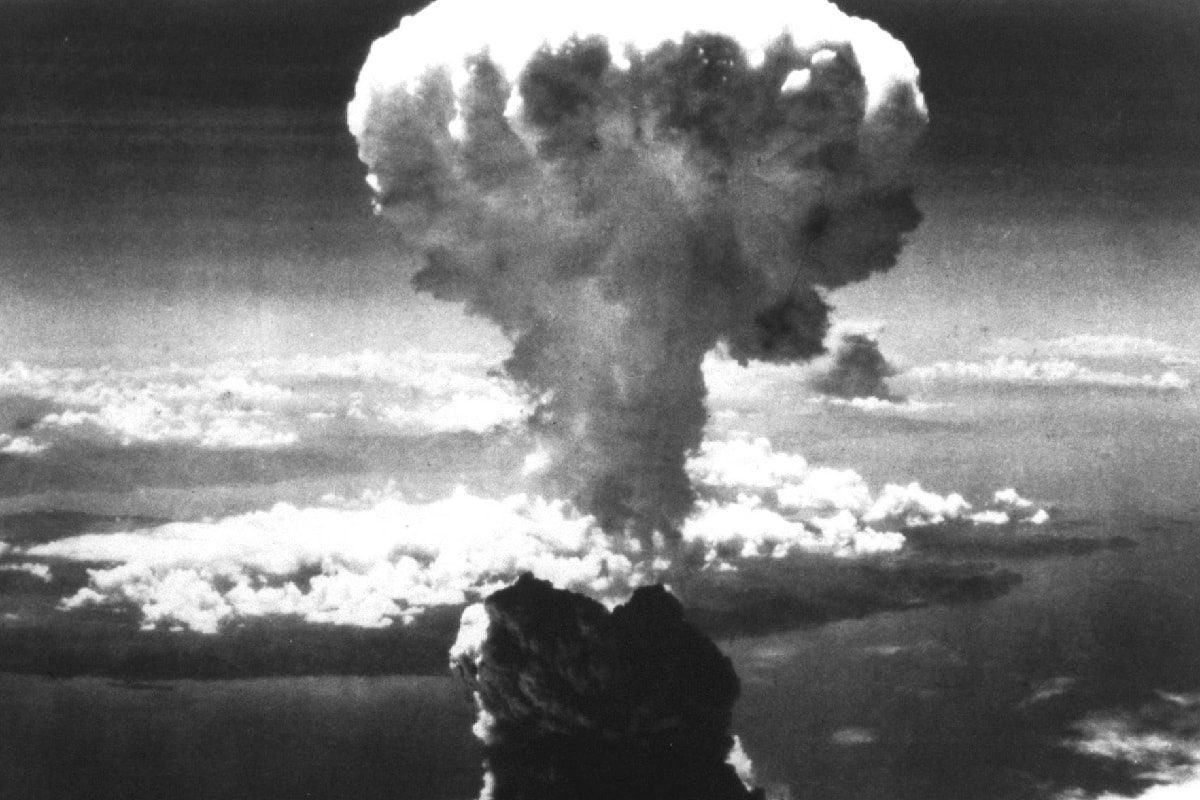
Hiroshima. Image Credit: Creative Commons.
His Research Was Dynamite
He made many contributions to his field. Not only the General Theory of Relativity, but also the “inadequacies of Newtonian mechanics and his special theory of relativity stemmed from an attempt to reconcile the laws of mechanics with the laws of the electromagnetic field,” the Nobel committee said.
He then worked successfully in quantum theory. His work on monatomic gases, atomic transition probabilities, and relativistic cosmology was considered remarkable.
Could He Have Been Head of Israel?
After World War Two, Einstein was offered the chance to be president of Israel. He refused this proposal, but that would have been one interesting part of his personal history had he accepted. Einstein was a leading practitioner of the World Government Movement.
This Quote Was Not For Everybody
Einstein’s inspirational quote, while a good one for people who were looking for a new leaf to turn over, was also sad since his son was never able to recover from mental illness. It was a shame that there were no workable treatments to counteract the psychiatric problems that we have today.
Einstein should have been a better father to his son instead of pressuring him to do the impossible. This is still a good lesson on how to react to a loved one who is afflicted with a debilitating mental health diagnosis. These people cannot just get on the figurative bicycle and pedal without their brain chemistry being fixed. Einstein, as a scientific genius, should have known this.
About the Author: Brent M. Eastwood
Author of now over 3,000 articles on defense issues, Brent M. Eastwood, PhD is the author of Don’t Turn Your Back On the World: a Conservative Foreign Policy and Humans, Machines, and Data: Future Trends in Warfare plus two other books. Brent was the founder and CEO of a tech firm that predicted world events using artificial intelligence. He served as a legislative fellow for US Senator Tim Scott and advised the senator on defense and foreign policy issues. He has taught at American University, George Washington University, and George Mason University. Brent is a former US Army Infantry officer. He can be followed on X @BMEastwood.