
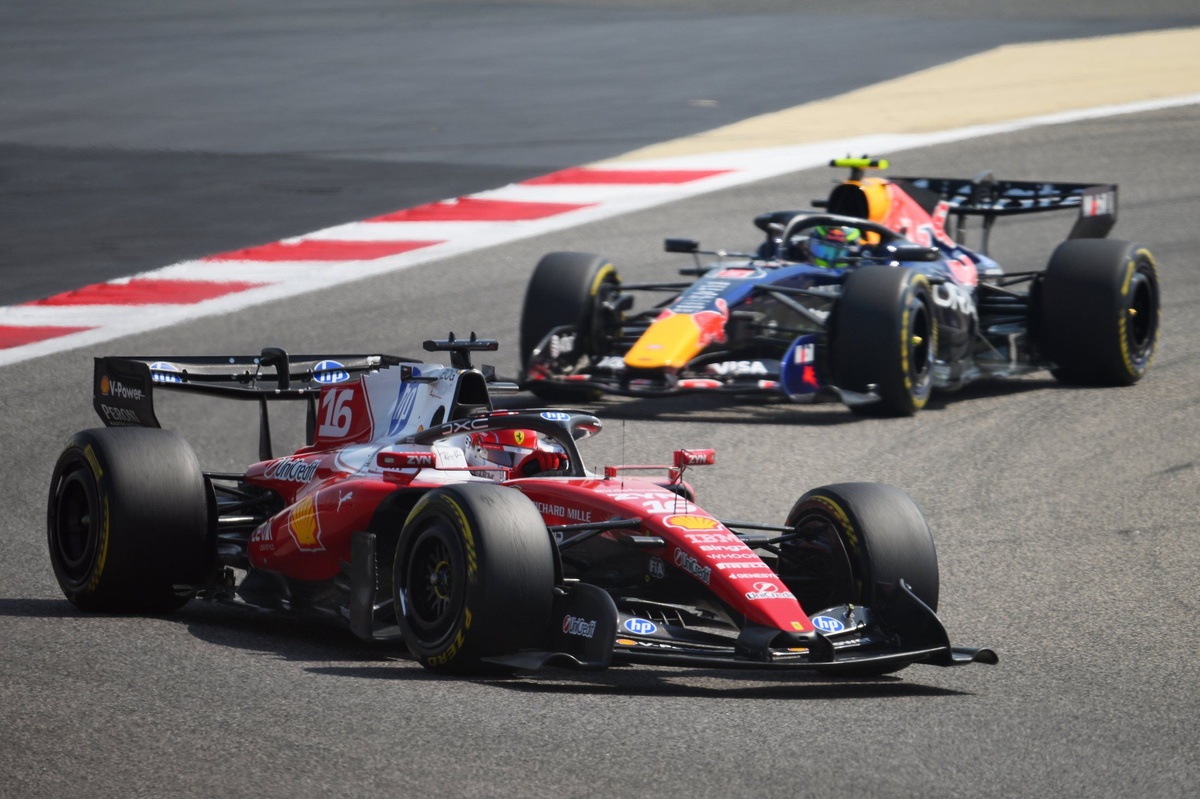
I was pleasantly surprised, when seeing the 2026 cars for the first time in the flesh in Barcelona, that there appeared to be myriad solutions to what had been described as an overly prescriptive set of regulations. As usual, the livery reveals had done anything but divulge any form of engineering detail, but track action exposed the nuances that all teams were keen to see from their rivals.
Of course, this was far from the level of release that we will see in Melbourne and even in Bahrain testing, but several changes were evident up and down the pitlane. Undoubtedly there were many other developments hidden from the prying eyes of designers and photographers. As I write this, the first part of the Bahrain test is over and unfortunately deadlines dictate that the final subtleties and ultimate performance that will become apparent in the final days of testing remain to be seen.
That said, there are many details of note on the cars and even some indications of the pecking order. Dealing with the general architecture of the cars first, push-rod rear suspension has become de rigueur throughout the grid but at the front, Cadillac, Alpine and Williams are using pull-rods rather than the push-rods found on the rest of the field.
At the rear, the push-rod layout does ease packaging but, more importantly, leaves a better air path to the rear corner along the lower part of the sidepod. At the front, it is more debatable. The pull-rod does have a lower centre of gravity, but the real design aim of the front suspension now, as it has been for several years, is to ensure the airflow is trained in the correct direction as it moves rearward. This is particularly evident in the down-washing layout of the front wishbones that’s becoming more apparent following the lead of McLaren last year. This configuration does add anti-dive, and it’s often thought that this is a primary design aim to keep a more stable aerodynamic platform but, in reality, the positioning of the suspension legs is aimed at pushing air down to the forward floor. Interestingly, neither Red Bull nor Racing Bulls has followed this extreme trend.
Aerodynamically there are also differences in the approach to the front wings and particularly the endplates, which are now much wider such that the overall width of the front wing assembly still reaches maximum width while the span of the elements is reduced. The Red Bull, in particular, has a very curved vertical section to the endplate, which blends into a narrower footplate and footplate curl. Haas has a much more angular footplate curl but most other cars are somewhat similar. There is some difference in out-washing vanes on the footplate and a large horizontal diveplane on the endplate can be seen on the Alpine, Audi, Cadillac and Haas. Remaining at the front, there is some variation on nose width and active front wing actuation but none of this appears particularly significant.
Read Also:
When the 2022 cars first appeared, there was a reasonable variation on sidepod shape, which ultimately tended to converge to the almost universal down-washing top surface. For 2026, the variation is back, with combinations of down-wash and undercuts to the pods.
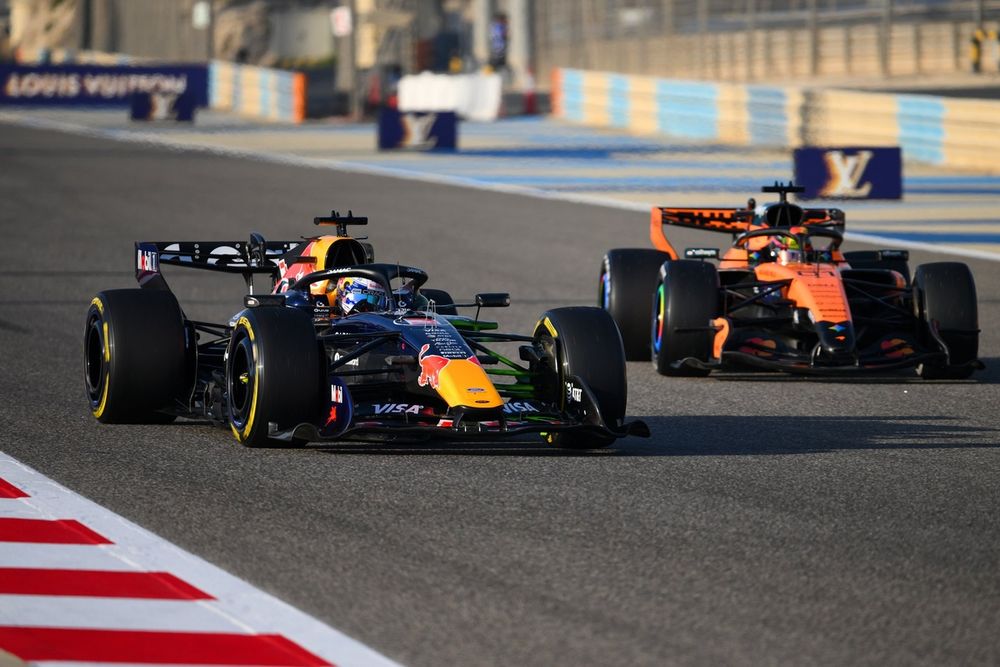
Red Bull and McLaren have contrasting sidepod designs, showing a welcomed divergence in design ideas
Photo by: Simon Galloway / LAT Images via Getty Images
McLaren has adopted a very narrow pod, which must make cooling installation complex, but the wide floor is likely to provide strong flow to the rear corner. Red Bull has quite a wide pod but in top view the rear coke shape is very sharp – again a feature similar to the Racing Bulls design.
Aston Martin has perhaps the most extreme sidepod design, with a pod that seems almost shrink-wrapped around the coolers, giving a very strong undercut but surely with some compromise to the mass flow of air through the heat exchangers. This is probably why the team seems to be favouring to exit air more through the top body louvres rather than the rear exit by the exhaust.
A fundamental of vehicle architecture is the positioning of the front and rear axle centrelines relative to the driver and power unit, and in F1 terms this really means the distance of the axle centre lines relative to the rear of the cockpit opening. The wheelbase is now fixed at a maximum of 3.4 metres, and no one is likely to get below that. But, within that limit, Red Bull seems to have pushed the wheels backwards and hence the weight forward, while at the other extreme is Alpine, with axles that are further forward of the cockpit. In both cases, however, the weight distribution has to remain within legal limits.
Thankfully rear ride heights are higher than last year, which the drivers will like because it allows softer suspension and less crashing of the floor into the track
In terms of set-up, the trend for very high rear ride heights and extreme rake that was a feature of the 2021 cars appears not to have been totally replicated. Thankfully rear ride heights are higher than last year, which the drivers will like because it allows softer suspension and less crashing of the floor into the track. There are still some different ideas, with McLaren and Red Bull on the high side and Ferrari relatively low. Of course, the static ride height is also a function of suspension stiffness and this is hard to assess.
Perhaps of more interest to most fans is what is the relative performance of the teams? I have always argued that it is very difficult to quantify this in testing as one never quite knows the fuel loads of the cars. This year it is further complicated by the extreme performance differences in lap time that can originate from the cars running varying energy release modes. With a much higher reliance on electrical power and a sparseness of energy, teams and drivers are still learning how best to manage the hybrid power release around the lap for best performance.
That said, we can see that Red Bull and Mercedes are ahead in the power-limited areas, while Mercedes and Ferrari seem to excel in the grip-limited areas, with McLaren close behind. In the low-speed, Mercedes seems to hold a slight advantage to Ferrari, with the situation reversed in the medium-speed corners. There is little to choose between the frontrunners in the high-speed turns.
Read Also:
There is much still to be learned, but I can see a three or four-way constructors’ battle at the front, which bodes well for the season. In terms of racing, though, we have yet to see the effectiveness of the boost and overtaking modes that have replaced the much-maligned DRS.
Want to ask Pat a tech question for a future issue? Let us know on autosport@autosport.com
This article is one of many in the monthly Autosport magazine. For more premium content, take a look at the April 2026 issue and subscribe today.
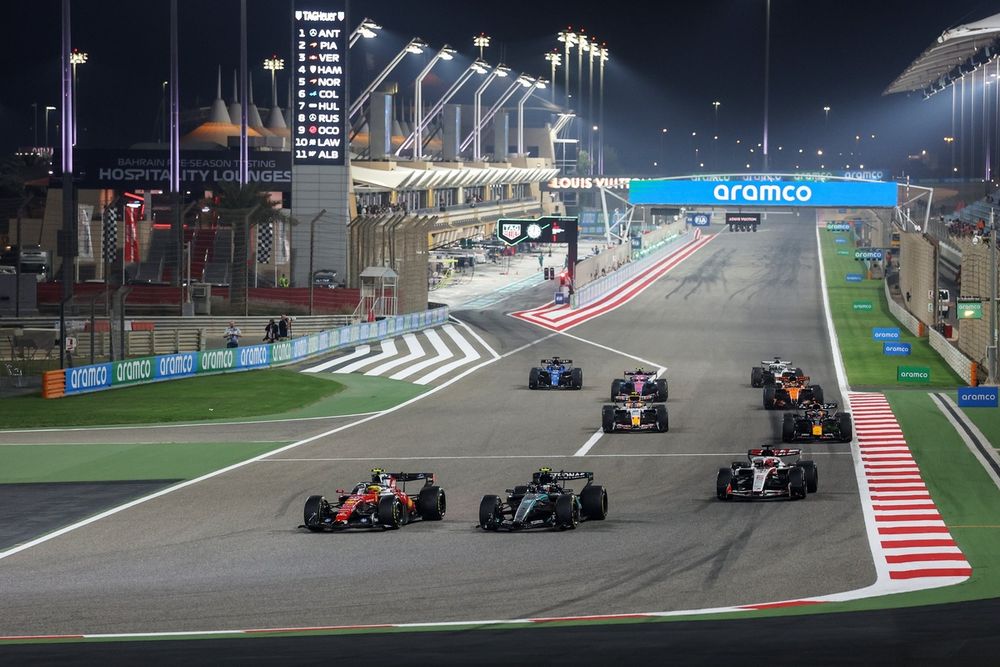
Anticipation builds towards the F1 opener to discover the true pecking order
Photo by: Steven Tee / LAT Images via Getty Images
We want to hear from you!
Let us know what you would like to see from us in the future.
– The Autosport.com Team