
As motorsport fans enjoy a weekend of high speed and Formula 1 glamour, a team of specialists are hoping for quiet at the Australian Grand Prix.
Nestled away and out of view from the public sits the grand prix medical centre at Albert Park, with trauma specialists from Melbourne’s Alfred Hospital on stand-by for the worst moments in motorsport.
Racing is inherently dangerous, with car crashes part of any category.
Improvements in safety have resulted in fans regularly seeing their favourite driver emerge from a crash unscathed. But drivers involved in any crash still need to be checked by medical professionals, despite appearing to be fine in the immediate aftermath.
Those drivers head to the grand prix medical centre, where Jack Spencer and his team are stationed all weekend to ensure care can be granted as quickly as possible.
“If a car is disabled by impact, either with another car or by the wall, [the driver] has to be seen by the medical centre,” Dr Spencer told ABC Sport.
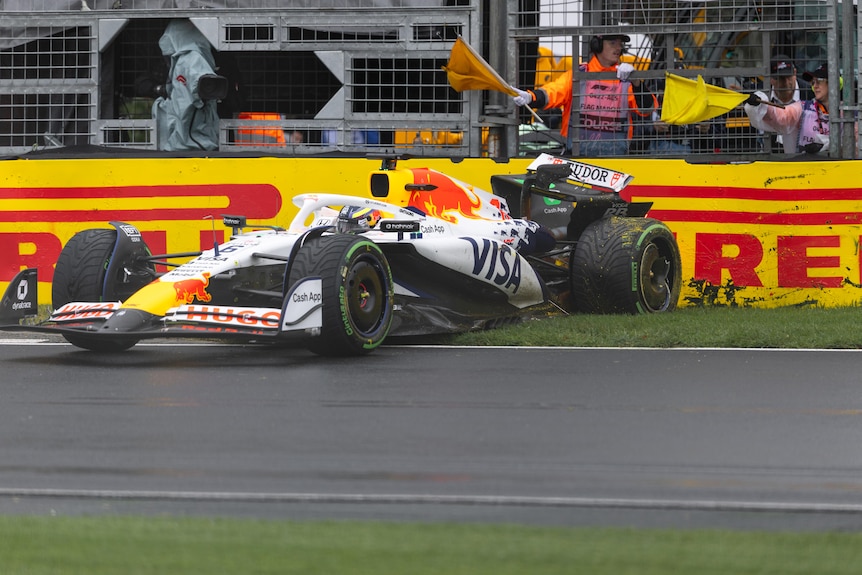
When a car is retired after a crash, the driver needs to be checked by the medical professionals. (Getty Images: Speed Media/Icon Sportswire/Santanu Banik)
An example Dr Spencer gave on Thursday was a driver in a support series who crashed into the wall, but was able to exit the car under his own power.
However, because the car had been disabled, the driver needed to be cleared by Dr Spencer’s team before being allowed to race for the rest of the weekend.
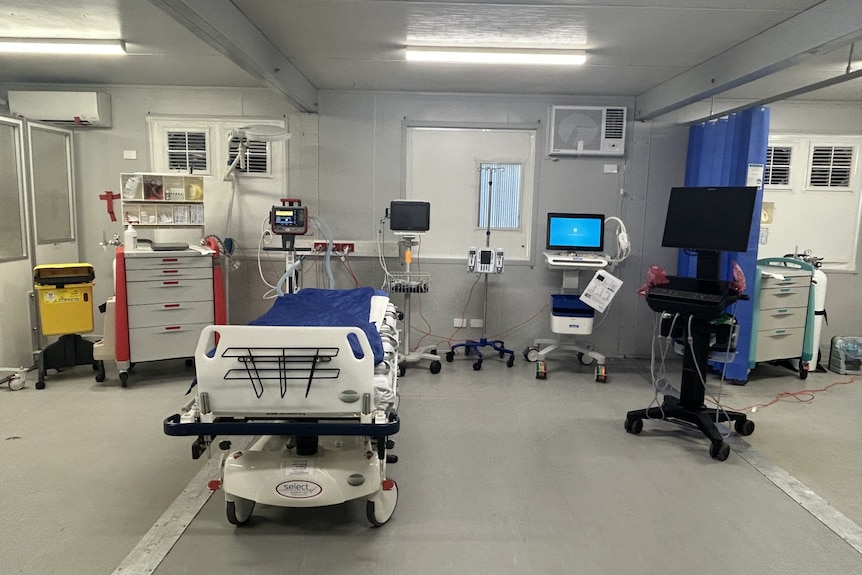
The Albert Park medical facility for the Formula 1 Australian Grand Prix. (Supplied)
But the emergency staff at Albert Park can do much more than just check over a driver.
“We do have the ability to intubate, ventilate, and even in the worst possible circumstance, do a thoracotomy: that’s open someone’s chest,” Dr Spencer said.
Several years ago, the medical centre needed to have the ability to perform surgeries, according to Dr Spencer, with neurosurgeons, cardiothoracic surgeons, and theatre staff.
But Albert Park is unlike many F1 tracks; it is very close to not only the city CBD, but also to a trauma hospital.
The proximity to the Alfred Hospital has allowed Dr Spencer and his team to advise whether a driver can bypass the medical centre for treatment.
“The ethos here is that a lot of these patients will go, if they’re significantly injured or suspected, they will bypass the medical centre, and they will go to the Alfred straight away,” Dr Spencer said.
“The initial check [is done] by a doctor in one of the course cars on the scene, and ambulance staff.
“Then you’d have a quick discussion with race control and me, and I would direct them that I think that this person should go straight to the Alfred.”
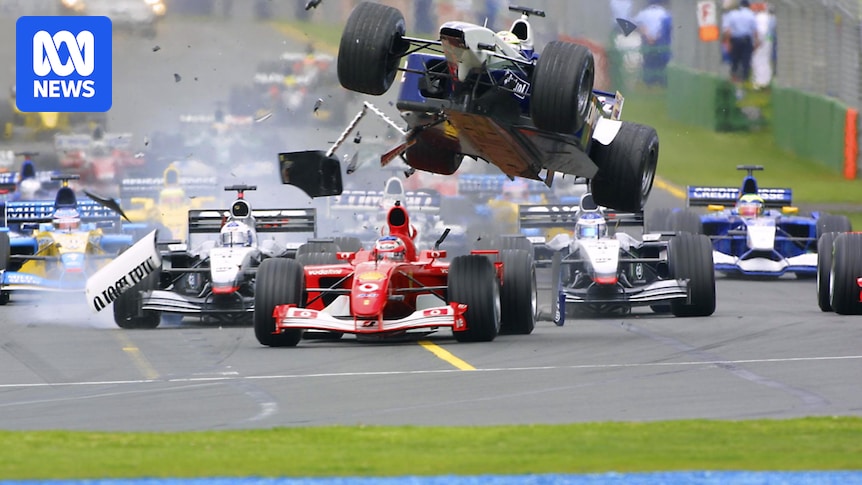
Albert Park has been the scene of many dramatic crashes, but the most spectacular came in 2002, Dr Spencer’s first year working at Albert Park.
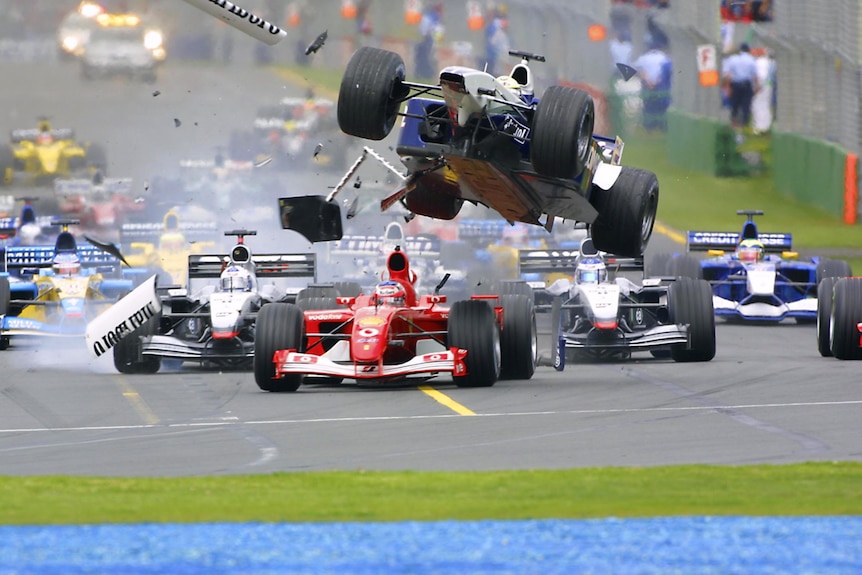
Ralf Schumacher had one of the Australian Grand Prix’s most dramatic moments, when his Williams took flight in 2002. (Getty Images: LAT Images/Pic Me)
That year, a multi-car crash on the opening lap was highlighted by Williams driver Ralf Schumacher flying through the air and into the barrier.
Incredibly, not only was no driver seriously injured, none required attention from the medical centre.
“That was amazing when he took up and went over the top,” he said.
“We stood up and put on our X-ray gowns.
“There were three cars in that, and no-one came in.”
ABC Sport will have live blog coverage of the Formula 1 Australian Grand Prix on Sunday, March 8.