
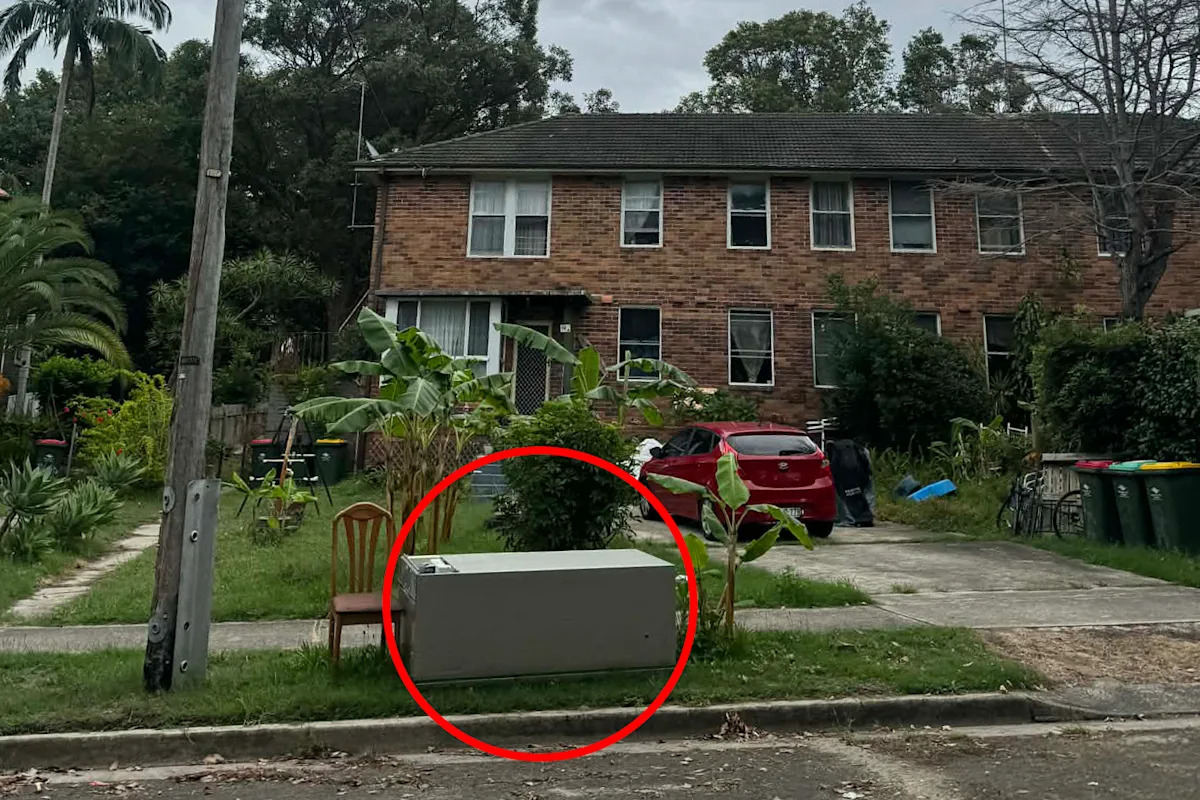
Dangerous chemicals are leeching out of unwanted fridges and air conditioners when they’re illegally dumped or placed on the kerb for council collection.
A new white paper published by sustainability advocates Circularity for Climate warns that around 65 per cent of these appliances contain superseded or banned gases, which harm the environment.
The data informing the report was collected by retailer and co-author Appliances Online.
Its sustainability team inspected the old white goods that its delivery drivers hauled away for recycling after they installed new ones at customer residences.
The gases inside these items would have either contributed to global heating or ozone depletion if they weren’t responsibly disposed of.
Most retailers don’t recycle old white goods, so it’s left up to the consumer or council to clean them up, and not all local government areas have the proper facilities to process them.
Circularity for Climate CEO Bronwyn Voice said the issue highlights an urgent need for a nationwide stewardship program where businesses pay a levy on the white goods they sell.
A similar program already exists in the beverage industry, where customers earn 10 cents for each can or bottle they return.
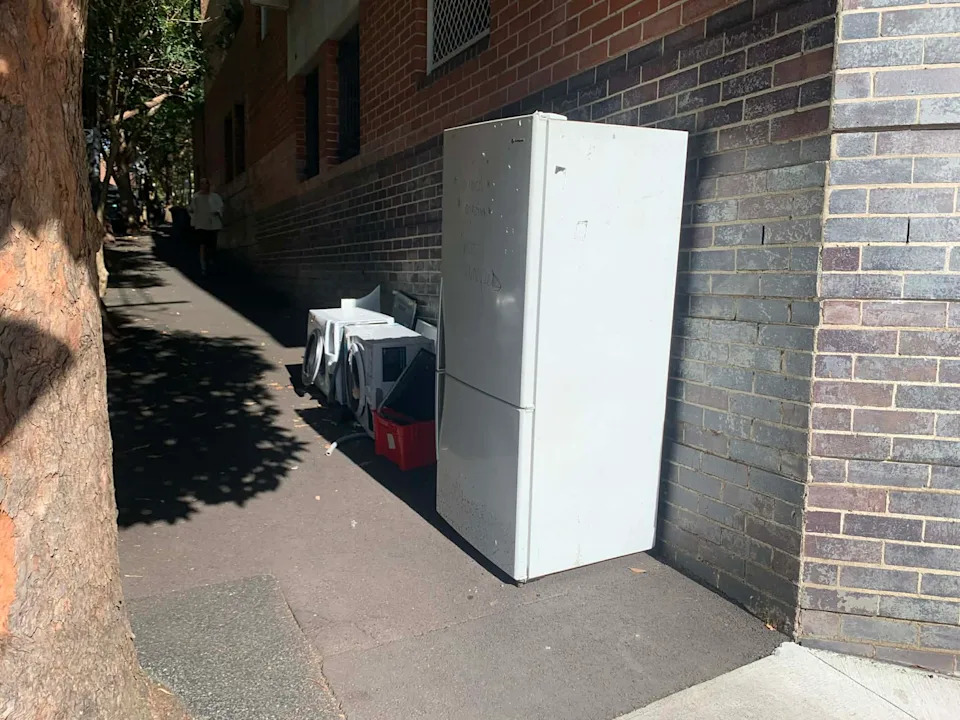
A fridge left out for council clean up in Sydney’s Surry Hills. Source: Yahoo News Australia
The tyre industry is also calling for a stewardship scheme, similar to what’s already in place in New Zealand.
“There really needs to be stronger regulation around appliance stewardship… so that local governments and communities don’t end up footing the bill of the recovery at the end of life,” Voice told Yahoo News.
$37 levy could reform white goods disposal
Chemicals of concern in white goods include PFAS, which can contaminate land and water, and gases like CFCs, which were banned worldwide after the Montreal Protocol was signed in 1987, and HFCs, which are in the process of being phased out in Australia.
Voice warns ozone-depleting gases are still contained in that “old beer fridge from the 1980s” or that appliance that was “built to last”, and they can leach out if the product isn’t correctly processed.
“Units with those older gases that have since been banned… need to be recovered, and our current system doesn’t really effectively address that,” she said.
In September, the Southern Sydney Regional Organisation of Councils (SSROC) and the Product Stewardship Centre of Excellence found that only 57 per cent of bulky items were being recycled.
It suggested a $37 levy could be paid by manufacturers to cover the costs of collection and processing.
Voice supports this recommendation and argues Australia should be adopting a scheme similar to that mandated by the European Union, where manufacturers, importers and retailers take responsibility for recycling and disposal of white goods and electronics.
Do you have a story tip? Email: newsroomau@yahoonews.com.
You can also follow us on Facebook, Instagram, TikTok, Twitter and YouTube.