
After a four-year closure, Newcastle Art Gallery has finally reopened to the public after a $48 million expansion.
The response from the community has been strong, with 18,000 people turning up for the Friday night street party celebrating the launch and 10,000 visiting the gallery over its first weekend.
The original brutalist building opened in 1977 comprising five galleries across two levels, and closed for refurbishment in 2022.
The expanded gallery features an additional 1600 square metres of floor space across 13 galleries, as well as a cafe, retail shop and new international-standard loading dock.
“[It] now enables us for the very first time to have our collection out on permanent display right across the ground floor,” says Lauretta Morton, the gallery director since 2018.
Newcastle Art Gallery expansion
The newly announced 2026 program features solo exhibitions by Torres Strait Islander artist Brian Robinson; New Zealand Australian artist Angela Tiatia; author, comedian and artist Anh Do (ABC TV’s Anh’s Brush with Fame); and The Mordant Family Gift, a landmark donation of 25 works given to the gallery by philanthropists Simon and Catriona Mordant.
The expanded gallery’s inaugural exhibition, Iconic Loved Unexpected, features almost 500 works drawn from its extensive permanent collection of 7000 works, valued at $145 million.
In the past, the gallery was only able to exhibit a tiny portion of its collection at one time due to its limited space.
Now, visitors can see landmark works such as John Olsen’s The Sea Sun of 5 bells, his only ceiling painting on permanent display, and William Dobell’s much-loved Portrait of a Strapper, a finalist in the 1941 Archibald Prize.
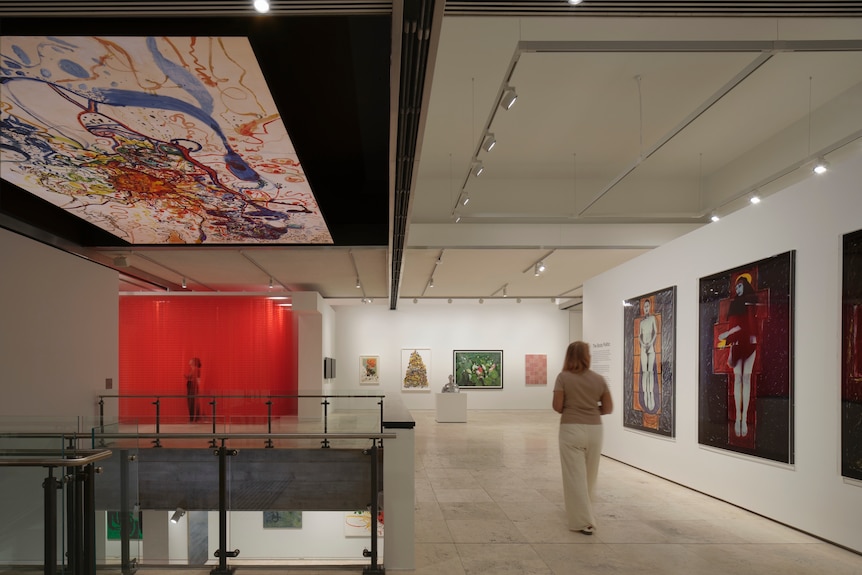
An installation view of the new gallery, including The Sea Sun of 5 bells (1964) by John Olsen, who was born in Newcastle in 1928. (Supplied: Newcastle Art Gallery/Matt Carbone)
Other artists whose work appears in the exhibition include Brett Whiteley, Emily Kam Kngwarray, Archie Moore and Tracey Moffatt.
“It was a chance to really delve into our collection and pull out … iconic works, such as our Whiteley and our Olsens,” Morton says.
“But we also wanted to get out some of the unexpected works that people haven’t seen for a long time, or they may have never seen before.”
An example is the gallery’s collection of mid-20th century avant-garde Sōdeisha Japanese ceramics, the largest outside Japan. Newcastle Art Gallery has loaned some of these works to the National Gallery of Australia and other state institutions.
“There are things that you can see at Newcastle that you can’t see anywhere else,” Morton says.
Here are five highlights from Iconic Loved Unexpected.
Summer at Carcoar by Brett Whiteley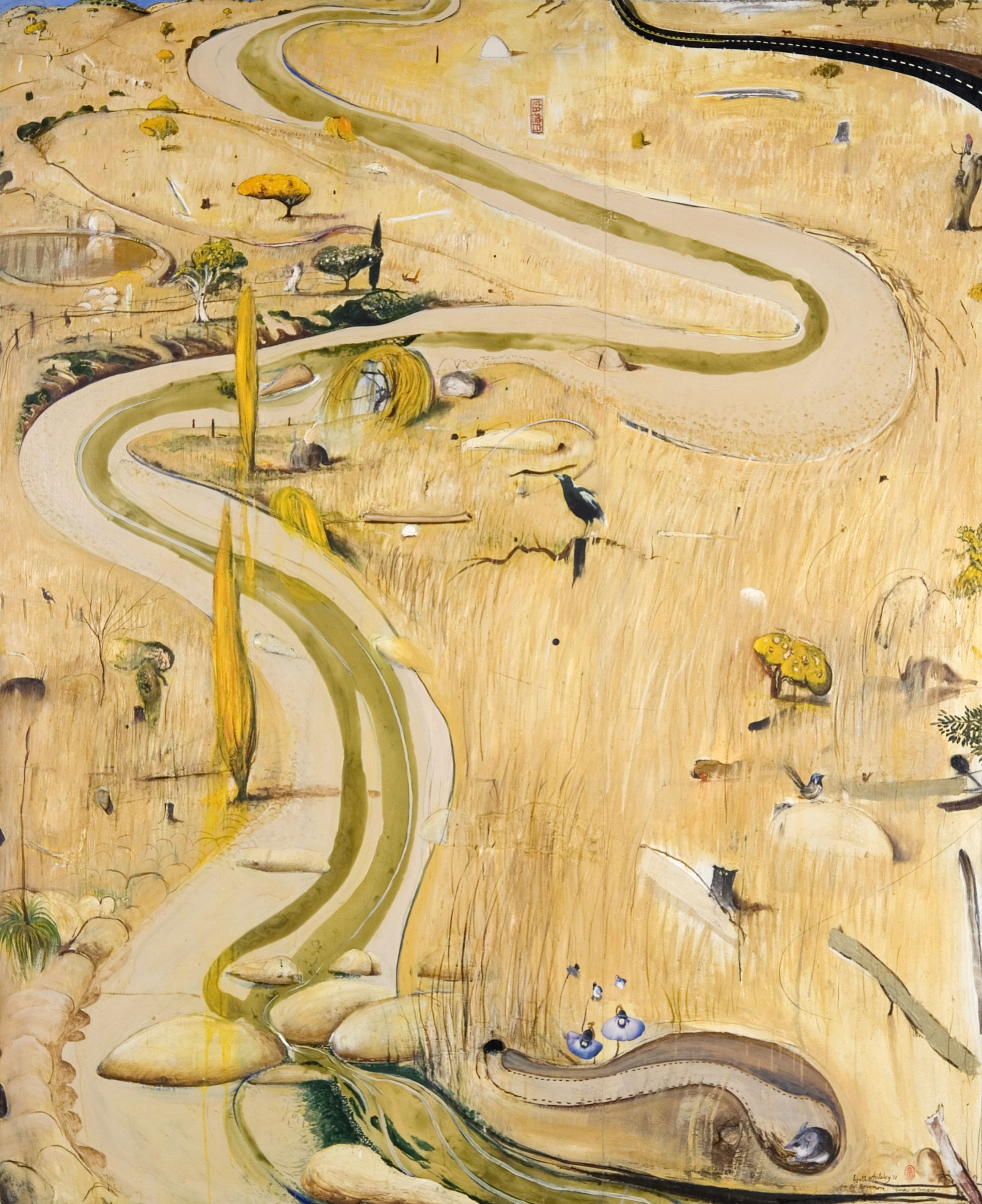
“Whiteley’s … landscapes of this era convey a sense of joy, lightness and release,” Morton writes in the collection publication. (Supplied: Newcastle Art Gallery/Wendy Whiteley)
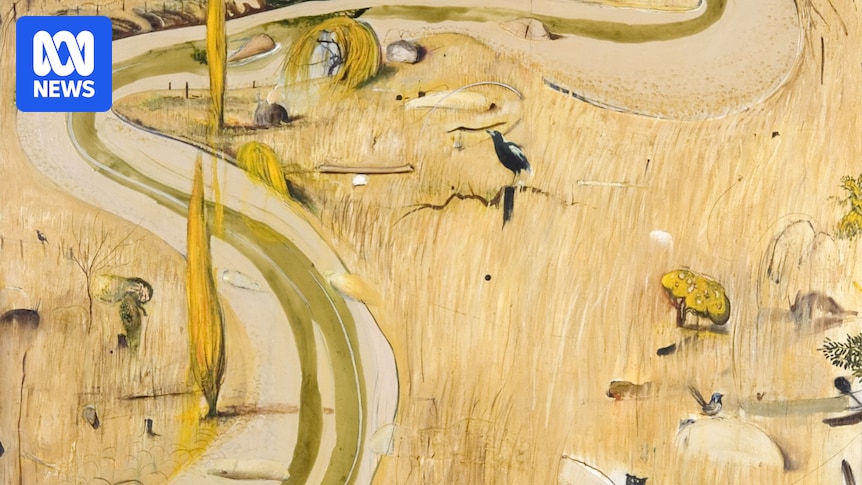
Brett Whiteley’s Summer at Carcoar is one of the most popular — and valuable — works in the Newcastle Art Gallery collection.
Painted in 1977, the same year the gallery opened, the large canvas depicts a stream winding through a country landscape of sun-bleached grass in Central Western NSW.
Summer in Carcoar won the Wynne Prize in 1978, the same year Whiteley won the Archibald Prize for Art, life and the other thing and the Sulman Prize for The yellow nude, becoming the only artist to win all three prizes in a single year.
The piece features elements of collage and assemblage.
“Close inspection of the painting reveals a bee in flight, a plump magpie, a blossoming flower, a small animal bone and a stone that pierces right through the painting’s surface,” Morton notes in the collection publication.
Morton says the golden-hued painting is not only a major work, but it’s also a departure from Whiteley’s famous blue-toned canvases of the 70s.
She tells ABC Arts: “Visitors … are so used to seeing the harbour works and the beautiful Lavender Bay works, and they are quite surprised to see such a beautiful work depicting [the] country,” she says.
Self-portrait with everlastings by Margaret Olley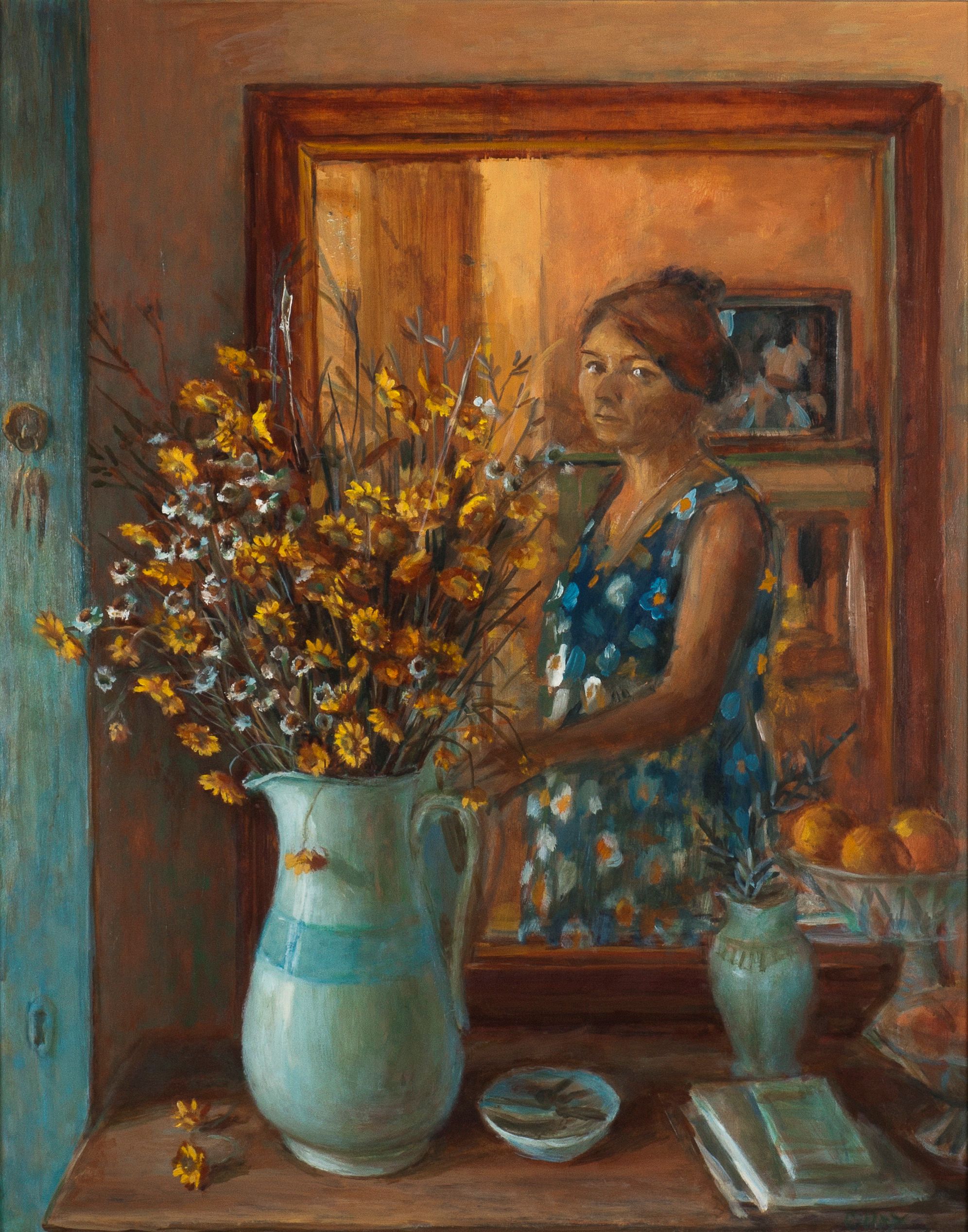
“Newcastle held a special place in Olley’s heart,” Morton writes. (Supplied: Newcastle Art Gallery)
Margaret Olley is known for her connection to Sydney, where she worked in her home studio in a Paddington terrace, and the Tweed, home to the Margaret Olley Centre at Tweed Regional Gallery near her birthplace in Lismore.
Less well-known is the artist’s long association with Newcastle. Olley lived in the city in the 60s and 70s, and donated 48 works, many painted in Newcastle, to the gallery in her lifetime.
The association has continued after her death, with the Margaret Olley Trust contributing $500,000 to the Newcastle Art Gallery expansion.
Several of her works, including a series of harbour views, are currently on display in the new Margaret Olley Gallery at Newcastle, named in her honour.
Self-portrait with everlastings is one of the artworks Olley produced in her Church Street terrace in Newcastle.
Morton describes the painting in the collection publication: “Self-portrait with everlastings, 1974, is a major example of her self-portraiture. Here, the artist depicts herself in the mirror in middle age, returning both her own and the viewer’s gaze with a sense of knowing.”
The work offers a meditation on the passage of time emphasised by the vase filled with everlastings, she writes, “flowers that retain their shape and appeal for long periods”.
My Country by Mirdidingkingathi Juwarnda Sally Gabori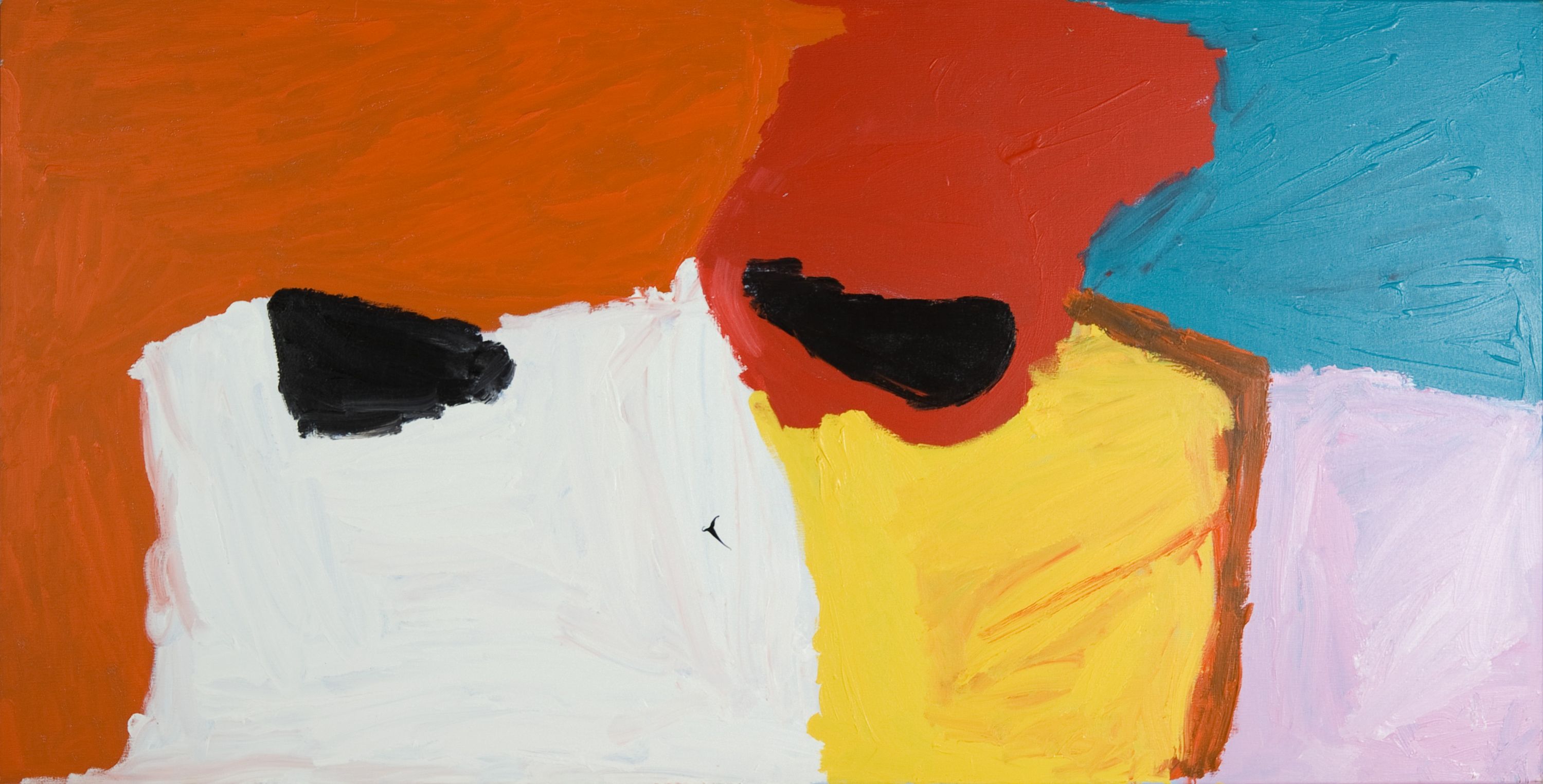
Gabori, who worked at Mornington Island Arts and Crafts Centre, produced 2000 paintings in her short career, many of which represented her Country on Bentinck Island. (Supplied: Newcastle Art Gallery/Sally Gabori estate)
Mirdidingkingathi Juwarnda Sally Gabori was a Kaiadilt artist who was born on Bentinck Island in the Gulf of Carpentaria.
An expert weaver, she began painting in 2005 when she was 81 and went on to represent Australia at the 55th Venice Biennale in 2013.
Gabori’s work My Country (2008) — a bold, vibrant painting of imposing scale, at almost two metres in length — hangs at the front of the new gallery, welcoming visitors into a lofty atrium filled with artworks by other First Nations artists, including Quandamooka artist Megan Cope’s 2022 installation, Kinyingarra Guwinyanba (Off Country).
“It was very important for me that the first sight line you see is a First Nations work,” says Morton, who describes Gabori’s painting as “iconic”.
“It’s interesting because some people don’t read it initially as a First Nations work; they think it’s a contemporary abstract work.
“I love that they have to delve into it to realise that this is an incredible First Nations female artist.”
The men who sold lies by Abdul-Rahman Abdullah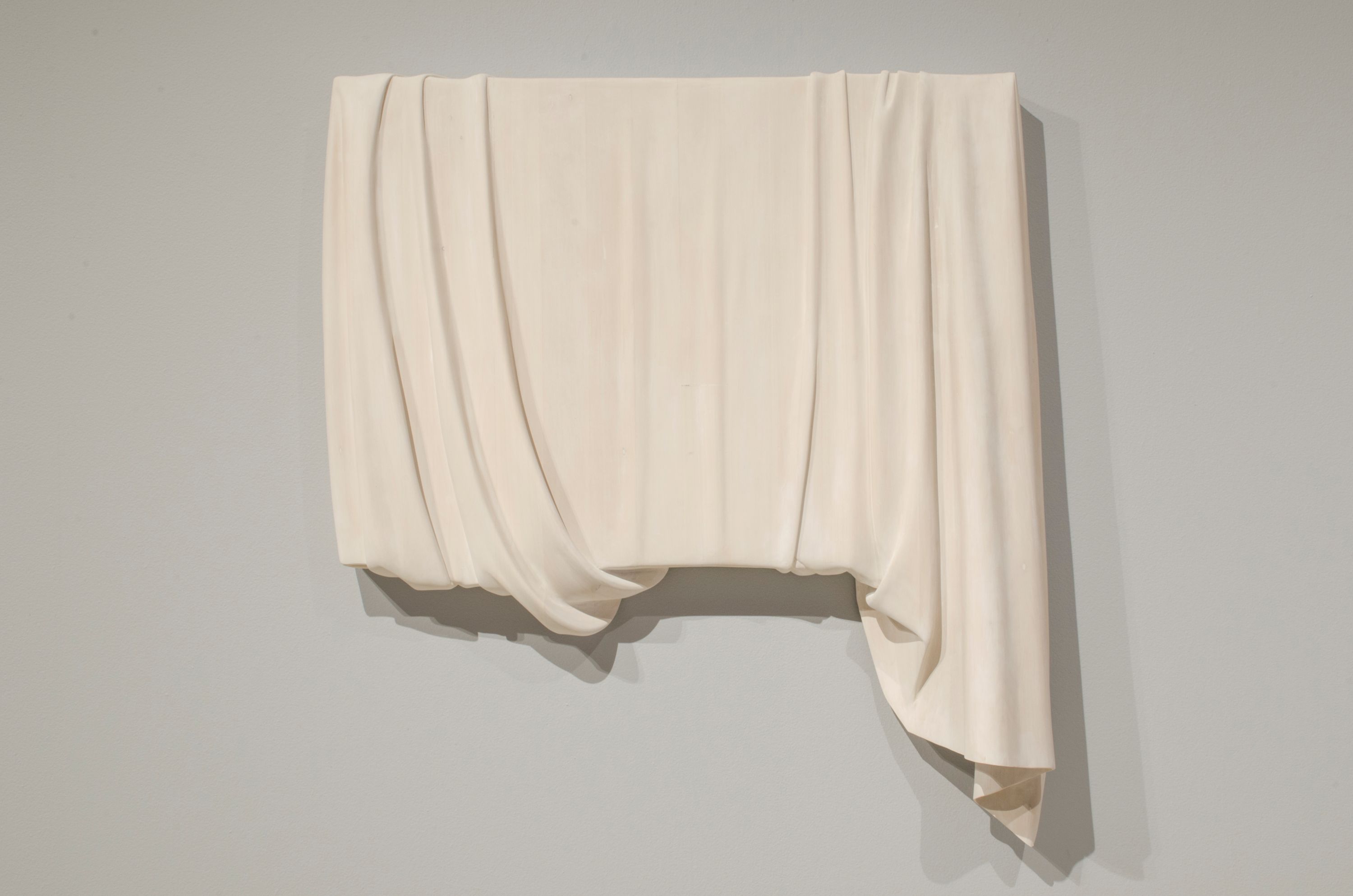
Abdul-Rahman Abdullah, the older brother of fellow artist Abdul Abdullah, works on Wadjuk Nyungar country in Western Australia. (Supplied: Newcastle Art Gallery)
In 2018, Newcastle Art Gallery commissioned eight contemporary artists, including Karla Dickens and Lindy Lee, to produce new works responding to a series of early colonial-era paintings of Newcastle by convict artist Joseph Lycett.
Abdul-Rahman Abdullah’s contribution to The 1818 Project was The men who sold lies, a wooden, hand-carved sculpture that creates the convincing illusion of a framed painting concealed by a draped cloth.
Brothers continue lifelong conversation through art
It speaks directly to Lycett’s 1818 work, Inner view of Newcastle, a landscape depicting the young penal colony. The two works, separated by two centuries, currently hang side by side.
“Abdul made [the work] exactly the same dimensions [as Lycett’s painting] but wanted to sheath it as his commentary on colonialism,” Morton says.
“It’s fooled so many people … I love the fact that it is so intriguing and unexpected.”
Watawan (Mullet) by Shellie Smith and Julie Squires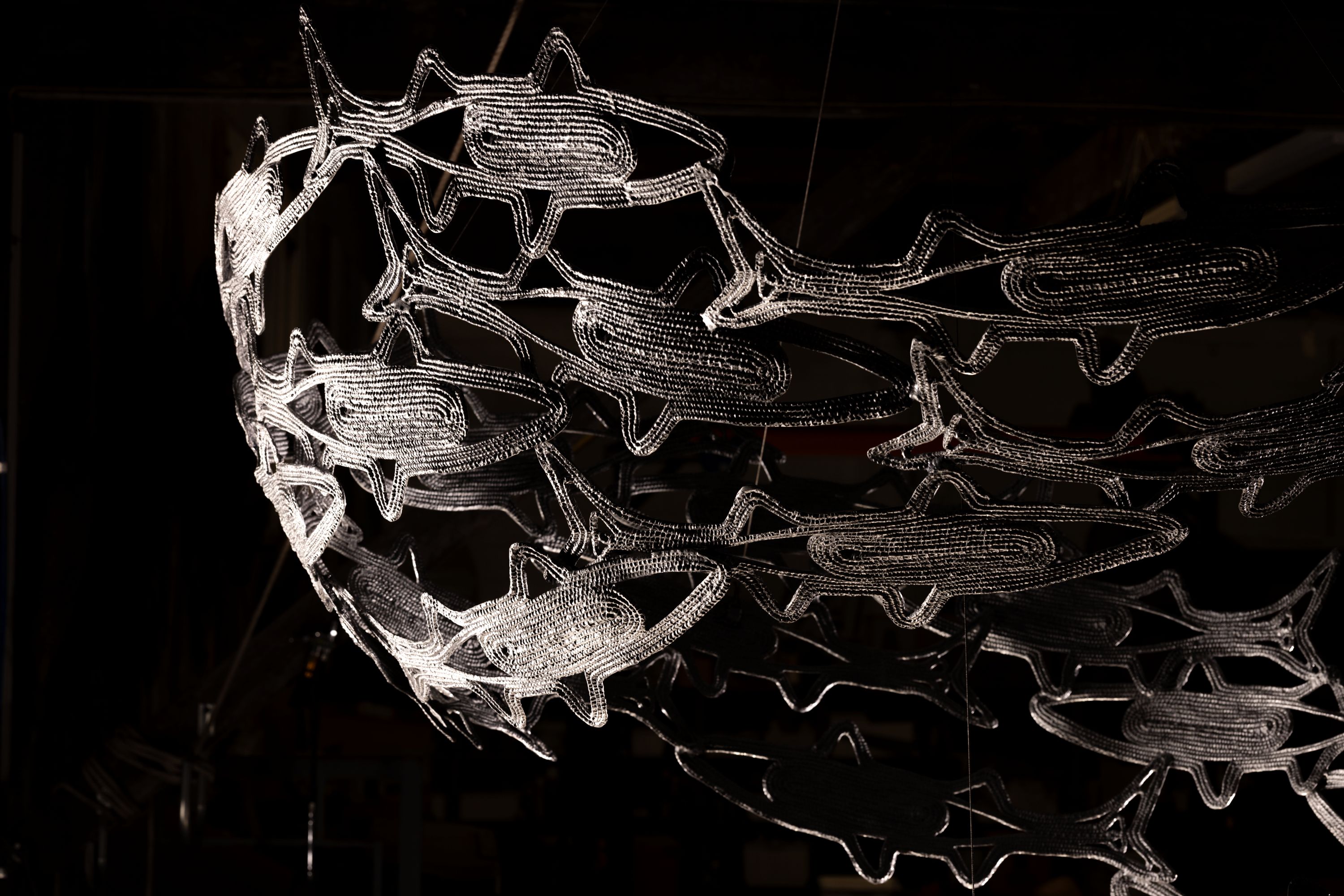
“Mullet don’t take a hook, and their elusiveness fascinated me,” Smith says. (Supplied: Newcastle Art Gallery)
Watawan (Mullet) is a new work by local Awabakal artist Shellie Smith commissioned for the gallery’s reopening.
The sculpture, a school of silver fish arranged in a spiral, is suspended from the roof overlooking the gallery’s new entrance.
Smith, who as a child spent school holidays fishing with her grandmother at Port Stephens, describes fish as a “significant motif” in her artistic practice.
“For me, art is about reconnecting with my ancestors, my family, and the cultural bonds that link us all.
“It’s about challenging colonial narratives and presenting our stories in ways that reflect our perspectives and our truth,” she says in the collection publication.
Smith initially created more than 30 woven mullet for the piece, a nod to the annual mullet run that takes place on the east coast.
She and Squires cast the woven fish first into bronze and then aluminium.
“Aluminium … shimmers like the fish scales that you would imagine seeing in the water, and it tells that lovely story of the mullet run, the Saltwater Country story of Shellie and her family,” Morton says.
Iconic Loved Unexpected is at Newcastle Art Gallery until May 23