

Following Liverpool’s late defeat by Wolves at Molineux earlier this week, head coach Arne Slot lamented that it was the “same old story and sums up our season”.
And it does. Liverpool have now lost five times to 90th-minute-plus goals this season, the most ever by a team in a single Premier League campaign. What should be a rare event has become worryingly commonplace for the reigning champions.
But they are not alone — every football supporter at any level of the sport knows that there is a certain, depressingly familiar, scenario that plagues their team. So we gathered The Athletic’s club writers to pinpoint what the “same old story” is at each of the 2025-26 Premier League’s 20 sides.
Arsenal
For Arsenal, the “same old story” they are desperately trying to avoid this season is finishing as perennial runners-up. It is 22 years since Arsenal’s most recent league title, and they came into this campaign off the back of three consecutive second-place finishes. Mocking chants of, “Second again, ole, ole” have accompanied them at many Premier League grounds since the games began in August.
If they can deliver the title, they will write a new story for this team.
James McNicholas
Aston Villa
“Same old story” is a phrase every time Villa go to Old Trafford and find a way, despite invariably dominating and being the better team, to lose. More broadly, these defeats tend to arrive in the same fashion — a sloppy goal conceded in the first half, giving Manchester United something to hold onto, and Villa passing the ball slowly and sideways, unable to find Morgan Rogers to help break down a low block.
And who do Villa face next in the Premier League? That’s right: Manchester United, at Old Trafford.
Jacob Tanswell
Bournemouth
Conceding late goals has become a habit for Bournemouth this season, with only Newcastle (15) and Liverpool (14) allowing more than their 13 after the 75th minute. This was a massive problem for Andoni Iraola in 2023-24, his debut year as the club’s head coach, with a noticeable drop in intensity towards the end of games resulting in 18 opposition goals being scored, many of them cheaply.
Bournemouth seemed to have arrested that habit last season, halving the amount with better defensive play. It has returned in the current one, though, due to a combination of suspect defending from set pieces and crosses, with their seven goals against from dead-ball situations after the 75th minute only ranking behind Liverpool and Nottingham Forest (nine each), albeit two of those were excellently-taken free kicks by Dominik Szoboszlai of Liverpool and Manchester United’s Bruno Fernandes.
Anantaajith Raghuraman
Brentford
Conceding a Harry Wilson screamer. The Wales international’s habit of scoring spectacular goals against them has been a recent and unwelcome development for Brentford in what have otherwise been rosy times.
In November of last season, they were leading 1-0 in stoppage time away to west London rivals Fulham before he struck twice to steal the points — the first a superb volleyed backheel. He then spoiled Thomas Frank’s final home game in charge, before his doomed move to Tottenham Hotspur, with a long-range strike in a 3-2 Fulham win in May.
Frank’s sucessor Keith Andrews has not been spared either: Wilson scored again in September as Brentford were beaten 3-1 at Craven Cottage.
Conor O’Neill

Harry Wilson celebrating after scoring a goal — a depressingly familiar sight to Brentford fans (Alex Davidson/Getty Images)
Brighton & Hove Albion
Bukayo Saka’s scruffy ninth-minute winner for Arsenal at the Amex Stadium on Wednesday was a reminder that Brighton are frustratingly efficient at leaking early goals.
It also happened three days earlier at the same venue when Morgan Gibbs-White struck for Nottingham Forest, although on that occasion Fabian Hurzeler’s side were quick out of the blocks themselves: Gibbs-White cancelled out a goal after six minutes by Diego Gomez and was followed two minutes later by Danny Welbeck scoring what proved the decider in a 2-1 Brighton victory.
Brighton’s away fans have been wearily used to them playing catch-up in matches soon after kick-off. When Jarrod Bowen gave West Ham United a 10th-minute lead in an eventual 2-2 draw at the London Stadium in December, it was the eighth time this season they had fallen behind on their league travels by the 24th minute or earlier.
Andy Naylor
Burnley
Scott Parker’s side have conceded first in 23 of their 29 Premier League games this season. These goals are often soft, avoidable or due to individual mistakes.
They have kept only three clean sheets in those 29 outings, which is indicative of a side who seem to need to face adversity before they perform. Their recent home game against Brentford was a prime example, when they mustered a reaction only after going 3-0 down after 34 minutes (they fought back to equalise, but lost 4-3).
There’s also the trend of digging out points against top-six teams — Burnley have drawn with Manchester United, Chelsea and Liverpool since the turn of the year. Yet any fleeting glimmer of hope of a great escape from what would be a third Premier League relegation in five seasons has been quickly extinguished when they fail to turn up for a more favourable fixture the following week and get beaten. The midweek performance against Everton, a 2-0 away defeat, mirrored several games where Burnley have looked second-best by a distance when facing resolute mid-table sides.
Andy Jones
Chelsea
Look, Chelsea’s disciplinary issues have been covered in depth by The Athletic on a few occasions now, but the players are still not getting the message. Perhaps if the topic is talked about enough times, they will actually start to listen.
Seven of Chelsea’s nine red cards received this season have come in the Premier League and could end up costing them Champions League football in 2026-27. Being a man down has inevitably had a big impact on results: they have picked up just six points out of a possible 21 from these matches, losing four times. It’s become such a common occurrence that some opposition fans have started to call them ‘Red Card FC’.
Simon Johnson
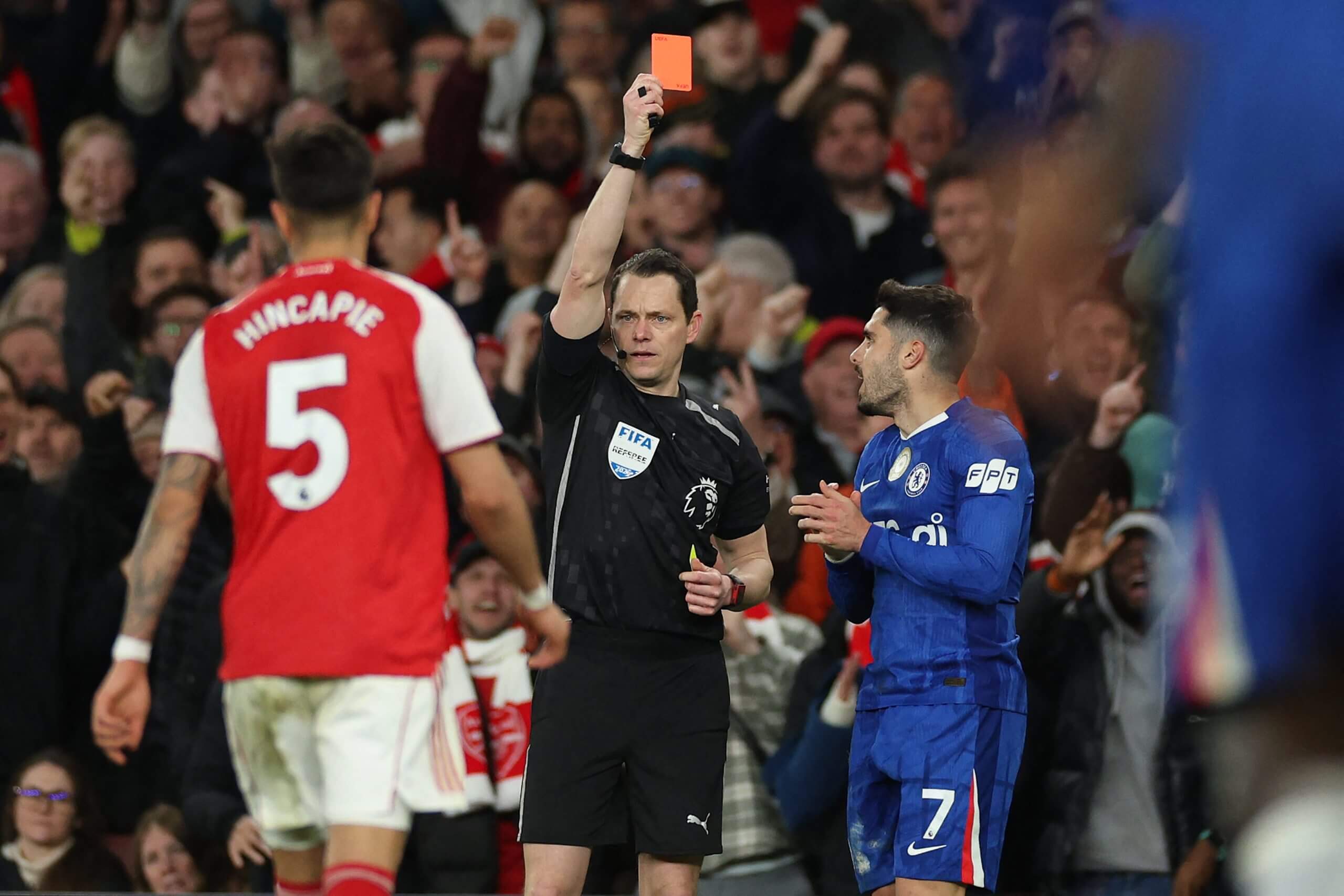
Red Card FC add another one to the collection (Adrian Dennis/AFP via Getty Images)
Crystal Palace
It has been an all-too-familiar failing for Crystal Palace in front of goal this season. They have scored 33 times in 29 Premier League games, which represents an underperformance of 12.1 on their expected goals (xG) figure of 45.1.
Missed chances have cost them on several occasions. Striker Jean-Philippe Mateta has been particularly culpable, with his eight goals from 23 Premier League appearances being almost four below where he should be, based on his xG number. But it is a team-wide issue that has frustrated manager Oliver Glasner throughout their poor run of form either side of New Year, even if that has since subsided — as Tottenham found out on Thursday.
Matt Woosnam
Everton
The story for much of Everton’s season so far has been of poor home form undermining standout results on their travels. Only Arsenal and Chelsea have more away points than David Moyes’ side (24), who have notched notable wins against Manchester United, Aston Villa and Newcastle United. But countless opportunities have been squandered at their new Hill Dickinson Stadium.
Speaking after beating Burnley 2-0 there in midweek, Everton’s first win at home since early December, Moyes said some of the questions around their form at Goodison Park’s £800million replacement have been “boring”. Quite. But only results like the one on Tuesday can change that particular narrative.
Patrick Boyland
Fulham
This time — no, really, this season is the one.
Craven Cottage last hosted a European game in 2011-12, but since Fulham made their most recent return to the Premier League in 2022, the hope has bubbled up every year. Can they qualify for the Europa League again? Even a spot in the third-tier Conference League would do. Sure, some clubs might have grander dreams, but memories of Fulham’s run to the 2009-10 Europa League final are always fresh in the minds of fans who witnessed it.
Under Marco Silva’s management in the top flight, there has always been a stage in the campaign when it seems possible — a four-point gap to sixth place in the February, a promising cup run, taking a big scalp to build belief. This season feels like a similar story… but then again, maybe it really will be different this time.
Justin Guthrie
Leeds United
Daniel Farke’s delayed substitutions.
As a man who gathered 190 Championship points across his first two seasons as Leeds’ manager, including winning a league title, and has now put Premier League survival in their own hands with nine games to go in year three, there are very few sticks for critics to beat Farke with. However, time and time again, he has looked to affect matches too late in the day.
The classic frustration is watching Leeds struggling in a game and Farke failing to change his personnel until after they have gone behind. It’s a rare day when you see him use his bench before the 70th minute.
Beren Cross
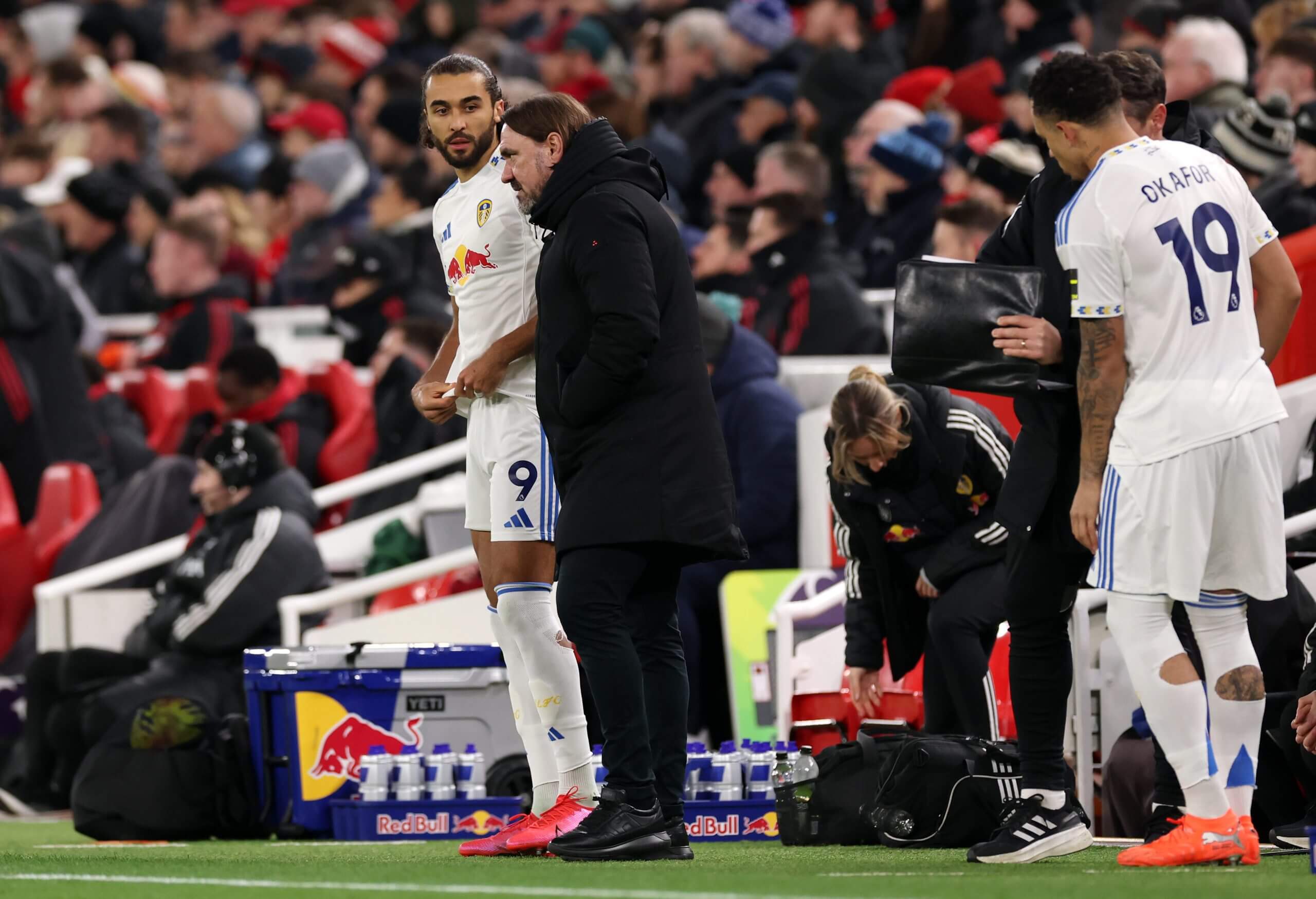
Daniel Farke in the process of making a trademark 70th-minute substitution (Carl Recine/Getty Images)
Liverpool
Since it was Arne Slot who inspired this article with the “same old story” quote, it’s only right to delve into his Liverpool side’s problems once again.
This season, they have lost five Premier League games by conceding in the 90th minute or later, the most ever by a team in a single campaign in the competition’s 34-year history. They’ve also dropped a total of nine points via conceding in stoppage time after letting in two late equalisers on top of those defeats.
Admittedly, there is an element of bad luck at play as Liverpool have often dominated games but then missed chances and surrendered points in frustrating or unfortunate fashion. Either way, it’s an issue they must fix, or risk missing out on Champions League football next season.
Gregg Evans
Manchester City
This was not the case against Leeds United last Saturday and Manchester City have put together some good wins despite it, but they regularly drop off in the second half of games, to the extent that even manager Pep Guardiola has acknowledged it as a big issue.
City’s dramatic comeback against Liverpool a month ago was the only time since December 27 that they have scored a second-half goal in the Premier League.
While they again failed to do so in Leeds, they did avoid the total loss of control that has been evident on pretty much all the other occasions, including that win at Anfield, and was a factor in the two points they dropped at home to relegation candidates Nottingham Forest in midweek.
Sam Lee
Manchester United
As turbulent as this season has been for them, only Arsenal and Manchester City have lost fewer Premier League games than Manchester United (six), who had almost forgotten what it was like to be beaten since the interim appointment of Michael Carrick in early January.
Will Osula’s 90th-minute winner for Newcastle on Wednesday brought everyone back down to earth, though, inflicting Carrick’s first defeat in 11 games across two managerial spells at United, and brought back memories of Everton’s victory at Old Trafford in November. As on that occasion, United failed to make the most of their man advantage after their opponents suffered a red card in the first half.
That was all the more infuriating because United have capitalised on exactly that scenario several times this season and twice already in Carrick’s short reign, in wins against Tottenham and Crystal Palace. For a team with aspirations of qualifying for the Champions League to lose to 10 men once in a season could be considered unfortunate. To do so twice is careless, and has dampened some of the justified optimism that had grown since Carrick replaced Ruben Amorim.
Mark Critchley
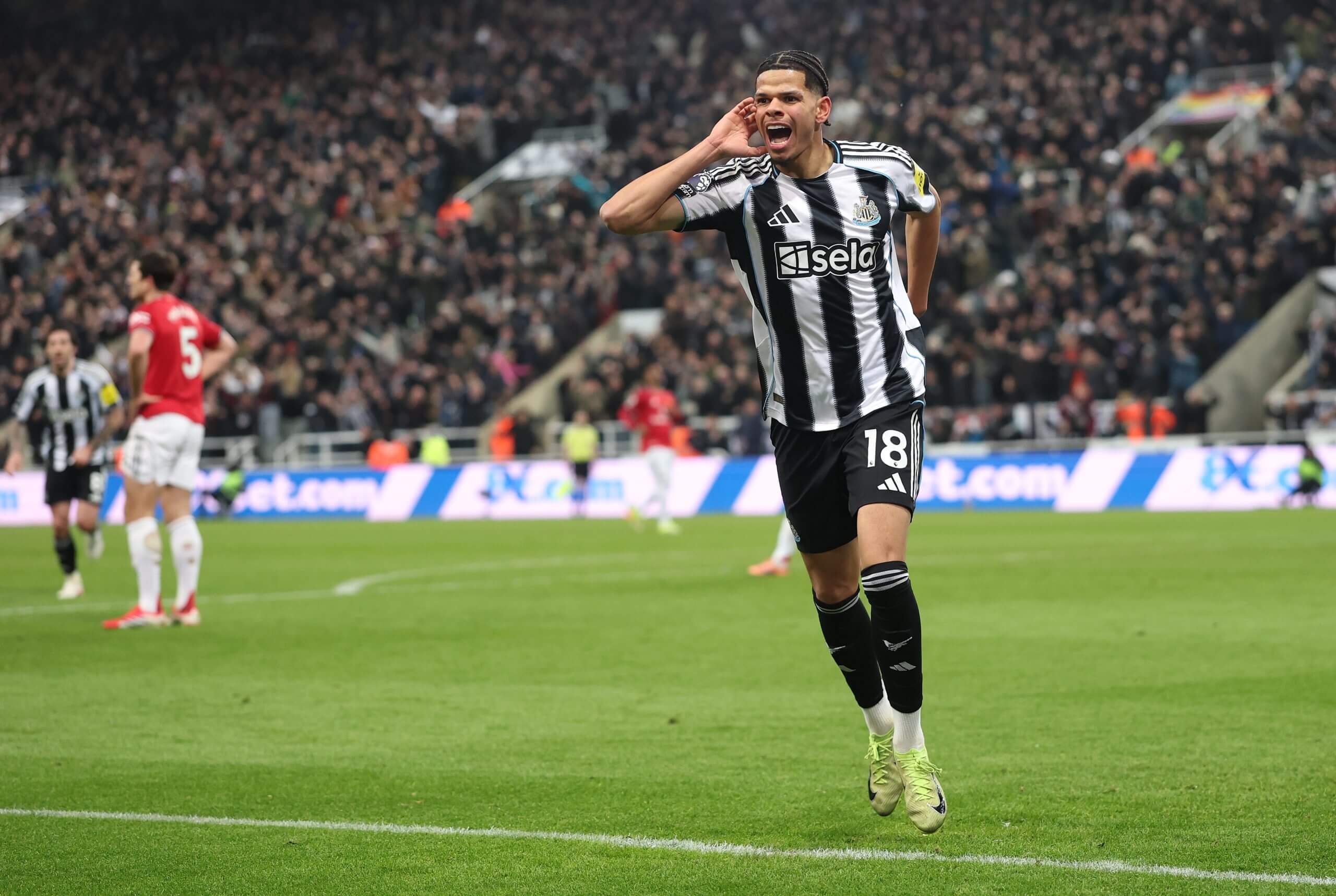
Ten-man Newcastle defeated Manchester United earlier this week (Stu Forster/Getty Images)
Newcastle United
Historically, it would have been that Newcastle were always the bridesmaid but never the bride, but last season’s Carabao Cup final triumph ended a 56-year trophy drought. Specifically focusing on this season, their myriad deficiencies in the Premier League mean that harmful defensive mistakes, poor decision-making and finishing in the final third and appearing at their most vulnerable when leading matches would be contenders.
Yet the 19 points dropped from winning positions, a tally second only to West Ham in the division, has to be the most exasperating as Eddie Howe’s side could, and probably should, be up in the European places today rather than down in 12th. When that is added to the meagre, league-worst three points they have gained from losing positions, it makes for pretty grim reading, regardless of the match situation.
Chris Waugh
Nottingham Forest
Where to start? Changing the head coach every few months feels like too obvious an observation. A lack of goals has been a massive issue — with 28 goals from the 29 league games, only last-placed Wolves (22) have hit the net less often — but perhaps the biggest impact of having four different head coaches, with four different sets of ideas and demands, has been evident at set pieces.
It was a fragility that then coach Nuno Espirito Santo addressed last season but this time around — under Nuno’s early-season successor Ange Postecoglou, Sean Dyche and now Vitor Pereira — it is a problem. Forest have conceded 13 times from free kicks and corners in the Premier League, including two in their most recent games against Liverpool and Manchester City. West Ham and Bournemouth have the joint-worst record against dead-ball deliveries with 16 goals allowed.
Paul Taylor
Sunderland
There are teams with worse away records in the Premier League, but Sunderland’s lack of attacking edge on their travels has been stark. Habib Diarra’s penalty to beat Leeds on Tuesday was only the eighth top-flight goal they’ve scored on the road this season (only Wolves have been worse with five), with Regis Le Bris’ side consistently short of creativity.
There is an understandable reluctance to engage in open, expansive football as a newly-promoted team but between October 25 and February 28, Sunderland did not score a first-half goal away from home. Perhaps predictably in such a blunt run, that left very little margin for error.
Philip Buckingham
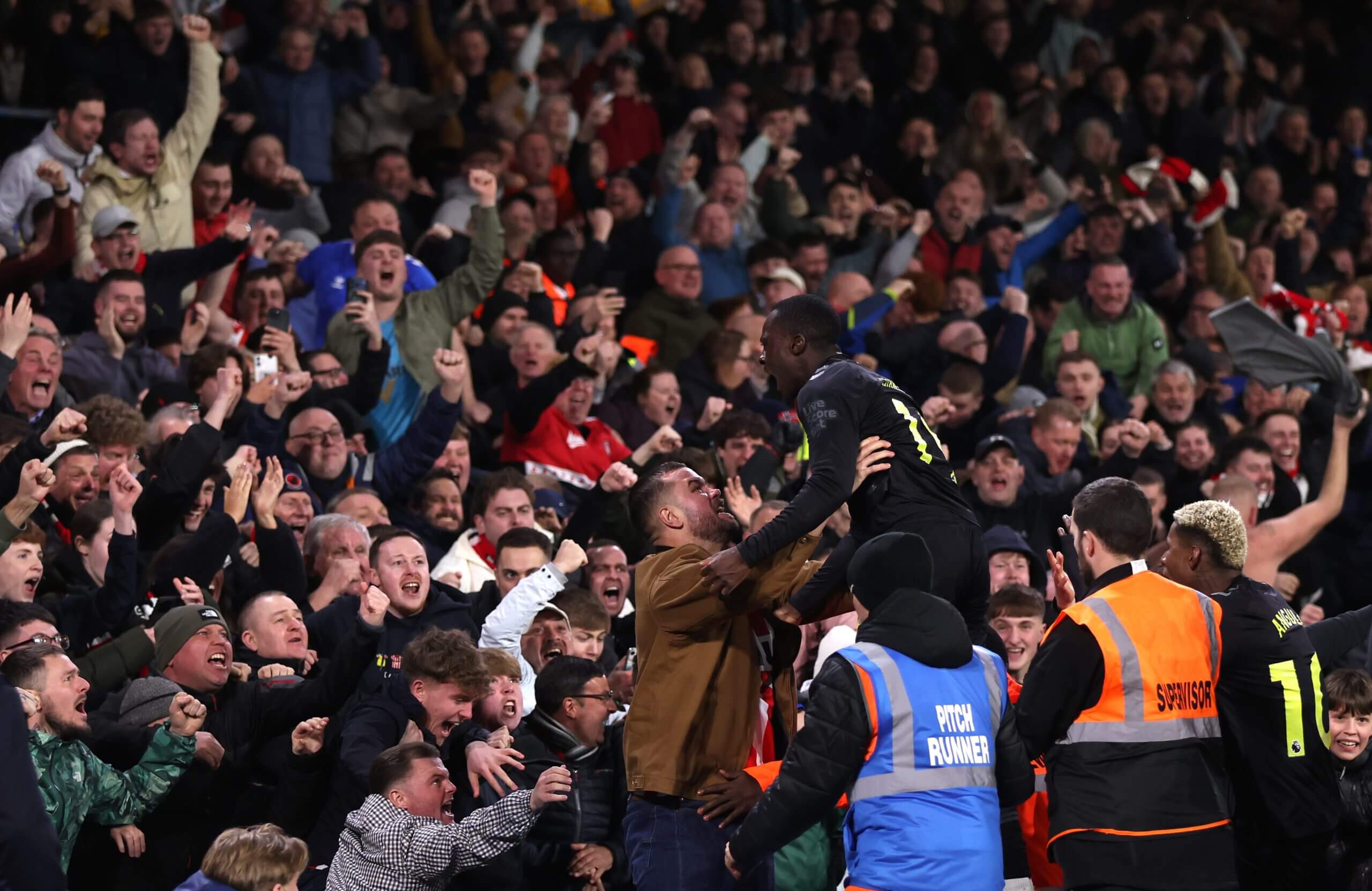
Sunderland fans celebrate their side’s goal at Leeds this week – a relatively rare occurrence (George Wood/Getty Images)
Tottenham Hotspur
Tottenham’s same old story throughout almost the entire first quarter of the 21st century was their inability to get over the line in the biggest moments, which spawned the ‘Spursy’ jibe. Having seemingly thrown that monkey off their backs in the Europa League final last May, they are now repeatedly bad at, well, pretty much everything else.
There’s a long list of persistent mistakes seen from Spurs this season, but the weekly theme of conceding goals from outside the penalty area stands out. Last weekend, it was Alex Iwobi’s bewildering side-footed effort to earn Fulham a 2-1 win. In the 4-1 defeat by Arsenal a week before, Viktor Gyokeres was the beneficiary of their failure to put pressure on shots from the edge of the area.
It’s an issue that started under last summer’s appointment Thomas Frank and promises to continue under interim replacement Igor Tudor unless the former Juventus and Croatia centre-back can find a way to stop it.
Elias Burke
West Ham United
It’s no surprise that the opposition being awarded a free kick causes fear among West Ham supporters: their team rank alongside Bournemouth (16) for most goals allowed from set plays this season. Of the five times Liverpool scored against them last weekend, three were from corners.
After conceding seven times in such situations under Graham Potter, there have been nine more under Nuno Espirito Santo, who took over as head coach in late September. West Ham do have a specialist set-piece coach on staff but with nine league games remaining in their ongoing fight to avoid relegation, only time will tell if they will suffer further misery.
Roshane Thomas
Wolverhampton Wanderers
Perhaps it’s a little simplistic compared to some of the more nuanced contributions in this article, but the recurring theme for Wolves this season has been defeats. Heavy, humiliating defeats; plucky, unfortunate defeats; weird, self-inflicted defeats; these guys have them all in their locker. Including the two cup competitions, it is now 22 of them from 36 matches, with the near inevitability of more to come over the eight remaining fixtures.
Even in their most recent Premier League loss at Crystal Palace two weeks ago, when Wolves had the better of the game, they found a way to get beaten, through a missed penalty and a needless sending-off.
The back-to-back wins against Aston Villa and Liverpool that followed were a welcome respite, but they lost to the latter in the FA Cup on Friday, no doubt leaving fans to utter the words, “Here we go again.”
Steve Madeley