

When the clerical body known as the Assembly of Experts meets to choose a new supreme leader for the Islamic Republic of Iran, one of the names many expect to be under consideration is that of Mojtaba Khamenei.
The 56-year-old has been described as a frontrunner, and remains so according to betting markets.
But perhaps his greatest qualification is that he is the son of Ali Khamenei, the ayatollah who led Iran for decades until he was killed at the start of the war with the US and Israel.
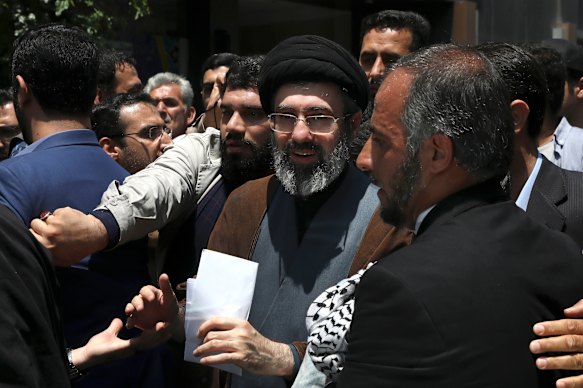 Mojtaba Khamenei, the son of Iranian supreme leader Ayatollah Ali Khamenei, attends the annual Quds, or Jerusalem Day, rally in Tehran in 2019.AP
“Religiously speaking, Mojtaba – like his father before he became the supreme leader – is only a midranking cleric,” Eric Lob, a Middle East scholar from Florida International University, writes for The Conversation. In 1989, Khameini snr was chosen over others with more experience in Islamic jurisprudence, and history would need to repeat for his son to be elected.
Lob notes that Mojtaba Khameini has never served in public office, unlike his father, who served as president before becoming supreme leader.
The Atlantic, in an article titled ‘The Most Dangerous Man in the World’, gives an account of the younger Khameini as both “more violent and ideological than his father”.
According to Mehmet Ozlap, the head of Charles Sturt University’s Centre for Islamic Studies and Civilisation, Khameini is closely associated with the regime’s hardline Revolutionary Guard Corps and opposed to reformist politics as well as engagement with the West.