
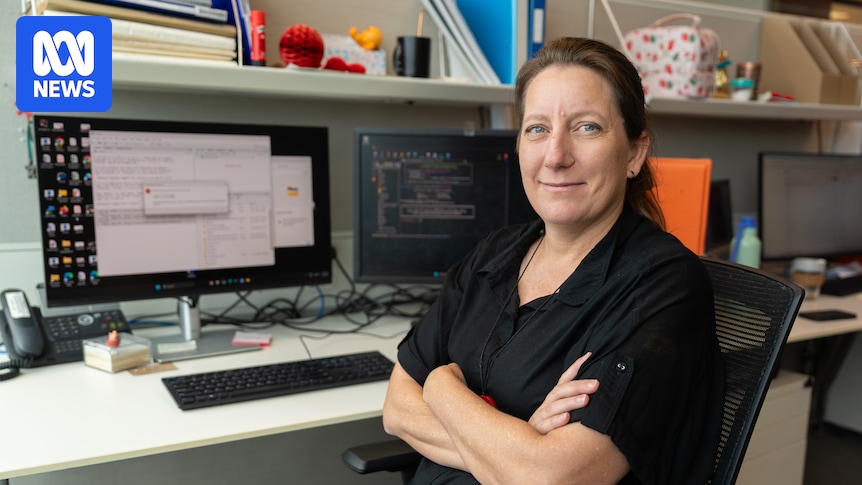
Between broken sleep and midnight feeds for her newborn twins, Rehan Villani did not give up on her potentially life-saving cancer research.
Dr Villani was trying to conduct research into how skin cancer develops and needed funding to conduct experiments in the lab.
Her maternity leave was spent writing grant applications to try to keep her research alive. But it was not enough.
“My childcare costs became more than the amount I was getting paid, so I couldn’t afford to go to work,” she said.
Despite her passion and the progress she was making, she left medical research due to her inability to secure adequate funding.
“It wasn’t even that I wanted to leave or because of the pressure, it was just that it was completely non-feasible to carry on,” she said.
Dr Villani is not the only researcher who has stepped away from the field for this reason.
According to the Australian Health and Medical Research Workforce Audit, more than 60 per cent of researchers have left active research roles between 2019 and 2024.
Meanwhile, over $1 billion of medical research funding remains undistributed due to a government spending cap.
The Medical Research Future Fund (MRFF) was established in 2015, pledging to disburse $1 billion a year for medical research once it reached maturity at $20 billion.
It reached $20 billion in 2020, but the billion-dollar-a-year pledge has never been paid out.
In 2022, the Morrison government introduced a spending cap, which restricted disbursement to $650 million a year until 2032-33.
The fund has now grown to over $25 billion — outperforming the original benchmark.
Since 2022, the amount spent on research has been nearly $1 billion less than originally pledged.
The legislation says the cap helps the fund grow more sustainably by having a fixed amount and “isolates the determination of disbursements from financial market fluctuations”.
But researchers argue it is depriving a starving sector of a much-needed lifeline.
Medical research ‘at a crossroads’
Grant Ramm, chief scientist and interim director of the Queensland Institute of Medical Research (QIMR), described the current funding environment as one of the toughest he has seen.
“I think medical research has reached a crossroads in this country,” Professor Ramm said.
“Right now, Australia’s medical research sector is being asked to deliver world-class breakthroughs with funding that simply isn’t keeping pace.”
Grant Ramm says the amount of funding is not keeping pace with the amount required to deliver breakthroughs in medical research. (Supplied)
Researchers’ calls have been backed by the Group of Eight universities, the Association of Australian Medical Research Institutes (AAMRI), and the Australian Academy of Health and Medical Sciences.
Research Australia, the national peak body representing the medical research sector, says they have long been advocating for the funds to be released.
“This chronic underfunding directly undermines workforce stability, drives talented researchers out of the system, and constrains Australia’s current and future research capacity,” chief executive Nadia Levin said.
Dwindling grant funding
Last year, the National Health and Medical Research Council rejected 91.9 per cent of applications for the ideas grants scheme, despite nearly half being considered “outstanding”.
Of the 2,347 applicants, only 190 projects were approved.
Professor Ramm said even though researchers knew they had very little chance of success, many had no choice but to spend a disproportionate amount of time applying for grants.
“That’s time taken away from patients, laboratories, and from discovering new therapies,” he said.
“It’s a pretty tough gig … going to work each day and knowing that you’ve only got a very small chance of being able to continue the work that you know is going to change lives.”
Nearly four years later, Dr Villani has returned to research, but has stepped away from her work in skin cancer.
She said the decision to leave was not due to having children but because she was not able to secure grant funding and therefore keep her ongoing employment.
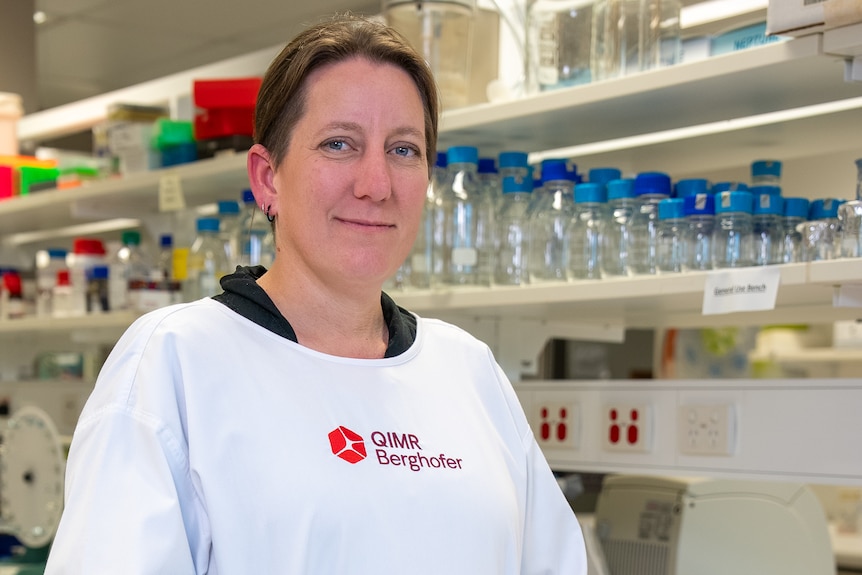
Dr Rehan Villani has returned to the research field but has stepped away from her work in skin cancer. (Supplied)
Her research focus has now shifted to inherited diseases at QIMR, but she believes she is lucky to still be in the research field at all.
“Any years out of the field is near crippling in terms of your fundability,” she said.
“I feel like the expertise that I have and [that] a lot of the people that I have trained alongside have … that expertise is gone.”
Hamish McWilliam, an immunology researcher, also made the decision to step away from his research field and move into the private sector due to funding cut-offs.
“In the end, the opportunities just aren’t there,” he said.
“I felt like I couldn’t really keep doing the basic research that even I thought was really important … it just wasn’t essentially fundable in that climate.”
Pressure on government to release funding
Independent MP Monique Ryan has called for the federal government to release the full funding ahead of the May federal budget, saying the sector cannot afford to wait.
Parliamentary Budget Office costings commissioned by Dr Ryan found the fund could more than double the disbursement to $1.4 billion per year, with no effect on the current base level of the fund, over the next decade.
Health Minister Mark Butler’s office did not answer questions about removing the cap or the MRFF’s allocations in the next budget.
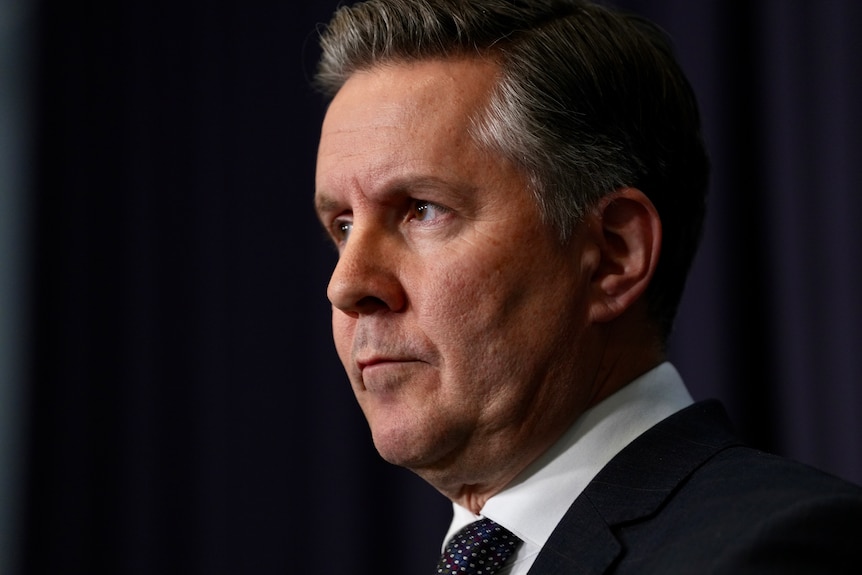
Mark Butler’s office did not answer questions about removing the cap on medical research funding each year. (ABC News: Callum Flinn)
A Department of Health, Disability and Ageing spokesperson said while the board recommends the maximum amount of funding available each year, the decision is made by the government.
The board has determined that $1.1 billion should be allocated for the 2026-27 budget. However, this exceeds the cap by $450 million.
The CSIRO cuts are just the tip of the iceberg for Australia’s science funding
For researchers like Dr Villani, the uncertainty is exhausting.
“Even a little bit of extra funding could help some of us get over the line to be able to keep going on these projects.”
Without it, she fears she will be forced out of the field again.
“I hope I’m here next year to be able to campaign, but I’m not sure of that either.”