
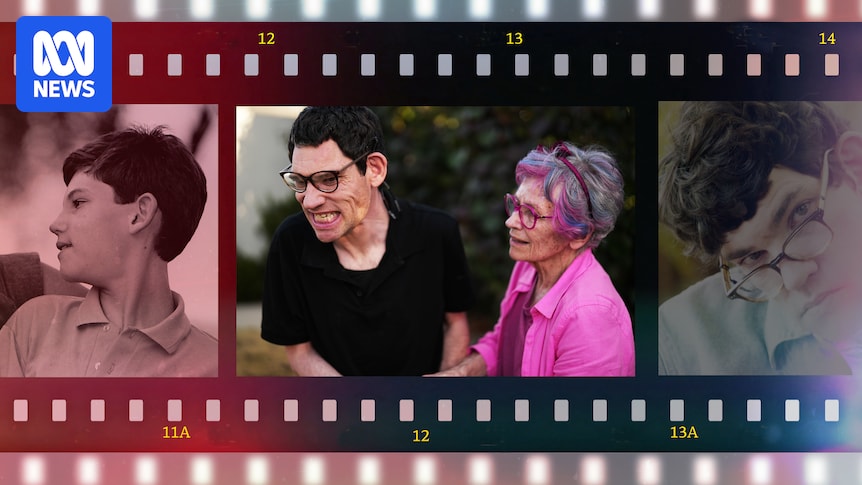
Deirdre Croft has dedicated 45 years to caring for and advocating for her intellectually disabled son, Richard. Each passing day brings more pressure to secure his future when she’s gone. It’s a distressing scenario faced by thousands of Australian parents.
Night has fallen, and Deirdre Croft sits in her office preparing to record a video for her son, Richard Rook, a video she hopes he will watch, over and over, after she dies.
Richard loves videos. Ever since he was a kid, the colour and movement of film has been a source of joy and communication for him, especially videos of people he loves.
His face lights up when they appear on the screen, says Deirdre, and he pulls the screen close, enthralled.
Richard lives with an intellectual disability after suffering a severe brain injury during birth. He’s 45 now, non-verbal and needs 24/7 care.
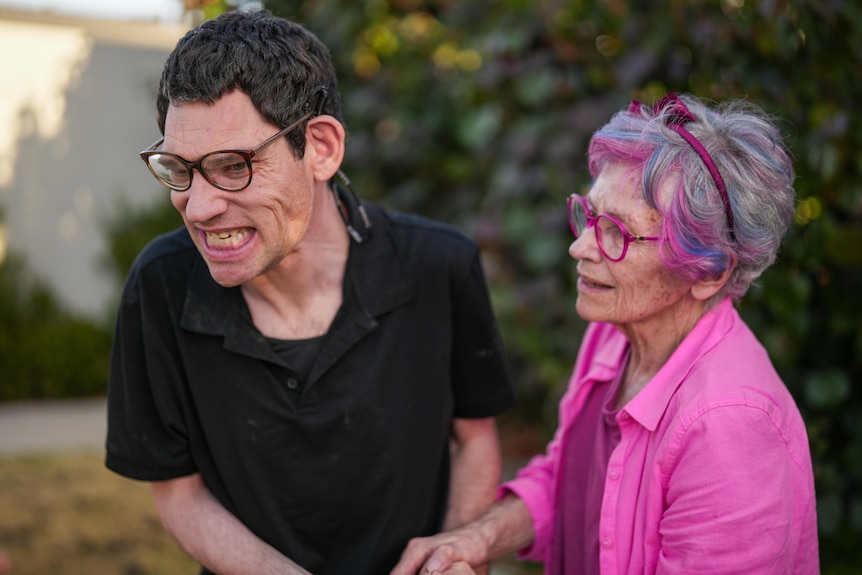 “See the person, not the disability”: Deirdre wants to remind others of Richard’s loving and playful side.(Australian Story: Nicholas Martyr)
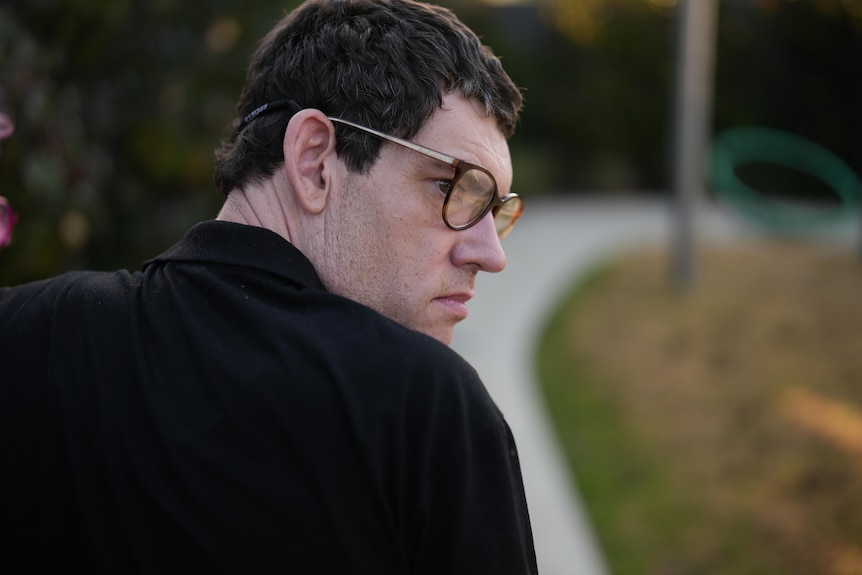 Deirdre says there’s “no time to waste” to organise Richard’s future.(Australian Story: Nicholas Martyr)
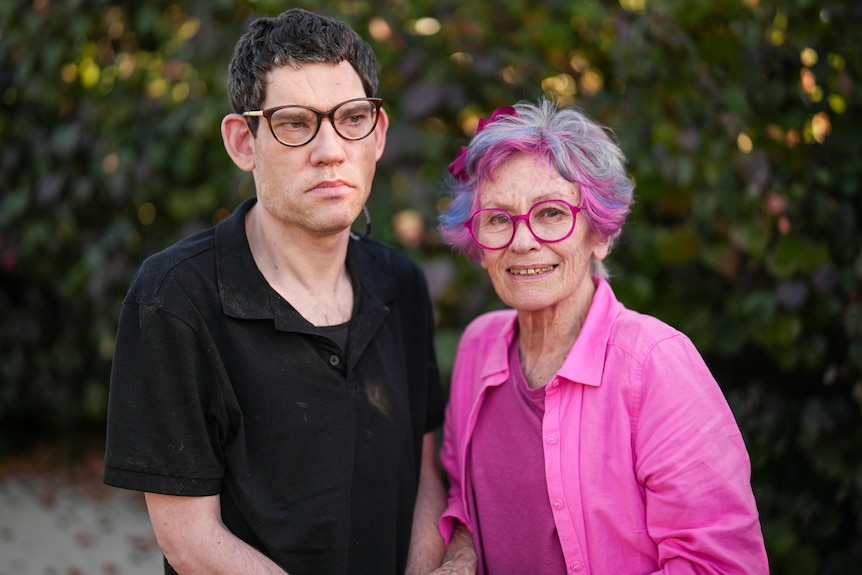 Dierdre, 72, with her son Richard, 45.(Australian Story: Nicholas Martyr)
Deirdre is 72 and Richard’s only surviving parent. A lifetime of caring and advocating for her only child has taken its toll on Deirdre’s health and, she says, “something feels like it’s disintegrating quite quickly”.
“I feel there’s no time to be wasted,” she tells Australian Story.
So, Deirdre sits in the dim light on a quiet night, ready to record her message of love for her son, just one of the myriad steps she is taking to prepare for the time when she is no longer here to look out for him.
She hits play on the camera and begins. “Hello Richard, it’s Mummy here.”
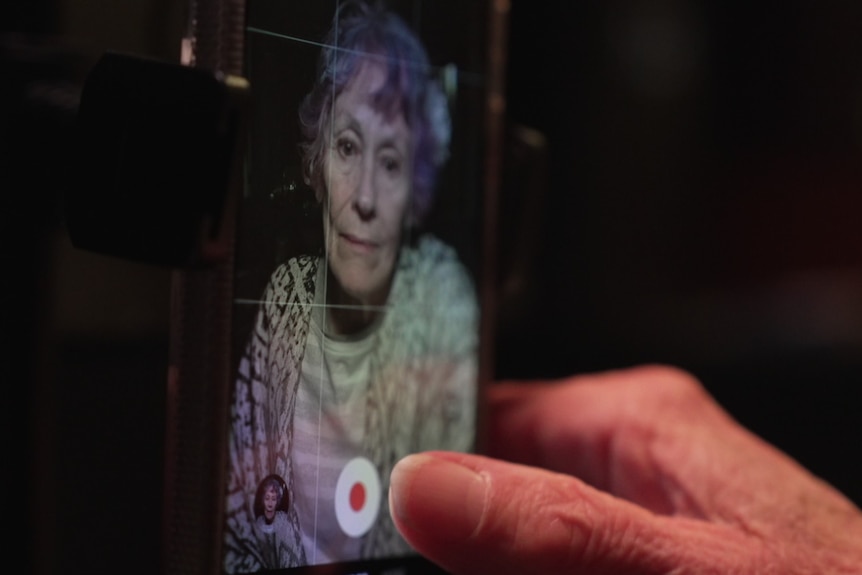 Deirdre hits record on her video messages for Richard.(Australian Story)
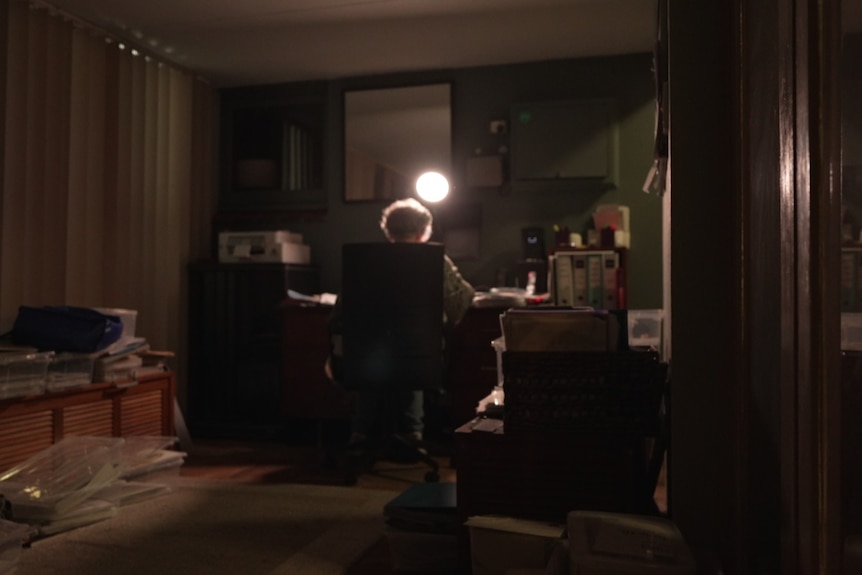 A time capsule of her love, Deirdre’s messages will be shown to Richard after she dies.(Australian Story)
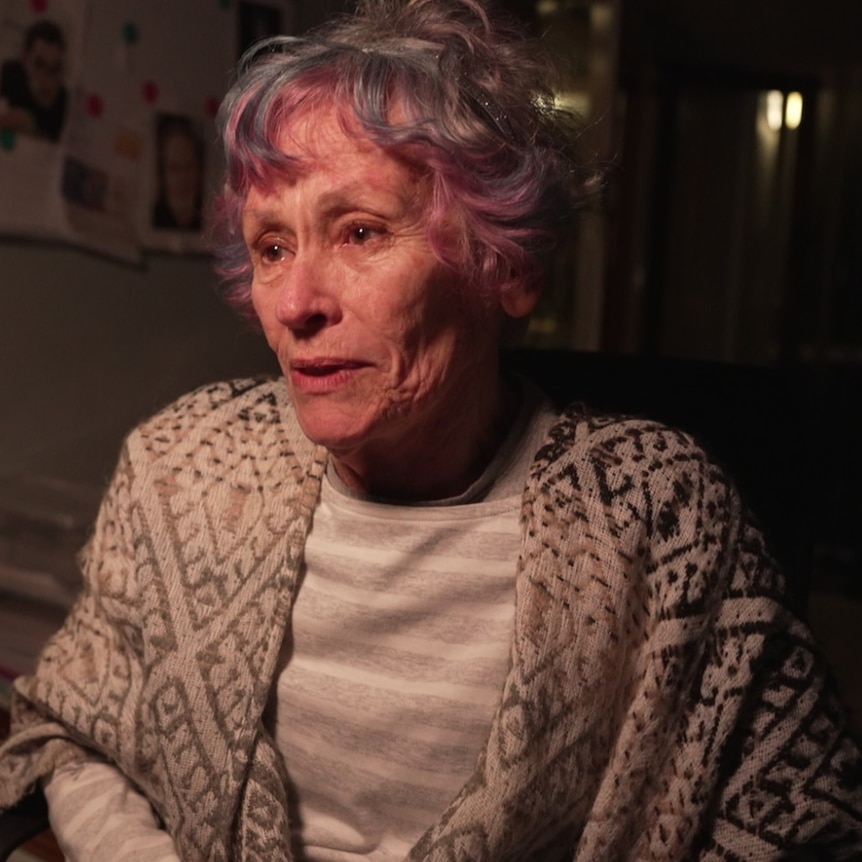 Deirdre wants her son Richard to know the impact he made on her life.(Australian Story)A difficult birth and hopes for ‘miracle recovery’
It’s a question, a fear, that lives inside the heads of the parents and caregivers of children with a profound disability: Who will look after my child when I’m gone?
Filmmaker Andrew Wiseman knows how heavily that question weighs on Deirdre, having spent large chunks of the past 35 years with her and Richard, documenting their lives in a series of three films.
From the first time Andrew met Deirdre, she was thinking about ways to safeguard her son’s future.
“I think Deirdre has been preparing for her death from day one with Richard,” he says. “She understands that in the long term, she won’t be around to look after Richard.
“She loves him to bits, and she wants to care for him and see him have a really good life.”
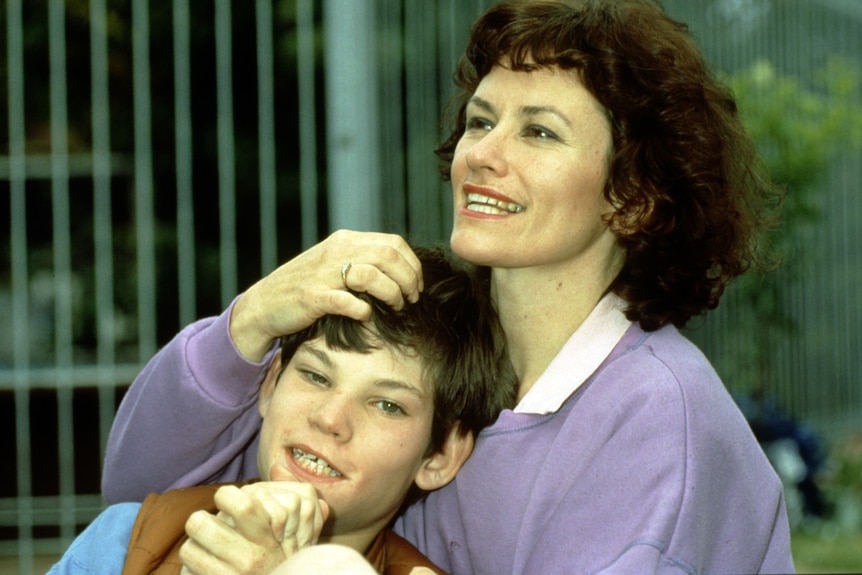 Deirdre gives a rare look inside life as a parent with a child with a profound intellectual disability.(Supplied: Andrew Wiseman)
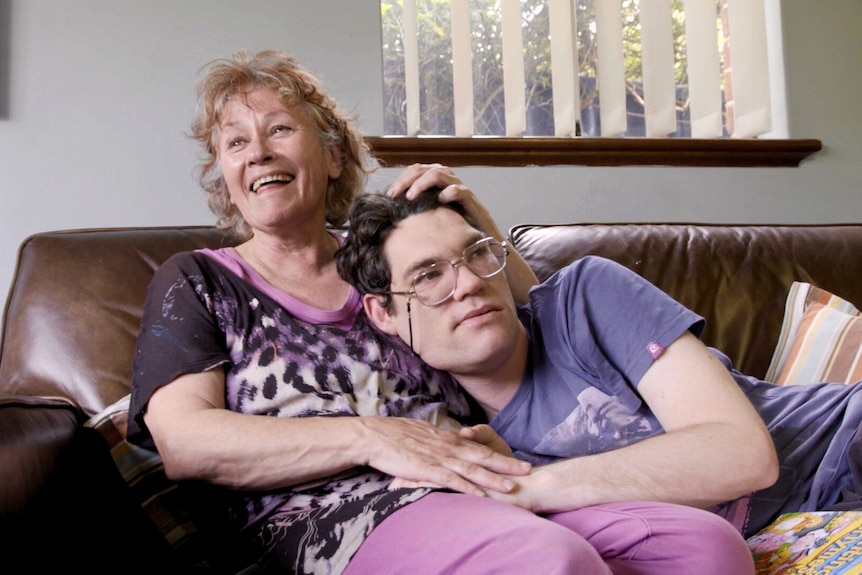 Deirdre has “given her all” to Richard over the past four decades.(Supplied: Andrew Wiseman)
Being pregnant with Richard, says Deirdre, was “one of the best times of my life”. “I was absolutely intrigued by what felt like a miracle of life developing in my body,” she says.
Deirdre and her husband, Charlie, counted down the days for their baby’s arrival but he was overdue and at 42 weeks, labour was induced.
The pain was excruciating, says Deirdre, and it soon became clear that Richard’s head was not moving through her pelvis as it should.
After more than 14 hours of labour, she was taken to surgery for a caesarean. She felt the surgeon “pulling and yanking and trying to get him out of my body” and then, for a brief moment, her baby was in her arms.
Then, he was whisked to intensive care.
“He just had a faint heartbeat,” Deirdre says. “And he was unconscious. It was touch-and-go whether he would live.”
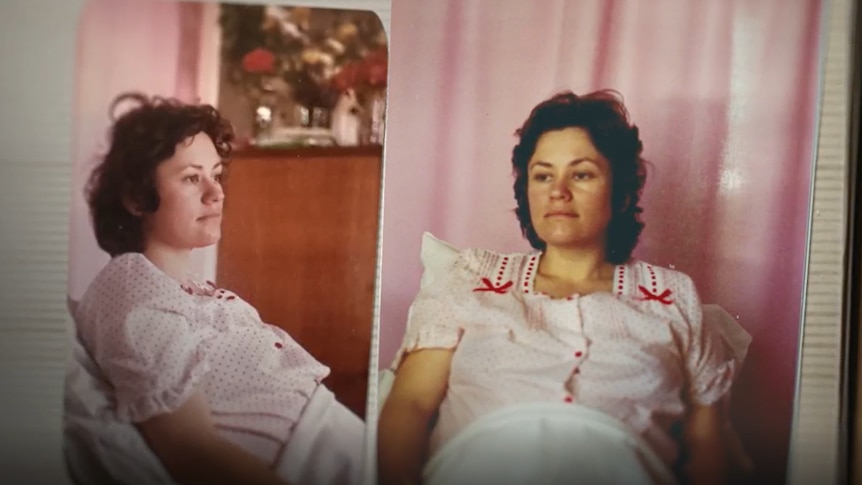 Deirdre sat stunned in the bed after the traumatic and painful birth experience.(Supplied: Deirdre Croft)
There’s a photograph of Deirdre after that traumatic night, sitting in her hospital bed, staring blankly into space. “I couldn’t process what had happened,” she says. “We have a romantic view of giving birth and the beautiful aftermath and all the love flowing through with the milk. And it was the antithesis.”
A week later, despite Richard suffering seizures while unconscious, he woke up. The next day, Deirdre breastfed him. Two weeks later, Deirdre and Charlie took their baby boy home.
“It seemed like he’d had a miracle recovery,” Deirdre says. “I really felt we’d been spared.”
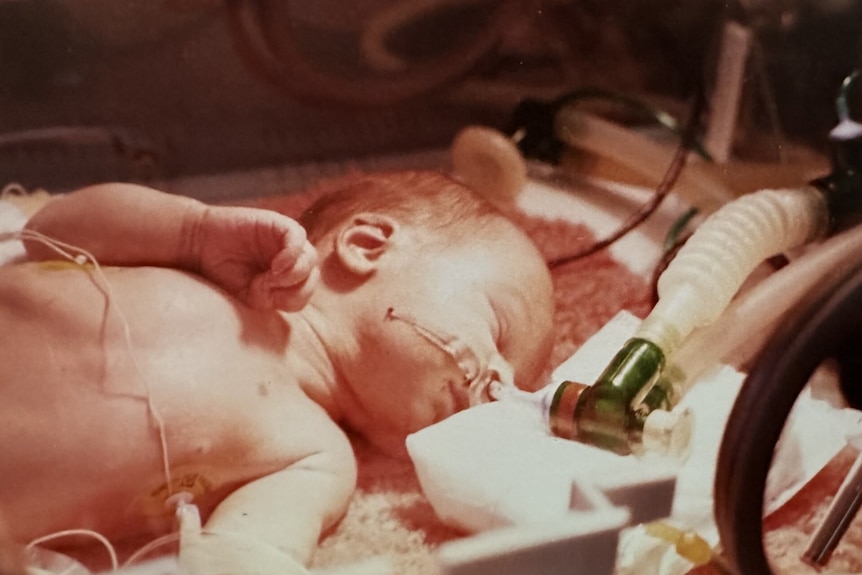 Richard was born unconscious and spent two weeks in hospital.(Supplied: Deirdre Croft)
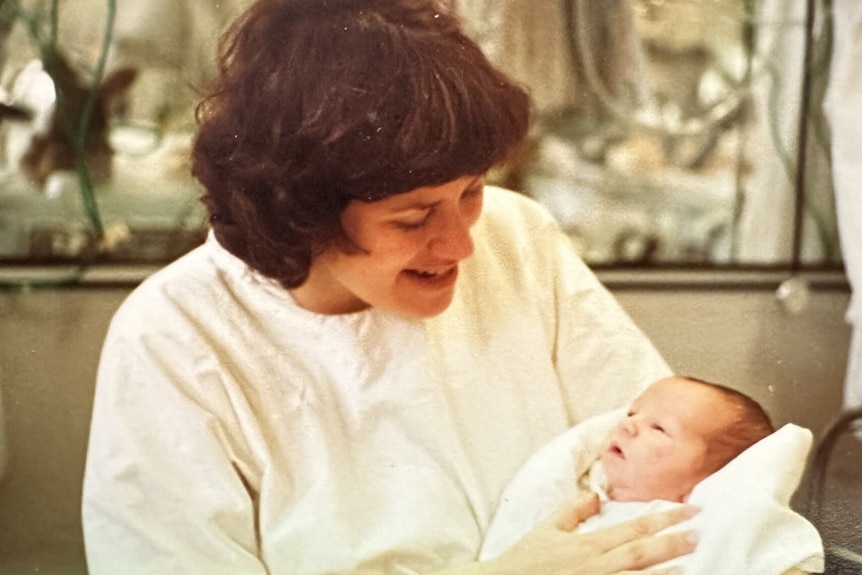 After a traumatic labour, Deirdre holds her baby boy.(Supplied: Deirdre Croft)
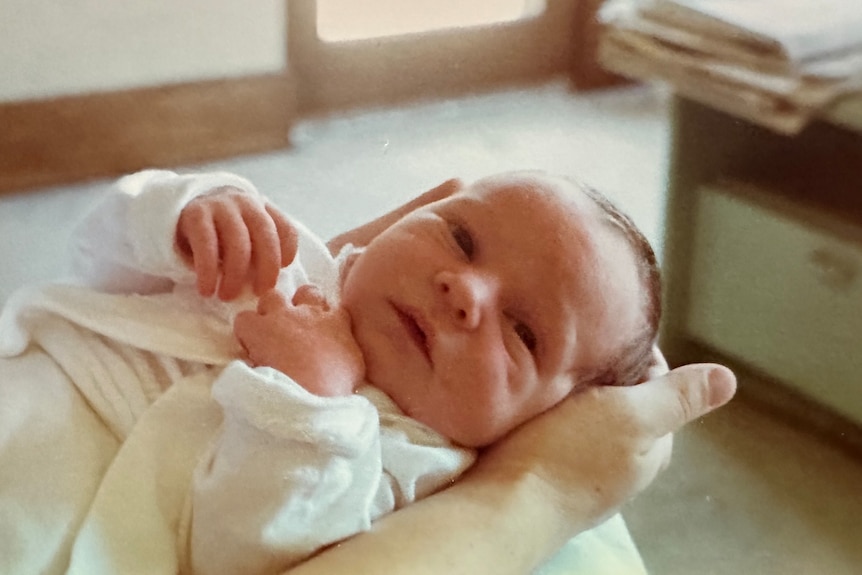 Despite a series of complications, Richard pulled through.(Supplied: Deirdre Croft)
 Deirdre opens doors to doco crew
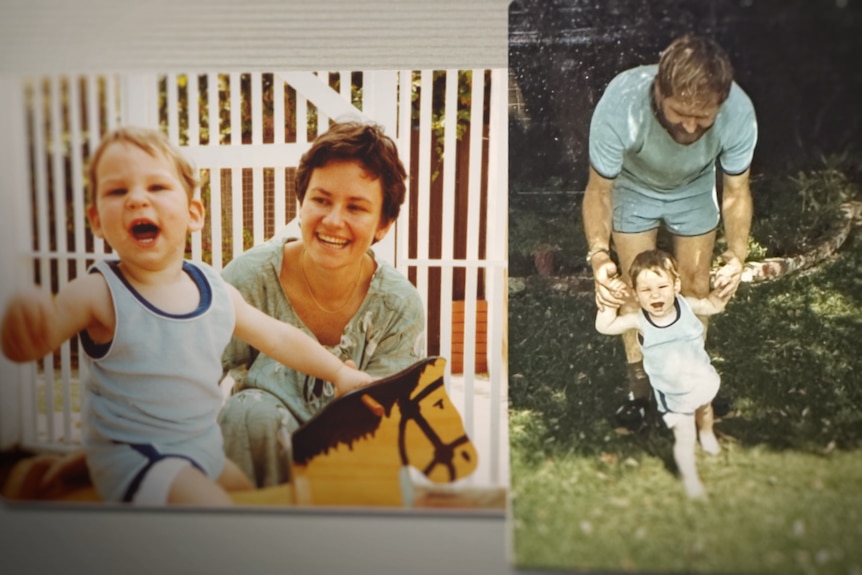
Richard is about 12 months old in the home movie that Deirdre and Andrew are watching. The little boy’s joy of riding a rocking horse in the backyard is as clear as that bright summer’s day.
But by now, Deirdre and Charlie knew the miracle was slipping away.
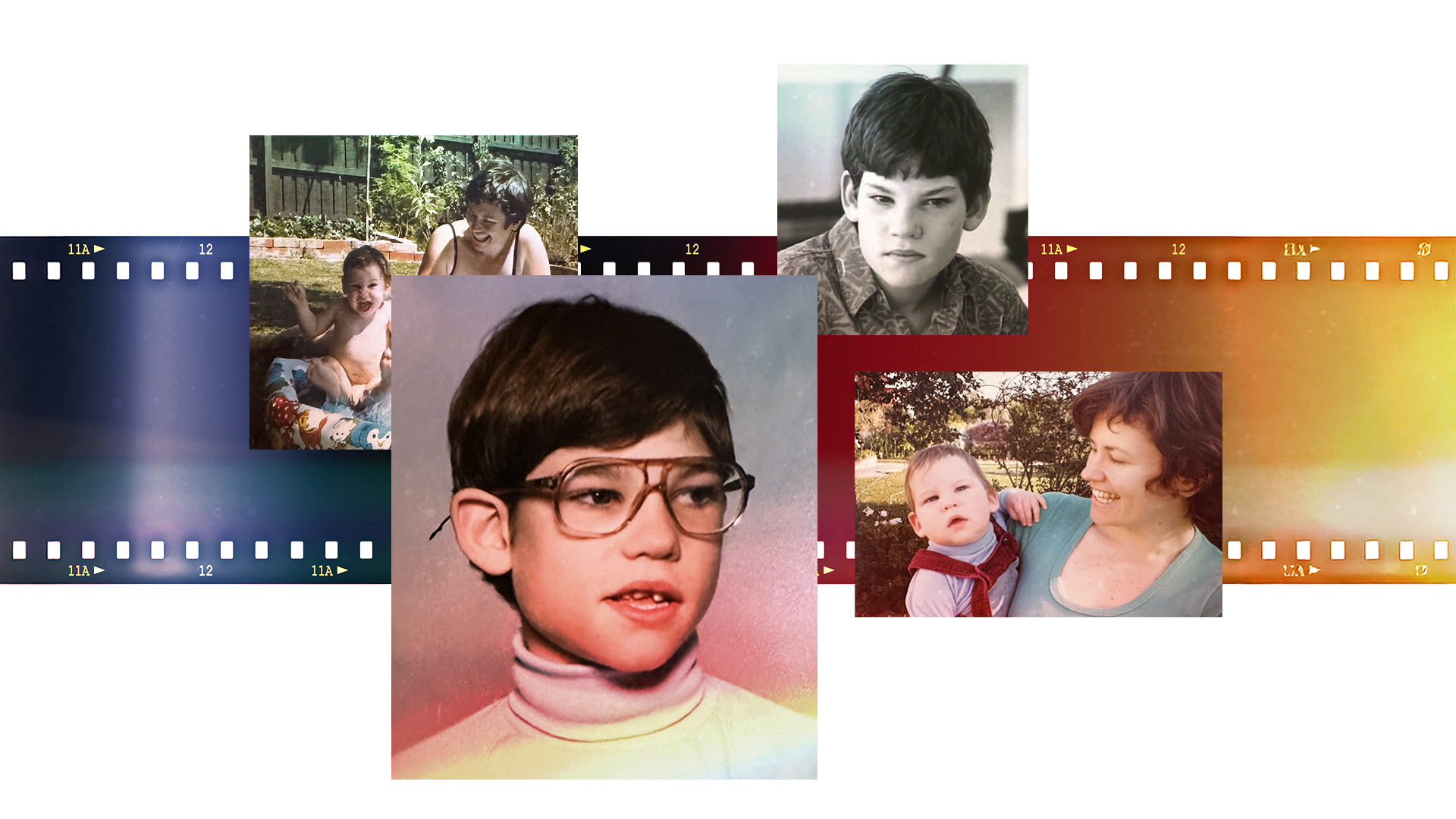
Richard was a placid baby and a good eater, but by about four months, it was obvious his sight was not developing properly. At 10 months, a neurologist advised that his head was not growing as it should, suggesting slow brain growth.
By 13 months, Richard was suffering seizures.
“I found the epilepsy as hard as anything because it was crisis and unpredictable and life-threatening, and they always occurred in the middle of the night,” Deirdre says.
 By about four months, doctors recognised Richard had poor eyesight and was not developing as he should.(Supplied: Deirdre Croft)
The family moved from Melbourne back to Deirdre’s home town of Perth when Richard was four, but by the time he was nine, the marriage had broken down. The couple shared the care of Richard, with Deirdre the dominant carer, and remained focused on Richard’s wellbeing.
As they adjusted to their new reality of raising Richard, Deirdre’s role in advocating for people with a disability, as well as their carers, grew.
That’s how Deirdre met Andrew. She’d trained as a journalist in Melbourne and approached Andrew about making a film about a camp that she was involved in for mothers with a child with a disability.
“She was a very impressive woman,” says Andrew, who eventually would focus the documentaries on Richard, Deirdre and Charlie. “She was clearly bright and very articulate and very passionate.
“What became apparent very early on is that she was prepared to be extraordinarily candid in front of the camera, to make herself vulnerable and talk about very personal matters.”
Andrew captured it all.
There’s a beautiful moment where a young Deirdre is sitting in the sun, smiling as she claps for 10-year-old Richard.
Richard claps along. Then he holds his mum’s hands. Then claps again.
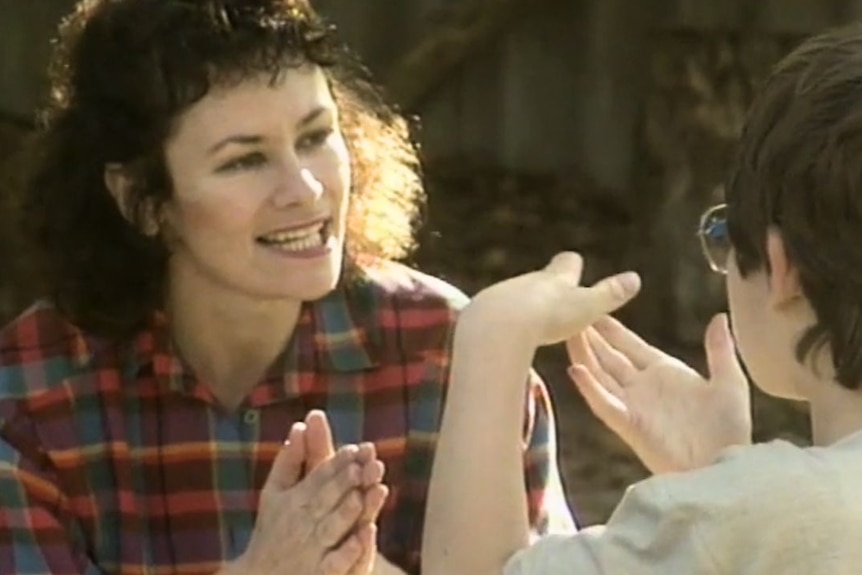 Deirdre Croft plays a hand-clapping game with her son, Richard.(Supplied: Andrew Wiseman)
Watch the Australian Story ‘Raising Richard’ tonight at 8 (AEDT) ABCTV and ABC iview.
In another scene, Deirdre is holding a large stuffed dog and saying the word “dog” over and over to Richard. He eventually seems to form the word and Deirdre beams, revealing how much she’d love to be able to have a conversation with her boy.
The camera kept rolling through the stressful, painful, embarrassing times, too.
For a period of his childhood, Richard had a deep fear of car travel, causing him to scream and lash out, often reaching out to pull Deirdre’s hair while she was driving.
Sometimes when they were at the shops, he’d become overstimulated and punch Deirdre or yell, with Andrew’s footage capturing the way others would stare or turn away.
“He would hurt me quite a lot,” Deirdre says now. “And it’s hard for me to remember how I endured that, but … Richard’s aggression was often driven by his fear. So, it wasn’t like it was malicious.
“It’s not like I hold a grudge against him for hurting me so much.”
Loading…
In one film, Deirdre talks about the brave face she would put on in public. “I would be devastated in the privacy of my own home,” she says, “and open the front door with my plastic smile across my mouth. ‘I’m fine, thank you very much. Yes. Got it all handled.'”
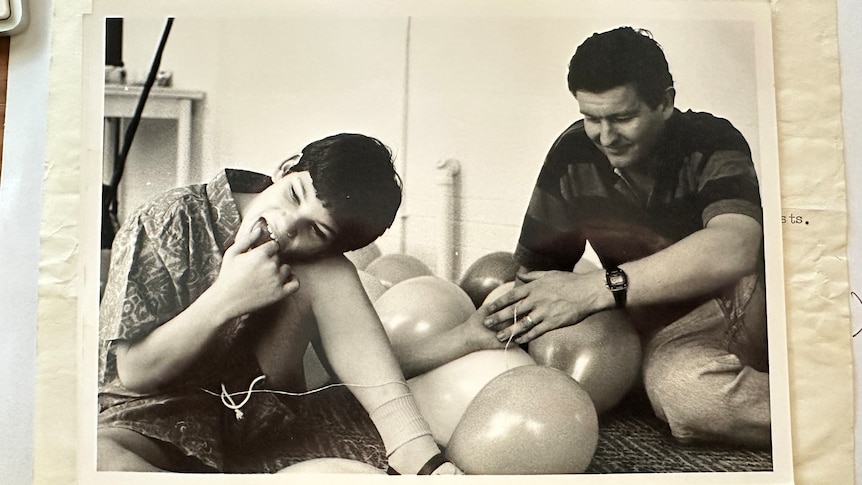 Andrew first met Richard in 1989 while filming the documentary Driving With Richard.(Supplied: Andrew Wiseman)
By the time Richard was 14, he was bigger and stronger than Deirdre. “If he was aggressive to me, that was quite physically threatening, quite apart from being emotionally upsetting,” she says.
It was decided that Richard would move in with Charlie, with Deirdre as the secondary caregiver.
“Richard does blokey things and Charlie … was prepared to take blokey risks with him,” Deirdre says. “So, he would take him camping and he’d take him riding on the back of a motorbike.”
Andrew’s second film documents those “risky” times, with heartwarming footage of Richard on the back of the bike with Charlie.
Richard’s face is looking skywards as he revels in the sensations of the sun’s rays, the wind and the speed.
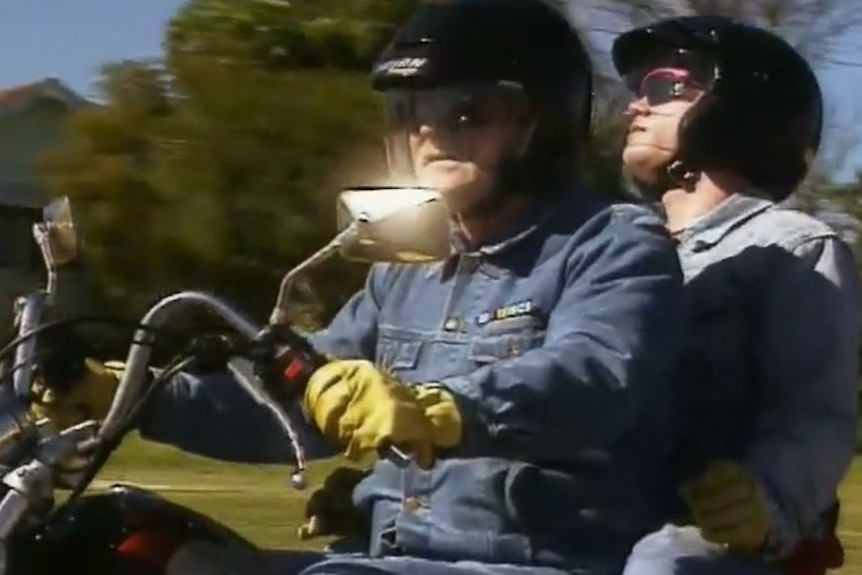
And it captures the gentle times, like the moment when a 20-year-old Richard, sitting on Charlie’s lap, reaches out to wrap his father’s arms around him.
“I just love him passionately, dearly,” Charlie says. “That’s basically what I’m living my life for, caring for Richard.”
‘What makes a human worthwhile?’
Without the day-to-day care of Richard, Deirdre threw herself into advocating for him and others like him.
At one point, she ran a scheme aimed at developing relationships in the community by matching politicians with someone with a profound disability. She wrote newsletters, lobbied and found contract work in the disability sector. Then she decided to squeeze in a PhD.
It looked at an issue that remains of vital importance to Deirdre: long-term support for people with intellectual disability. “In the 50s and 60s, parents were told to put them in an institution, forget they ever had them and get on with their lives,” she says.
That was never going to happen to Richard. “Richard and people like him have much to offer us [in] helping us explore our value system and what is worthwhile in our humanity,” Deirdre says.
“I believe that people like Richard teach us how to be kind and how to care for others. How do we put a price tag on that? Surely our society benefits if more and more people are kind and caring.”
In fact, she’s come to consider Richard her life coach, a therapist. “He knows nothing about world politics. He has no ego. He doesn’t judge me. It’s liberating. It’s, ‘Hold my hand and let’s play a song together.'”
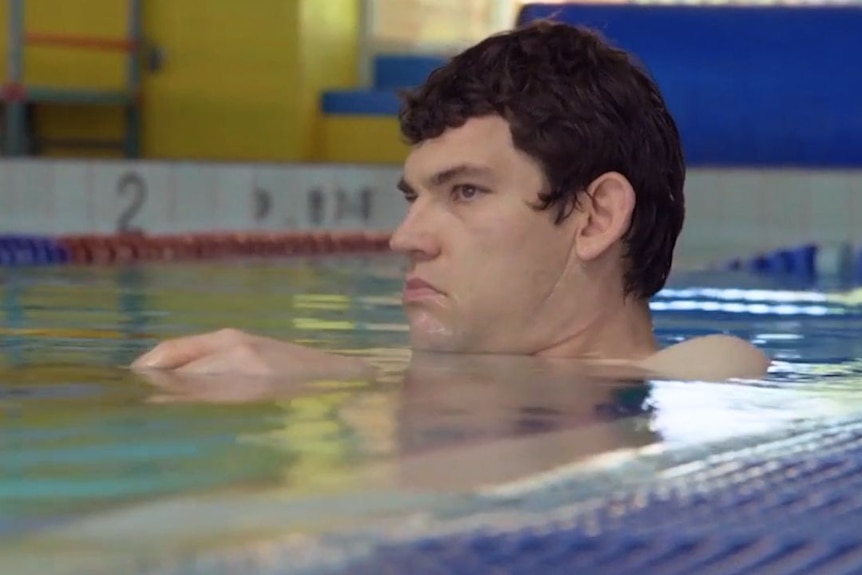 Three films over nearly 30 years intimately charted the unpredictability of life for a mother of a son with intellectual disability.(Supplied: Andrew Wiseman)
“Surely our society benefits if more people are kind and caring.”
— Deirdre Croft
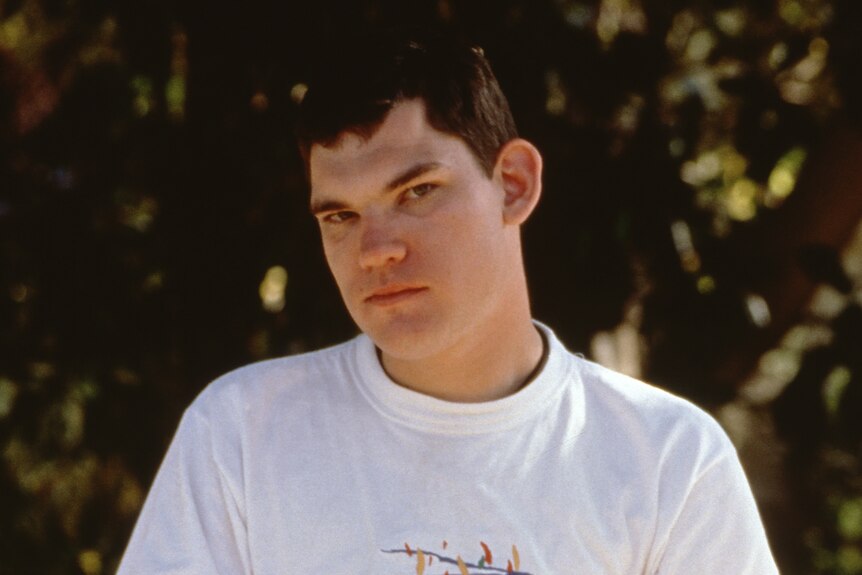 Richard has taught Deirdre the value of kindness.(Supplied: Deirdre Croft)
As Deirdre studied and explored the possibilities for Richard’s long-term care, a lot was happening in her life.
She’d met Chris, a musician, who she considers her soulmate and who never baulked at helping care for and love Richard.
She was supporting her mother, who was looking after Deirdre’s frail father. After he died, Deirdre’s mother was hit by a car and later suffered a stroke. Again, Deirdre cared for her.
Then, when her mother was in the hospital after a second stroke, Deirdre was diagnosed with breast cancer and needed surgery.
“I am not very good at caring for myself,” Deirdre says. “Most of my adult life has been focused on caring for other people.”
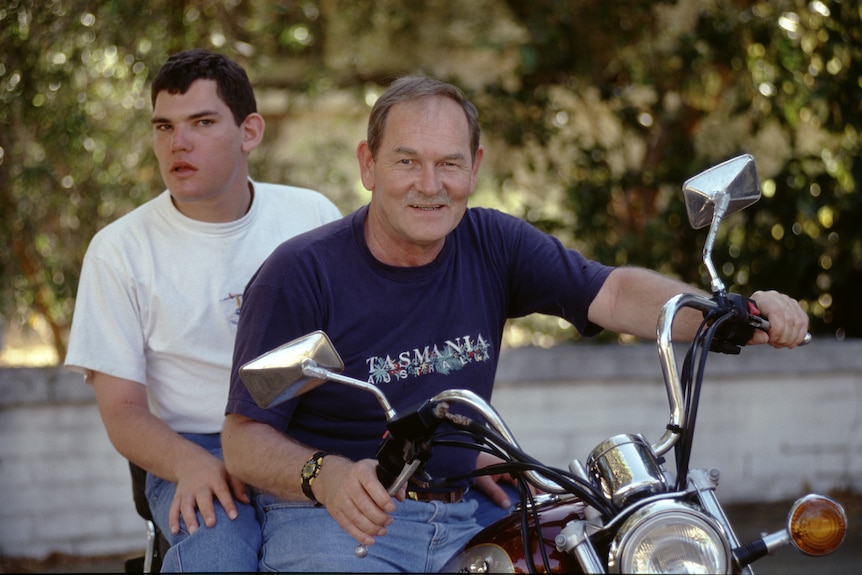 Charlie did the “blokey stuff” with his son, Richard.(Supplied: Andrew Wiseman)
Come 2012, Charlie had a heart attack and Richard returned to live with Deirdre. The next year, Charlie was diagnosed with cancer. He died in December 2013.
“It’s so hard to know what sense Richard makes of death,” Deirdre says. “We had a memorial for Charlie in Perth, and they had images of Charlie on the screen and Richard was intrigued to watch his dad.
“We understand what death is, but I’m sure Richard doesn’t. People come and people go,” she says, her voice quavering. “Why did they leave?”
 The reality of 24/7 care
The routine of caring day-to-day for Richard was in full swing again for Deirdre, a routine that had not changed much since he was a child.
“Richard needs someone with him 24 hours a day, seven days a week,” she says in the third film.
“Bathing him, feeding him, tending to his personal needs.
“Steadying him when he walks, putting [him] to bed, getting up to him in the middle of the night.”
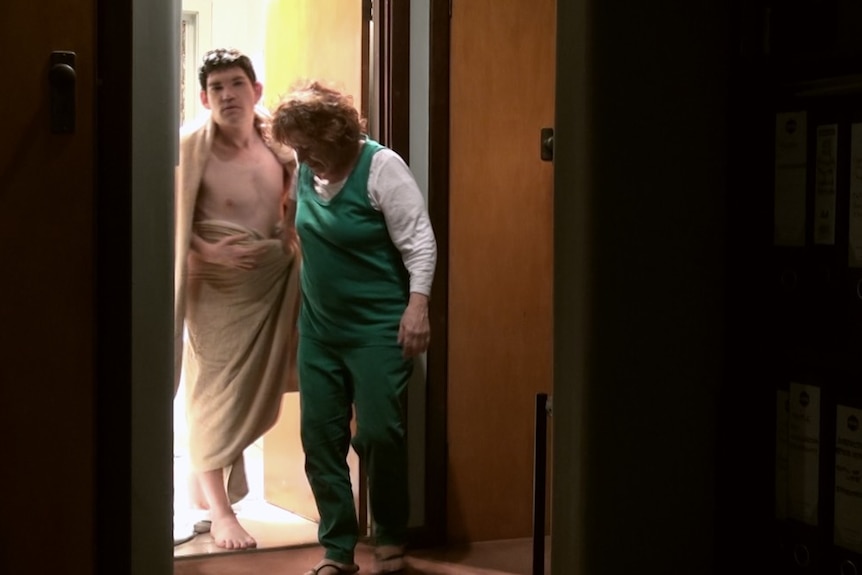 Deirdre needs to help Richard care for himself, including bathing.(Supplied: Andrew Wiseman)
Richard’s communication has always been largely emotional, Deirdre says. “When he’s feeling uplifted, he’ll make happy little bopping sounds. When he’s excited, he’ll let out man-sized screams. But when he’s frustrated, he can also make very loud vocalisations, which can be quite distressing to others.”
The rigours of caring led Deirdre to drop her PhD but she soldiered on, tapping into support services that gave her some respite while Richard was out in the community.
But those around Deirdre could see she was struggling.
“I wasn’t prepared to say, ‘I can’t do this anymore,'” Deirdre says. “But people were watching me and having concerns for me.”
The decision was made to apply for Richard to move into a group home, sharing with other people with disabilities. When he was 34, one became available.
There’s a scene in which Deirdre is standing in the bedroom of what will be Richard’s bedroom, her lip quivering. She covers her face with her hand, trying to hide the distress of this “momentous” decision.
She says now: “When you have been absolutely committed to the care and wellbeing of someone you know is very vulnerable, to entrust that to anyone else is very challenging and potentially traumatic.”
For a time, it was a great move. Richard bonded with his carers and was happy and settled.
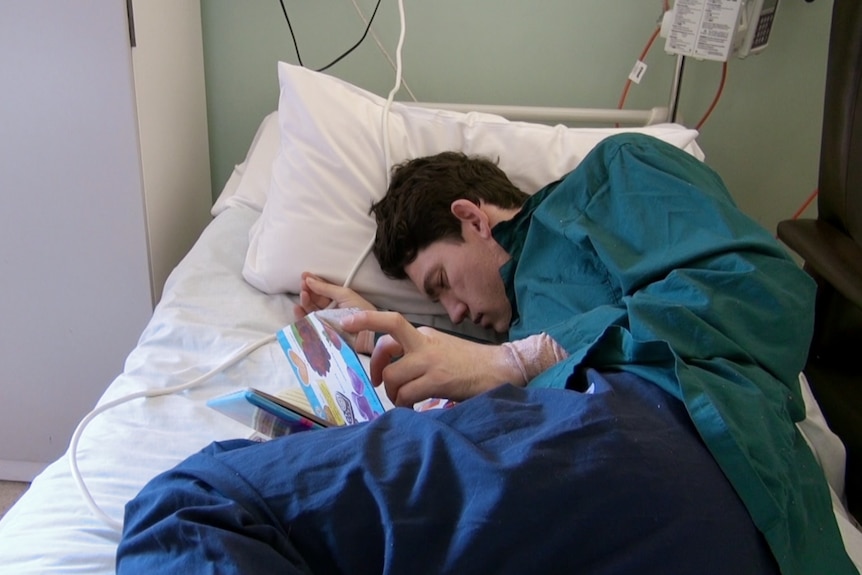 Richard went downhill and was hospitalised.(Supplied: Andrew Wiseman)
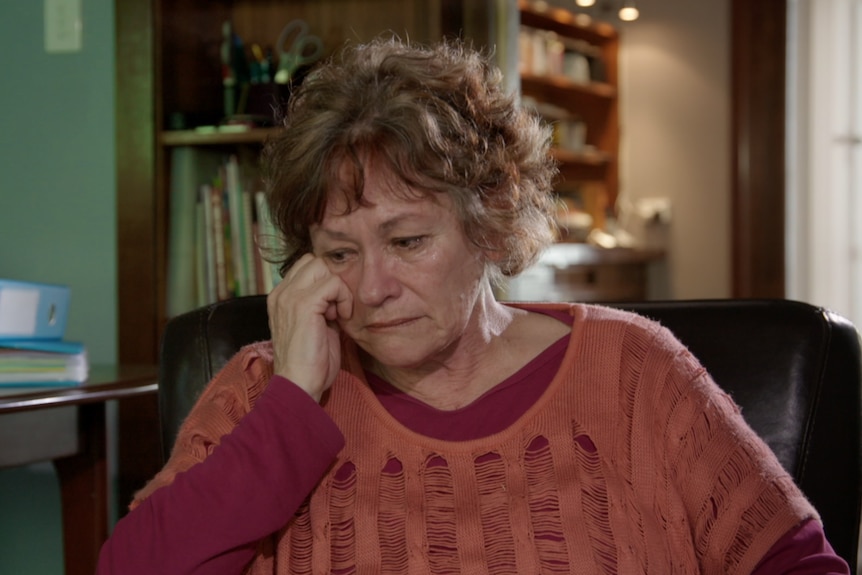 Deirdre opened up about her fears for Richard in the 2016 documentary Wonder Boy.(Supplied: Andrew Wiseman)
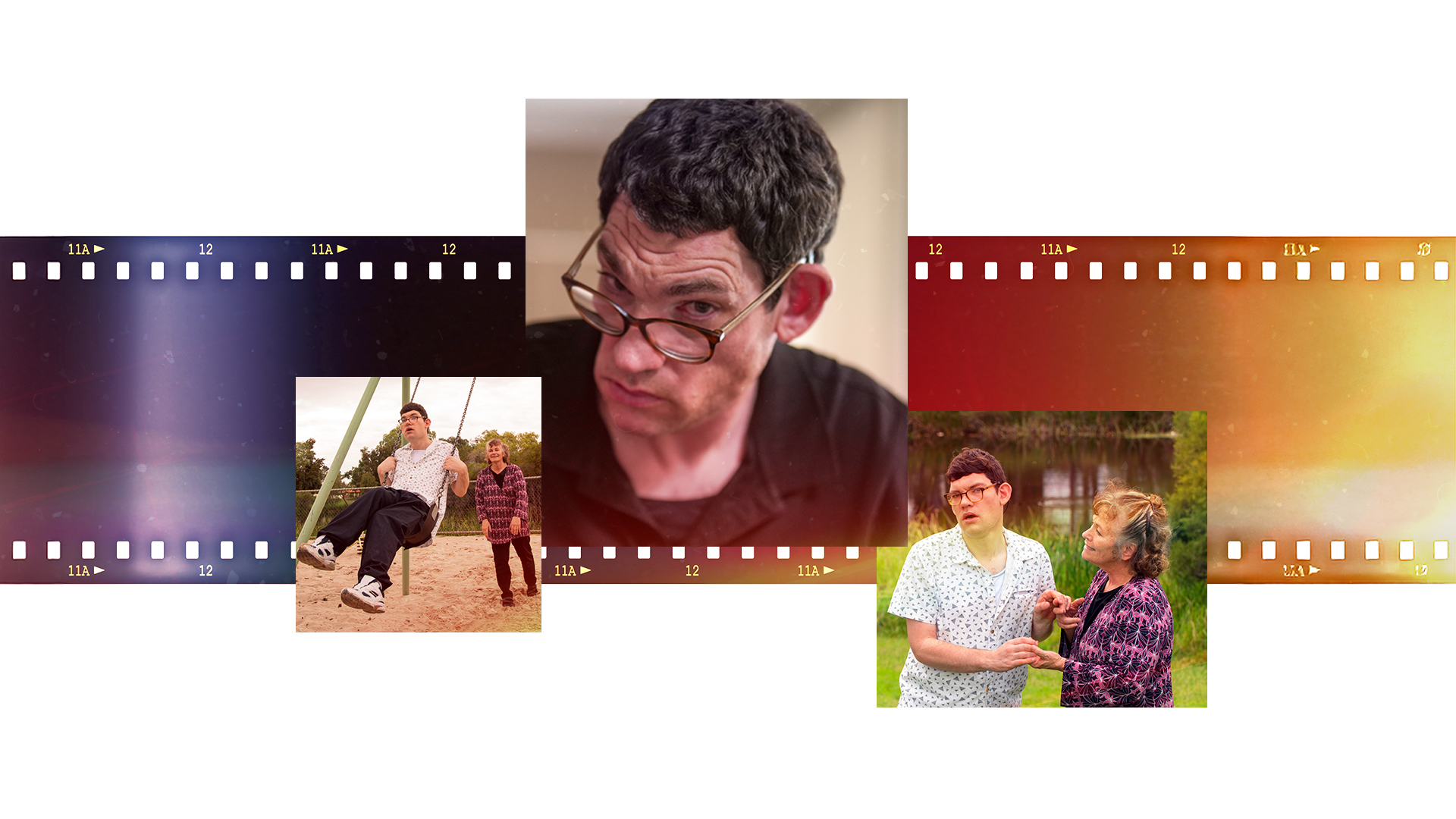
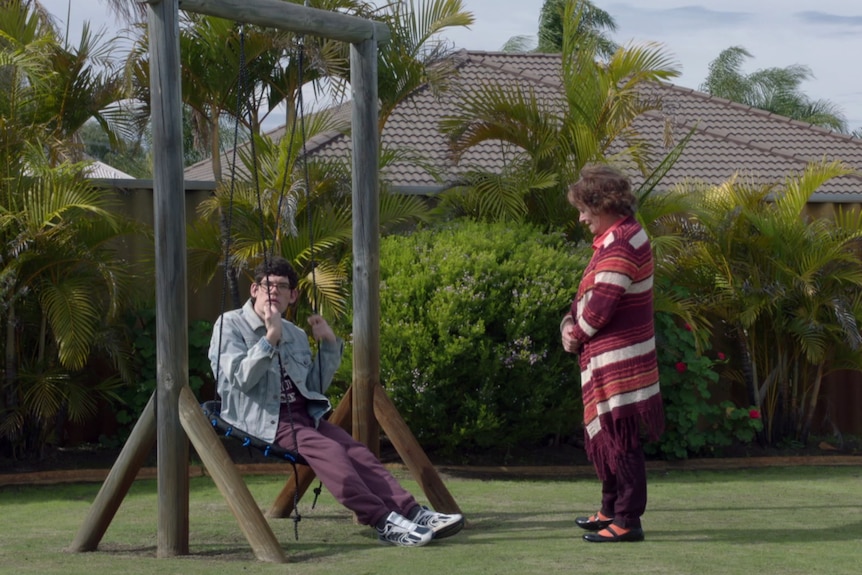 Since he was a boy, Richard has always found happiness playing on the swings.(Supplied: Andrew Wiseman)
But about eight months later, the residents were moved to another home and Richard went downhill quickly. Deirdre is still unclear about what caused her son to become so agitated and distressed that he was hospitalised eight times within three years.
She would bring him home from the hospital to keep him calm and enjoy the concerts that her partner Chris would create for him, return him to the home — and the cycle would begin again.
Deirdre realised the set-up was unsustainable. Richard had an inheritance from his father. She would have a house built for him and organise to have support staff onsite, all the time.
“If he had his own home, he would be guaranteed a stable environment that we could create to meet his sensory needs and his accessibility needs for the rest of his life,” she says.
Richard followed the build closely, visiting to watch the slab go down and the uprights go up.
In July 2020, Richard and Deirdre received the keys to the low-set grey brick home.
It’s Richard’s home. No-one can take it from him.
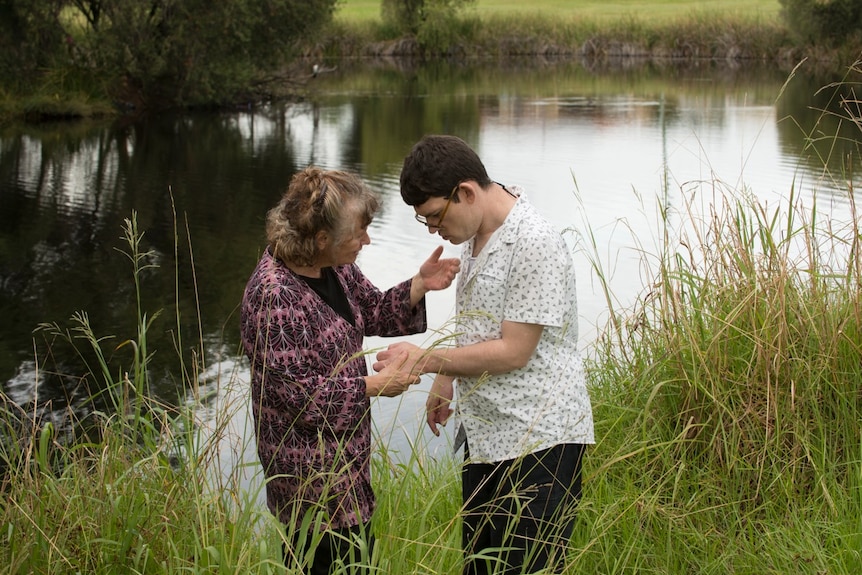 Deirdre is mobilising a team that can come together and take care of Richard with the same love and respect she has shown her son his whole life.(Supplied: Andrew Wiseman)
But Deirdre knows all too well that loved ones are not here forever. Within a year of Richard moving into his new home, their beloved Chris died from bowel cancer.
Deirdre’s mission now is to ensure Richard not only has his home but people in his corner to take on the caring, legal and organising roles when she no longer can.
Carer load gets ‘heavier and heavier’
If there is an overarching theme to his documentaries, Andrew says, it is that caring for a person with a disability needs to be shared, often across a lifetime.
“Not for a moment, not for a month, not for a number of years, but in many cases, it’s just completely ongoing,” he says.
Which is why Deirdre is sitting at a table with a group of relatives, friends and treasured support workers discussing the next step towards forming a legally incorporated not-for-profit association to oversee the ongoing care of Richard.
They will be volunteers who offer a range of different skills but share one abiding goal: they want the best for Richard.
It’s a Canadian concept called a Microboard, which came to Australia in 2008 under the leadership of disability services advocates Marita Walker and Eddie Bartnik. Marita is sitting at this table, a former work colleague of Charlie’s who has known Richard since he was seven.
“Marita has been a rock, a stalwart, a rational mind, an initiator, a backbone,” Deirdre says.
So much goes into caring for Richard beyond meeting his day-to-day physical needs. There’s his health care, financial management, liaising with all the agencies that support his care and organise outings, the upkeep and management of the home, and paying bills. “The load on my shoulders has just got heavier and heavier,” Deirdre says.
Handing over that load will not be easy for Deirdre. And, says Marita, Deirdre is not at the point of being confident to do that yet.
But Deirdre knows that once the planning and legal processes have been finalised, this long-term plan for Richard will be for the best.
“When I’m no longer here, Richard’s life will be in upheaval anyway,” she says, her voice cracking with emotion, “so the more security and stability we can create, the less traumatic that might be for him.”
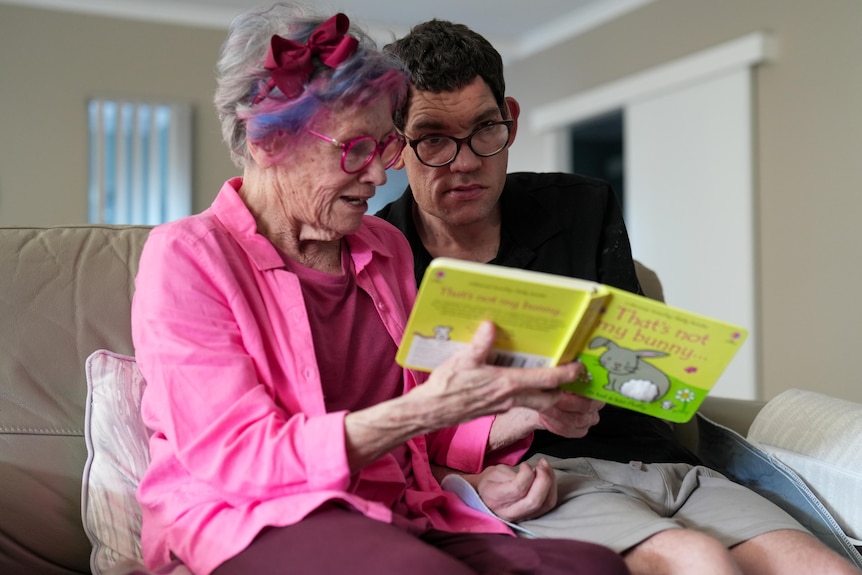 Richard enjoys reading with his mum.(Australian Story: Nicholas Martyr)
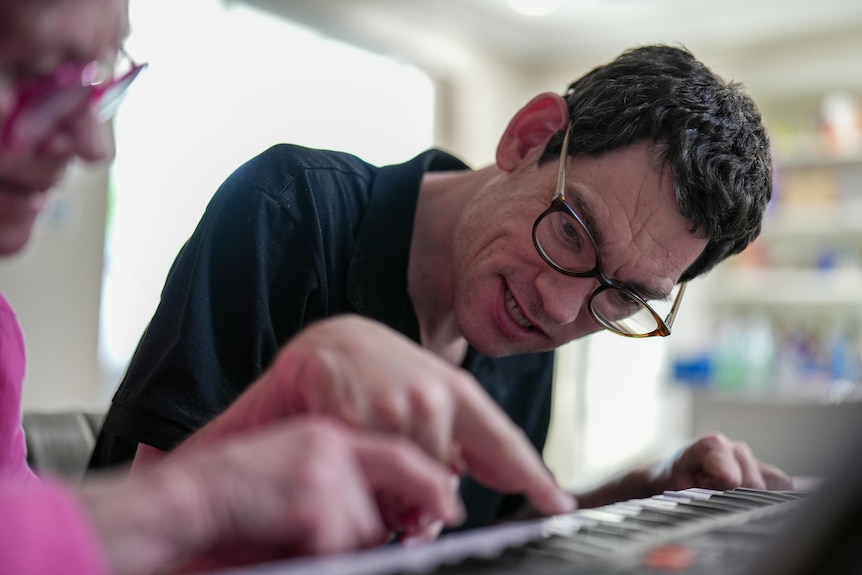 Richard concentrates playing keyboard with his mum.(Australian Story: Nicholas Martyr)
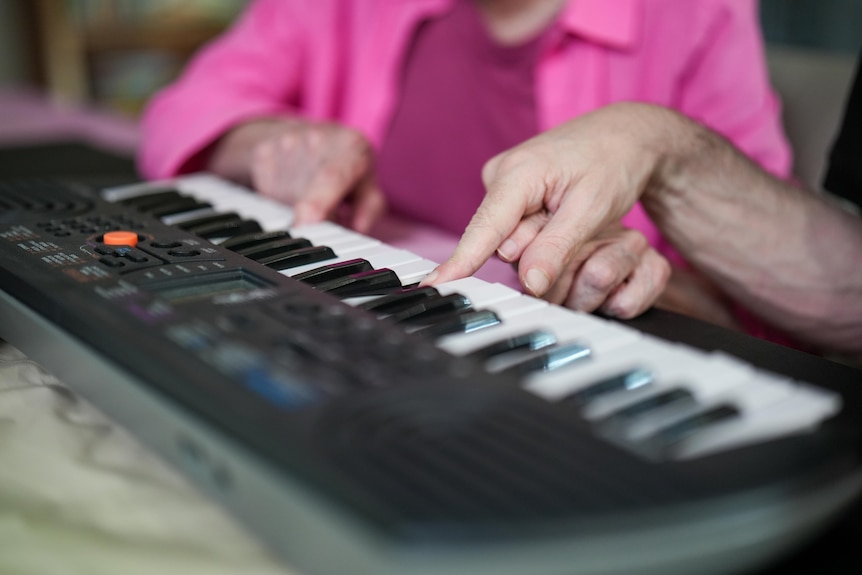 Deirdre and Richard take a quiet moment to play keyboard together.(Australian Story: Nicholas Martyr)’I have learned so much from you’
Back at her desk with her camera recording, Deirdre is explaining to Richard the type of fun and love-filled film clips she’s compiling for him to watch, “if I’m not around to show them to you”.
There’ll be videos of all the people who have cared for him over his life, she tells him, and plenty of clips of him enjoying different activities.
Will Richard understand her words? It’s not the point. That’s his mum on that screen, and just as with his dad, Charlie, and great mate, Chris, Richard is always happy to see the faces of those he loves.
“Right now,” continues Deirdre, “What I’d like to say to you is how much I value your contribution to my life … I have learned so much from you.”
She goes through a list: he’s taught her playfulness and patience, she says, problem-solving, the value of not holding onto grudges or bad times. Humanity.
“You open our hearts and we connect with you,” Deirdre tells Richard.
“You give us a bigger cause to work towards. It’s not just what we can get out of this life. It’s acknowledging that … if we work together, we can make a better society.”
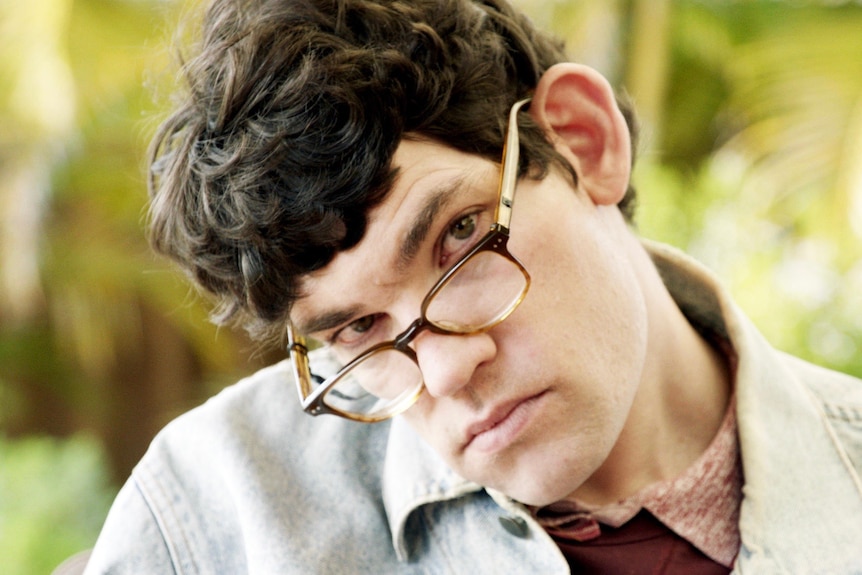 Now living in his own home, Richard is “content”, Deirdre says.(Supplied: Andrew Wiseman)
Tears are welling in Deirdre’s eyes now, but she stays strong. “The last thing I want to say to you, Richard, is that I love you with all my heart and I am so grateful that you’ve been a part of my life.”
She smiles into the camera, then reaches over and presses stop.
One day, Richard will look at this video and see his mum on the screen.
She won’t come through the door with a smile and a kiss for him, but she’ll be there in the land of film that so engages Richard — talking to him, encouraging him, loving him. As always.
Watch the Australian Story, Raising Richard, on Monday, March 9 at 8 (AEDT) on ABCTV and ABC iview.
CreditsProducer: Olivia RoussetFeature Writer: Leisa ScottDigital Producer: Megan MackanderImages and video: Nicholas Martyr and supplied by Deirdre Croft and Andrew WisemanGraphics: Kylie Silvester, Nina Maile GordonEditorial: Greg Hassall and Lisa McGregor
Andrew Wiseman’s trilogy of documentaries On Richard’s Side will be available on ABC iview from Monday March 9.