
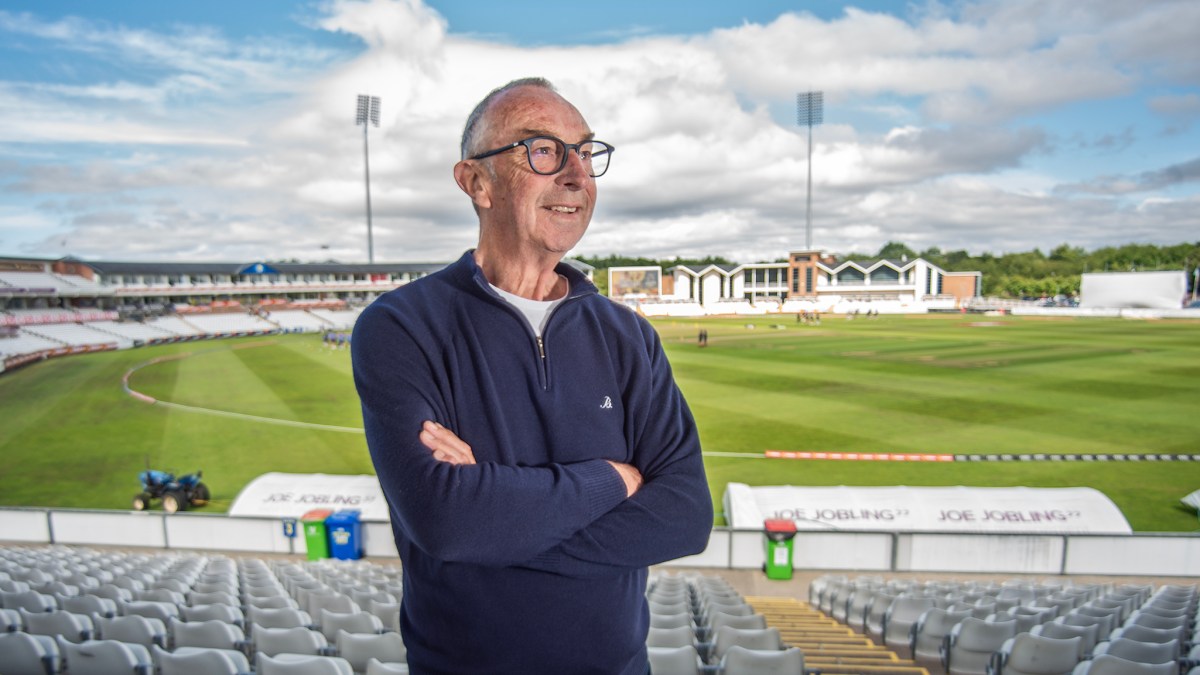
The hour hand nears 11 and David “Bumble” Lloyd is holding court. A captivated audience of co-commentators and camera operators giggles away at a tale he tells of a rugby star. Suddenly, on the other side of the glass, a bell rings. “Oh, we’re on here,” says a voice familiar to millions worldwide. Lloyd plonks on a pair of headphones, takes a pew and begins talking into a microphone.
In his 78 years, Lloyd has heard, seen and done almost everything cricket offers. During a 695-game playing career he skippered Lancashire and earned 17 England caps before, upon retirement in 1983 — he finished with a mic-dropping 123 — spending several summers as an umpire. Next came coaching stints, first at his beloved Lancashire and then England.
However, Lloyd’s celebrity stems largely from his commentary work. Around his Lancashire coaching duties, Lloyd was a regular summariser on Test Match Special, and, after he left his England post in 1999, he spent 22 years as one of Sky Sports’ most recognisable figures. Now a talkSPORT regular, Lloyd also stars in Stick to Cricket, a Sky Sports podcast, alongside Sir Alastair Cook, Michael Vaughan and Phil Tufnell.
He does not, then, either for fame or fortune, need to spend midweek days at a sparsely populated Chester-le-Street adding oral colour to the 1,500 or so tuned in for the livestream of Durham’s County Championship clash with Surrey. Nor is it necessary for him to be a LancsTV — the county’s in-house channel — regular or do radio work at Headingley.

Lloyd gives Sam Dalling a few tips on the art of commentating
CHARLIE HEDLEY PHOTOGRAPHY 07984 013297 INFO@CHARLIEHEDLEY.COM
“I’m a bit like Jimmy Anderson,” he responds when asked what motivates him. “I interviewed Jimmy a few weeks back and I’m just the same as him, really. The game’s been terrific to me. I’ve had some great times and, like every other walk of life, you have one or two demanding times.
“However, I just love the game. It’s a release to me. I’ve plenty of stuff to do. I like fishing, I like golf. But I love watching the young Lancashire lads. I used to do what they’re doing, and they’re the custodians right now.”
Lloyd travelled north in the early hours, leaving behind the cricket pitch he tends on his York property. It has never hosted a match, but “would do for a village game”, he says, eyes twinkling. An agricultural building that his local council wanted to remove, thinking it was a caravan based on a Google Earth search, is his pavilion. In there, Lloyd stores his air rifle and a stock of Triple Hazy Jane IPA.
Next summer will be Lloyd’s 40th commentating. His first dabble came at Lord’s as Lancashire’s voice for the 1986 NatWest Trophy final. His great friend John Barclay provided the Sussex slant. He felt no nerves but “not knowing anything about it, I thought there would be a script! But the producer simply said, ‘Oh good, you’re here, off you go’ and that was it, straight into it.”
His aptitude was obvious, and soon a BBC-headed letter landed inviting him to join the TMS team full-time. “Very politely I said, ‘I’m not sure I can do this, I’m too busy,’ ” he says. “Peter Baxter [the producer] just said, ‘Think again.’ ”
And Lloyd did, enjoying half a dozen happy years in the box alongside commentary doyens such as Brian Johnston, Henry Blofeld, Christopher Martin-Jenkins and a baby-faced Jonathan Agnew.

Bumble, right, alongside Blofeld, left, and Baxter during the fifth Test between England and West Indies at Trent Bridge in 1995
ADRIAN MURRELL/GETTY IMAGES
“It was an absolute hoot,” he says. “Brian would lead the charge and Fred [Trueman] was fabulous. He could be outrageous — a lot of his lines aren’t repeatable now — but the greatest ones came when Brian would set him up by throwing a fly on to the water.
“Brian once said that Darren Gough was Yorkshire’s quickest bowler since the war, and Fred replied by calling Goughie a medium pacer and insisting he could bowl faster in his mac and a pair of wellingtons!”
Years later, when Lloyd asked why Baxter had approached him, the answer was simple: “The voice is absolutely perfect.” For his three years as England coach, Lloyd was heard only in his capacity as interviewee.
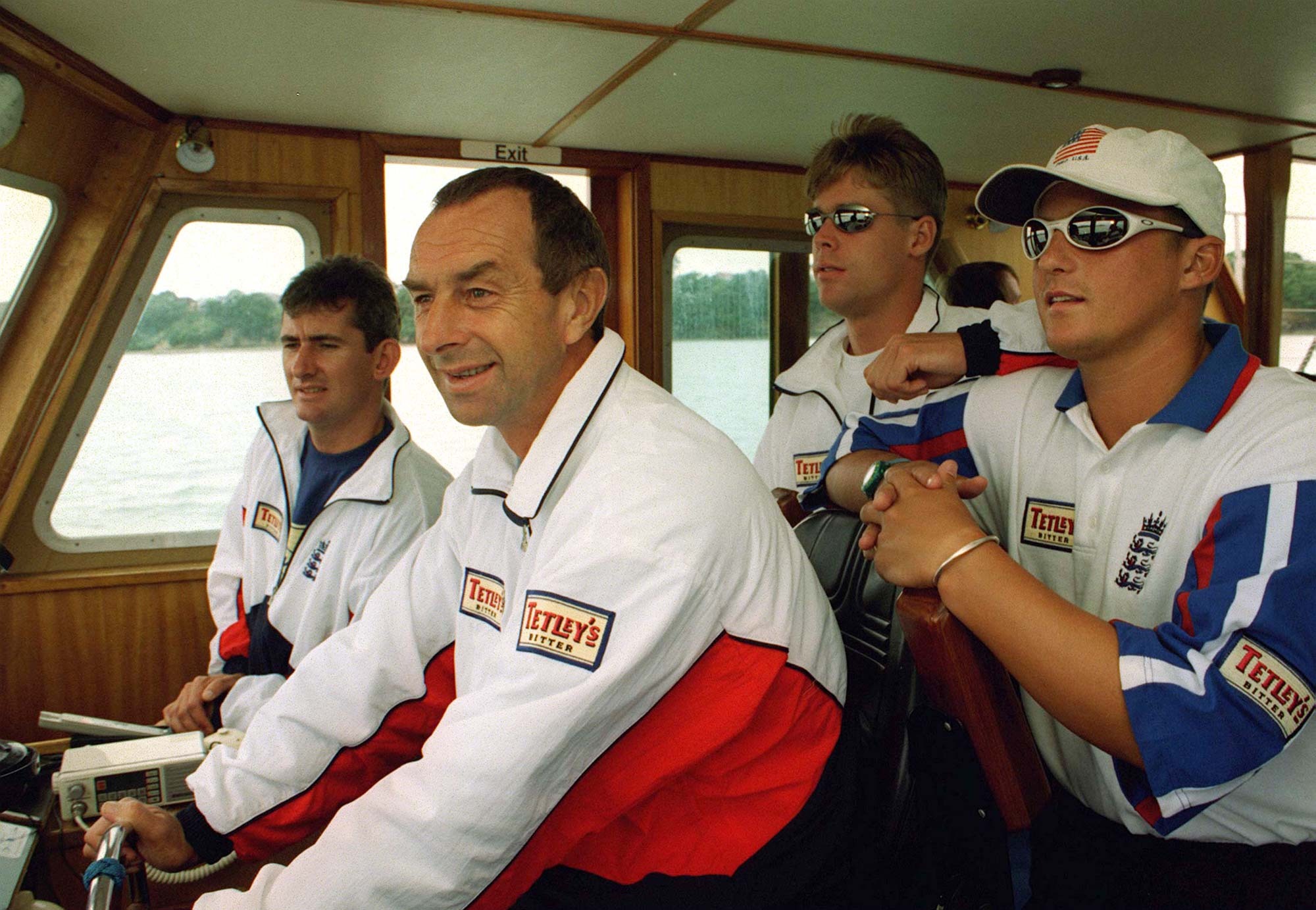
Lloyd, here in New Zealand with Andrew Caddick, left, Nick Knight, centre, and Darren Gough, was England head coach between 1996 and 1999
ROSS SETFORD/PA
However, within hours of the announcement that the 1999 home World Cup would mark the end of his tenure, it was confirmed he had joined Sky, where he stayed until deciding, in December 2021, that it was “the right time to pass on the microphone”. His friends David Gower, Ian Botham and Michael Holding had all recently moved on and the previous month Lloyd had apologised publicly to Azeem Rafiq, the former Yorkshire all-rounder, for offensive comments made in private messages.
Having mastered both arts, Lloyd is well placed to explain the differences between commentating for TV and radio. “With radio, you just keep going and be descriptive, whereas there is a technical side to TV. Richie Benaud would say, ‘If you’ve nothing to add, shut up.’ And the unwritten law that once this bowler is running in, shut up.”
Not everyone does that though, do they? “I won’t name names but one or two very, very seasoned commentators have never mastered it, and I know that down in the edit suite they’re swearing.”
On further probing, the most surprising finding is that a TV commentator, despite sitting facing the action, should be watching the monitor in the box. “You’ve got to comment on what’s going into people’s homes. It’s a bit like umpiring. You’ve got two ends, and you go in a split second from watching the front foot at one end to looking for an lbw at the other. Your eyes are moving all the time.
“The trick with all of it is to make the people you’re talking to think they are sat next to you. Oh, and have a bit of fun. I ain’t sitting here for seven hours being miserable.”
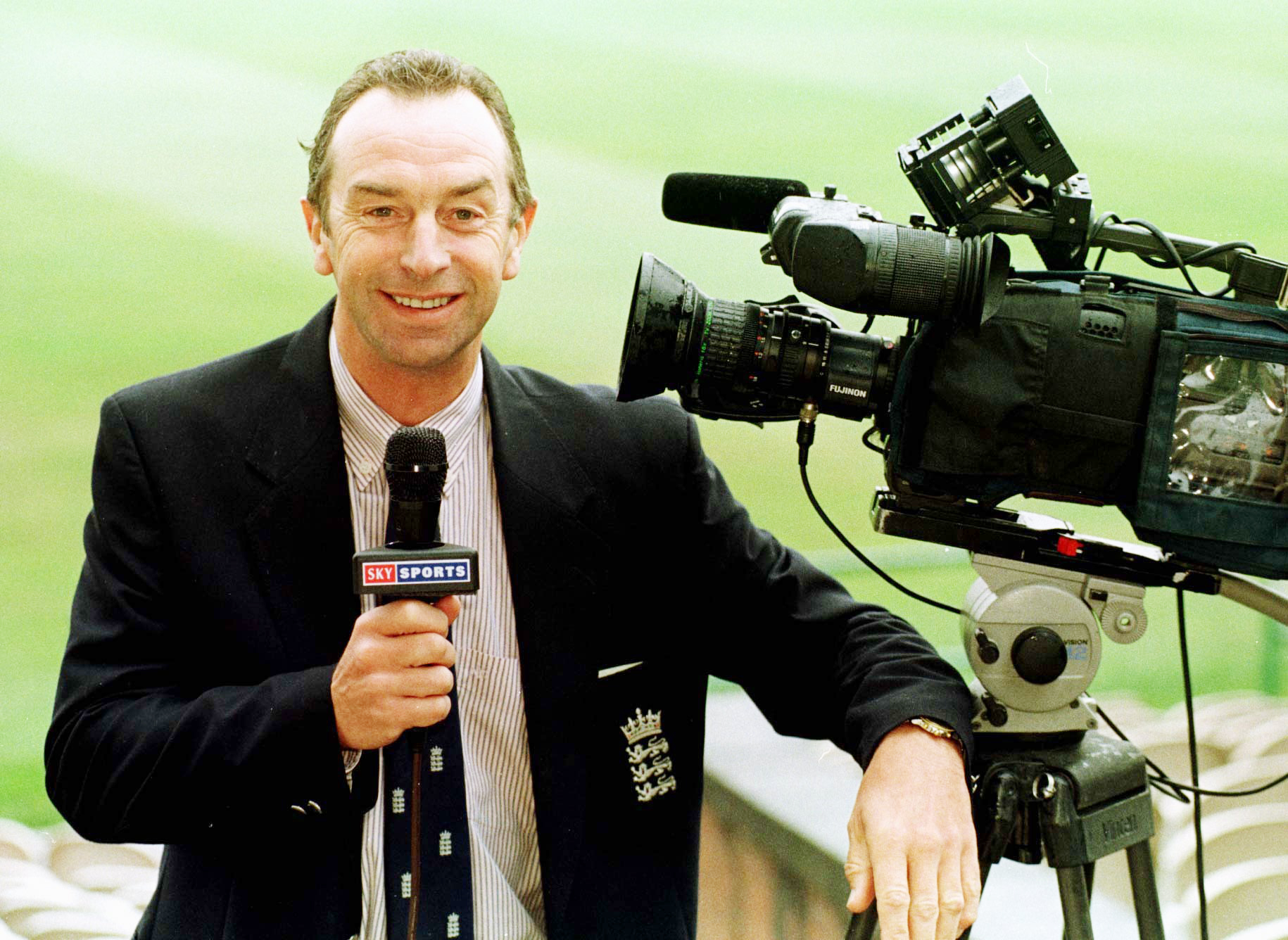
Lloyd joined Sky in 1999 and was a constant voice of the network’s coverage for 22 years
MICHAEL CRABTREE/PA
At Sky, there were no formal planning meetings. Instead commentators and producers would plan the following day over an evening meal or glass of wine. Nasser Hussain and Ian Ward are, according to Bumble, brilliant with ideas for features. “Then you get the running order for the day through.” Stints are 30 minutes, but “from a selfish point of view, you don’t want too much of a break. You lose the thread.” To avoid that, Lloyd watches every ball religiously when off-air.
Others have corporate or written commitments to attend, while “Richie [Benaud] would be at the back on the racing. He’d set his little laptop up and would be tapping away. He weren’t looking at how many runs [Kumar] Sangakkara’s got; he’d be looking at the 3.30 at Ascot!”
Recalling Benaud’s antics reminds Lloyd of his own dabbles with the bookies, and he is into another yarn. He explains how he and team-mates would regularly visit the on-site bookmaker, whites on, and back themselves to make 20 or more runs in Sunday league fixtures. “You’d stick a florin — ten pence — on at 4-1 and then punters in the betting shop would ask, ‘Are you in good form? Do you feel all right?’ Just imagine a betting shop with all the players in it now!”

Lloyd was captain of Lancashire when they won the Gillette Cup final at Lord’s in 1975, leading players like Farokh Engineer, to his left, and Clive Lloyd, over his right shoulder
BILL SMITH/POPPERFOTO VIA GETTY IMAGES
Voice notwithstanding, Lloyd’s greatest assets are his natural warmth and enviable people skills. He is adored by the cricketing public, and, within minutes of entering Banks Homes Riverside, one gentleman mimics bowing to him. The pair end up reminiscing about the days when scorecards were updated overnight, printed in the morning and cost sixpence.
On air, Lloyd has perfected the cocktail of cricket and tale-telling. Some stories are seemingly random, like the time Mike Ashley — the billionaire former Newcastle United owner — haggled a 40 per cent discount on the £70 asking price to land his helicopter at Accrington Cricket Club, or a youthful Derek Pringle’s appearance as an extra in Chariots of Fire.
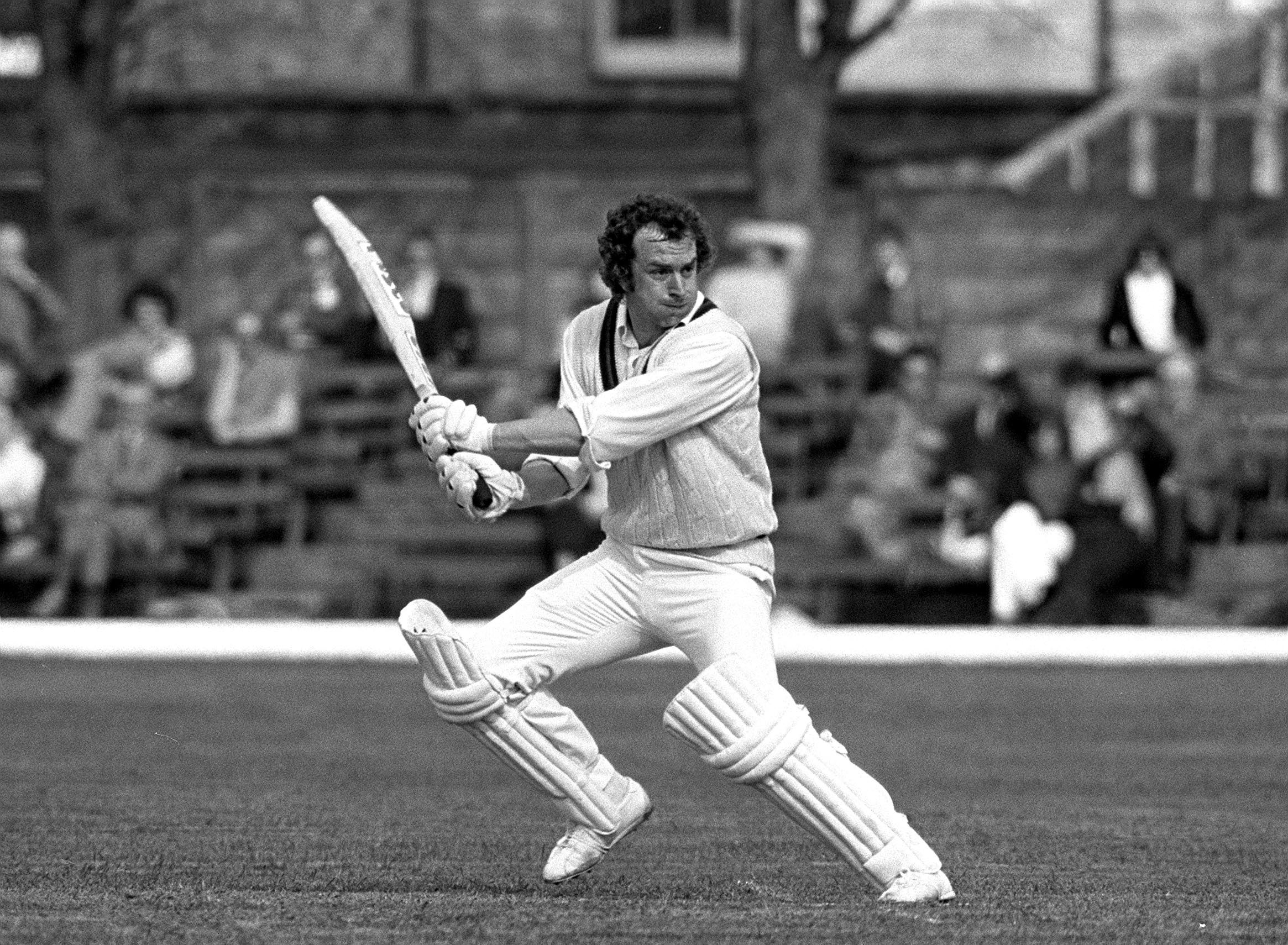
An accomplished county player, Lloyd played nine Tests for England, averaging 42.46
BOB THOMAS SPORTS PHOTOGRAPHY VIA GETTY IMAGES
Others stem from the action, such as the one about the Surrey head coach, Gareth Batty. As Batty kneels pitchside barking instructions, Lloyd recounts an England Under-19 tour to Bulawayo in Zimbabwe that he led as coach. “We had a 6am leave and the hotel manager said there were a couple of unpaid bills. I asked him for the names so I could sort it.
“I got on the coach, told the driver to turn the engine off, and said, ‘Would Prince Monolulu and Elvis Presley come and settle their bills, please.’ Gareth stood up and when I asked which one he was, he said, ‘Both!’ ”
Occasionally Lloyd even begins crooning, with a full rendition of Stanley Holloway’s The Return of Albert filling gaps between balls during one Sam Curran spell.
Yet amid the light-hearted tales, there is also a sharp cricket brain. It should not be forgotten that this is a man with a Test-match double century, a career in which he banked north of 27,000 runs and who has led an international side. He switches back into game mode easily, spotting subtle changes in fields, in stances, in a bowler’s intentions instantly. He is clearly an admirer of Emilio Gay.
He also keeps up with events elsewhere, regularly checking the Lancashire score. His dismay on discovering that they need a mammoth 473 runs to defeat Glamorgan is real. A win would have boosted promotion hopes but they ultimately fall 154 short.
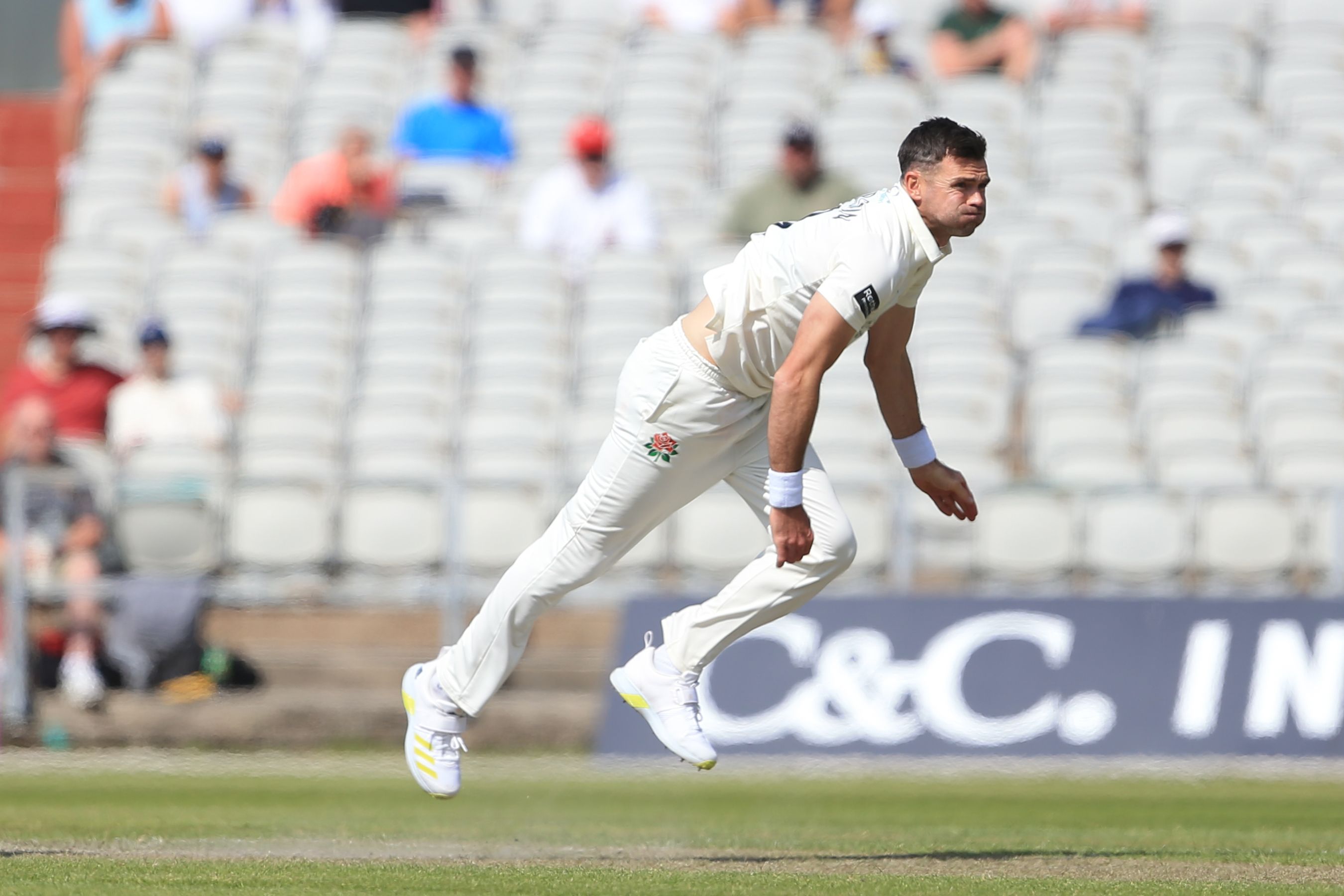
Lancashire, spearheaded by Anderson, have struggled in the County Championship this year
GEORGE FRANKS/PROSPORTS/SHUTTERSTOCK
He is buoyed by the uplift in his county’s form during the T20 Blast North Group, which they topped thanks to the “stardust” from the likes of Anderson, Chris Green, Jos Buttler and Liam Livingstone. The wider picture concerns him, though. “The club itself is wrestling with whether it is a cricket club, or a stadium/arena. Well, it is very clearly a cricket club, and we seem to have lost track of that.
“I fully accept that you need business and finance to pay the bills, and the stadium is gorgeous, as good as any there is in the world.” Quickly Lloyd catches his own faux pas. “I shouldn’t call it a stadium. I should call it a ground. And as I say, it wouldn’t take much to get back to everybody understanding that it is Lancashire County Cricket Club, not the Emirates Old Trafford Arena.”
Have they asked for your help? “No, not at all.” Would you like them to? “Yes.” Have you offered? “Sort of. I’d have a lot to offer. I can’t believe I haven’t been asked, but that’s the way it is.”
Lloyd would also happily give his input into the future of the game. He believes the Hundred will soon become a T20 competition, making the Blast obsolete, and urges the powers that be not to neglect domestic red-ball cricket. “Don’t put it in a backwater. I know it doesn’t bring money in, but it breeds cricketers. Make it important, and I tell you how I would make it important: £20million to win the County Championship. Now they’d play, and you’d get some good pitches. And there is another thing — I’ve got a cunning plan. Let’s play county cricket in summer.”
Lloyd has fingers and toes in many pies and admits that perhaps he ought to slow down. But he doesn’t really mean it. It is not his style. He hopes to be working in Australia for the Ashes and has recently participated in a couple of features with Sky. “I don’t discount going back,” he says. The twinkle becomes a burning star. “I would very much like to go back.”