
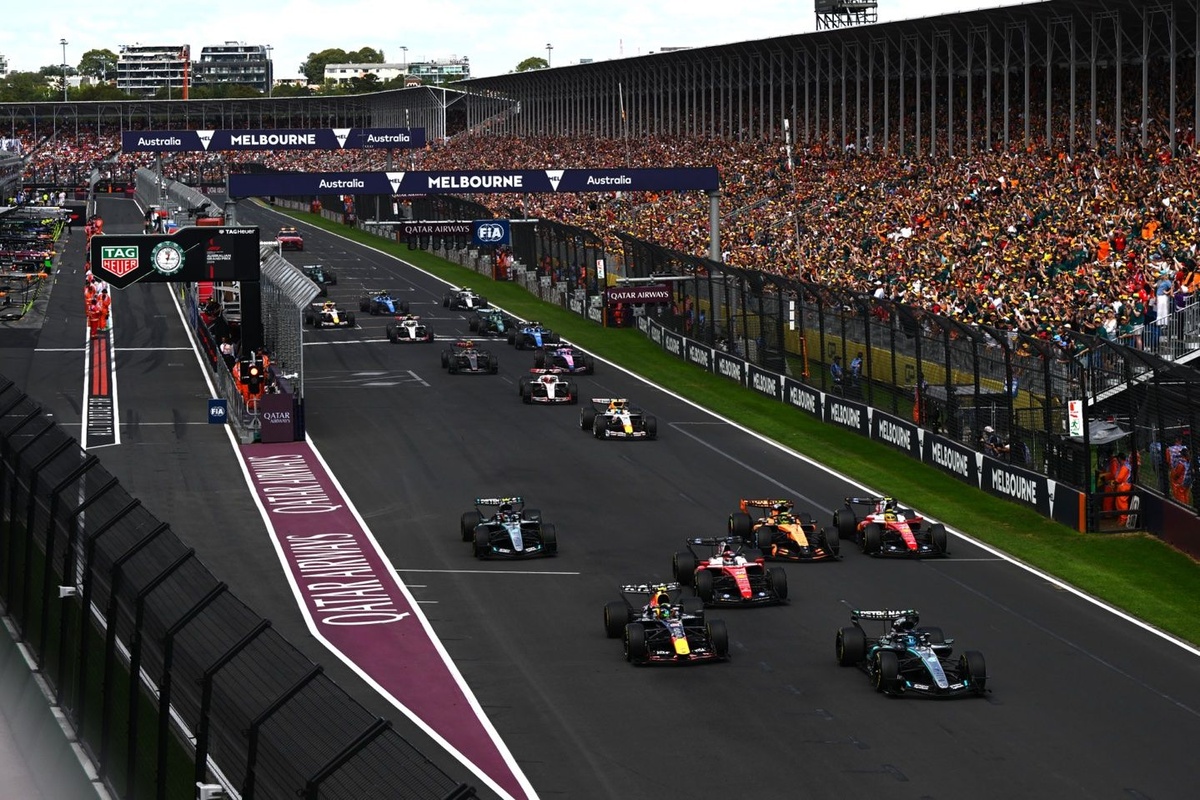
Did the eventual winner of the Australian Grand Prix George Russell, jump the start at the Formula 1 season opener? This claim has stirred up social media after onboard footage circulated online, but how true are the allegations?
The fact is that when the light sequence began to signal the start of the Melbourne race, Russell on pole position in his Mercedes W17 rolls slightly forward. This is shown by the footage from his onboard camera: the front wheels move. However, when the signal to start appears – the five red lights that go out simultaneously – Russell is once again completely stationary and begins the race from a standstill.
Advertisement
Read Also:
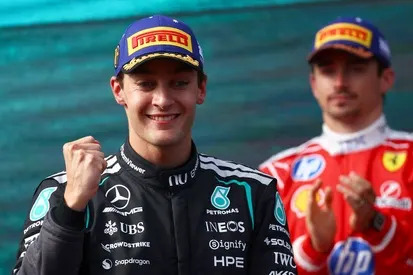
F1 Australian GP: George Russell wins in Mercedes 1-2, Ferrari’s strategy fails
False start or not?
The 2026 Formula 1 rules provide clear guidance. A possible false start is defined in the sporting regulations under Article B5.11.1, which states:
During any standing start (Articles B5.7.2 or B5.10.8) or standing start resumption (Article B5.15.4), all cars must be:
a. Stationary in their allocated grid position for the period after the red light is illuminated and before the start signal is given by extinguishing all red lights, as defined in Article B5.7.1b,
Advertisement
b. Positioned in their allocated grid position on the starting grid in such a way that the transponder is able to detect the moment at which the F1 car first moved from its grid position after the start signal is given,
c. Positioned in their allocated grid position such that no part of the contact patch of their front tyres are outside of the lines (front and sides) at the time of the start signal.
At the sole discretion of the stewards, a 5-second penalty, a 10-second penalty, a drive-through penalty or a stop-and-go penalty will be imposed on any driver who is judged to have breached this article.
Advertisement
George Russell, Mercedes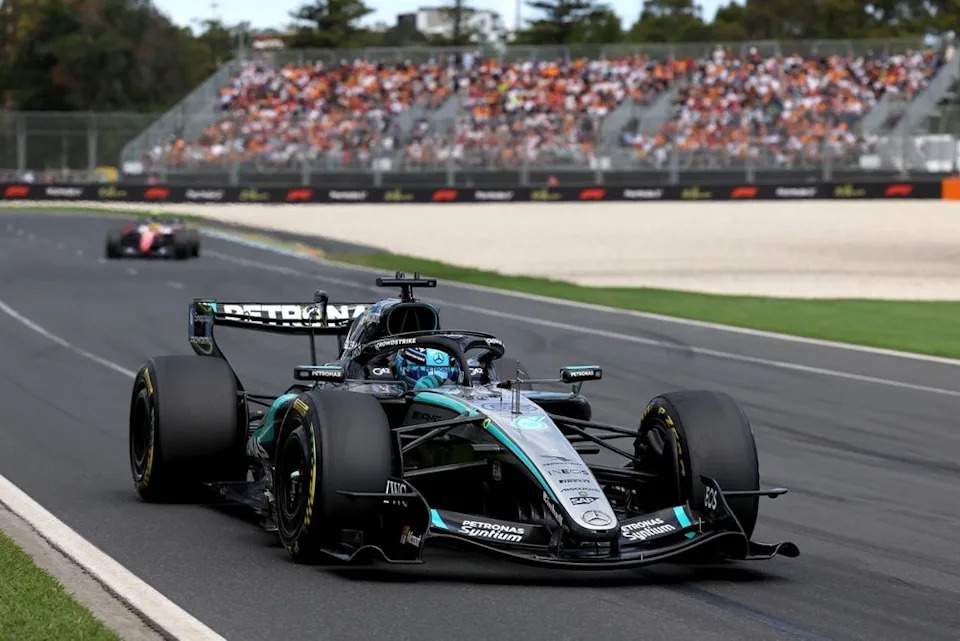
George Russell, Mercedes
How the situation should be assessed
Russell’s brief roll forward before the start does not count as an early or false start under section a, because from the moment the third red light illuminates, the Mercedes is once again completely stationary.
There is also no indication in the footage that his front tyres extended beyond the lines of his starting box as described in section c. The front wing extending beyond the grid box is not relevant under the regulations.
Advertisement
The conclusion therefore seems likely: Russell’s start was legal.
Read Also:
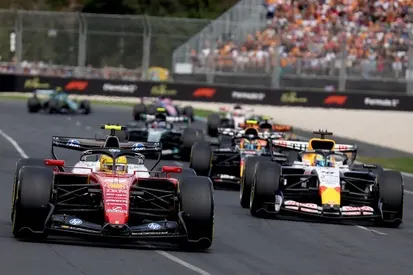
From “artificial” to “awesome” – how drivers rate the racing under F1’s 2026 rules
Investigations concerning the race start
The only steward investigations related to the start phase involved Franco Colapinto and Nico Hulkenberg.
Colapinto received a stop-and-go penalty because a team member touched his car after the 15-second signal.
Hulkenberg had not reached the grid under his own power and would have committed a rules violation if he had started the race. However, because Audi pushed the car back from the grid into the pit lane and Hulkenberg did not start the race, no rules violation occurred.
To read more Motorsport.com articles visit our website.