
A woman who claimed her state-provided home was unsafe and the rent was excessive has lost her bid to sue WA’s housing authority.
Joanne Jacobs, whose WA Housing Authority home is in the remote Aboriginal community of Wakathuni in the state’s Pilbara, had claimed her house was neglected and the authority had breached its obligations to repair and maintain it under national consumer laws.
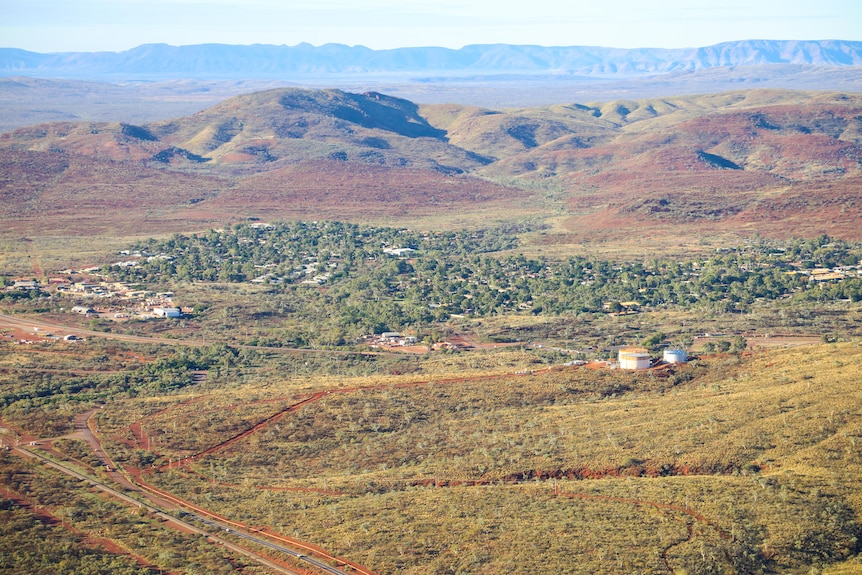
Wakathuni is about 30 kilometres south of Tom Price (pictured) in the WA’s Pilbara region. (ABC Pilbara: Amelia Searson)
Her lawyers told the Perth Magistrate’s Court the housing authority was obligated to maintain rental properties so that they were reasonably fit for use as a home and place of residence.
By leaving Ms Jacobs to live in unsafe conditions and excessively increasing rent, the authority was in breach of WA tenancy laws, and local health laws, they said.
But Magistrate Lisa Ward dismissed Ms Jacobs’s claim.
Septic, stove issues
The case was the first time a question of a landlord-tenant relationship being a consumer-supplier one had been tested in court.
Ms Jacobs reported a variety of issues with her home, such as a malfunctioning stove, septic blockages, faulty shower facilities and exhaust fans as well as insect infestations.
A major issue also raised was a lack of air conditioning, which she claimed meant her house was often uninhabitable in summer months, when temperatures often exceeded 40 degrees Celsius.
But Ms Jacobs will not be forced to pay the authority compensation over the case, the magistrate ruled.
The WA Housing Authority provides housing in more than 122 remote Aboriginal communities.
It has been contacted for comment.
Ms Jacobs was represented by Australian Lawyers for Remote Aboriginal Rights (ALRAR), which has represented First Nations people in similar cases across Australia on a pro bono basis.
Next steps
ALRAR principal solicitor Daniel Kelly has won several challenges made against and by the Northern Territory government in recent years.

Daniel Kelly says the team is considering its next steps. (ABC News: Peter Healy)
After a lengthy appeals process, a 2023 High Court decision found NT Housing liable for the impact the lack of repairs had on public housing tenants.
Mr Kelly said the team was considering its next steps.
“I commend my client for her courage in bringing this important case, and putting her concerning experience with the WA Housing Authority on record,” he said.
‘Failing standards’
Council of Aboriginal Services WA (CASWA) chief executive Chad Stewart said he was disappointed by the outcome of the case.
“In 2026, no Western Australian should have to live in substandard public housing that impacts their health and wellbeing, but sadly, this is a reality of many Aboriginal families in remote WA,” he said.
“Aboriginal families in remote WA continue to live in homes that fail basic safety and health standards, with issues like malfunctioning toilets, mould, pest infestations, and lack of cooling systems commonplace, posing a significant risk to children and families.”
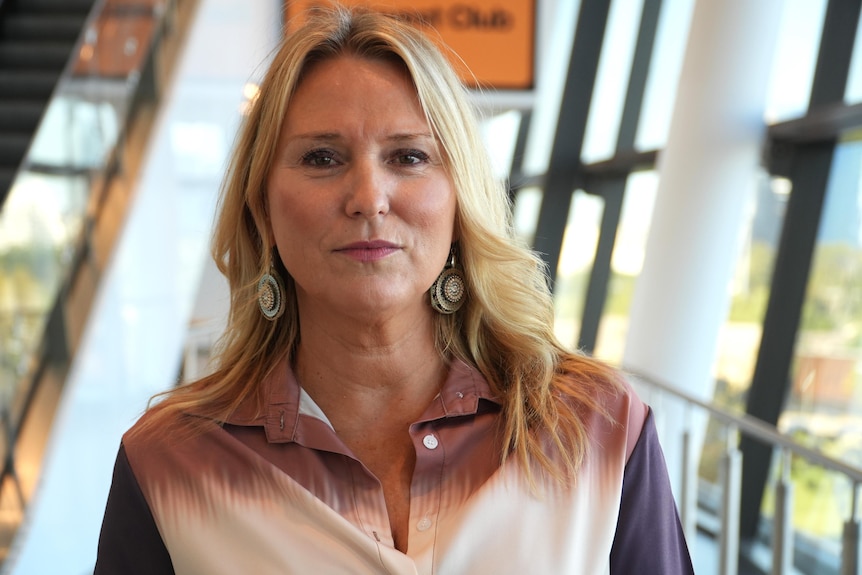
Kath Snell wants the government to lead by example when it comes to public housing. (ABC News: Courtney Withers)
Shelter WA chief executive Kath Snell called for stronger standards in rental housing — especially state-owned housing.
“Western Australia has some of the weakest standards for rental homes in Australia,” she said.
“Strong standards would prevent what we have seen in this test case — and as WA’s biggest landlord, the Cook government should lead by example.”