
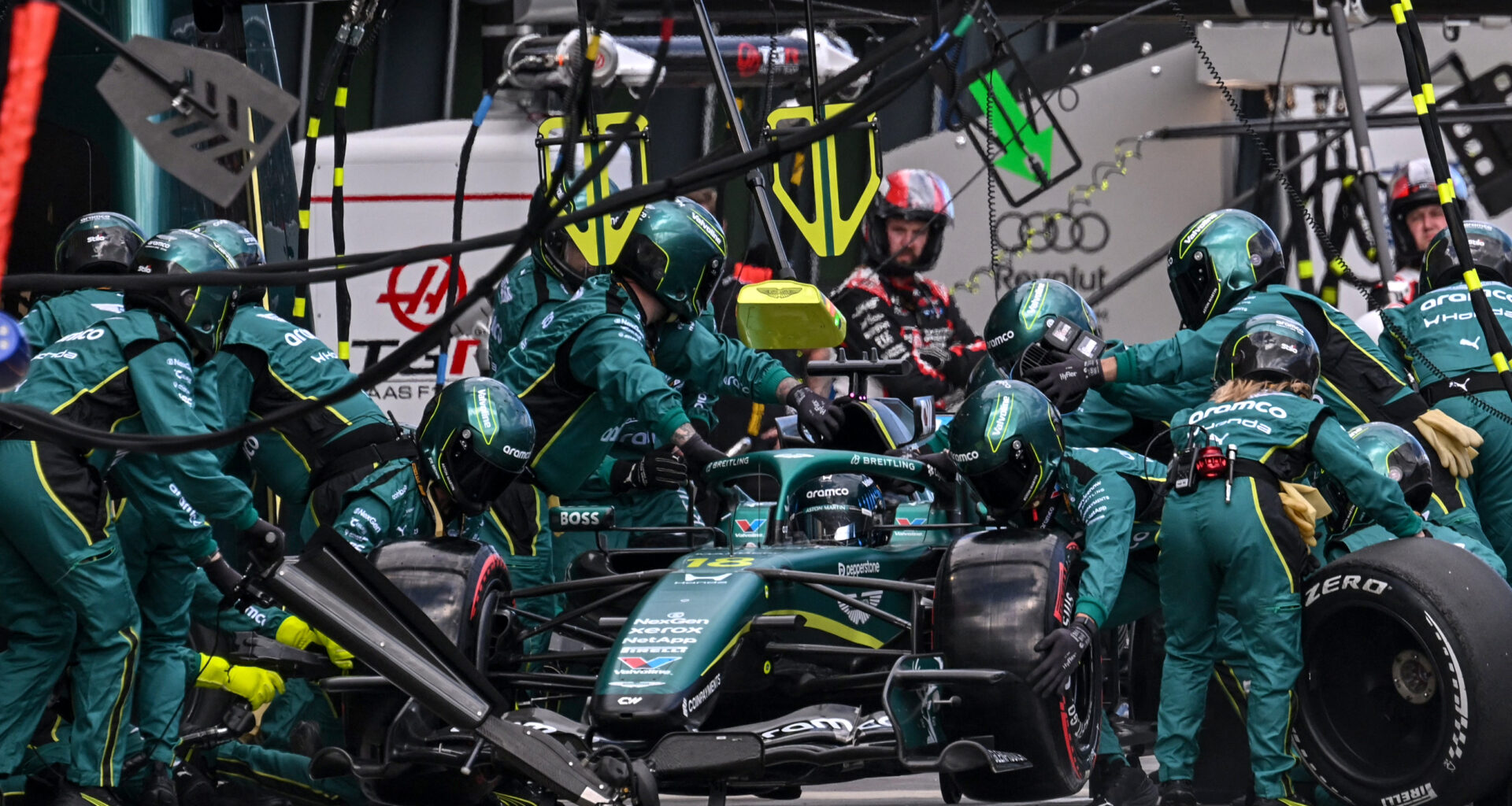
The Formula 1 Grand Prix in Melbourne is over for another year. Businesses and government in the host state of Victoria are examining how more revenue might be generated next year as F1 continues to grow in popularity. Likewise, event organisers will assess the effectiveness of their preparations and F1 teams will undertake post-race evaluations.
Both F1 and military organisations are fighting an intellectual battle to come to grips with a new era in their respective endeavours.
However, there is another organisation that could learn from the event, and from F1 more broadly: the Australian Defence Force. Survival in both the F1 world (financially) and in military organisations (literally) hinges on the ability to rapidly learn and adapt.
Military learning and adaptation shares several important characteristics with F1.
First, in both endeavours, learning is partially technological but always intellectual. Both feature the interaction of humans and advanced technology where learning and adaptation is ultimately a human undertaking. While technology will play a prominent role, human decision-making, energy, drive and creativity is the critical component of learning and adaptation. Providing the right purpose and incentives for learning and adaptation, and undertaking the right training, educational and organisational reform to improve it, is vital.
Second, both military and F1 have a need for rapid learning, sharing of lessons, and adaptation. In war, survival is often driven by an individual and team capacity to learn and adapt better and faster than the enemy. In F1, this same pressure exists in an even more compressed time frame against 11 competing organisations. And, given the increasing application of AI in military and commercial entities, the pace of the adaptation war is likely to increase.
A third shared characteristic is that learning and adaptation occurs (or should occur) concurrently at different levels. In military institutions, tactical, operational and strategic learning should be taking place at the same time, with interaction between each level. Likewise, F1 learning occurs tactically (in a car and in pit lane), operationally (the conduct of a race campaign across a weekend) and strategically (ongoing learning across a season, including frequent technological and tactical upgrades).
A final shared characteristic is that both military and F1 organisations suffer from imperfect insight about their adversaries. In war, the enemy always seeks to obscure their strategies, intentions, tactics and technologies. The same occurs between the various racing teams in F1, as they struggle to find the smallest advantage.
While perhaps not the most obvious pairing of learning partners, F1 and military institutions have much to share with each other about their learning and adaptation systems.
Thus, the shared imperatives of military institutions and F1 teams offers the chance for sharing about learning processes and how these can be applied to more rapid, real-time endeavours on the racetrack and on the battlefield.
But there is an additional imperative to do this now. Both military institutions and F1 racing are in a period of technological disruption and transformation in how their affairs are conducted.
In 2026, F1 introduced new rules that changed, among other things, the size of cars, their power units (including the balance of combustion and electrical energy), and active aerodynamics. This has fundamentally changed the “balance of power” among race teams. It has also forced drivers to learn new ways of generating advantage on the track through new methods of power harvesting and management.
Since 2022, military institutions have been disrupted by the widespread use of drones and then artificial intelligence. It has led, at least in some leading-edge military organisations, to a transformation in tactics and military structures, training and force structure models.
Thus, both F1 and military organisations are fighting an intellectual battle to come to grips with a new era in their respective endeavours. They are doing so by learning quickly, fast following where necessary, and cycling through rapid adaptation cycles. They may come up with different methods of adapting to the new learning environment, but there is much that each can learn from the other.
Key areas of collaboration might be collection and analysis of data insights through the use of AI. F1 also excels at strategic decision making in short time frames (days or weeks). The Australian Department of Defence does not excel in this area. Additionally, given the demands to change how drivers operate their vehicles, military organisations could learn from the individual training and development required in F1, as well as the impacts on tacticians and technical crews.
While perhaps not the most obvious pairing of learning partners, F1 and military institutions have much to share with each other about their learning and adaptation systems. Both operate at the leading edge of technology, cognition and human performance. Even the smallest advantage matters to both. A new era of collaboration, at a time when the military and F1 are experiencing major disruptions, might offer an intellectual and technological edge for both.