

Last Updated on March 9 2026, 9:35 pm
Is this Newey’s long game? Insiders are whispering that Aston Martin could profit if the FIA tweaks the 2026 rules. Just one race into Formula One’s radical new era, the rumours have already begun. The 2026 regulations were intended to usher in a cleaner, smarter hybrid future for the sport, but the opening round suggested that teams are still grappling with the complexities of the new power units.
Several cars appeared awkward under acceleration. Drivers complained about strange deployment characteristics. Rather than celebrating lap times, engineers were glued to their laptops studying energy traces. Amid the confusion, a quiet theory has begun to circulate in the paddock: if the rule makers intervene to tweak the new regulations, effectively altering the split between combustion and electrical power, Aston Martin might suddenly find itself in an ideal position to compete.
Some observers suspect this might not be a coincidence, but rather a potential Newey ‘masterstroke’.
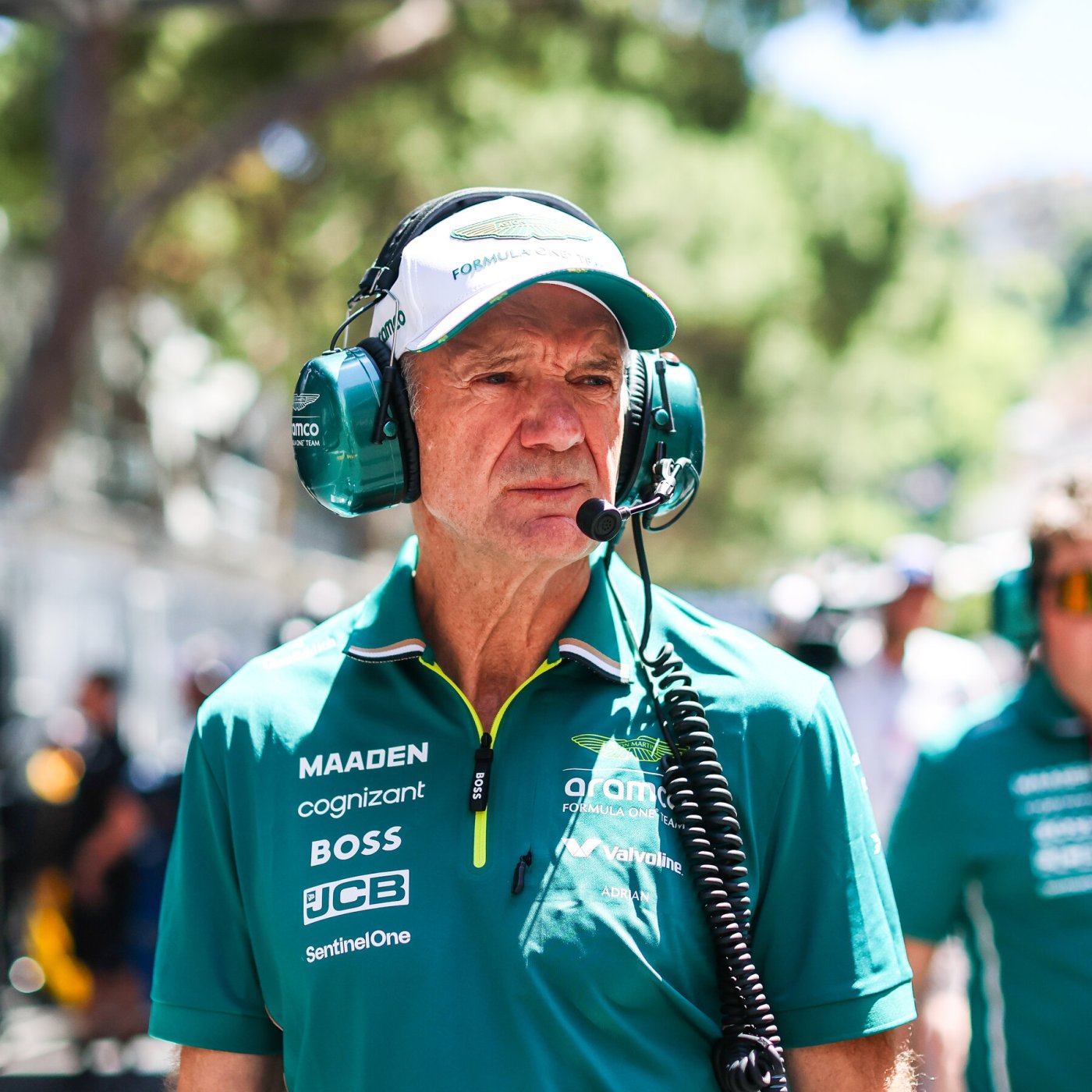
After all, when it comes to anticipating regulatory changes, few people in Formula One have a better reputation than the legendary designer who is now guiding Aston Martin’s technical direction: Adrian Newey.
MORE F1 NEWS – Paddock Revolt in Melbourne: Teams Furious with FIA as Mercedes Stuns the Field

Aston Martin’s puzzling early form
The first race weekend of the new era was far from smooth for the Aston Martin Aramco Formula One Team.
The car was difficult to drive at times, with both drivers reporting heavy vibration and an unforgiving ride. The team also lacked the raw pace of some rivals during key sessions, leaving observers wondering whether the ambitious project had got off to a faltering start.
On paper, it looked like a team still trying to understand a complicated machine.
However, Formula One history has taught the paddock that first impressions of cars shaped by Newey’s philosophy are rarely the full story, and Aston Martin’s early struggles may not necessarily reflect the car’s true potential.
RULE CHANGES EXPECTED TO COME
The status quo
Under the 2026 regulations, the electrical component of the power unit produces approximately 350 kW, which is almost equal to the output of the internal combustion engine.
This dramatic shift puts enormous strain on the energy recovery systems.
According to engineers across the paddock, it is proving far more difficult than many expected to recover enough electrical energy through braking alone.
The result is a curious phenomenon: cars that start a straight with strong hybrid power but risk running out of energy before reaching the braking zone.
MORE NEWS – Young F1 star one step away from race ban ahead of Melbourne
Christian Horner saw the problem coming
Interestingly, the roots of this debate stretch back almost two years.
During the initial discussions about the 2026 regulations, Christian Horner, the then team principal of Red Bull Racing, publicly questioned the feasibility of the proposed hybrid balance.
Early simulations from Red Bull Powertrains indicated that, at circuits with relatively light braking zones, the new engines might struggle to generate the necessary electrical energy to maintain the intended 50 per cent hybrid power contribution.
Horner famously described the upcoming power units as ‘Frankenstein’s monsters’.
His concern was that drivers might be forced into operating modes where the internal combustion engine would run harder than necessary purely to generate electricity.
This could result in drivers shifting gears or running higher revs along straights simply to produce additional charge.
These comments were widely mocked at the time.
Toto Wolff’s dismissal
Among those who dismissed the warning was Toto Wolff, the head of the Mercedes-AMG Petronas Formula One Team. He suggested that Horner’s criticism might be a distraction designed to mask the struggles of Red Bull’s engine programme.
“Maybe what frightens him more is that his engine programme is not coming along, and he wants to kill it that way,” Wolff said at the time.
Horners’ proposal was relatively modest: a small reduction in the electrical power requirement, perhaps by five to ten per cent, to prevent the system from becoming overly complicated.
Would you like to see more TJ13 Formula 1 coverage? Add us to your favourites list on Google to receive trusted F1 news.
The ‘Frankenstein’ workaround
Fast forward to the start of the 2026 season, and the scenario Horner predicted appears to be unfolding.
With the removal of the MGU-H system and increased reliance on battery power, teams have adopted unusual operating modes to maintain energy levels.
Hywel Thomas, the managing director of Mercedes High Performance Powertrains, recently explained how the new engines behave differently at certain points during a lap.
“In the future, the revs and thus the noise level will increase noticeably, even though the cars aren’t actually accelerating,” he said.
The reason is simple: the power unit sometimes runs harder purely to generate electrical energy.
“The engine switches to full-throttle mode when braking and cornering to produce additional energy, which we feed directly into the battery,” Thomas added. “In parts of a lap, the engine acts as a generator.”
Crisis meetings are already happening
The scale of the challenge has prompted discussions behind closed doors, say some sources operating in FOM close to this website. Earlier this season, teams reportedly raised concerns about the long-term viability of the power unit rules at a meeting in Bahrain.
This is where the Aston Martin theory becomes interesting. Has Aston Martin produced a design anticipating change?
Some observers believe that Newey’s approach to the Aston Martin project may already account for the possibility of rule adjustments.
If the FIA were to reduce the maximum electrical deployment or alter the energy recovery requirements, the balance between combustion power, battery capacity, and cooling systems would shift immediately. Cars would be using more combustion power than electric over a lap.
Conversely, a design optimised for slightly lower electrical reliance could find itself operating in the new sweet spot. Specifically, Aston Martin’s design focuses on extremely tight packaging and the core structure of the tub surrounding the battery is also incredibly small. Honda was forced into a late change to alter the design of the battery for this reason, the so-called ‘double stacked’ battery design is unique to the Aston Martin car. It is impossible to know whether Aston Martin has pursued such a philosophy, but it does have an extreme interpretation already baked into the car.
Should the rules be tweaked as it is anticipated, smaller batteries could be employed, which would far better suit the extreme Aston Martin design. Other teams would fundamentally be at a disadvantage until a new design of tub for 2027 would be permissible under the cost cap rules.
Certainly, those who have followed Newey’s career know that he has repeatedly demonstrated an ability to interpret not only existing regulations, but also how they might evolve.
F1 Results Today: Russell Wins as Piastri’s Home Race Ends in Pre-Start Disaster
The Newey–Horner connection
The idea that Newey might have anticipated this debate is also fuelled by his long working relationship with Christian Horner. During their time together at Red Bull, the pair spent nearly two decades analysing regulations and searching for competitive opportunities.
If Horner had serious concerns about the hybrid balance as early as 2024, it is easy to imagine them continuing to discuss the issue behind the scenes. Newey would certainly have been aware of the arguments about energy recovery limits and the potential for rule adjustments.
Whether this influenced Aston Martin’s design philosophy is pure speculation. But in Formula One, speculation often thrives where technical secrecy exists.
 FOLLOW TJ13 ⤴️
A waiting game for F1 fans
We must wait for the season to unfold. For now, Aston Martin’s true competitiveness remains unclear. The opening race may simply reflect the usual growing pains that accompany a new regulation cycle.
Alternatively, it could represent the first chapter of a longer story, in which the competitive order evolves rapidly as teams learn more about the complex hybrid systems.
However, if the FIA does decide to adjust the regulations in the coming races, the consequences could be felt across the entire grid.
If Aston Martin suddenly emerges from the midfield with unexpected pace, the paddock may wonder if Newey anticipated the twist all along.
In Formula One, the difference between genius and luck is often only apparent in retrospect.
MORE NEWS – 2026 Australian GP: Exciting or Whacky races as perilous dangers become apparent
Less than twenty four hours before the all new 2026 Formula One cars take to the track in Melbourne, one team is dreading their Australian outing. Paddock rumours have spread like wildfire suggesting the Honda/Aston partnership is beyond crisis and that the drivers will complete the formation lap on Sunday only to retire the cars.
For fans of the iconic British racing marque, 2026 was to represent a new dawn for the team who in their history have won multiple championships in a variety of motorsport categories, but for the Silverstone based F1 team hopes of any kind of success this year appear forlorn.
Further reading: “We will win the title” Alonso’s bold claim as Aston Martin drivers risk literal nerve damage caused by Newey car in Melbourne
Expectations for Aston Martin ‘sky high’
As the team packed their all newAdrian Newey designed car into freight cargo at Birmingham airport for the flight to Girona on January 28th, the flight was the second most tracked in the world that day – such was the expectation. And having broken cover, the design was deemed a ‘marvel’ by many F1 engineers and analysts with its stunning aesthetics featuring aggressive, “sculptured” bodywork and a new concept in rear end suspension.
This season Aston Martin have reached the lofty heights of a ‘works team’ status with an exclusive relationship with Honda as their engine supplier. The historic Japanese manufacturer of winning F1 engines had bagged five championships along with Red Bull since 2021 and expectations were high they could once again rule the roost at the pinnacle of motorsport.
With Canadian billionaire Lawrence Stroll rebranding the bankrupt Racing Point F1 outfit in 2021 to Aston Martin, his investment in the team has been huge. Over $200m has been spent on state of the art facilities just outside the gates of Silverstone and his headhunting list for the best in the business reads like a who’s who inside the paddock.
Yet concerns emerged back in January, when Aston Martin declared they would be late to the Barcelona shakedown due to ‘production delays.’ The team subsequently recorded the least…CONTINUE READING THIS STORY

With over 30 years of experience in Formula 1 as an insider journalist, I have built trusted connections across the paddock, from race engineers and mechanics to senior team figures. At The Judge 13, I and a handful of trusted colleagues share exclusive Formula 1 news, expert analysis and behind-the-scenes stories you will not find in mainstream motorsport media.